• KGS/USD = 0.01144 0%
  • KZT/USD = 0.00196 -0%
  • TJS/USD = 0.10899 0%
  • UZS/USD = 0.00008 0%
  • TMT/USD = 0.28571 0.28%
  • KGS/USD = 0.01144 0%
  • KZT/USD = 0.00196 -0%
  • TJS/USD = 0.10899 0%
  • UZS/USD = 0.00008 0%
  • TMT/USD = 0.28571 0.28%
  • KGS/USD = 0.01144 0%
  • KZT/USD = 0.00196 -0%
  • TJS/USD = 0.10899 0%
  • UZS/USD = 0.00008 0%
  • TMT/USD = 0.28571 0.28%
  • KGS/USD = 0.01144 0%
  • KZT/USD = 0.00196 -0%
  • TJS/USD = 0.10899 0%
  • UZS/USD = 0.00008 0%
  • TMT/USD = 0.28571 0.28%
  • KGS/USD = 0.01144 0%
  • KZT/USD = 0.00196 -0%
  • TJS/USD = 0.10899 0%
  • UZS/USD = 0.00008 0%
  • TMT/USD = 0.28571 0.28%
  • KGS/USD = 0.01144 0%
  • KZT/USD = 0.00196 -0%
  • TJS/USD = 0.10899 0%
  • UZS/USD = 0.00008 0%
  • TMT/USD = 0.28571 0.28%
  • KGS/USD = 0.01144 0%
  • KZT/USD = 0.00196 -0%
  • TJS/USD = 0.10899 0%
  • UZS/USD = 0.00008 0%
  • TMT/USD = 0.28571 0.28%
  • KGS/USD = 0.01144 0%
  • KZT/USD = 0.00196 -0%
  • TJS/USD = 0.10899 0%
  • UZS/USD = 0.00008 0%
  • TMT/USD = 0.28571 0.28%
09 December 2025

Doing Business 2020 records results in Tajikistan’s reform to improve business climate

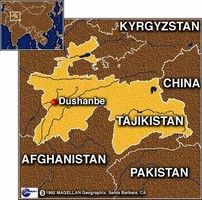
DUSHANBE (TCA) — The decision taken by the Government of Tajikistan to focus on addressing critical business climate constraints that had dissuaded enterprises from contributing more actively to the country’s ambitious development objectives have shown first results: the World Bank Group’s Doing Business 2020 report has recorded three related reforms in the past year, earning Tajikistan a spot among the world’s top ten most improved economies for ease of doing business, the World Bank said on October 24.

In its wake, Tajikistan has taken a big step upwards to the 106th rank globally, with a score of 61.3 out of 100.

“Against the backdrop of ambitious development objectives and emerging trade opportunities, Tajikistan has realized that an improved business climate for small and medium-size enterprises holds the key to investments, innovation, employment generation, and sustainable domestic resource mobilization,” said Jan-Peter Olters, World Bank Country Manager for Tajikistan. “By sustaining this reform momentum, Tajikistan will lay the foundation for increased private sector activities, export orientation, and dynamic rates of sustainable and inclusive growth.”

Highlights of Tajikistan’s reforms have been:

- the introduction of a social identification number in the company incorporation certificate at the time of registration;

- improved access to credit by launching a unified, modern and notice-based collateral registry, the establishment of a functional secured-transactions system, the broadening of the scope of assets that can be used as collateral, the allowance of the general description of debts and obligations, the granting of absolute priority to secured creditors, and the provision of a time limit and clear grounds for relief from automatic stays during reorganization procedures; and;

- the facilitation of the export of goods by prioritizing customs clearance of perishable products.

Tajikistan’s most significant improvements were in the area of getting credit. An expansion of secured transactions legislation made financing for entrepreneurs easier, less risky and less costly. Tajikistan now scores 11 out of 12 in the strength of legal rights index and ranks 11th globally on this indicator.

Importantly, Tajikistan improved the process of starting a new business. Entrepreneurs now receive a social identification number when registering the company with the Tax Authority. The time it takes to start a business in Tajikistan has been reduced to seven days and is shorter than the regional average.

In response to the improvements in the access to neighboring markets, trading across borders has been simplified. When exporting perishable goods, such as edible fruit and nuts, local entrepreneurs now spend fewer hours complying with border requirements. These represent first steps of a broader reform agenda, requiring the economy—still not at the level of regional norms for cost—to improve its performance in this critical area.

Looking forward, Tajikistan’s reform priorities lie in the relatively underperforming areas of getting electricity (ranked 163), resolving insolvency (153), paying taxes (139), and dealing with construction permits (137). For example, local entrepreneurs need to undertake nine procedures to obtain electricity connection in Tajikistan, the most in the region. The country receives only four points out of eight on the reliability of supply and transparency of tariff index. In addition, at 29.6 cents on the dollar, the average recovery rate in Tajikistan remains lower than the 38.5 cents regional average.
Kazakhstan, Great Britain strengthening investment and economic cooperation

LONDON (TCA) — Kazakhstan’s investment opportunities and the further development of Kazakh-British business relations were the key topics discussed during the visit of the Kazakh delegation representing the public and private sectors led by Deputy Minister of Foreign Affairs of Kazakhstan Roman Vassilenko, the Kazakh  Foreign Ministry reported on  October 23.

The 3rd meeting of the Kazakh-British Business Council and the Kazakhstan Global Investment Forum 2019 were held in London as part of the visit. The forum was organised by Financial Times, an influential international newspaper, the fDi Magazine, Kazakhstan’s Samruk-Kazyna National Welfare Fund, Kazakh Invest National Company, and the Embassy of Kazakhstan in the UK.

Over 200 business executives from the manufacturing, agricultural, chemical, mining and financial sectors, as well as metallurgy, alternative energy, logistics and digital technologies spheres attended the forum.

The event was dedicated to the vast business and investment opportunities Kazakhstan has to offer, as well as the latest political and economic transformations in the country. As a rapidly growing economy strategically located at the crossroads of Europe and Asia, Kazakhstan has the potential to become an important commercial partner for the UK after Brexit.

“Kazakhstan is the largest economy in Central Asia, accounting for more than half of the region’s GDP. We are also widely considered to have the best investment climate in the region, having attracted over $300 billion in foreign direct investment since independence,” Mr. Vassilenko said in his opening address.

Vassilenko said that the Ministry of Foreign Affairs of Kazakhstan, which since the beginning of this year was tasked to attract investment into the key sectors of the Kazakh economy, is making every effort to achieve its objectives.

The key forum speakers included the Chair of the Board of the Samruk-Kazyna National Welfare Fund Akhmetzhan Yessimov, Governor of the Astana International Financial Centre (AIFC) Kairat Kelimbetov, UK Minister for Investment of the Department for International Trade Graham Stuart MP, UK Prime Minister’s Trade Envoy to Kazakhstan Baroness Emma Nicholson, Chair of the All-Party Parliamentary Group on the Belt and Road Initiative Faisal Rashid MP, and the President of the European Bank for Reconstruction and Development (EBRD) Sir Suma Chakrabarti.

Speaking at the plenary session, Mr. Stuart noted that “The UK is now one of the biggest foreign direct investors in Kazakhstan, showing the confidence our firms have in your dynamic economy. Hundreds of British companies have their licenses to operate in Kazakhstan with total trade between our nations worth £2.7 billion last year. Now, as the UK prepares to leave the European Union and become truly a global champion of free trade, we want British firms to play an even more central role in helping Kazakhstan grow and develop over the coming decades.”

“At the heart of Eurasia Kazakhstan’s GDP has expanded four percent in the past two years and it provides a wonderful stable platform for which we are deeply grateful for British companies to access their neighbours in the Eurasian Economic Union, China and Uzbekistan. And Kazakhstan has attracted the lion’s share of inward investment into the heart of Eurasia. And today, the Astana International Financial Centre and many other institutions will show us the potential investment opportunities and perhaps give us more current possibilities of the privatisation programme of state-owned companies,” Baroness Nicholson said.

The role of Samruk-Kazyna, which manages Kazakhstan’s largest state assets in various industries, was a special topic on the agenda.

“Taking into account the global economic trends, the [Samruk-Kazyna] Fund approved a new strategy aimed at diversifying income by investing in such promising sectors as petrochemical industry, renewables, high tech, Industry 4.0, as well as creating joint private equity funds with sovereign funds and major investment companies,” Mr. Yessimov said.

He also noted that over the next five years, the Fund plans to invest more than $38 billion in the above areas, where $32 billion will be foreign investments of which British companies are expected to be a part of.

Kazakhstan’s participation in the Chinese Belt and Road Initiative gained particular attention. The forum discussed the prospects of developing a tripartite partnership between the United Kingdom, Kazakhstan and China based on the principles of maximising efficiency through the use of the British project management system, Kazakhstan’s resources and Chinese investments.

Following the Kazakh-British Business Council meeting, Samruk-Kazyna signed an agreement with Da Vinci Capital investment company on the creation of a $100 million joint private equity fund. Under the agreement, the fund is to invest at least $40 million in Kazakh enterprises in the IT and digitalization sectors to facilitate their development and subsequent IPO.

Samruk-Kazyna also signed a co-investment agreement with EDP Renovaveis, the world’s fourth largest solar and wind power company. The document regulates the principles of the joint implementation of renewable energy projects in Kazakhstan. EDP Renovaveis plans to implement a project to build a 250 MW solar power plant in Kazakhstan.

The event also saw the signing of two memoranda of cooperation:

– between the QazIndustry Kazakhstan Industry and Export Centre and the International Development Ireland Ltd on the assistance in attracting Irish investment projects in Kazakhstan’s special economic and industrial zones, and

– between the Ministry of Health of Kazakhstan and the Gap Insaat company on the construction of a 350-bed hospital in Aktau using the financing provided by UK Export Finance.

The forum also included the award ceremony of the Global Free Zones of the Year 2019 prize, annually awarded by the fDi Magazine to one of the 5,000 free economic zones of the world. Kazakhstan’s TURKISTAN Special Economic Zone won in three nominations: in the Asia-Pacific region for supporting small and medium-sized enterprises, the Ones To Watch editor’s choice award, and Best Marketing Slogan, which reads “Honoring the past, creating the future”. The victory is expected to raise recognition and improve the attractiveness of the TURKISTAN SEZ for foreign investors.

The Kazakhstan delegation’s visit continued on 24 October with the sixth meeting of the Kazakh-British Intergovernmental Commission on Trade, Economic, Scientific, Technical and Cultural Cooperation.

US government celebrates achievements in agriculture and water in Tajikistan

BOKHTAR, Tajikistan (TCA) — The United States Embassy, together with the Tajik Ministry of Agriculture, government representatives of Khatlon Province on October 23 hosted an event to celebrate the accomplishments of the United States Agency for International Development (USAID) Feed the Future Tajikistan Agriculture and Water Activity over the last four years. The event highlighted U.S. government contributions to increase, diversify, and add value to the production, post-harvest handling, and processing of agricultural products in an effort to address malnutrition and market surplus production in southwestern Tajikistan, the U.S. Embassy in Dushanbe said.

Continue reading