
• KGS/USD = 0.01143 -0%
  • KZT/USD = 0.00198 -0%
  • TJS/USD = 0.10899 0.93%
  • UZS/USD = 0.00008 0%
  • TMT/USD = 0.28490 -0.28%
  • KGS/USD = 0.01143 -0%
  • KZT/USD = 0.00198 -0%
  • TJS/USD = 0.10899 0.93%
  • UZS/USD = 0.00008 0%
  • TMT/USD = 0.28490 -0.28%
  • KGS/USD = 0.01143 -0%
  • KZT/USD = 0.00198 -0%
  • TJS/USD = 0.10899 0.93%
  • UZS/USD = 0.00008 0%
  • TMT/USD = 0.28490 -0.28%
  • KGS/USD = 0.01143 -0%
  • KZT/USD = 0.00198 -0%
  • TJS/USD = 0.10899 0.93%
  • UZS/USD = 0.00008 0%
  • TMT/USD = 0.28490 -0.28%
  • KGS/USD = 0.01143 -0%
  • KZT/USD = 0.00198 -0%
  • TJS/USD = 0.10899 0.93%
  • UZS/USD = 0.00008 0%
  • TMT/USD = 0.28490 -0.28%
  • KGS/USD = 0.01143 -0%
  • KZT/USD = 0.00198 -0%
  • TJS/USD = 0.10899 0.93%
  • UZS/USD = 0.00008 0%
  • TMT/USD = 0.28490 -0.28%
  • KGS/USD = 0.01143 -0%
  • KZT/USD = 0.00198 -0%
  • TJS/USD = 0.10899 0.93%
  • UZS/USD = 0.00008 0%
  • TMT/USD = 0.28490 -0.28%
  • KGS/USD = 0.01143 -0%
  • KZT/USD = 0.00198 -0%
  • TJS/USD = 0.10899 0.93%
  • UZS/USD = 0.00008 0%
  • TMT/USD = 0.28490 -0.28%
07 December 2025

Viewing results 1 - 6 of 5

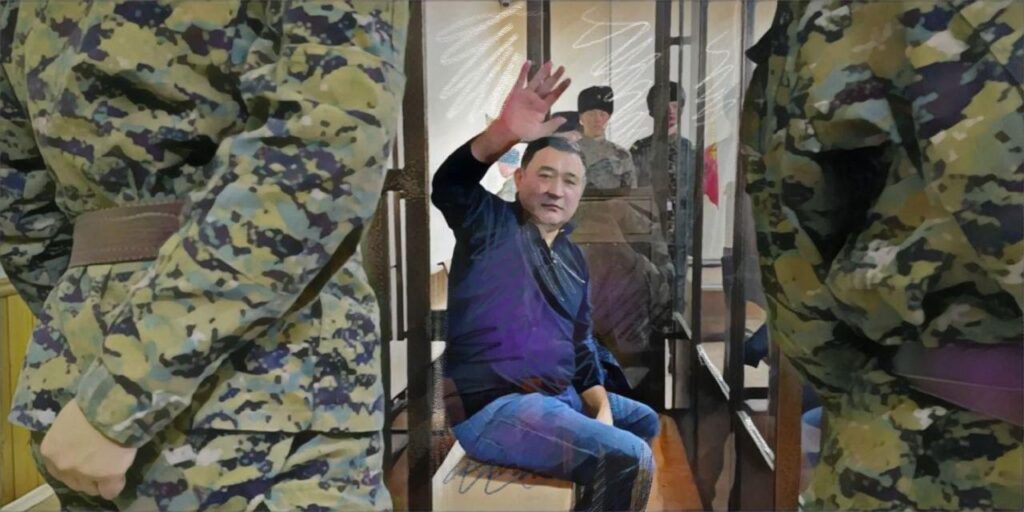
Arrests of Opposition Politicians in Kyrgyzstan Sparks Outcry Ahead of Elections

On November 22, law enforcement agencies in Kyrgyzstan launched a large-scale special operation, detaining several opposition politicians, their relatives, and media representatives. The actions were carried out under criminal proceedings initiated under Article 278 of the Criminal Code of the Kyrgyz Republic, “Organization of Mass Unrest”. In three cases, the authorities also alleged attempts to “violently seize power” in what has become an increasingly familiar mantra. The scope of the operation and the number of individuals involved have drawn significant public attention. The arrests come just days before the parliamentary elections scheduled for November 30, prompting concerns among observers about the government's approach to managing opposition voices and maintaining stability during the electoral cycle. Official Version According to the Ministry of Internal Affairs, a “destructive group” was preparing to stage mass protests following the announcement of the election results in the Jogorku Kenesh (parliament). The group allegedly included politicians, former deputies, civil servants, and law enforcement officials. Investigators claim the suspects attempted to recruit members of the criminal underworld and sports organizations to provoke violent clashes. The ministry alleges that the planned unrest would start in the south of the country and then spread to Bishkek and other regions, creating an “effect of mass discontent.” The group reportedly operated through a defined structure, with “coordination groups” tasked with articulating political demands and criminal organizations responsible for applying pressure. Some participants allegedly pre-assigned themselves roles in a proposed political configuration. Investigators also claim the group intended to issue “unconstitutional appeals” and possibly seize government buildings, television channels, law enforcement facilities, weapons, and penitentiary institutions. Separately, the Interior Ministry announced the arrest of Social Democratic Party leader Temirlan Sultanbekov and said he had been charged with organizing mass riots. Waves of Searches and Detentions Local media reported that Kadyrbek Atambayev, the son of former President Almazbek Atambayev, and former first lady Raisa Atambayeva were brought in for questioning. Raisa Atambayeva was released later the same day. Former head of the State Service for Combating Economic Crimes, Syimyk Zhapykeyev, was detained in the Issyk-Kul region and transported to Bishkek for questioning before also being released that evening. Searches were conducted at the home of former deputy Shailoobek Atazov, while other prominent figures, including former Deputy Minister of Internal Affairs and ex-MP Kubanychbek Kadyrov, and the former CEO of the April TV channel, Dmitry Lozhnikov, were also questioned. Authorities linked Lozhnikov to the detained politicians. The Interior Ministry stressed that all actions were authorized by court orders and were part of an ongoing investigation into the organization of mass riots. Court Rulings: Arrests and Preventive Detentions On November 23, the Pervomaisky District Court in Bishkek issued preventive detention orders for ten individuals, including Temirlan Sultanbekov, Shailoobek Atazov, Ermek Ermatov, Damir Musakeev, Kadyrbek Atambayev, Kubanychbek Kadyrov, and businessman Urmat Baryktabasov (also known as Askarbekov). The identities of three additional detainees have not been publicly disclosed. Kadyrbek Atambayev has been remanded in custody until January 17, 2026, according to his lawyer Sergei Slesarev, who confirmed that...


Syrian Forces Intensify Arrests of Uzbek and Foreign Militants in Idlib

Syrian forces under the administration of Ahmed al-Sharaa have escalated their long-running security campaign against foreign fighters in northwestern Syria, targeting individuals affiliated with the Islamic State (ISIS) and other jihadist factions. According to Syrian sources cited by the El Manshar news outlet, the crackdown has gained momentum in recent months, with a focus on detaining commanders and field operatives of various nationalities, particularly in the Idlib region. Among those detained are several Uzbek nationals. In June 2025, security forces in Idlib arrested Ayoub “Abu Dujana” al-Uzbeki, a military trainer, and transferred him to an undisclosed location. In late August, another Uzbek figure, known as Islam al-Uzbeki, was detained during a raid in the Qasour neighborhood of Idlib. On September 3, Syria’s Internal Security Directorate announced the dismantling of an ISIS cell in the Harem area of western Idlib, with all members taken into custody, including fighters from Iraq and Uzbekistan. This is not the first time Uzbek militants have been the focus of security operations. Reports from late 2022 documented more than 20 raids on ISIS-affiliated cells across Idlib province, resulting in the arrests of several Uzbek fighters. Since 2020, forces loyal to Sharaa have also targeted the al-Qaeda-linked “Tawhid and Jihad” battalion, detaining senior figures such as its founder, Abu Saleh al-Uzbeki. Those arrests sparked violent clashes with rival jihadist groups. Analysts suggest the campaign aims to consolidate Sharaa’s authority by bolstering security services, pre-empting the rise of autonomous armed factions, and eliminating groups that resist integration into his command structure. It also appears intended to signal compliance with previous understandings with the United States concerning the handling of foreign fighters in Syria. Despite these efforts, El Manshar notes that extremist groups continue to maintain a limited but persistent presence in eastern Idlib and along the Turkish border. The campaign, therefore, represents a protracted struggle for dominance rather than a definitive resolution of the foreign fighter issue.

Kazakhstan Confronts Major Data Leak in High-Stakes Security Crackdown

A detective thriller worthy of a Hollywood script is quietly playing out in the daily lives of Kazakhstani citizens, one with implications for nearly every household. At its core lies the largest leak of personal data in Kazakhstan’s history, unfolding across Almaty and Astana. The incident touches on something deeply personal: data that could be weaponized by fraudsters for illicit gain. Sixteen Million Records Exposed In early June, the Telegram channel SecuriXy.kz, known for its cybersecurity reporting, revealed a massive breach of Kazakh citizens' personal data. "A CSV file containing the personal data of Kazakh citizens, containing 16.3 million lines, has been discovered. The table contains the following fields: Last name, First name, Middle name, Gender, Date of birth, ID number, IIN [Bank Identification Number], Mobile phone number, Work phone number, Home phone number, Citizenship, Nationality, Address, Confirmed address, Start and end dates of residence," the channel stated. The analysis identified 16,302,107 records, 16.9 million unique phone numbers, and 15,851,699 unique individual identification numbers (IINs), the number of citizens whose information had been compromised. “The ‘address’ field often contains the addresses of dental clinics, polyclinics, the Tax Committee, universities, and other organizations,” the channel noted. The leak included highly sensitive personal data such as contact details and IINs, which the channel warned could be used for: “Phishing, social engineering, document forgery, and telephone fraud.” The data appears to have been compiled over a significant period. SecuriXy.kz reported that, “Most of the records were entered into the system after 2011,” with over two million added in 2022 alone. Data from 2023-2024 also appears, underscoring the leak's relevance. The revelation sparked swift reactions from officials. The Ministry of Digital Development, Innovation, and Aerospace Industry (MCIAI) released a statement confirming an investigation in collaboration with law enforcement and intelligence agencies. “It should be noted that the initial analysis indicates that the information may have originated from private information systems. No hacker attacks or leaks of personal data from state information systems have been recorded at this time. It is premature to draw final conclusions or confirm the accuracy of the information until the investigation is complete,” the ministry stated, adding that similar past incidents often involved outdated data compiled by service sector firms or microfinance institutions. “The ministry is monitoring the situation," the authorities concluded. "Additional information will be posted after the investigation is complete.” Cybersecurity experts, however, were less dismissive. Enlik Satieva, vice president of the TSARKA Group, a cybersecurity firm affiliated with the government, stressed the seriousness of the breach. "These are not just names," she stated. "The published database contains the most important personal data of citizens. In particular, it includes surnames, first names, patronymics, gender, dates of birth, IINs, citizenship, nationality, residential addresses, registration and residence periods, as well as mobile, home, and work phone numbers." Satieva suggested that some of the data may have been sourced from medical organizations, and that the leak might stem from a specific entity or multiple sources linked through IINs. Criminal Case and Contradictions...
