• KGS/USD = 0.01143 -0%
  • KZT/USD = 0.00198 -0%
  • TJS/USD = 0.10899 0.65%
  • UZS/USD = 0.00008 -0%
  • TMT/USD = 0.28490 -0.28%
  • KGS/USD = 0.01143 -0%
  • KZT/USD = 0.00198 -0%
  • TJS/USD = 0.10899 0.65%
  • UZS/USD = 0.00008 -0%
  • TMT/USD = 0.28490 -0.28%
  • KGS/USD = 0.01143 -0%
  • KZT/USD = 0.00198 -0%
  • TJS/USD = 0.10899 0.65%
  • UZS/USD = 0.00008 -0%
  • TMT/USD = 0.28490 -0.28%
  • KGS/USD = 0.01143 -0%
  • KZT/USD = 0.00198 -0%
  • TJS/USD = 0.10899 0.65%
  • UZS/USD = 0.00008 -0%
  • TMT/USD = 0.28490 -0.28%
  • KGS/USD = 0.01143 -0%
  • KZT/USD = 0.00198 -0%
  • TJS/USD = 0.10899 0.65%
  • UZS/USD = 0.00008 -0%
  • TMT/USD = 0.28490 -0.28%
  • KGS/USD = 0.01143 -0%
  • KZT/USD = 0.00198 -0%
  • TJS/USD = 0.10899 0.65%
  • UZS/USD = 0.00008 -0%
  • TMT/USD = 0.28490 -0.28%
  • KGS/USD = 0.01143 -0%
  • KZT/USD = 0.00198 -0%
  • TJS/USD = 0.10899 0.65%
  • UZS/USD = 0.00008 -0%
  • TMT/USD = 0.28490 -0.28%
  • KGS/USD = 0.01143 -0%
  • KZT/USD = 0.00198 -0%
  • TJS/USD = 0.10899 0.65%
  • UZS/USD = 0.00008 -0%
  • TMT/USD = 0.28490 -0.28%
07 December 2025

Viewing results 1 - 6 of 18

Kazakh Singer Dimash Kudaibergen Climbs U.S. Charts with “Smoke”

Kazakhstani singer Dimash Kudaibergen has achieved significant success on the U.S. charts with his song Smoke, ranking highly on both Amazon and iTunes. Throughout January 2025, international media outlets, including publications in Argentina, the United Kingdom, and the United States, featured stories on the singer. Reports highlighted his exceptional vocal range, creative independence, and dedication to Kazakh national culture - qualities that have earned him a global fan base. “Dimash Kudaibergen is rapidly becoming one of Asia's best-known artists, captivating audiences worldwide with his unique fusion of neo-classical, pop, Kazakh folk, and contemporary trends. His independence allows him to experiment freely, combining traditional Kazakh motifs with global musical influences. For him, music is not just entertainment but an opportunity to present Kazakhstan's rich culture on the world stage,” Haute Living wrote. [embed]https://www.youtube.com/shorts/zKBUihALTH0[/embed] Released on April 26, 2024, Smoke is one of Dimash’s latest tracks. The music of the composition was written by the singer, with lyrics by Candice Kelly and Dimash Gordon. The song quickly gained traction, and by January 30, 2025, it had risen in the U.S. charts. It reached No. 32 on the iTunes Top 100, entered the Top 10 of Amazon’s Best Sellers in Songs, and claimed No. 1 in Amazon’s Best Sellers in Pop. This success underscores Dimash Kudaibergen’s growing influence beyond Kazakhstan and rising prominence in the international music industry. Dimash Kudaibergen is a Kazakh singer renowned for his extraordinary six-octave vocal range. He first gained international recognition after winning Slavic Bazaar (2015) and later became a finalist on the Chinese talent show Singer (2017). His musical style blends elements of neoclassical, pop, and traditional Kazakh folk. He has performed on prestigious stages worldwide, including the Kremlin Palace, Barclays Center, and Meridian Hall in Toronto. In 2019, he won the MTV Global Chinese Music Awards, and in 2021, he was named Asian Musician of the Year by the Top Chinese Music Awards. Kudaibergen also took part in the opening and closing ceremonies of the Beijing Olympics.

Japanese Musician Mashu Komazaki Named “Ambassador of Uzbek Culture”

Japanese singer and musician Mashu Komazaki has been awarded the title of “Ambassador of Uzbek Culture,” becoming the first Japanese citizen to receive this distinction, Uzbekistan’s Ministry of Culture has announced. As an Ambassador of Uzbek Culture, Komazaki will work to promote Uzbekistan’s traditional music and arts in Japan. The Ministry of Culture has pledged full support for her activities, providing national costumes, musical instruments, and other cultural materials. Komazaki has a close connection to Uzbek music, having previously volunteered as a music teacher in Bukhara. She plays the dutor, a traditional Uzbek stringed instrument, and has performed at major cultural festivals in Uzbekistan. Speaking at the award ceremony, she expressed gratitude for the honor and shared her passion for introducing more Japanese audiences to Uzbek music. “When I perform Uzbek music, many in Japan tell me it creates a vivid image of a mysterious land along the Silk Road. Some even say they want to visit Uzbekistan because of the music,” she said. The “Ambassador of Uzbek Culture” title is part of a new initiative under a presidential resolution aimed at recognizing foreign citizens who actively promote Uzbekistan’s cultural heritage. Those granted the status receive cultural materials and may even be recommended for state awards based on their contributions. Komazaki plans to organize concerts and educational events in Japan to further showcase Uzbekistan’s rich musical traditions.

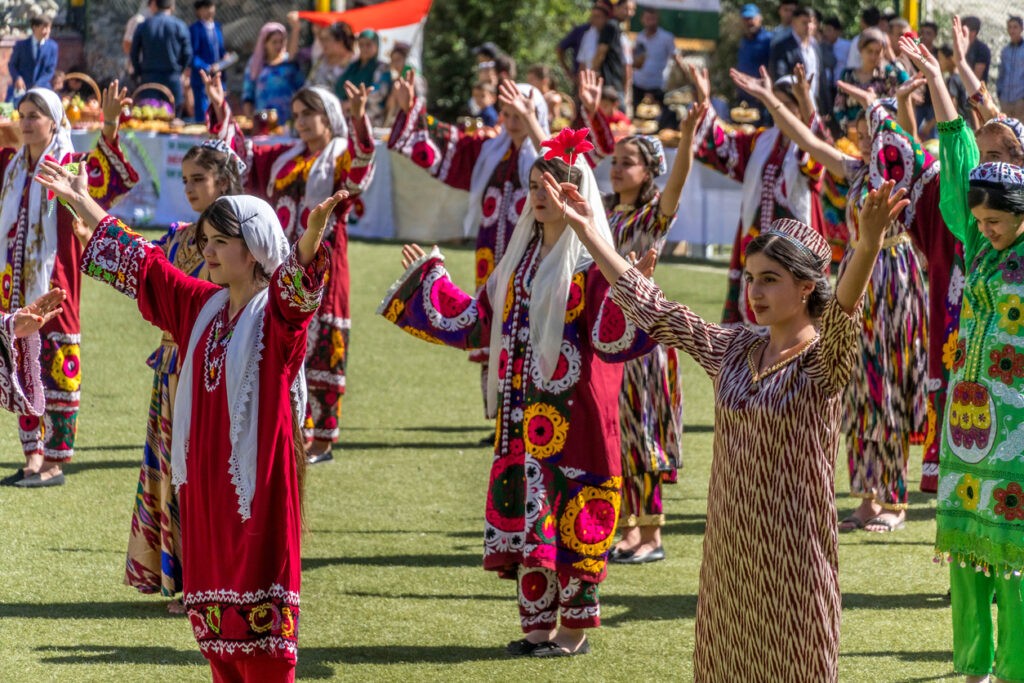
Tajikistan Nominates National Game and Stories for UNESCO Heritage List

Tajikistan is advancing efforts to preserve its cultural heritage by proposing several national traditions for inclusion on UNESCO’s Intangible Heritage of Humanity list, according to Culture Minister Matlubakhon Sattoriyon. The National Commission for UNESCO is currently reviewing these nominations. One notable nomination is the traditional game nardbozi, similar to backgammon, which has been submitted jointly with Iran. Tajikistan is also seeking recognition for the folklore tales of One Thousand and One Nights and the Toki tradition, both of which reflect the rich oral storytelling heritage of the Tajik people. Aminzoda Abdufatto, director of the Research Institute of Culture and Information at the Tajik Ministry of Culture, emphasized that these proposals are part of a broader strategy to preserve Tajikistan’s cultural traditions while promoting them on the global stage. In 2024, Tajikistan successfully inscribed several cultural elements on the UNESCO Intangible Heritage List, including the Meҳrgon festival, a celebration of harvest and gratitude, and the art of playing the rubob, a stringed instrument central to the musical traditions of Tajikistan and neighboring countries such as Afghanistan, Iran, and Uzbekistan. These recent initiatives underscore Tajikistan’s commitment to cultural diplomacy and its collaboration with neighboring countries in safeguarding shared traditions. UNESCO’s Representative List of the Intangible Cultural Heritage of Humanity recognizes cultural practices, knowledge, skills, and expressions that communities identify as part of their heritage. This recognition helps raise awareness of cultural diversity and encourages the protection and preservation of these traditions.

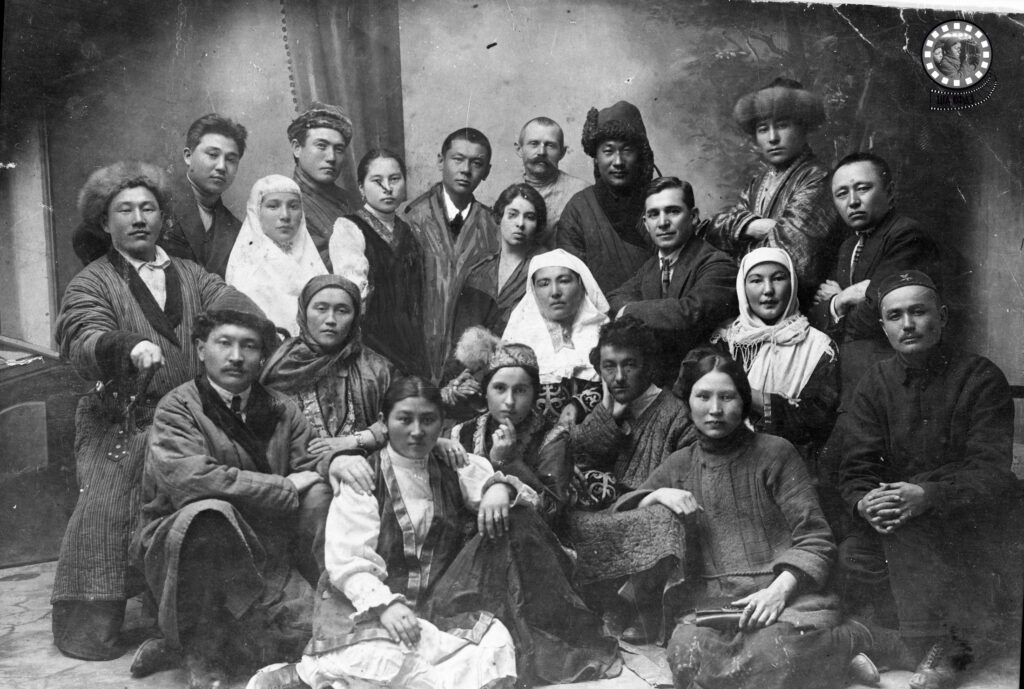
Amre Kashaubaev and the Mystery of an Old Photograph

In Kazakhstan, the musical talent of Amre Kashaubaev is well known. Thanks to him, European audiences were introduced to the live melodies of Kazakh music when Kashaubaev performed Kazakh songs at the International Exhibition of Modern Decorative and Industrial Arts of 1925 in Paris. As previously reported by The Times of Central Asia, the first recordings of Kazakh music were made between 1903 and 1909 during the travels of the German explorer Richard Karutz in Turkestan. His book, Among the Kirghiz and Turkmens in Mangyshlak, published in 1911 in Russia, was edited by Vasily Radlov, a renowned ethnographer, archaeologist, and educator of German origin, who was also a pioneer in Turkology. However, it was only in 1925, thanks to Kashaubaev’s talent, that Europeans could hear Kazakh folk songs performed live. The fate of this man is very similar to the destinies of thousands of talented individuals in the early years of the Soviet Union, whose creative works could not fit into the "Procrustean bed" of communist ideology. [caption id="attachment_27972" align="aligncenter" width="1279"] Amre Kashaubaev and his wife Orazke, Kzyl-Orda, 1926.[/caption] Amre Kashaubaev was born in 1888 in the Abraly district of the Semipalatinsk region. His first professional attempt to become a singer was a public performance at a fair near the village of Koyandy, not far from the modern city of Petropavlovsk, at a festival of Kazakh oral art. Through his songs, Kashaubaev’s art became famous throughout Kazakhstan. Anatoly Lunacharsky, then the People’s Commissar for Education, personally invited him to participate in concerts at the International Exhibition in Paris. Kashaubaev also actively participated in the creation of the first Kazakh professional theater. In April 1927, he gave a concert in Moscow, followed by a performance in Frankfurt. He frequently performed on the radio, singing Kazakh folk songs and enchanting listeners with the beauty and depth of his voice. His theatrical performances also garnered great interest. Today, archival institutions and museums in Kazakhstan hold only a few photographs and documents depicting Kashaubaev. This is because many documents were destroyed by his colleagues and relatives due to his political persecution by the Bolsheviks. His trip to Paris proved to be fatal for the singer since it drew the attention of the Soviet state security agencies. During the Paris exhibition, the talented singer met Kazakh political dissident Mustafa Shokay, who in 1917 had been the Chairman of the Kokand Autonomy — a state entity that lasted for six months in the Turkestan region of the Russian Empire. Moreover, Shokay was an active member of the Alash Party, which the Soviets deemed bourgeois and whose members were subjected to repression. Although Kashaubaev was not imprisoned for his ties with political opponents of the Bolsheviks, he faced significant pressure from the authorities. On December 6, 1934, he was found dead on the streets of Alma-Ata. The cause of his death remains unknown. Within the archival fonds of The Central State Archive of Film, Photo Documents, and Sound Recordings of the Republic of Kazakhstan, we believe there...

Art and Inspiration: Capturing the Essence of Almaty

With colorful illustrations of landmarks, natural monuments, and city-life moments, Aidana Niyazalieva’s postcards of Almaty stand out. TCA spoke with the artist to learn more about her inspiration, creative process, and challenges behind her postcards and the Almaty arts scene. TCA: What inspired you to start making postcards of Almaty? I've been drawing since I can remember; everything surrounding me – my room, the streets, and the buildings – inspires me. This led me to study architecture. However, after working as an architect, I realized that my passion for drawing was stronger. I decided to try it, eventually devoting myself to illustration and turning this hobby into a profession. I started with the city I grew up in, Almaty, and created a few postcards of the views I walked past the most. This became a way to combine everything I love - art, architecture, and my love for the city. TCA: How do you decide which landmarks, views, or themes to feature in your postcards? I choose places and themes close to me that evoke an emotional connection in people. Usually, the ideas come from my walks around the city. During my walks, I take many photos for possible drawings. Sometimes, a few buildings of the same type could grow into a series of illustrations, as in the “Houses“ postcard set that was united by the old houses of the Soviet period located in a Golden Square area. Also, I might get requests from people about places they would like to see, as happened with the Kazakhstan Hotel or Esentai River illustrations. TCA: What is your favorite spot in Almaty to capture in your art, and why? My favorite place in Almaty is the old city center. Its unique architecture, with characteristic features from different periods from neoclassical to modernist buildings, and its streets with cafes and terraces have always attracted my attention. Those buildings keep their history, whether these are old houses with sophisticated details or monumental facades of theaters and institutes. When I'm there, I always look closely at small elements like the carved balconies, window frames, mosaics, and patterns on the facades – I try to capture them in every illustration. TCA: Are there specific stories or personal memories behind some of your postcard designs? As a local, I have a personal connection to almost every location I illustrate. Capturing a place authentically requires more than just visual reference - it also needs an emotional connection. That’s why I barely draw locations I’ve never visited. Behind almost every illustration is a moment tied to the place. For example, the Kasteyev Museum holds a special place in my heart. My grandma used to take me there often when I was little, and it’s where I first took art lessons. So, I decided to create this illustration to capture the architecture of the museum and the memories connected to the place. TCA: Can you walk us through the creative process behind designing a postcard? Firstly, after the location is...

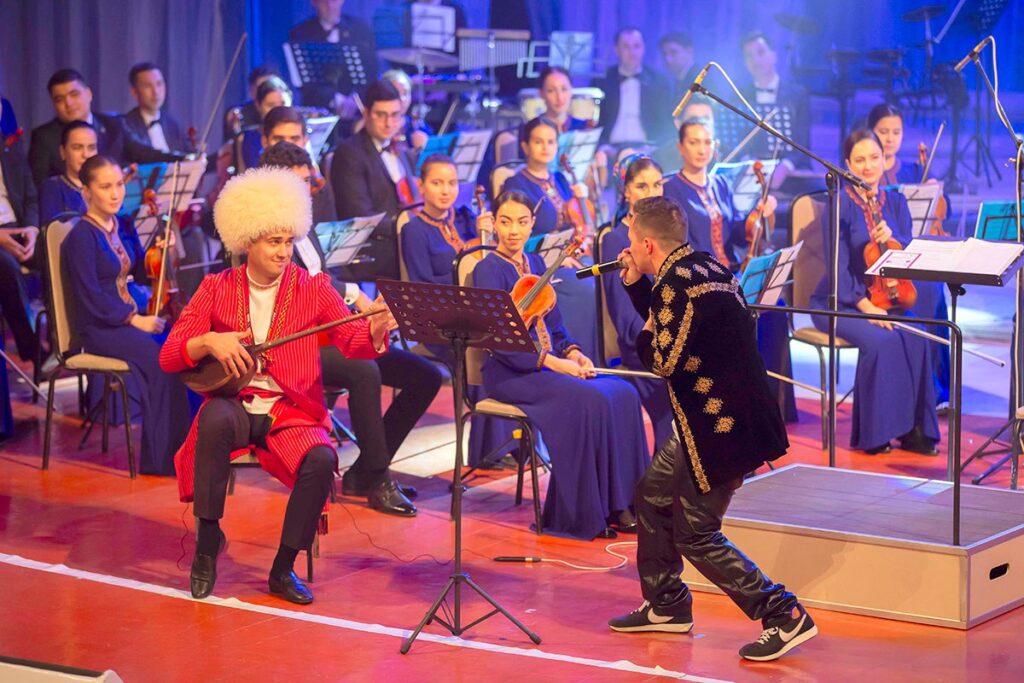
American Musicians Celebrate the Dutar During Tour of Turkmenistan

The Turkmen dutar, a two-stringed lute, and symbol of the nation’s musical heritage, left a lasting impression on American artists visiting Turkmenistan on a recent tour. Musicians Keith Bass, Aaron Young, and Richard Steighner praised the uniqueness of Turkmenistan’s traditional music during their performances as part of the “Broadway and Beyond” concert series. The tour began with its first concert on January 16 at the Mukam Palace in Ashgabat. The American performers shared the stage with the State Symphony Orchestra of Turkmenistan, led by conductor Rasul Klychev, and soloists from the State Choir. The concert program featured a mix of popular Broadway melodies and innovative interpretations of the works of Makhtumkuli Fraghi, the national Turkmen poet. A standout moment of the evening was the performance of “I Want to Feel the Wind,” a song based on Makhtumkuli’s poetry and composed especially for the tour. Beatboxer Richard Steighner highlighted the creative synthesis of styles that emerged during the collaboration. “Blending my beatboxing with the soft yet rich sound of the dutar was an unforgettable experience,” Steighner said. “The beauty of Turkmen music is astounding, and the dutar was a true revelation for us. We even incorporated it into an original piece, creating a unique fusion of traditional melodies and modern trends.” Keith Bass, another member of the ensemble, emphasized the value of cultural exchange. “Working with Makhtumkuli’s works gave us an opportunity to view music through a new lens. Every concert here has become a platform for creative experimentation,” Bass said. U.S. Ambassador to Turkmenistan Elizabeth Rood, who attended the Ashgabat performance, highlighted the role of cultural events in fostering international understanding. “Music and culture are bridges that unite people. We will continue to support projects that preserve cultural heritage and serve as symbols of friendship and trust,” Rood said. Following the debut in Ashgabat, the “Broadway and Beyond” series will continue with performances in Turkmenbashi, Balkanabad, and Dashoguz.