


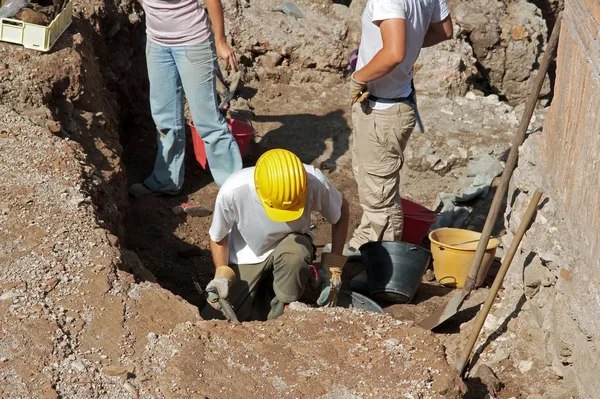
Ancient Water Pipeline Unearthed on 65-Meter Hill in Tajikistan
Archaeologists in Tajikistan have uncovered a remarkable ancient water pipeline system atop a 65-meter hill at the Mugtepa settlement, believed to have been constructed approximately 1,500 years ago. The site, towering above the city at the height of a modern twenty-storey building, once hosted fortresses of the rulers of Uratyube across various historical periods. For nearly three decades, however, the archaeological site remained neglected. Construction in 2017-2018 further compromised its integrity, leading many to assume its secrets were lost forever. That changed in the summer of 2025, when an expedition from the Department of Archaeology, Ethnography, and Religious Studies at Khujand State University, led by Professor Nabijon Rakhimov, began new excavations. The project, supported by staff from the Kalai Mug Historical and Cultural Complex under Mirzo Olimov, proceeded without official funding but succeeded thanks to the contributions of students and specialists. Between June 18 and July 18, the team examined three segments of the aqueduct system. Water was drawn from a spring at the base of a nearby hill and transported via ceramic pipes known as kuburs, each approximately 40 cm in length. The pipes were joined using waterproof alabaster mortar and laid in trenches 85 cm wide and 20 cm deep. Small pools, or hauzes, were found along the route, likely used for water collection. All components of the system were uniformly manufactured, suggesting the existence of specialized production workshops. Unearthing Everyday Life In soil layers dating to the 5th to 8th centuries, researchers discovered pottery, stone grain grinders, and spindle whorls, evidence of a thriving agricultural and textile economy. Deeper strata revealed artifacts from earlier eras, ranging from the 1st-3rd centuries CE to the Achaemenid and Hellenistic periods (6th-1st centuries BCE). Notable finds included fragments of tall-stemmed goblets, cup-shaped vessels, and red-slip bowls. “Archaeological monuments are not just stones and shards; they are material evidence of our history. Without protection and careful treatment, they can disappear,” said Rakhimov. The team now plans to petition the Agency for the Protection of Monuments under the Government of Tajikistan to secure official support for continued excavations and preservation efforts at Mugtepa. Other Significant Finds in the Region This discovery follows several notable archaeological breakthroughs in Tajikistan in recent years. In 2023, a 7th-century sewer system was uncovered in Istaravshan by architect Amindjonov Khomid and Professor Rakhim Nabiev. The structure, approximately 1,300 years old, highlights the advanced engineering of the period. A rare 6th-century jug, made of concrete and coated in clay, was found nearby. In May 2025, archaeologists from the National Museum of Tajikistan discovered a Kushan-era clay vessel near the village of Sarband, inscribed in the Bactrian language. The inscription read, “This water jug belongs to a woman named Sagkina,” offering a rare glimpse into ancient literacy and social life. And in November 2024, an international team led by Professor Yossi Zeidner of the Hebrew University reported the discovery of artifacts dating back 150,000 years at the Soyi Khavzak site in the Zeravshan Valley. Finds included stone tools, animal bones,...

