Russia Seeks to Reassert Role at Central Asia Summit, but Kazakhstan and Uzbekistan Push Their Own Agendas
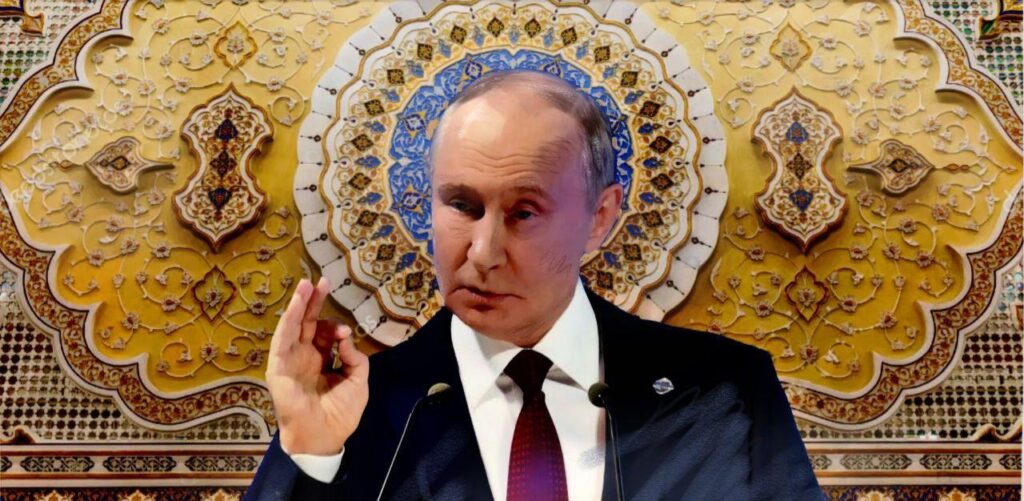
The second Central Asia-Russia summit, held ahead of the Commonwealth of Independent States (CIS) leaders’ meeting, reaffirmed the Kremlin’s continued intent to assert influence over the region. Russian President Vladimir Putin used the platform not only to signal discontent with the pace of economic integration but also to critique the Central Asian republics for what he portrayed as insufficient engagement in bilateral trade. Despite growing ties between Central Asian states and external partners, exemplified by the “C5+1” dialogue format that includes major powers such as the U.S. and China, Putin made clear that Russia does not view its influence in the region as diminished. Opening the summit, Putin took a veiled swipe at the “C5+1” initiative, which has gained traction in recent years. “I am in constant contact with each of the Central Asian presidents,” he said, before adding, “But I am sure that this multilateral format of communication is also very useful and has its obvious ‘added value’, so to speak.” By “added value,” the Russian leader appeared to suggest that multilateral engagement enables Central Asian states to present a more unified front in foreign negotiations, an approach that complicates Moscow’s ability to exert influence through bilateral channels. Putin also expressed dissatisfaction with the current levels of mutual trade and Russian investment in the region. While acknowledging that trade between Russia and Central Asia had surpassed $45 billion, he pointedly compared this figure to trade with Belarus, which exceeds $50 billion despite its far smaller population. “Our trade turnover with Belarus exceeds $50 billion. Let me remind you that Belarus has a population of 10 million. Uzbekistan already has nearly 40 million, Tajikistan over 10 million, and Kazakhstan more than 20 million. Can you imagine what a colossal resource this is?” Putin said. “This means there are strong prospects for expanding our economic relations.” Putin described Russia’s current $20 billion in regional investments as inadequate and called for increased engagement, but also tempered expectations surrounding major infrastructure and logistics projects championed by Astana and Tashkent, while positioning Russia as a central player in their development. He proposed integrating existing North-South and East-West corridors into a unified Eurasian logistics network supported by digital and transport services. “This will allow us to significantly increase international transport volumes through our common region,” Putin said. Kazakh President Kassym-Jomart Tokayev responded directly, updating figures presented by Putin and reaffirming Kazakhstan’s commitment to regional integration. He noted that Russia’s total trade with Central Asia exceeded $50 billion in 2024, with $28 billion in trade between Russia and Kazakhstan alone. Tokayev emphasized the strategic importance of transport cooperation with Russia, stating that “Russia is a key gateway for the region’s countries to global markets. Therefore, cooperation in the transport and logistics sector is a matter of heightened strategic importance.” [caption id="attachment_37343" align="aligncenter" width="1600"] Image: Akorda.kz[/caption] Tokayev outlined Kazakhstan’s existing transport infrastructure, eleven international corridors, including five rail and six road routes, that carry about 85% of land freight between Asia and Europe. Over 15 years, Kazakhstan has...