• KGS/USD = 0.01143 -0%
  • KZT/USD = 0.00198 -0%
  • TJS/USD = 0.10899 0.65%
  • UZS/USD = 0.00008 -0%
  • TMT/USD = 0.28490 -0.28%
  • KGS/USD = 0.01143 -0%
  • KZT/USD = 0.00198 -0%
  • TJS/USD = 0.10899 0.65%
  • UZS/USD = 0.00008 -0%
  • TMT/USD = 0.28490 -0.28%
  • KGS/USD = 0.01143 -0%
  • KZT/USD = 0.00198 -0%
  • TJS/USD = 0.10899 0.65%
  • UZS/USD = 0.00008 -0%
  • TMT/USD = 0.28490 -0.28%
  • KGS/USD = 0.01143 -0%
  • KZT/USD = 0.00198 -0%
  • TJS/USD = 0.10899 0.65%
  • UZS/USD = 0.00008 -0%
  • TMT/USD = 0.28490 -0.28%
  • KGS/USD = 0.01143 -0%
  • KZT/USD = 0.00198 -0%
  • TJS/USD = 0.10899 0.65%
  • UZS/USD = 0.00008 -0%
  • TMT/USD = 0.28490 -0.28%
  • KGS/USD = 0.01143 -0%
  • KZT/USD = 0.00198 -0%
  • TJS/USD = 0.10899 0.65%
  • UZS/USD = 0.00008 -0%
  • TMT/USD = 0.28490 -0.28%
  • KGS/USD = 0.01143 -0%
  • KZT/USD = 0.00198 -0%
  • TJS/USD = 0.10899 0.65%
  • UZS/USD = 0.00008 -0%
  • TMT/USD = 0.28490 -0.28%
  • KGS/USD = 0.01143 -0%
  • KZT/USD = 0.00198 -0%
  • TJS/USD = 0.10899 0.65%
  • UZS/USD = 0.00008 -0%
  • TMT/USD = 0.28490 -0.28%
07 December 2025

Viewing results 1 - 6 of 37

Solar-Powered Irrigation System Launched Outside Tashkent

A new drip irrigation system that runs on solar power has been introduced in the Akkurgan district outside Uzbekistan's capital Tashkent. The irrigation system is being funded by the European Union, and is part of a project between the United Nations Development Programme (UNDP) and the Uzbek Ministry of Agriculture. Increasing water scarcity is a serious challenge in rural Uzbekistan. Many families rely on their backyard gardens to grow vegetables, and better irrigation will help rural communities to become more economically sustainable. The system includes a water pump that extracts water from a vertical well at a depth of 180 meters, supported by solar panels. The system irrigates 0.8 hectares of land, benefiting 10 households and saving nearly 60% of water compared to traditional irrigation methods. The excess electricity generated by the solar panels is sold to the State Electricity System, and the revenue is used to manage and operate the irrigation well and the drip irrigation network. Mr. Wim Riepma, Head of Cooperation of the European Union's Delegation to Uzbekistan, commented: "This solar-powered drip irrigation system not only addresses water scarcity but also paves the way for more sustainable agriculture in Uzbekistan. Most importantly, it directly benefits local families by increasing their access to electricity and water for irrigation, thus enhancing food security and incomes."

Over 200 UNDP Projects Implemented in Kazakhstan

During a meeting between Kazakhstan's Vice Prime Minister, Nurlan Baibazarov and Katarzhina Vaviernia, permanent representative of the United Nations Development Program (UNDP) in Kazakhstan, discussions focused on UNDP projects aimed to promote the economic development of UN member states. To date, over  200 projects worth over $200 million have been implemented in the country with support from the government of Kazakhstan, public organizations, the business sector, UN agencies, and other partners.  Broad ranging, the initiatives include the development of small and medium businesses, green energy, agriculture, and ecotourism. Nurlan Baibazarov  noted that Kazakhstan is ready to present the third Voluntary National Review on implementing the Sustainable Development Goals at the High-Level Political Forum in New York in 2025 and stated: "Achieving the Sustainable Development Goals is a national priority for Kazakhstan. We pay great attention to discussing the implementation of the goals at different platforms to find optimal solutions for our state's sustainable development. The voluntary review will objectively reflect the country's main achievements, challenges, and emerging problems." In addition, it was noted that Kazakhstan is interested in strengthening cooperation with UNDP, and in particular,  the successful implementation of the UNDP Country Program for 2021-2025.

UNDP Launches Course on Gender Issues in Turkmenistan

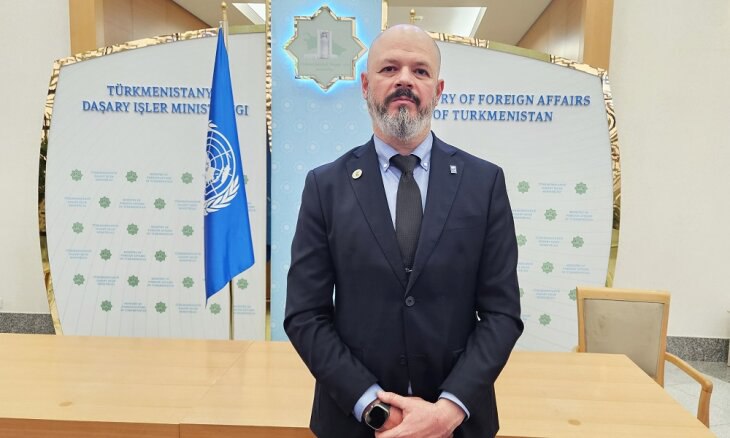
Turkmenportal has reported that the United Nations Development Programme is launching a specialized online course on gender issues for Turkmenistan's civil servants. The course will cover topics such as basic gender definitions, international standards, gender in public policy, gender analysis tools, local gender stereotypes, strategies for achieving gender equality, national frameworks, the prevention of gender-based violence, and engaging men in efforts to promote gender equality. Training will be offered in English, Russian, and Turkmen, and will include texts, quizzes, presentations, and other content to aimed at providing the necessary knowledge and skills to promote gender equality in the workplace. The course is expected to provide civil servants with a comprehensive understanding of gender equality concepts and international standards, enhance their ability to integrate gender aspects into public policy, and enable them to actively promote gender-responsible governance. As Tomica Paovic, the UNDP Resident Representative in Turkmenistan, noted, mainstreaming gender issues and awareness into civil servants' work is crucial to promoting equality, enhancing policy effectiveness, and ensuring sustainable development. "We are confident that this important initiative, supported by the UNDP's partner, the Government of Canada, will strengthen the country's capacity for gender equality and women's empowerment, in line with the National Action Plans on Human Rights and Gender Equality in Turkmenistan," Paovic stated.

Kazakhstan, UNDP, and Eurasian Development Bank Unite in Water Management

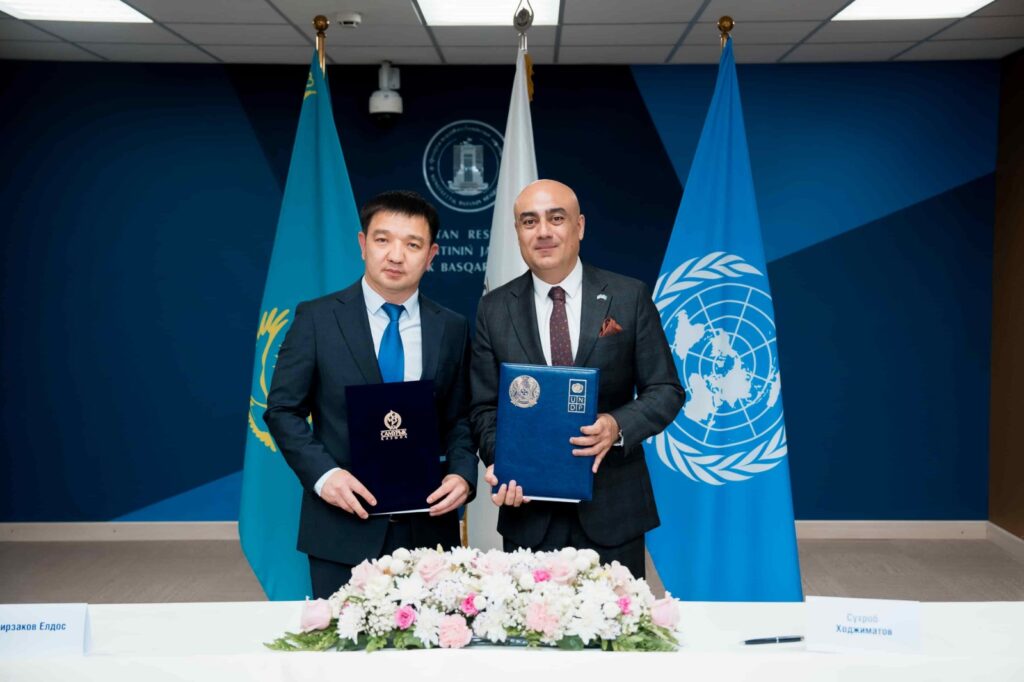
On 28 June, the Ministry of Water Resources and Irrigation of Kazakhstan, the United Nations Development Programme (UNDP) in Kazakhstan, and the Eurasian Development Bank (EDB) signed a letter of intent to cooperate on joint development projects in multi-purpose water resources management. As reported by the EDB Media Centre, as part of the agreement, the EDB plans to allocate approximately US $5.3 million in technical assistance to implement several initiatives including water sector digitalization, the development of regional training centres for state-of-the-art irrigation technologies, piloting modern water-saving technologies, and developing a legal and institutional framework for the water sector. Kazakhstan is experiencing an increase in water-related disasters, as evidenced by recent severe floods and escalating water shortages caused by new infrastructure projects in neighbouring regions, and to mitigate future risks, must instigate improved irrigation and water management strategies. Nurzhan Nurzhigitov, Kazakhstan’s Minister of Water Resources and Irrigation, commented: “Our Ministry faces many important tasks, one of which is the modernization and improvement of the country’s water management system. For this purpose, a concept and its comprehensive plan outlining specific measures for the development of water infrastructure in Kazakhstan and other large-scale projects were developed and approved. We intend to actively cooperate with international organizations and financial institutions, adopt the best practices of other countries, and jointly implement large projects that will bring benefits for decades to come. Today’s agreement is another step in this direction.” Nikolay Podguzov, Chairman of the EDB Management Board, added: “We are on the verge of a water shortage in Central Asia – this is a complex regional challenge, but we are tackling it. This is the call we want to convey to all interested parties. We must act very quickly and together. We have only five years to get the region ready and avoid severe water shortages. To timely inform all interested parties, we have done significant work and will keep working to expand the network of partnerships.” “Globally, the water sector suffers from insufficient funding and investment,” highlighted Sukhrob Khojimatov, UNDP Resident Representative a.i. in Kazakhstan. “Today, less than 10% of global investment goes into water infrastructure. In this context, we are encouraged by this partnership, which we believe will help address complex issues in water management, strengthen climate resilience, and develop regional cooperation in Central Asia under the water agenda.”    

UNDP and Samruk Kazyna Support Socially Vulnerable Young People in Kazakhstan 

The United Nations Development Programme (UNDP) in Kazakhstan and Kazakhstan’s National Welfare Fund Samruk-Kazyna JSC have signed a non-financial statement of intent on cooperation to support socially vulnerable young people in the regions of Kazakhstan. According to a report issued by UNDP Kazakhstan, the agreement will also promote responsible business practices addressing potential human rights violation risks, and introduce principles of gender equality to overcome gender discrimination in companies associated with the Samruk-Kazyna Fund. Gibrat Auganov, Managing Director for Corporate Governance, Social and Labour Relations and Occupational Health and Safety of Samruk-Kazyna JSC, commented: "As part of our cooperation with the UNDP, we are launching an internship programme at our companies to support socially disadvantaged young people from the various regions of Kazakhstan. We are also planning a number of initiatives in the field of human resources and social policy - based on global standards of gender equality and human rights protection." Over 300 young people from the Mangystau and Kyzylorda regions are expected to complete internships at Samruk-Kazyna companies this year. The joint internship programme is a key component of the UNDP regional initiative "Strengthening Community Resilience to Prevent Violent Extremism in Central Asia," funded by the government of Japan. As part of the partnership, UNDP will also provide technical support to Samruk-Kazyna JSC to conduct a gender assessment of the holding's activities, develop an action plan and provide training on human rights due diligence and gender equality. "This partnership has three main objectives that reflect our shared desire to create a more just, responsible and inclusive future,” said Sukhrob Khojimatov, UNDP Deputy Representative in Kazakhstan. “Implementing human rights standards and gender equality strategies brings tangible economic benefits. This helps businesses attract and retain talented employees, encourages innovation, improves financial performance and enhances their reputation among consumers and investors.”  

Electronic Information Exchange Systems to Be Introduced in Turkmenistan’s Agencies

The Türkmenaragatnaşyk Agency and UNDP (United Nations Development Program) have signed an agreement to assist the introduction of an inter-agency electronic information exchange system in Turkmenistan in accordance with the decree of President Serdar Berdimuhamedov, as reported by Arzuw.news. "The document provides for the connection of Turkmenistan's agencies to the systems of electronic information exchange and electronic document management, as well as training of specialized staff in this area, taking into account international experience," the report states. The President of Turkmenistan stressed that the country is currently actively working on digitization in various spheres of life in the state. At the meeting of the Government of Turkmenistan, Director General of the Agency of Transport and Communications, Mammetkhan Chakyev presented for consideration projects on introduction of electronic information exchange systems in the country's agencies.