• KGS/USD = 0.01143 -0%
  • KZT/USD = 0.00198 -0%
  • TJS/USD = 0.10899 0.65%
  • UZS/USD = 0.00008 -0%
  • TMT/USD = 0.28490 -0.28%
  • KGS/USD = 0.01143 -0%
  • KZT/USD = 0.00198 -0%
  • TJS/USD = 0.10899 0.65%
  • UZS/USD = 0.00008 -0%
  • TMT/USD = 0.28490 -0.28%
  • KGS/USD = 0.01143 -0%
  • KZT/USD = 0.00198 -0%
  • TJS/USD = 0.10899 0.65%
  • UZS/USD = 0.00008 -0%
  • TMT/USD = 0.28490 -0.28%
  • KGS/USD = 0.01143 -0%
  • KZT/USD = 0.00198 -0%
  • TJS/USD = 0.10899 0.65%
  • UZS/USD = 0.00008 -0%
  • TMT/USD = 0.28490 -0.28%
  • KGS/USD = 0.01143 -0%
  • KZT/USD = 0.00198 -0%
  • TJS/USD = 0.10899 0.65%
  • UZS/USD = 0.00008 -0%
  • TMT/USD = 0.28490 -0.28%
  • KGS/USD = 0.01143 -0%
  • KZT/USD = 0.00198 -0%
  • TJS/USD = 0.10899 0.65%
  • UZS/USD = 0.00008 -0%
  • TMT/USD = 0.28490 -0.28%
  • KGS/USD = 0.01143 -0%
  • KZT/USD = 0.00198 -0%
  • TJS/USD = 0.10899 0.65%
  • UZS/USD = 0.00008 -0%
  • TMT/USD = 0.28490 -0.28%
  • KGS/USD = 0.01143 -0%
  • KZT/USD = 0.00198 -0%
  • TJS/USD = 0.10899 0.65%
  • UZS/USD = 0.00008 -0%
  • TMT/USD = 0.28490 -0.28%
07 December 2025

Viewing results 1 - 6 of 62

Justice for Veterans: U.S. Acknowledges Cancer Cases Tied to Service at Uzbekistan’s K2 Base

Thousands of American veterans who served at Uzbekistan’s K2 airbase have reported rare cancers and diseases - but only now, more than two decades later, is the U.S. government taking steps to address their dire situation. The U.S. Department of Veterans Affairs (VA) has announced plans to include bladder, urinary tract, and genitourinary cancers as conditions presumed to be linked to service at Uzbekistan’s Karshi-Khanabad airbase, known as K2. In 2001, the U.S. military moved into K2, a former Soviet airbase, to support a series of operations named “Enduring Freedom” which were purportedly aimed at tackling terrorism and Al-Qaeda in the wake of 9/11. However, in addition to the threat of terrorism, the troops faced another danger: the toxic environment. Reports from the base describe exposure to chemicals and radioactive materials. Soldiers recalled an underground “black bubble,” glowing lakes, and a chemical odor lingering in the air. [caption id="attachment_26149" align="aligncenter" width="634"] Image: Stronghold Freedom Foundation[/caption] The Karshi-Khanabad airbase was heavily used by the Soviet military during its operations in Afghanistan from 1979 to 1989, when it served as a site for producing, storing, and testing various weapons, including chemical weapons. The base also stored fuel, solvents, and other harmful substances. Additionally, it became a dumping ground for toxic waste, asbestos, enriched uranium, and other hazardous materials. Spills of these substances were frequent, leaving lasting environmental damage. Before the U.S. occupied K2, the destruction of Soviet-era missiles left some soil contaminated with low-level radioactive depleted uranium. The destruction of Soviet missiles was part of disarmament obligations under the 1987 Intermediate-Range Nuclear Forces (INF) Treaty. A 2001 survey found traces that could be harmful if inhaled, and a 2002 assessment confirmed small amounts of uranium, identified as non-U.S. depleted uranium, outside Camp Stronghold Freedom’s perimeter. The affected area was covered with clean soil, fenced off, and marked as off-limits in November 2001. Furthermore, approximately 392 chemical compounds were found at the K2 Air Base. Thousands of military personnel who served in K2 suffered from severe illnesses, including rare forms of cancer, associated with their time at the base. However, over the years, the U.S. government and the VA have delayed recognition of the link between service in K2 and these health issues, leaving many veterans without adequate support. [caption id="attachment_26150" align="aligncenter" width="1140"] Image: Stronghold Freedom Foundation[/caption] According to the Stronghold Freedom Foundation, K2 veterans are 500% more likely to get cancer than other veterans - 75% of U.S. service members deployed to Uzbekistan alone have developed at least one type of K2-related illness. On November 11, President Joe Biden announced an expansion of the PACT Act (Promise to Address Comprehensive Toxics Act), a law he signed in August 2022 to improve healthcare for veterans exposed to toxins. President Biden stated that the act has already helped over a million veterans and their families access benefits. Under new efforts, the VA will add bladder cancer, ureter cancer, multiple myeloma, and certain types of leukemia to the list of presumptive conditions. This expansion applies...
Chinese Companies to Purchase Uranium Concentrates from Kazatomprom for $2.5 Billion

Shareholders of Kazatomprom, Kazakhstan’s national uranium producer, have approved agreements with two Chinese partners: CNNC Overseas and China National Uranium Corporation (CNUC). These agreements include a spot contract with CNNC Overseas and a long-term contract with CNUC. Under the terms of these deals, Kazatomprom plans to supply uranium concentrates to China valued at approximately KZT1.25 trillion (around $2.5 billion). While the company has not disclosed specific delivery timelines or volumes, the agreements mark a significant development in Kazakhstan-China nuclear energy cooperation. CNNC Overseas registered in Hong Kong, and CNUC, based in China, are both subsidiaries of the China National Nuclear Corporation, a state-owned entity responsible for operating nuclear power plants across China. Kazatomprom has been deepening its ties with China in the nuclear energy sector. In May 2023, a ceremony at the Fangchenggang Nuclear Power Plant marked the acceptance of fuel assemblies produced by Ulba-TVS LLP, a Kazakh-Chinese joint venture in Ust-Kamenogorsk. These assemblies, made from Kazakhstani uranium feedstock, are destined for use in Chinese nuclear power facilities.

Kyrgyzstan Asks IAEA for $45 Million for Nuclear Waste Remediation

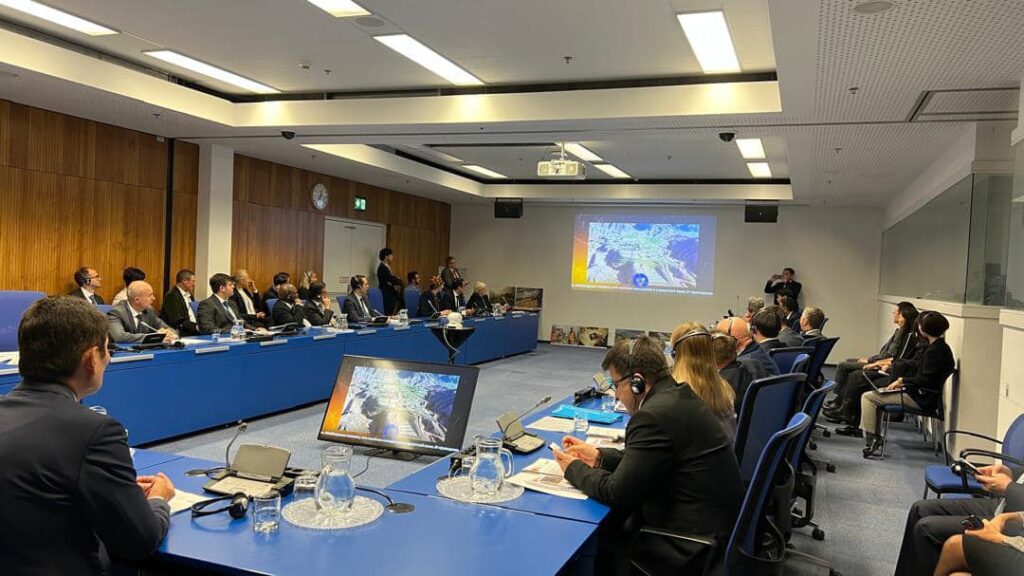
Kyrgyzstan's Deputy Minister of Emergency Situations, Azamat Mambetov, has asked for support from Central Asian countries at the International Atomic Energy Agency's General Session in Vienna, Austria. The 68th session of the IAEA General Conference is taking place from September 16 to 20, 2024. An official from the Kyrgyz Republic Ministry of Emergency Situations made a speech that called for attention to be paid to the importance of ensuring environmental safety in the region. “In his speech, Azamat Mambetov emphasized the importance of the problem of radiation safety in Central Asia and called for the intensification of international efforts to reclaim uranium tailings in the region,” the Ministry of Emergency Situations stated. The IAEA adopted a resolution on “The Role of the International Community in Preventing Radiation Threats in Central Asia.” A strategic master plan was developed to reclaim uranium sites in the region and create a special account for environmental remediation in Kyrgyzstan, Uzbekistan, and Tajikistan. The Deputy Minister of Emergency Situations of Kyrgyzstan informed IAEA members about the process of completing the reclamation of two nuclear waste sites in the country's south. This has allowed about 80,000 people in that area to live safely. The Kyrgyz Ministry of Emergency Situations stressed that it is grateful to all countries and international organizations that have made a significant contribution to the environmental rehabilitation of the tailing dumps left over from Soviet-era uranium mining in Central Asia. However, approximately another $45 million is needed to implement the Strategic Master Plan fully. According to the Kyrgyz Ministry of Emergency Situations, there are currently 92 toxic and radioactive waste dumps in the country. Of these, 23 tailings contain uranium elements, while the rest contain radioactive rock residues, heavy metals, and cyanide.

Why Does Energy-Rich Kazakhstan Want Tajikistan’s Uranium?

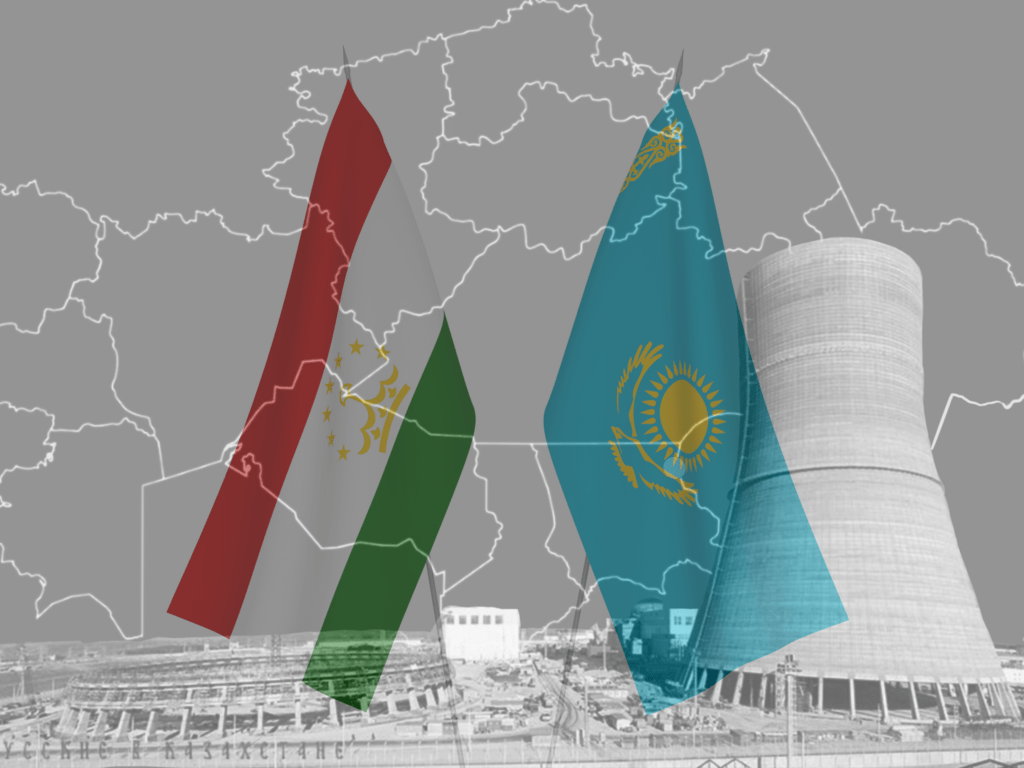
Despite having significant uranium resources, Tajikistan does not plan to build a nuclear plant anytime soon, if it all. Quite aware of that, Kazakhstan – Dushanbe’s ally in the Russian-dominated Collective Security Treaty Organization (CSTO) – is reportedly eyeing Tajikistan’s uranium. But why? "I would rather earn a profit from the resources of others than my own," John D. Rockefeller, a prominent industrialist, is often paraphrased as saying. Policymakers in Astana could soon begin implementing such a strategy in regard to uranium. Kazakhstan is the largest producer of natural uranium worldwide. In 2022, the energy-rich nation produced the largest share of uranium from mines (43% of world supply), followed by Canada (15%) and Namibia (11%) (ref). In spite of that, Astana could eventually start purchasing the radioactive element from Tajikistan. On August 22, following Kazakh President Kassym-Jomart Tokayev’s visit to Dushanbe, the Tajik Rare-Earth Metals Company, TajRedMet, and Kazakhstan’s national atomic company, Kazatomprom, signed a memorandum of understanding and cooperation in the extraction and processing of uranium and rare-earth metals. Signing such a protocol aligns with Astana’s ambitions to build a nuclear power plant in the country. In that context, Kazatomprom – the world's largest uranium producer – is likely seeking to play an active role in producing uranium fuel for the proposed nuclear plant. Given the global resurgence of nuclear energy and the ensuing “race for uranium,” Kazatomprom is keen to assess the current status of Tajikistan's uranium reserves, and, if feasible, expand its resource base. Uranium is considered one of the main natural resources of Tajikistan. It is believed that the first atomic bomb developed by the Soviet Union contained raw materials from Tajikistan. But after the collapse of the USSR, uranium mining was curtailed in the mountainous country. According to various estimates, 14% of the world's reserves of uranium are located on the territory of the landlocked country of around 10 million people. But compared to other nations, Tajikistan does not have significant uranium mining operations, meaning its uranium deposits remain underdeveloped. However, the fact that Russian companies are interested in exploration and mining of uranium in the Tajikistan suggests that Kazatomprom might have serious competition. It is entirely possible that other foreign corporations will also eventually join the “race for uranium” in Tajikistan. Meanwhile, Kazakhstan will almost certainly be inclined to consolidate its own uranium market. In terms of uranium production in the largest Central Asian state, the Russian State Nuclear Energy Corporation Rosatom is the leader due to its shares in five enterprises operating in Kazakhstan. Since Astana aims to develop closer ties with the West, it is no surprise that France is looking to strengthen its position in the energy-rich country, particularly in its nuclear and uranium sectors. Russia and China are unlikely to give up easily on their ambitions to preserve their influence in the Central Asian nation, however. In 2022, Kazakhstan exported around half of its uranium to China. From January to October 2023, Astana shipped uranium worth $922.7 million to the...

Kazakhstan and Tajikistan to Cooperate Over Rare-Earth Metals

Kazakhstan’s national atomic company, Kazatomprom, the world's largest producer of uranium, has announced a new strategic partnership with Tajikistan’s TajRedMet (Tajik Rare Metals) in the mining and processing of uranium and rare and rare-earth metals. According to the parties' agreement, the companies will collaborate in exploring, mining, and processing uranium and other rare and rare-earth metals, conducting research and development work, introducing innovative technologies, and training personnel. Meirzhan Yussupov, CEO of Kazatomprom, commented: “This step is of great importance for strengthening the partnership between our companies. Although it is too early to talk about specific results, we are focused on promising joint projects in the uranium industry and rare and rare-earth metals, which can significantly benefit Kazakhstan and Tajikistan.” As part of the agreement, TajRedMet representatives will soon visit Kazakhstan to inspect Kazatomprom's production facilities and assess the potential for further cooperation in more detail. According to an IAEA research paper, Tajikistan has significant mineral resources awaiting development, including rare metals, earth elements, and uranium. Several countries have expressed interest in the development of Tajikistan’s uranium resources. Russia was considering assisting Tajikistan in developing its uranium resources, as well as assisting in geological prospecting, with the aim of involvement in the subsequent extraction and possible processing of uranium. China’s Guangdong Corporation has also expressed an interest in participating in projects to develop Tajik uranium deposits. The Tajik government has also agreed to allow Indian companies to explore for uranium mineralization. In his address to parliament in December 2023, Tajik President Emomali Rahmon ordered the government to focus on mining lithium, tungsten, nickel, and antimony, and develop a program for processing these metals domestically into finished products.

Uranium Lawsuit Against Kyrgyz Government To Be Considered in Washington, D.C.

A case against the Kyrgyz authorities will be heard in Washington, D.C. in November 2024. At the end of 2022, International Mining Company Invest Inc. - which is headquartered in the U.S. - filed a lawsuit in international arbitration, accusing the Kyrgyz authorities of illegally expropriating investments. The company estimated its losses at $63 million. In 2009, International Mining Company Invest Inc. received the right to use subsoil for geological exploration. In 2013, the country's authorities issued a license to the foreign company to search for uranium and other metals at one more site. International Mining Company Invest Inc. carried out work in three regions of the republic; however, in 2019, a moratorium on exploration and development of uranium and thorium deposits was introduced. The company lost its license and initiated arbitration proceedings at the International Center for Settlement of Investment Disputes. Speaking at a press conference in Bishkek, Kyrgyz Justice Minister Ayaz Baetov said the case will be heard in international arbitration in Washington in November 2024. "The so-called uranium moratorium was the reason for this case's emergence. The case is now being considered. We have our arguments; they have theirs," the official stated. The previous authorities imposed a moratorium on the mining and exploration of uranium and thorium deposits; the new administration lifted the ban, but announced that Kyrgyz companies would develop the deposits.