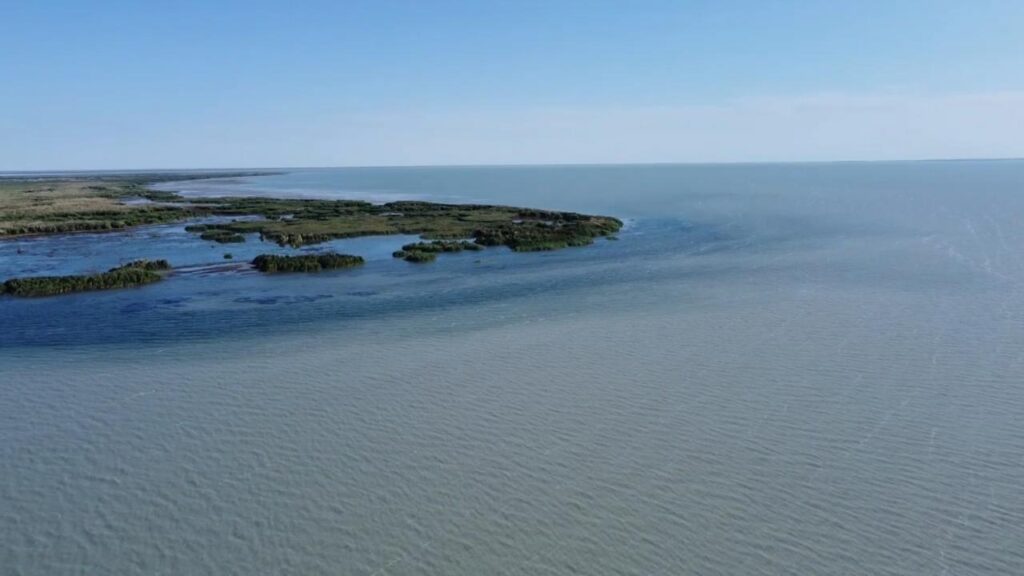
Kyrgyzstan Moves to Address Falling Water Levels in Lake Issyk-Kul
Kyrgyzstan is stepping up efforts to combat the declining water level of Lake Issyk-Kul, a critical ecological and economic resource, as the effects of climate change intensify. Deputy Prime Minister and Minister of Water Resources Bakyt Torobaev raised the issue at a government meeting this week, highlighting a combination of shrinking glaciers, reduced precipitation, and inefficient water use, particularly in agriculture, as key contributing factors. Lake Issyk-Kul, located in northeastern Kyrgyzstan, is the country’s largest lake and a vital component of the regional climate system. It also supports biodiversity and tourism. Torobaev warned that the continued decline in water levels could have far-reaching environmental, economic, and social consequences. Strategic Measures to Stabilize the Lake To address the crisis, Torobaev proposed a set of comprehensive interventions requiring cooperation between government agencies, scientists, local communities, and civil society. Key initiatives include: Modernizing irrigation systems and introducing water-saving technologies; Expanding green areas across the Issyk-Kul region; Enhancing research on glaciers and water resources; Developing long-term climate adaptation strategies. As previously reported by The Times of Central Asia, water diversion for agricultural irrigation, particularly outside the lake basin, was identified by experts at the 2024 National Water Forum as one of the primary threats to Issyk-Kul’s sustainability. Government Investment and Monitoring In response, the Kyrgyz government has pledged $392 million toward efforts to stabilize the lake’s water level. This includes $200 million dedicated to installing modern irrigation systems across 100,000 hectares of farmland. An additional investment will fund the deployment of 2,200 automated sensors to monitor water consumption in real time. Authorities expect these measures to return up to 200 million cubic meters of water to the lake, helping to mitigate the decline and protect Issyk-Kul's long-term ecological balance.