• KGS/USD = 0.01143 -0%
  • KZT/USD = 0.00193 -0%
  • TJS/USD = 0.10881 0%
  • UZS/USD = 0.00008 0%
  • TMT/USD = 0.28575 0%
  • KGS/USD = 0.01143 -0%
  • KZT/USD = 0.00193 -0%
  • TJS/USD = 0.10881 0%
  • UZS/USD = 0.00008 0%
  • TMT/USD = 0.28575 0%
  • KGS/USD = 0.01143 -0%
  • KZT/USD = 0.00193 -0%
  • TJS/USD = 0.10881 0%
  • UZS/USD = 0.00008 0%
  • TMT/USD = 0.28575 0%
  • KGS/USD = 0.01143 -0%
  • KZT/USD = 0.00193 -0%
  • TJS/USD = 0.10881 0%
  • UZS/USD = 0.00008 0%
  • TMT/USD = 0.28575 0%
  • KGS/USD = 0.01143 -0%
  • KZT/USD = 0.00193 -0%
  • TJS/USD = 0.10881 0%
  • UZS/USD = 0.00008 0%
  • TMT/USD = 0.28575 0%
  • KGS/USD = 0.01143 -0%
  • KZT/USD = 0.00193 -0%
  • TJS/USD = 0.10881 0%
  • UZS/USD = 0.00008 0%
  • TMT/USD = 0.28575 0%
  • KGS/USD = 0.01143 -0%
  • KZT/USD = 0.00193 -0%
  • TJS/USD = 0.10881 0%
  • UZS/USD = 0.00008 0%
  • TMT/USD = 0.28575 0%
  • KGS/USD = 0.01143 -0%
  • KZT/USD = 0.00193 -0%
  • TJS/USD = 0.10881 0%
  • UZS/USD = 0.00008 0%
  • TMT/USD = 0.28575 0%
20 December 2025

Viewing results 2305 - 2310 of 4268

EBRD Plans to Double Investments in Kazakhstan in 2024

Kazakhstan's Deputy Prime Minister, Nurlan Baibazarov, met with Hussein Ozkhan, the Acting Managing Director of the European Bank for Reconstruction and Development (EBRD) for Central Asia and Mongolia, it has been reported. The meeting discussed the status of current projects and EBRD's plans to finance new initiatives. Special attention was paid to attracting investments for Kazakhstan's sustainable socio-economic development. Ozkhan said the bank plans to double its investments in Kazakhstan's economy this year. In particular, the EBRD is developing a significant project with Kazakhstan's power grid management company, KEGOC, which aims to improve the reliability of electricity supply in the country’s western regions. The largest territorial project, the construction of new sewage treatment facilities in Aktobe, was signed earlier. Funds have also been allocated for constructing new production facilities for Araltuz JSC, a leading producer of table salt, and support for women's and youth entrepreneurship. In June 2024, ahead of schedule, the new passenger terminal of Almaty Airport opened, also financed by the EBRD. The bank also participated in the IPO of the national air carrier Air Astana. Baibazarov emphasized that Kazakhstan intends to expand cooperation with the EBRD at national and regional levels, supporting the bank's desire to invest in the private sector. "Our country is ready for mutually beneficial work with the EBRD to attract investment for the implementation of projects in energy, transport and logistics, the development of renewable energy and private business," the Deputy Prime Minister said. Since the beginning of cooperation with Kazakhstan, the EBRD has invested €10.2 billion in the country's economy through 324 projects. The bank's project portfolio in Kazakhstan currently includes 121 projects worth more than €2.9 billion.
UN: Central Asia’s Big Youth Population is Key to Progress

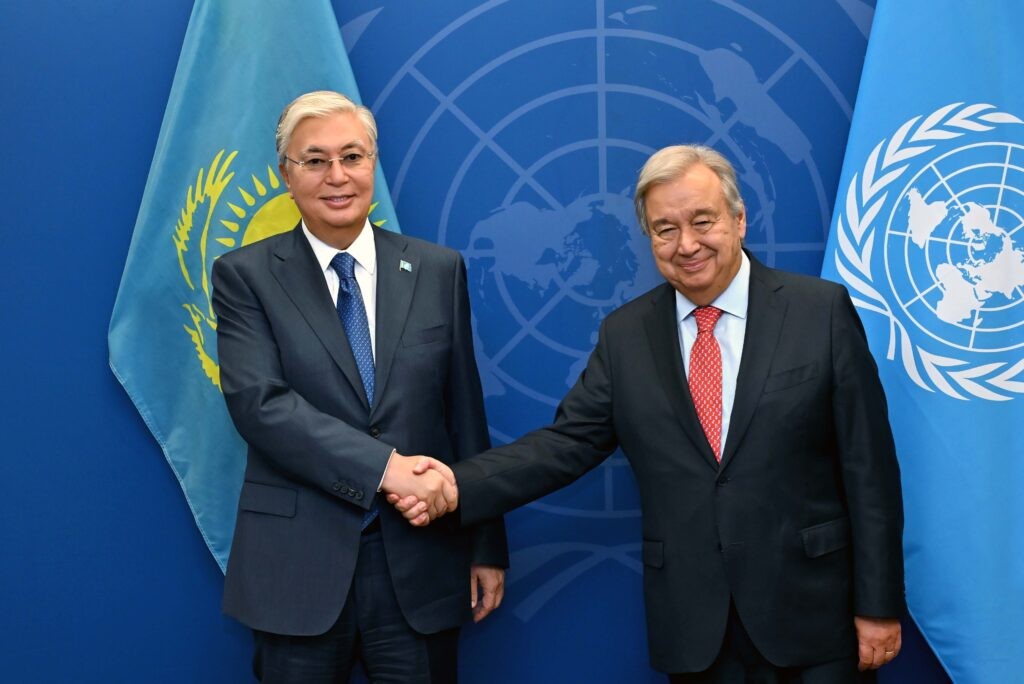
U.N. Secretary-General António Guterres shook hands with presidents and addressed dignitaries in ornate halls during a tour of Central Asia last week. But he also spent a lot of time with young people, saying “their potential is largely untapped” in a region where, by United Nations estimates, people under 30 years old make up more than 50% of the population. Guterres, a former prime minister of Portugal, met young climate activists in Kyrgyzstan and students in Turkmenistan. In Tajikistan, the U.N. chief said 70% of that country’s population is under 30 and told young people at a school there to hold elders to account on the pressing challenge of climate change. “You have the moral authority to talk to others - as those that suffered the impacts of climate change and are not contributing essentially to it,” Guterres said at a school established by UNICEF with funding from the European Union. “You are the victims of climate change. So, you have the right to tell the others, ‘Behave.´ Because they are not behaving.” Think globally, Guterres told the students. “It’s not Tajikistan or Uzbekistan,” he said. “No, it’s everything together.” The U.N.’s focus on young people having a say in Central Asia stems from a sense of possibility in what could shape up as an increasingly strong labor and leadership pool, as well as concern that young people with few prospects drift into unemployment and disenchantment, fueling social pressures and instability. The fertility rate in the wider region comprising Europe, North America and Central Asia has dropped in numerous countries in the last decade, while the “five Central Asian countries, Georgia, Israel and Monaco are the only countries in the region with a total fertility rate at or above replacement level,” the United Nations Economic Commission for Europe said in a report in October. At the same time, the report said, the Central Asian states are among the countries in the region that have “experienced negative net migration” since 2015, while countries receiving the largest numbers of migrants in that period were the United States, Russia, and Germany. The total population of the five Central Asian countries is about 76 million. Some of those countries, especially Tajikistan and Kyrgyzstan, rely heavily on remittances from nationals who struggle to find work at home and seek opportunities abroad, particularly in Russia. The alleged involvement of several Tajiks in a deadly terror attack in the Moscow area in March led to a backlash of harassment and intense scrutiny aimed at many Central Asian migrants in Russia. At a regional health forum in Kyrgyzstan last month, the Europe director of the World Health Organization, a U.N. agency, noted that Central Asia has a “significant young and educated population” at a time when European populations are aging. “This will – if the youth potential is maximized – give Central Asia an edge in the decades ahead,” the director, Dr. Hans Kluge, said.

Kazakh Government Is Trying (Again) To Introduce An Unpopular Betting Law

A newly resurrected Law on Gambling Business is set to come into force in Kazakhstan. The law will see the introduction of a new private betting regulator that will be granted extensive government powers, and pocket 1.5% of all betting transactions. Its return bodes yet another bout of strategic networks in the Kazakh government, where powerful lobbying forces from private companies are increasingly finding a presence in the corridors of power. The fast track of this new regulator is unusual. Despite protests from the betting industry, the bill passed the second reading. The regulator, formerly known as the Betting Accounting Centre (BAC) and now renamed the Unified Accounting System (UAS), passed the first reading in Parliament on June 3, and the second reading on June 5. Later on 28 June, the Senate approved the bill and it is now waiting to be signed into law. Several consequences could follow once this new regulator is enforced. They include the new body performing as a gambling referee, and therefore possessing privileges in terms of resource allocation, production, and sales. At the same time, the regulator will determine market competition and pocket 1.5% of all profits. With such sweeping powers, there is no mention as to how the regulator will be monitored and controlled to ensure it acts transparently. In January this year, the Kazakh parliament announced that it intended to reintroduce the new betting law in parliament, two years after a scandal involving a deputy minister accepting bribes from pro-regulator lobbyists forced the government to abandon its first attempt to pass the law. This year’s bill would be identical to the previous one, except for two changes: the term “Betting Account Centre” will be replaced by the more circumlocutious “Unified Accounting System”; and the regulator will perform the role of a fintech company controlling all financial transactions of the betting sector. The introduction of the bill just over two years ago shocked the Kazakh betting industry. The introduction of a third-party regulator with government powers that could control and determine market players and obtain 1.5% of profits drew immediate comparisons to old Kazakhstan, a troubled history which president Tokayev insists the country is moving away from. After speaking up against the regulator in 2019, particularly on its powers to obtain shady profits and capacity for abuse, the owners of independent bookmaking company Olimp were arrested by the government as members of ‘organised crime syndicates.’ The conventional wisdom was that the parliament had learned from the debacle and would now be pursuing more subtle means of silencing the opposition to this bill. So, besides the polishing up of the regulator label, what has changed? And why might the Kazakh parliament think things will turn out differently for them this year? For one, the Kazakh parliament has labelled this new law under the guise of a public health concern and to help the younger generation combat the rising problem of gambling addiction in Kazakhstan. This includes increasing the age of betting to 21 and...

Tokayev Calls For Expanded SCO to Play Greater Role on Global Stage

A meeting entitled “Strengthening Multilateral Dialogue – Striving for Sustainable Peace and Development” was held to conclude the Shanghai Cooperation Organization summit in Astana on July 4. The meeting was was held in the "SCO Plus" format. and was attended by the leaders of the SCO full member states who participated in the Summit earlier in the day, plus leaders of the organization's observer countries and dialogue partners. These included the UN Secretary-General António Guterres, presidents Recep Tayyip Erdoğan of Turkey and Ilham Aliyev of Azerbaijan, and the Emir of Qatar, Sheikh Tamim bin Hamad Al Thani. The SCO Plus session of the Summit took on greater importance this year, amid suggestions that the alliance is primed to expand next year. Countries interested in joining the SCO as full members include Turkey, Qatar and Egypt.  In his speech at the meeting, Kazakhstan's President Kassym-Jomart Tokayev emphasized the role that the SCO can play as a stabilizing force in the international arena. “Today the world is faced with serious challenges caused by unprecedented geopolitical contradictions and growing conflict potential,” said Tokayev. “The international security architecture is under threat, which could lead to dire consequences for all of humanity. In such a fateful period, we are entrusted with a huge responsibility for strengthening peace, stability, and security through collective efforts at the regional and global levels. The Shanghai Cooperation Organization, taking into account its authority, significant economic and human resources, is capable of developing effective solutions to achieve sustainable development goals and overcome modern challenges.”  Concerning the role of the United Nations, Tokayev said that its potential is far from being exhausted. “Our common task is to strengthen the role of the UN as the main international institution for ensuring global security, capable of effectively confronting the challenges of the 21st century. The voice of the SCO should and will sound louder in the international arena, promoting a consolidated position on various problems of our time,” he emphasized. In his own speech, Gutteres referred to the SCO as "a valuable partner of the United Nations". With reference to strengthening trade and economic ties, Tokayev said: “At the current stage, the economies of the SCO member countries are demonstrating high growth rates of 4% to 9%. The share of the SCO states in global GDP is 30% already. Today, the foreign trade of the SCO participating countries exceeds $8 trillion, which is equivalent to a quarter of all world trade.”  Tokayev emphasized the fact that economic growth in Asia is largely due to the SCO states. On behalf of Kazakhstan, he also welcomed China’s intention to expand access for SCO countries to its market, and increase trade turnover with the SCO member states to $3 trillion. “It is important for us to fully unleash the colossal economic potential of the SCO. The interaction of the SCO with such integration associations as the EAEU, BRICS and ASEAN opens up broad prospects. A powerful driver for sustainable growth in global trade is further strengthening of transport connectivity. More than...

Kyrgyzstan to Support Female Entrepreneurship

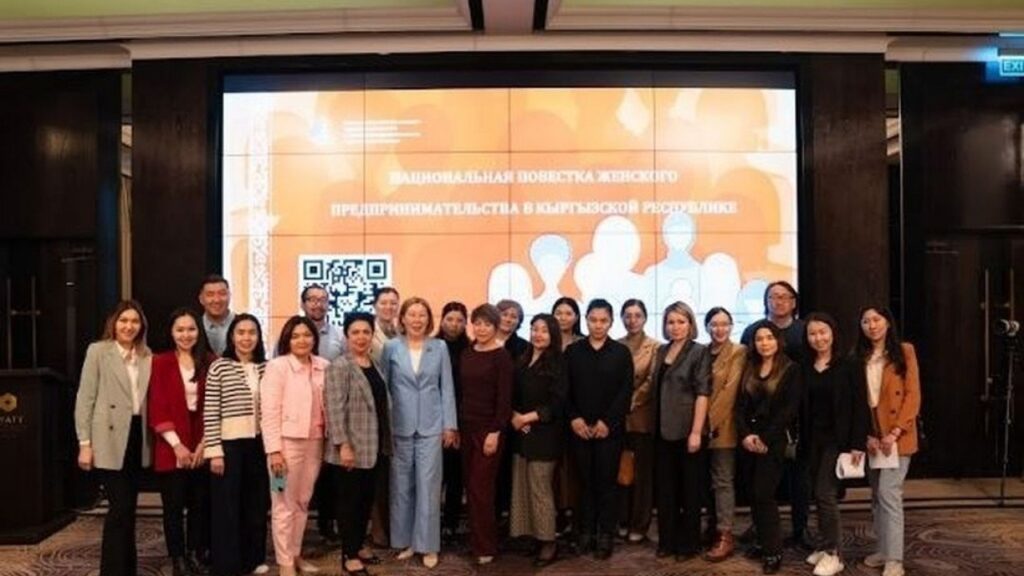
A group of Kyrgyz parliamentary deputies have initiated amendments to the draft law "On the Protection of Entrepreneurs' Rights," which will bow be supplemented with the words "women's entrepreneurship." The amendment states that women make up half of Kyrgyzstan's population, but their contribution to the economy is far less significant. Citing IMF data, the authors of the amendment stated that female entrepreneurship can contribute up to 27% to the republic's GDP. "As experience shows, the level of income from small businesses does not exceed the officially established subsistence minimum, which, unfortunately, does not leave additional funds available for further business development. The data also shows that women entrepreneurs who have better access to assets and can make independent decisions can help reduce poverty," the bill states. Representatives of the women's forum "Kurak," who contributed to drafting the amendments, proposed introducing the term "woman entrepreneur" into the law and defining this as a legal entity wherein a woman owns at least 51% of the shares. They believe this will enable women to receive preferential financing and access state support. "Women entrepreneurs often need more time to run a business. After all, they often raise children and run a household in parallel. It is also tough for a woman to get a loan from a bank because the collateral property belongs to men. Moral support from our patriarchal society and the state is also lacking," human rights activist Ainura Sarynbayeva told The Times of Central Asia. The legislative introduction of the word "woman" and "women's entrepreneurship" will help further develop women's businesses, believes Sarynbayeva, adding that commercial banks and international development institutions are already prepared to provide preferential lending. "Today, there are no countries in Central Asia where the concept of "women's entrepreneurship" is enshrined in the law. The draft law being promoted in Kyrgyzstan is largely similar to the Azerbaijani law. The authorities there support women businessmen at the state level," said Sarynbayeva. According to the latest census, Kyrgyzstan is home to 3.3 million women - half of the country's population. However, despite various training sessions and courses, only a small percentage of Kyrgyz women participate in economic activities. Human rights activists attribute this state of affairs to the haphazard nature of government support. The average Kyrgyz businesswoman is 40-50 years old, has a secondary education, is an individual entrepreneur or manages a small or medium-sized business, and has a family and children.

Mixed Results for Kazakhstan in Media Freedom Rankings

Analysts at Ranking.kz have provided an overview of press freedom in Kazakhstan and alleged violations against journalists. According to the International Foundation for the Protection of Freedom of Expression, Әdil sөz, there was a 20.1% decrease in incidents of violations against correspondents last year, with 434 incidents in 2023 and 141 from January to May this year. Additionally, reports of pre-trial claims or lawsuits against individual journalists or editorial offices declined by 5% in 2023. Despite this, seven court decisions led to various sentences for journalists at the end of 2023. The most common violation was obstruction of legitimate professional activities, with 51 cases, including six violent ones, primarily involving police and state employees. Threats to journalists and editorial offices were also significant, with 44 incidents reported. Nonviolent attempts to coerce journalists were noted to have decreased slightly. However, despite fewer reported violations, according to Reporters Without Borders, censorship issues have worsened. Kazakhstan's press freedom ranking fell from 134th to 142nd in 2024, with a score of 41.11 out of 100. In contrast, Kyrgyzstan ranks highest in Central Asia at 120th, while Turkmenistan remains one of the worst globally in 175th place.