• KGS/USD = 0.01144 0%
  • KZT/USD = 0.00212 0%
  • TJS/USD = 0.10456 0.19%
  • UZS/USD = 0.00008 0%
  • TMT/USD = 0.28490 0%
  • KGS/USD = 0.01144 0%
  • KZT/USD = 0.00212 0%
  • TJS/USD = 0.10456 0.19%
  • UZS/USD = 0.00008 0%
  • TMT/USD = 0.28490 0%
  • KGS/USD = 0.01144 0%
  • KZT/USD = 0.00212 0%
  • TJS/USD = 0.10456 0.19%
  • UZS/USD = 0.00008 0%
  • TMT/USD = 0.28490 0%
  • KGS/USD = 0.01144 0%
  • KZT/USD = 0.00212 0%
  • TJS/USD = 0.10456 0.19%
  • UZS/USD = 0.00008 0%
  • TMT/USD = 0.28490 0%
  • KGS/USD = 0.01144 0%
  • KZT/USD = 0.00212 0%
  • TJS/USD = 0.10456 0.19%
  • UZS/USD = 0.00008 0%
  • TMT/USD = 0.28490 0%
  • KGS/USD = 0.01144 0%
  • KZT/USD = 0.00212 0%
  • TJS/USD = 0.10456 0.19%
  • UZS/USD = 0.00008 0%
  • TMT/USD = 0.28490 0%
  • KGS/USD = 0.01144 0%
  • KZT/USD = 0.00212 0%
  • TJS/USD = 0.10456 0.19%
  • UZS/USD = 0.00008 0%
  • TMT/USD = 0.28490 0%
  • KGS/USD = 0.01144 0%
  • KZT/USD = 0.00212 0%
  • TJS/USD = 0.10456 0.19%
  • UZS/USD = 0.00008 0%
  • TMT/USD = 0.28490 0%

Viewing results 3247 - 3252 of 5581

Islamic State – Khorasan Province: An Element of Geopolitical Rivalry?

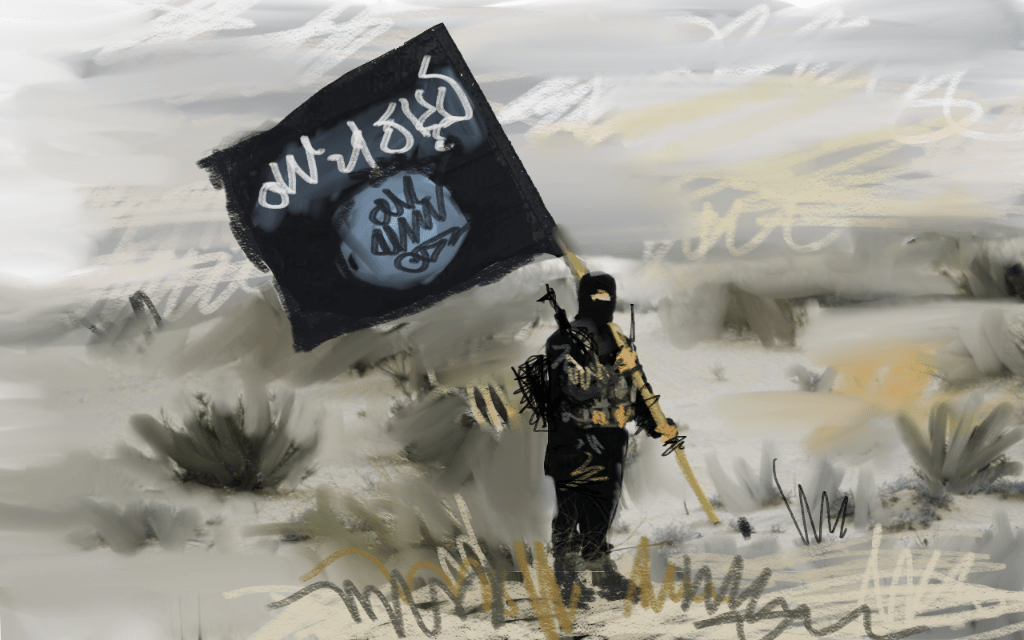
In the aftermath of the terrorist attack in Moscow, the media has once again been saturated with discussions about the terrorist group Islamic State – Khorasan Province (ISKP), also known as ISIS-Khorasan and “Wilayat Khorasan.” At this point, most of the coverage has focused on the Afghan wing of Islamic State, and not its other “wilayats,” such as on the Arabian Peninsula, “Wilayat Sinai” (Islamic State – Sinai Province) or “Wilayat Caucasus” (Islamic State – Caucasus Province). The international media covering the ISKP attack in Moscow, including journalists from Russia, widely speculated that the terrorist group is looking at Central Asia as its next base. Such media coverage included a variety of sentiments indicating that Central Asia should be worried. Reports have suggested that the alliance of Central Asian leaders with Moscow makes them look weak in the eyes of ISKP and that the terrorist threat emanating from Central Asia has become a point of weakness for the Putin regime. It has also been suggested that Islamic terrorism in Central Asia remains a real problem for the FSB, and even though the FSB has extensive experience in fighting extremists in the Caucasus, having committed enormous resources to the issue, Central Asia is a blind spot. Alarm bells sounded that regional jihadist groups have become more powerful. Thus, the terrorist attack in Moscow significantly increased media attention on ISKP in the context of Central Asia. Overall, the ISKP theme fits into existing narratives regarding threats to the southern border of the CIS. Sanaullah Ghafari, Emir of ISIS-K; image: rewardsforjustice.net   The more likely reality is that in Central Asia, ISKP has been more of a challenge to regional security than an existential threat. In recent years, the region has been broadly successful in dealing with threats from Afghanistan.   How real of a threat is the ISKP? A very narrow circle of experts can give a truly objective assessment of ISKP. Information about ISKP membership is contradictory and seemingly based on political considerations. As such, it is difficult to back these up with statistics. The number of fighters reported vary greatly from 2,000 to several tens of thousands. What remains indisputable are two facts: 1. Despite measures declared by the Taliban to eliminate the ISKP, terrorist acts by the group are still recorded throughout Afghanistan, and 2. The group lacks a serious infrastructure in Afghanistan. The activity of ISKP in Afghanistan consists of carrying out targeted, low-level terrorist acts, mainly against local Hazara Shiites. Based on the assessments of the UN Afghanistan monitoring team, the potential of ISKP success looks dubious. In its reports, UN experts point to a decrease in ISKP activity in Afghanistan. Recently, the UN has avoided estimating the size of the group, but previous estimates put it at 1,500-2,200 fighters. At the same time, according to a UN report in January, “ISKP adopted a more inclusive recruitment strategy, including by focusing on attracting disillusioned Taliban and foreign fighters.” Taliban officials, meanwhile, tend to play down the situation....
Uzbekistan Considers Hosting Relocated Ukrainian Enterprises

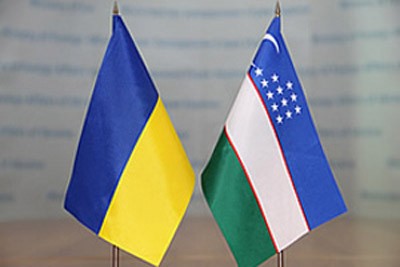
Representatives of Uzbek and Ukrainian businesses have discussed the relocation of certain Ukrainian production enterprises to Uzbekistan. The meeting was held in Kyiv as part of a business council established in 2021. Heads of state bodies and businessmen -- including the founder of the korzinka.uz supermarket chain and co-founder of Newmax Technologies, Zafar Hashimov -- participated in the meeting to offer their perspectives on Ukrainian-Uzbek economic ties. Since the beginning of Russia's attack on Ukraine in February 2022 the countries' bilateral trade turnover has significantly decreased -- in 2023 it amounted to $320 million, down from $747 million in 2021. One of the issues discussed was the customs value of textile products exported from Uzbekistan to Ukraine. An important aspect of the discussion were proposals to transfer to Uzbekistan some Ukrainian production enterprises affected by military actions -- as well as to expand cooperation in the creative economy. Several Ukrainian investment projects are already being implemented in Uzbekistan. The pharmaceutical company Yuria-Pharm acquired the Reka-Myod enterprise in 2023. Another pharmaceutical company, Lekhim, entered the Uzbek market in 2021 and built a large production complex that opened in 2023.

Uzbek Military Receives NATO Training

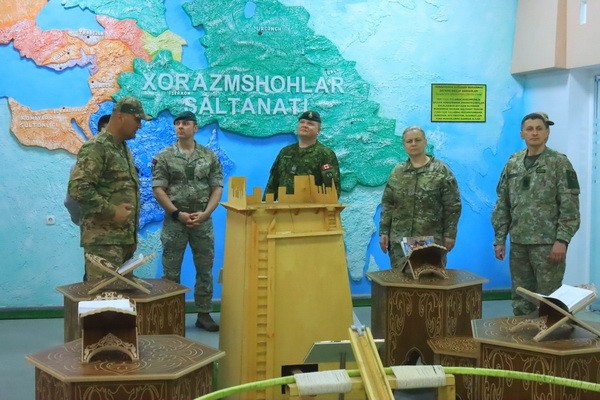
Young recruits from Uzbekistan's armed forces have been gaining new skills with military professionals from NATO. Senior staff from NATO recently visited Uzbekistan's military training center, affiliated to the country's Ministry of Defense. Uzbek cadets were given classes on a number of subjects, including on how non-commissioned officers are trained in NATO member states. Uzbekistan's army ranked 65th out of 145 countries in the most recent PowerIndex rating. The country's defense sector conducts international exercises on a regular basis; last October Uzbek servicemen won an army competition in South Korea, while this year the training range in the city of Termez will host joint exercises with the Indian military. Uzbekistan cooperates with NATO under the Partnership for Peace program.

Kazakhstan Seeks Investment from South Korea

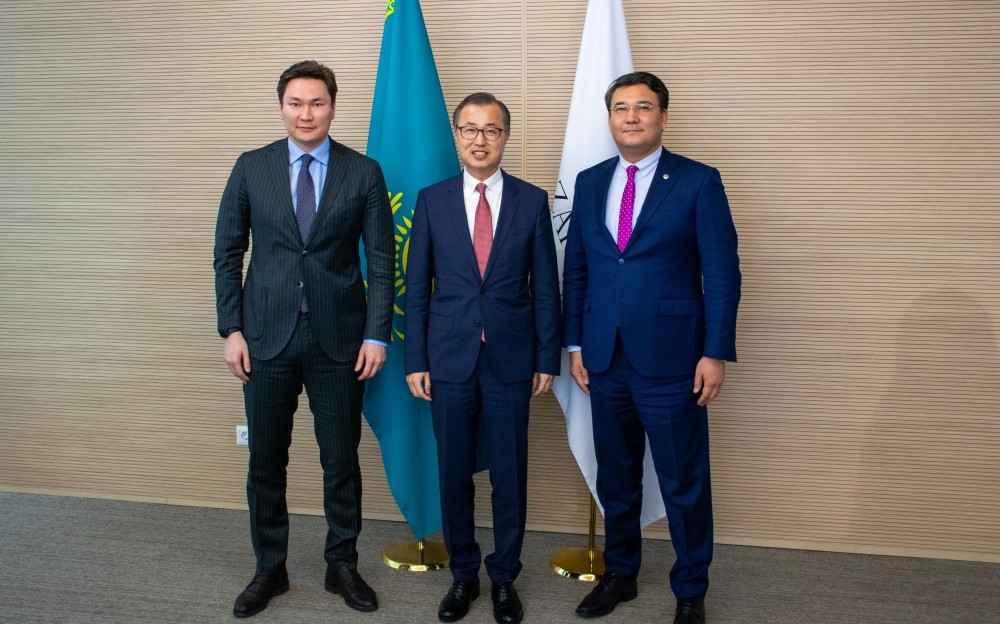
Over the past ten years, South Korea's investments in Kazakhstan's economy have exceeded $6.8 billion and several joint Kazakh-Korean projects with investments of about $1 billion are currently under implementation. The potential to increase and diversify bilateral trade and expand investment cooperation was the focus of a meeting on 16 April between Gabidulla Ospankulov, Chairman of the Investment Committee of the Ministry of Foreign Affairs of Kazakhstan, Yerzhan Yelekeyev, Chairman of the Management Board of National Company Kazakh Invest, and Joe Tae-Ik, Ambassador of the Republic of Korea to Kazakhstan. During the meeting, Ospankulov spoke of the large number of Korean companies working in Kazakhstan and emphasizing that developing economic and investment relations with South Korea is a priority, pledged comprehensive support to companies implementing projects in the country. Kazakh Invest’s Yelekeyev gave thanks to Korean car brands for their input into the Kazakhstan’s successful development of the domestic automotive industry and reported on the high potential for strengthening partnerships in tourism, energy, and petrochemistry. Looking ahead, he stated, “South Korean entrepreneurs work in an export-oriented economy and create competitive, innovative products. We want to adopt this expertise and technology in developing priority sectors in Kazakhstan. In this regard, we are ready to provide a full range of support services, including an existing package of preferences." In return, Ambassador Joe Tae-Ik confirmed his intention to assist in implementing new joint investment projects.

Challenges Facing Uzbekistan’s Textile Industry

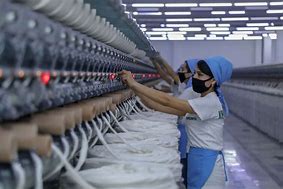
On April 16, President Shavkat Mirziyoyev chaired a government meeting on increasing exports and investments in Uzbekistan’s textile industry which currently comprises over 6,000 enterprises and has a workforce of 570,000. Due to investments and new technologies, productivity has increased 4.2-fold over the past seven years. Last year, the manufacture of textiles, clothing and knitwear was valued at $8.2 billion and exports amounted to $3.1 billion. However, the share of products with high added value in the export of finished goods remains low. Almost 80% of all exports are destined for traditional markets, while exports to Europe fall below expectations. This is largely because only 175 Uzbek enterprises are equipped with international certifications required for export to developed countries. According to an analysis by the Boston Consulting Group of Uzbekistan’s raw materials, the country has the potential to provide products worth at least $15 billion and create 500,000 new jobs. The cost of one kilogram of yarn is 28% cheaper than the world average giving Uzbekistan a major competitive advantage but access to raw materials remains a key challenge faced by domestic textile enterprises. Whilst the country has the capacity to process 1.3 million tons of cotton fibre, it currently produces about 1 million tons due to the high costs of cultivation. Reflecting on the situation, President Mirziyoyev emphasized the pressing need for Uzbekistan’s textile industry to engage in the complete processing of existing raw materials to create high added value and redress the balance by switching from exporting to traditional cheap markets to more lucrative alternatives. In addition to increasing the number of international export certificates to producers, the meeting highlighted the importance of extensive advertising campaigns in European countries and forging new partnerships with international textile and garment brands.

IMF Forecasts 2.3% Growth in Turkmenistan’s Economy

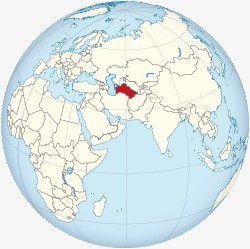
In her report on the International Monetary Fund (IMF) mission to Turkmenistan, from 27 March – 9 April, Ms. Anna Bordon announced that Turkmenistan’s economy is set to expand by around at 2.3% in the coming year. According to the IMF mission’s assessment of the economic outlook and risks of Turkmenistan’s macroeconomic and financial developments, the country’s economic activity moderated in 2023 and inflation is on the rise. IMF staff estimate that post-pandemic growth surged to 5.3% in 2022 before falling to 2% in early 2023 as world commodity prices subsided, monetary policy tightened, and pressures on exchange rates abated. A temporary situation, inflation began to pick up later in 2023 and is projected to gradually rise to 8% mainly due to the country’s policy to increase public sector wages and pensions by 10% per year. “To improve spending efficiency, Turkmenistan should enhance its targeting of social spending, move toward public wage increases based on performance, and enhance public investment management,” said Ms Borden. The IMF estimates that growth of hydrocarbon production will stabilize at around 2%. In contrast, non-hydrocarbon growth is expected to remain subdued, given the challenging geopolitical and business environment, investment inefficiencies, the significant overvaluation of real exchange rates, and burdensome standards imposed by international regulations. The end of mission statement concluded: “The authorities are adequately focused on economic diversification. A more market-based economic diversification strategy would be preferable. Sustained macroeconomic stability is a pre-requisite for diversification, which importantly requires adjusting the exchange rate and eliminating exchange restrictions.” It was also recommended that Turkmenistan “gradually phase out administrative controls and reduce the footprint of the state in the economy”.