• KGS/USD = 0.01144 0%
  • KZT/USD = 0.00201 0%
  • TJS/USD = 0.10486 0.48%
  • UZS/USD = 0.00008 0%
  • TMT/USD = 0.28571 0%
  • KGS/USD = 0.01144 0%
  • KZT/USD = 0.00201 0%
  • TJS/USD = 0.10486 0.48%
  • UZS/USD = 0.00008 0%
  • TMT/USD = 0.28571 0%
  • KGS/USD = 0.01144 0%
  • KZT/USD = 0.00201 0%
  • TJS/USD = 0.10486 0.48%
  • UZS/USD = 0.00008 0%
  • TMT/USD = 0.28571 0%
  • KGS/USD = 0.01144 0%
  • KZT/USD = 0.00201 0%
  • TJS/USD = 0.10486 0.48%
  • UZS/USD = 0.00008 0%
  • TMT/USD = 0.28571 0%
  • KGS/USD = 0.01144 0%
  • KZT/USD = 0.00201 0%
  • TJS/USD = 0.10486 0.48%
  • UZS/USD = 0.00008 0%
  • TMT/USD = 0.28571 0%
  • KGS/USD = 0.01144 0%
  • KZT/USD = 0.00201 0%
  • TJS/USD = 0.10486 0.48%
  • UZS/USD = 0.00008 0%
  • TMT/USD = 0.28571 0%
  • KGS/USD = 0.01144 0%
  • KZT/USD = 0.00201 0%
  • TJS/USD = 0.10486 0.48%
  • UZS/USD = 0.00008 0%
  • TMT/USD = 0.28571 0%
  • KGS/USD = 0.01144 0%
  • KZT/USD = 0.00201 0%
  • TJS/USD = 0.10486 0.48%
  • UZS/USD = 0.00008 0%
  • TMT/USD = 0.28571 0%

Viewing results 3475 - 3480 of 5270

Kazakhstan Seeks to Increase Oil Transit Through Azerbaijan

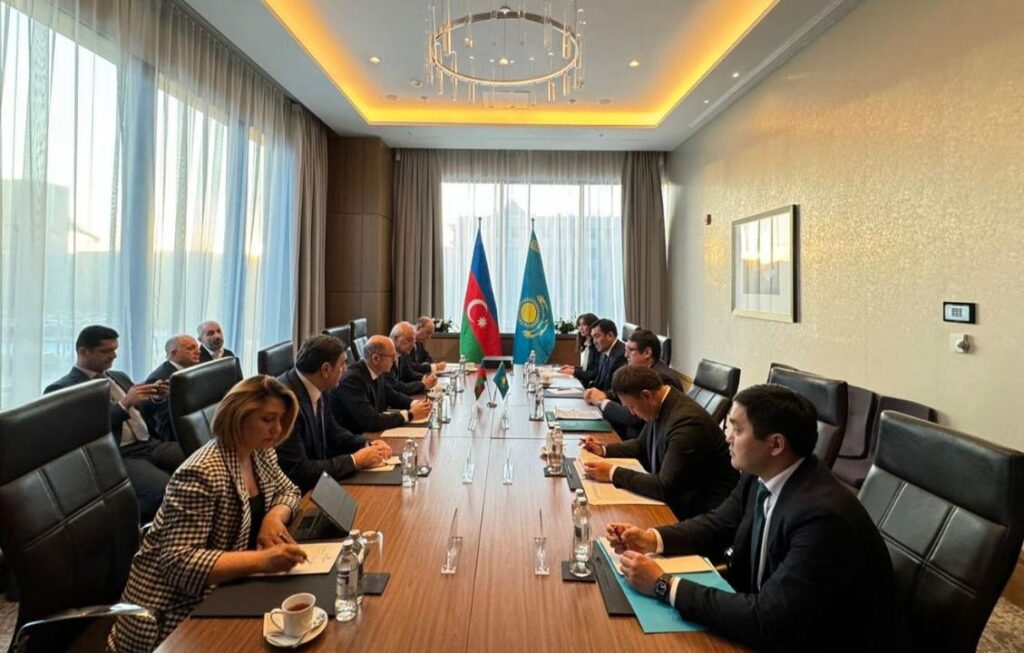
With the production of crude oil set to rise in Kazakhstan, the country plans to increase shipments across the Caspian Sea and through Azerbaijan. On March 6th, Kazakhstan’s Minister of Energy Almasadam Satkaliev met his Azerbaijan counterpart, Parviz Shahbazov, to discuss cooperation between their countries regarding the transit of Kazakh oil and the implementation of large-scale renewable energy projects. Back in 2022, Kazakhstan’s President Kassym-Jomart Tokayev ordered an increase in the volume of oil transported across the Caspian Sea. In response, Kazakhstan’s national oil and gas company KazMunayGas and the state oil company of Azerbaijan, SOCAR, entered into an agreement to transport up to 1.5 million tons of oil per year from Kazakhstan’s Aktau port through the Baku-Tbilisi-Ceyhan oil pipeline. In 2023 Kazakhstan’s shipment of crude oil from the Caspian port of Aktau grew to almost 1.4 million tons and this year, is expected to rise to 1.5 million tons. Major expansion projects are currently underway at Kazakhstan’s Tengiz, Karachaganak, and Kashagan oil fields to increase the future output of crude oil. Today, most of the country’s oil is exported via the pipeline managed by the Caspian Pipeline Consortium (CPC) which runs to the Russian Black Sea port of Novorossiysk. The throughput capacity of the Kazakh section of the Caspian Pipeline Consortium (CPC) pipeline has increased from 54 million to 72.5 million tons per year. The Kazakh and Azeri energy ministers also discussed a forthcoming project to connect the Caucasus region and Central Asia’s energy systems through the installation of a deep-sea cable in the Caspian Sea.
Chinese Company to Establish a Bank in Kyrgyzstan

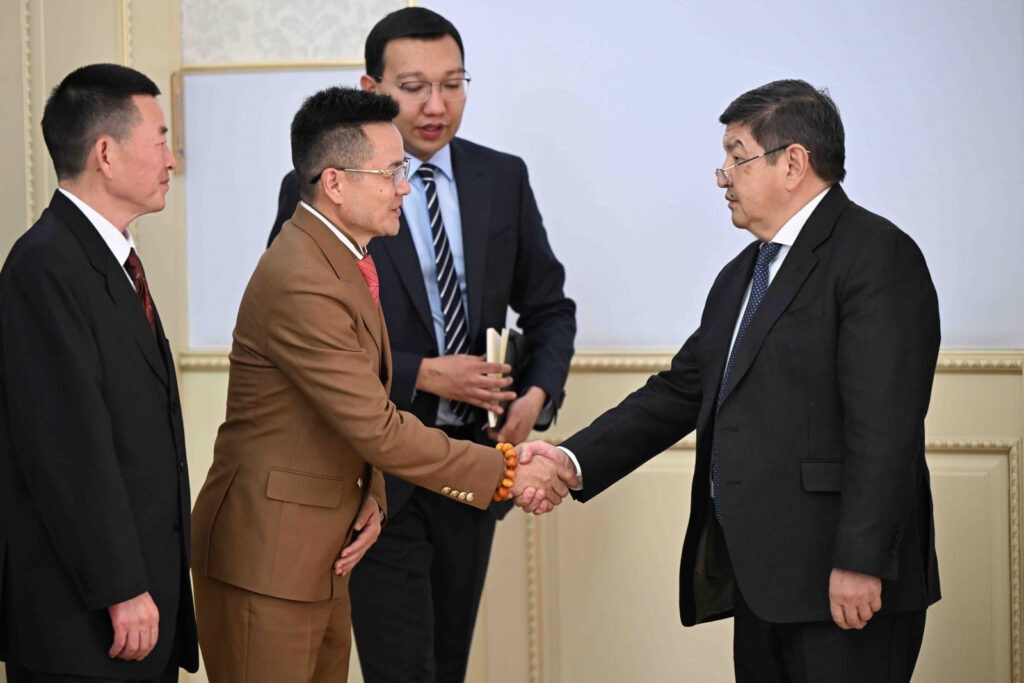
On March 6th, the Chairman of the Cabinet of Ministers of the Kyrgyz Republic, Akylbek Japarov and leadership of the Chinese company Sichuan Hongxinde Equity Investment Fund Management Co. Ltd, met in Bishkek to discuss the establishment of the Post Bank in Kyrgyzstan. In August 2023, a Memorandum of Cooperation was signed by the open joint-stock company Kyrgyz Pochtasy (Kyrgyz Post) and the Chinese company, followed in January 2024 by both parties signing a framework agreement on the joint investment project. The opening of the Post Bank will allow for the modernization of facilities owned by Kyrgyz Pochtasy in tandem with the construction of new facilities. The project includes the introduction of automated and digitalized processing for businesses as well as the creation of socially-oriented multifunctional service centers for both the public and entrepreneurs.

USAID Launches New Project to Support Businesses in Uzbekistan

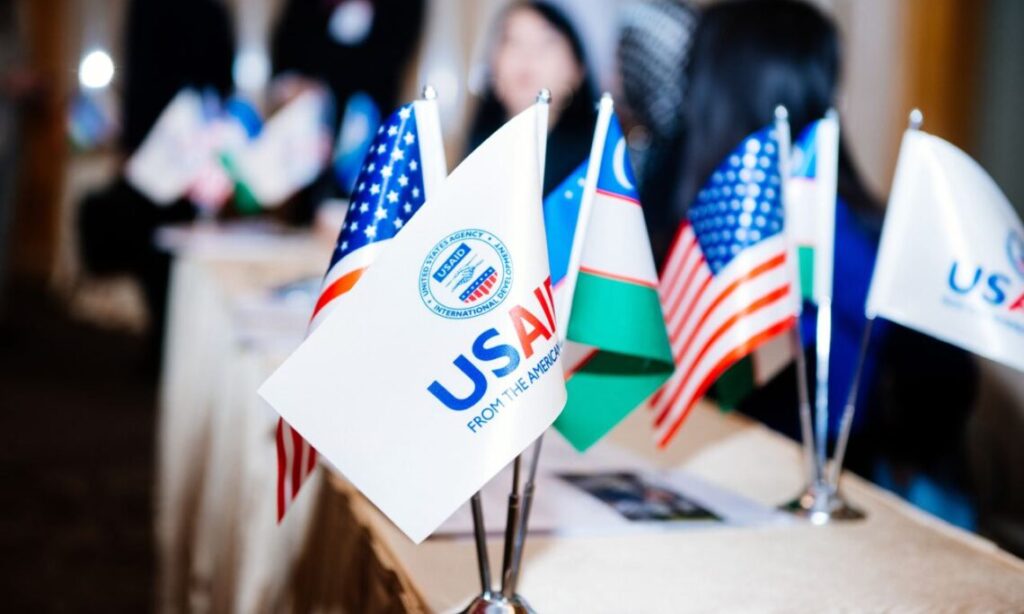
The U.S. Agency for International Development (USAID) has announced an investment of $17.7 million in a five-year Business Support Project in Uzbekistan. The project aims to enhance competitiveness in small and medium enterprises across four key sectors: information and communications technology (ICT), tourism, textiles, and the green economy. Created in partnership with the government of Uzbekistan and the private sector, the project’s two primary goals are to break down barriers affecting growth and increase investment in the private sector. By focusing on these objectives, the project seeks to create a more enabling environment for business expansion and innovation, thereby contributing to the overall economic prosperity of Uzbekistan. Speaking at the launch on March 5th, USAID Mission Director to Uzbekistan David Hoffman declared, “Today, we embark on a transformative journey with the Business Support Project. This initiative represents a pivotal moment in our shared pursuit of a prosperous, inclusive, and sustainable future for Uzbekistan. By addressing critical barriers to growth and leveraging the dynamism of the private sector, we aim to unlock new opportunities for businesses, especially those led by women and youth. Our collective efforts through our Business Support Project will pave the way for a more resilient and competitive economy, benefiting not just Uzbekistan but the entire region.”

Great Women in the History of Turkmenistan

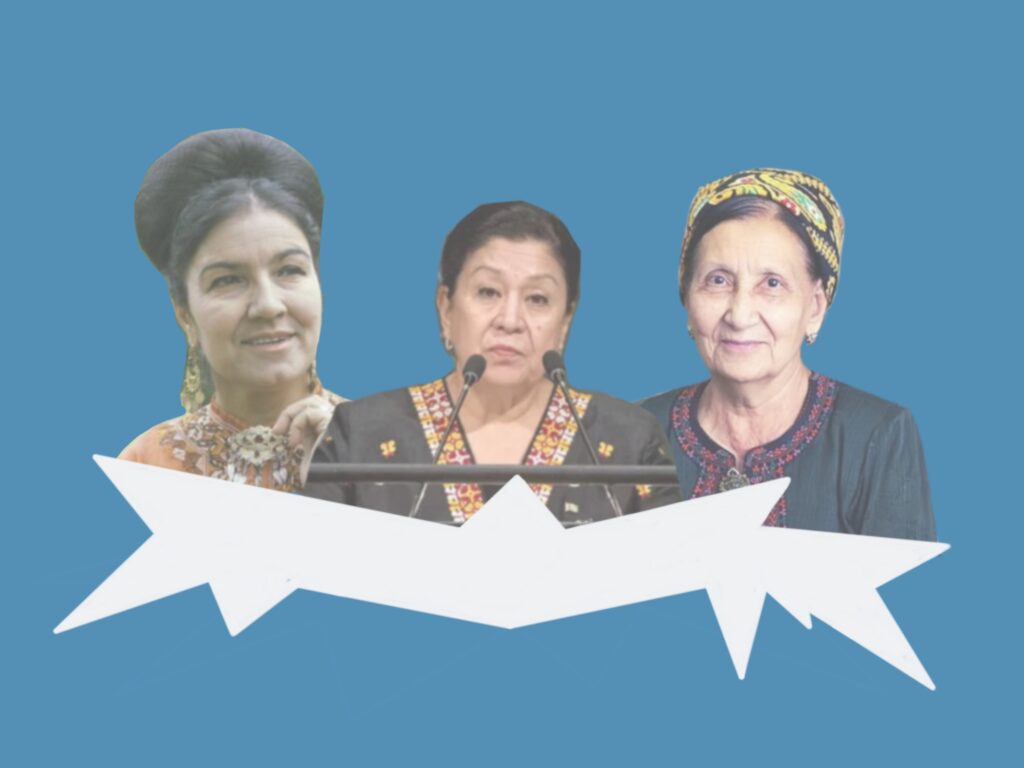
On the occasion of International Women’s Day, we remember outstanding Turkmen women, each of whom has left an indelible mark on the history of the country.   Sabira Atayeva Photo: kino-teatr.ru A famous theater and film actress, Sabira Atayeva devoted over 55 years of her life to her performances. Born in Ashgabat in 1917, Atayeva grew up in an orphanage, but was selected for her talent by a special commission to study in Moscow at VGITIS. During her career, Atayeva played a huge number of roles, not only in Turkmenistan, but also in films made by studios in Kazakhstan, Uzbekistan, Tajikistan, and Ukraine. Named as both a laureate of the State Prize named after Magtymguly and a People's Artist of the USSR, she is fondly remembered for her parts in the films, “Daughter-in-Law” (1972), “The Kugitang Tragedy” (1978), and the famed historical epic set in the time of Genghis Khan, “The Fall of Otrar” (1991).   Maya (Mamajan) Kuliyeva Photo: famousfix.com Raised in an orphanage from the age of eight, Kuliyeva attended the Turkmenistan branch of the Moscow Conservatory before joining the Turkmen Theater of Opera and Ballet. A lyric soprano, she became the first to perform roles from Western operas on stage in Turkmenistan. Her repertoire included roles in The Tsar's Bride by Nikolai Rimsky-Korsakov, Faust by Charles Gounod, and Madama Butterfly by Giacomo Puccini. Beyond the stage, she also appeared in several films. Kuliyeva received a host of awards throughout her career, including the titles of Honored Artist of the Turkmen SSR, People's Artist of the Turkmen SSR, People's Artist of the USSR, and Hero of Turkmenistan. Additionally, she served as a deputy of the Supreme Council of the Turkmen SSR during its second and fourth sessions. A Communist Party organizer during the Soviet-era, she continued to receive recognition after the dissolution of the USSR. In 2010, it was reported that she still had final say over all operas performed in Turkmenistan. Kuliyeva passed away in 2018, shortly before her 98th birthday, but her legacy lives on. In 2019, the Turkmen National Conservatory was renamed in her honor and the Museum of Maya Kuliyeva opened, and in 2020 a concert was staged in Ashgabat to commemorate the centenary of her birth.   Aksoltan Atayeva Photo: UNICEF.org A diplomat and politician, Aksoltan Atayeva has been the Permanent Representative of Turkmenistan to the United Nations since February 23rd 1995, making her the most senior Permanent Representative from any nation currently serving. A graduate of Medical Sciences, Atayeva has held numerous other posts, including Minister of Public Health, Minister of Social Security, President of the Trade Unions of Turkmenistan, and has been a member of the People's Council since 1993. Atayeva is currently the Ambassador of Turkmenistan to Cuba, Brazil, and Venezuela. In 2019, she was named a Hero of Turkmenistan.   Maya-Gozel Aimedova Photo: famousfix.com Maya-Gozel Aimedova is a celebrated actor who first graced the screen in "Incident in Dash-Kala" (1961). In this film, she portrayed a teacher battling against...

Great Women in the History of Tajikistan

On the occasion of the day of solidarity of women in the struggle for rights and emancipation, we remember outstanding Tajik women, each of whom has left her own unique mark on the history of the nation.   Malika Sabirova Photo: halva.tj A Soviet-era ballerina, Malika Sabirova left her indelible mark on the history of the arts as the prima ballerina of the Aini Tajik Academic Opera and Ballet Theater. Her exceptional talent was acknowledged on the world stage after she won a gold medal in the first International Ballet Competition in Moscow in 1969, which led to her being awarded the title of People's Artist of the USSR. Sabirova not only performed her roles magnificently on stage, but also became a driving force in the development of Tajik ballet. A pupil of the outstanding Galina Ulanova, she inscribed her name in the list of outstanding Soviet ballerinas as the “princess of Tajik ballet,” working tirelessly from the age of ten until her untimely demise just shy of her fortieth birthday.   Zebiniso Rustamova Photo: asiaplustj.info Representing the Soviet Union, Zebiniso Rustamova won the world and team championship in archery in 1975, setting a new record. She was also an integral part of the team that won the world championship in 1985 and 1987, and European team championship in 1976, 1984 and 1986. In 1976, Rustamova won the bronze medal at the Montreal Olympics. A legendary athlete in her homeland, from 1992-2000 she served as the President of the Tajikistan Olympic Committee.   Malika Kalandarova Still from the film "Bride and Groom" Known for her extraordinary talent in the art of folk dance, Malika Kalandarova made a significant impact with her unique blend of grace and strength earning her an international reputation. An Honored People's Artist of the USSR and the Tajik SSR, Kalandarova's performances were characterized by her striking plasticity, with her career also involving her work as a stage director and a tutor. In 1993, she emigrated to the U.S., opening the Malika International Dance School. In 2020, she was commemorated with a stamp by the Post of Tajikistan, underscoring her cultural significance.   Sarajan Yusupova Photo: Creative Commons Sarajan Yusupova was a Soviet geochemist, Honored Worker of Science and Technology of Tajikistan, an academician at the Academy of Sciences of the Tajik SSR, and a Doctor of Geological and Mineralogical Sciences. The first woman academician in geochemistry in the history of Tajikistan, with her research on the celestine deposits from which radioactive strontium is extracted, she earned global recognition in the scientific community. Yusupova also served as a deputy of the Supreme Soviet of the Tajik SSR in two convocations.   Sofia Hakimova Photo: asiaplustj.info An eminent medical scientist, Sofia Hakimova carved her place in history by becoming the first Tajik woman to attain a Doctorate of Medical Sciences at the age of just 33. Her illustrious career saw her become a member of the Academy of Medical Sciences and earn the title of Honored Scientist of...

Global Environment Facility to Aid Ecosystem Restoration in Central Asian Countries

The Global Environment Facility (GEF) Trust Fund will provide almost $5.4m to Tajikistan, Turkmenistan and Uzbekistan to support their efforts to strengthen integrated water resources management in the Amu Darya, Zarafshan and Panj river basins. This funding is part of the Central Asia Water-Land Linkages (CAWLN) program, implemented by the United Nations (UN) Food and Agriculture Organization (FAO) and supported by the GEF Trust Fund. Under this initiative, GEF will provide financing for projects totaling over $26m across Central Asia. The project will run until August 2025. The financing will be used to restore 5,350 hectares of land and ecosystems, and also to introduce improved cultivation practices on 1.3 million hectares of land. It also aims to reduce greenhouse gas emissions by over 11 million tons, and improve co-management of shared ecosystems. The program is projected to improve the lives of 487,000 people. Central Asia's complex river systems are the main sources of water for the region's 60 million people, agriculture, and energy production. They also support diverse ecosystems and livelihoods in these countries. However, unsustainable water use and soil degradation have led to water scarcity and upset the ecological balance of the region. The program aimed at addressing these negative impacts consists of seven projects, including individual projects in Kazakhstan, Kyrgyzstan, Turkmenistan and Uzbekistan. They aim to improve agriculture and natural resource management by addressing issues such as tree felling, land degradation and loss of biodiversity. In addition, there is a regional project to coordinate efforts and share knowledge across basins. Although there is no separate program for Tajikistan, the country will be involved in projects on ecosystem restoration and sustainable agriculture. The Central Asia Water and Land Resources Complex Program, recently approved by the GEF council and overseen by FAO, will provide $26m (with co-financing from the World Bank of $335.5m) to restore the ecosystems of the Amu Darya and Syr Darya river basins. It will also aim to improve water security, resilience and livelihoods of rural communities in Kazakhstan, Kyrgyzstan, Tajikistan, Turkmenistan and Uzbekistan. Since 1994 Uzbekistan has participated in the implementation of more than 50 GEF projects at the national, regional and international level.