• KGS/USD = 0.01143 0%
  • KZT/USD = 0.00205 0%
  • TJS/USD = 0.10433 0.1%
  • UZS/USD = 0.00008 0%
  • TMT/USD = 0.28577 0%
  • KGS/USD = 0.01143 0%
  • KZT/USD = 0.00205 0%
  • TJS/USD = 0.10433 0.1%
  • UZS/USD = 0.00008 0%
  • TMT/USD = 0.28577 0%
  • KGS/USD = 0.01143 0%
  • KZT/USD = 0.00205 0%
  • TJS/USD = 0.10433 0.1%
  • UZS/USD = 0.00008 0%
  • TMT/USD = 0.28577 0%
  • KGS/USD = 0.01143 0%
  • KZT/USD = 0.00205 0%
  • TJS/USD = 0.10433 0.1%
  • UZS/USD = 0.00008 0%
  • TMT/USD = 0.28577 0%
  • KGS/USD = 0.01143 0%
  • KZT/USD = 0.00205 0%
  • TJS/USD = 0.10433 0.1%
  • UZS/USD = 0.00008 0%
  • TMT/USD = 0.28577 0%
  • KGS/USD = 0.01143 0%
  • KZT/USD = 0.00205 0%
  • TJS/USD = 0.10433 0.1%
  • UZS/USD = 0.00008 0%
  • TMT/USD = 0.28577 0%
  • KGS/USD = 0.01143 0%
  • KZT/USD = 0.00205 0%
  • TJS/USD = 0.10433 0.1%
  • UZS/USD = 0.00008 0%
  • TMT/USD = 0.28577 0%
  • KGS/USD = 0.01143 0%
  • KZT/USD = 0.00205 0%
  • TJS/USD = 0.10433 0.1%
  • UZS/USD = 0.00008 0%
  • TMT/USD = 0.28577 0%

Viewing results 3481 - 3486 of 5350

Expansion of Transport Connections between Kazakhstan and Uzbekistan

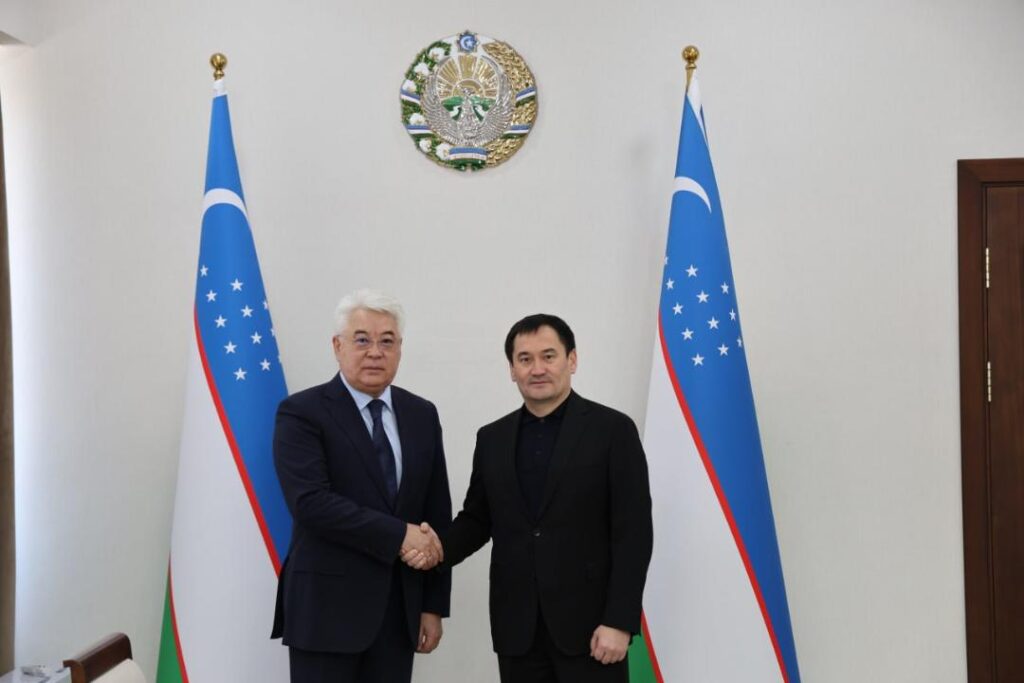
On March 8th, the Ambassador of Kazakhstan to Uzbekistan Beibut Atamkulov and the Minister of Transport of Uzbekistan Ilhom Makhkamov met in Tashkent to discuss the expansion of transit, transport and logistics links between Kazakhstan and Uzbekistan. The implementation of a collaborative project to improve the road and rail infrastructure between the two countries is essential for the realization of a plan to increase bilateral trade to $10 billion per annum. Kazakh-Uzbek rail and road freight is growing. In 2023, the volume of rail freight alone, between Kazakhstan and Uzbekistan, increased by 17.2% to 31.4 million tons, compared to 26.8 million tons in 2022. The resumption of air services between the Kazakh cities of Almaty and Aktobe and Uzbekistan’s Nukus, as well as new connections between the countries’ tourist centres including Turkestan-Samarkand, Turkestan-Bukhara, and Turkestan-Urgench, was also discussed. The current number of weekly flights between cities in Kazakhstan and Uzbekistan is 25; between Astana and Tashkent, 8, and between Almaty and Tashkent, 17.

New Bonded Zone to Boost Kyrgyz Exports to China

The Ministry of Digital Development of the Kyrgyz Republic has announced the opening of a new bonded zone to boost the development of e-commerce and exportation of Kyrgyz goods to the Chinese market. The zone covers an area of 7,500 square meters on the Kyrgyzstan border between Kyrgyz Pochtasy (Kyrgyz Post) OJSC, Naryn’s free economic zone (FEZ), and Kashgar FEZ in China’s western Xinjiang Uygur Autonomous Region. The opening of the new national pavilion ‘Made in Kyrgyzstan,’ a facility where Kyrgyz products are exhibited, stored, sold, and shipped both in e-commerce and offline modes, was attended by Akylbek Japarov, Chairman of the Cabinet of Ministers of Kyrgyzstan, on a visit to the zone early in March. The project provides 48 and 72-hour direct warehouse-to-warehouse services for cross-border trading logistics between China and Kyrgyzstan.

World Bank Group Landmark Visit to Central Asia

The World Bank Group Board of Executive Directors has concluded a landmark visit to Kazakhstan, Kyrgyzstan, and Tajikistan. The Board reported that it had welcomed the opportunity to observe first-hand, Central Asian developments in tackling climate change within the prism of the water-energy nexus, the private sector’s growing address of green issues, and gender equality. Ten executive directors met with high-ranking officials and local stakeholders to discuss ongoing and future support provided by the International Development Association (IDA) to Kyrgyzstan and Tajikistan, and in Kazakhstan, focused on the World Bank Central Asia regional program. In Kyrgyzstan, the delegation attended a meeting with President Sadyr Japarov, Akylbek Japarov the Cabinet of Ministers chairman, and other officials. Visits were made to World Bank-funded project sites for water and sanitation, education, and disaster risk management, as well as a MIGA-guaranteed smart farm of hydroponic greenhouses and IFC agri-food processing projects. In addition to discussions with Tajikistan’s president Emomali Rahmon and his cabinet, the delegation toured the Rogun hydropower plant site and World Bank-financed projects on early childhood development and the improvement of health services. A meeting also took place with IFC investment beneficiaries in Dushanbe. The visit to Kazakhstan, included a World Bank-financed oncology centre, and a tour of the Almaty Airport, an IFC project site. The World Bank Group's key objectives in Central Asia are fostering robust recovery from recent crises, enhancing climate resilience, creating jobs, and protecting the countries’ most vulnerable populations. Dominique Favre, the World Bank’s Executive Director for Switzerland, who also represents the constituencies of Azerbaijan, Kazakhstan, the Kyrgyz Republic, Poland, Serbia, Tajikistan, Turkmenistan, and Uzbekistan, praised the regions’ progress and reiterated the company's commitment to helping Central Asian countries tackle ongoing challenges, particularly concerning water, energy, and agriculture.

Central Asian Energy Trading May Soon Include Iran

According to the Iran.ru news agency, Iranian Minister of Energy Ali-Akbar Mehrabian has said that his country is open to trading electricity with Turkmenistan, Tajikistan and Uzbekistan. Iran currently exchanges electricity with the majority of its neighbors, according to Mehrabian, who made the statement in Tehran during a meeting with Uzbek Minister of Energy Zhorabek Mirzamakhmudov on March 4. Mehrabian paid particular attention to the growth of cooperation between Iran, Turkmenistan, Uzbekistan and Tajikistan in the area of electricity markets and trading. As part of the Unified Energy System of Central Asia (UESCA), which was established during the Soviet era, the energy systems of Kyrgyzstan, Kazakhstan, and Uzbekistan currently operate separately. Turkmenistan exited the system in 2003, which was a direct result of Uzbekistan’s refusal to allow electricity from Turkmenistan to transit across Uzbek grid infrastructure. Tajikistan was automatically disqualified from the UESCA when Uzbekistan unilaterally withdrew following a significant accident in Tajikistan’s energy system in November 2009 -- a catastrophe that also led Kazakhstan to accuse Tajikistan in that same month of stealing power from the grid. In 2018, the regional system was rebooted with the return of Uzbekistan to UESCA. In 2019 Tajikistan began work to rejoin the unified energy grid ring of Central Asia, with financial assistance from the Asian Development Bank. Tajikistan’s Ministry of Energy declared last summer that the country would like to become a member of the regional system by the end of 2023, but little progress has been made up to the present. One positive sign of note is that since 2018, Tajikistan has been supplying electricity to some districts of Uzbekistan's Surkhandarya region -- because those districts aren't connected to the Uzbek central power distribution grid.

Uzbekistan’s Poverty Rate Decreased by Half Over 20 Years, Says UN Report

The United Nations Development Program (UNDP) has published a report detailing Uzbekistan’s 2023 poverty index, and it indicates that roughly 4.2 million Uzbek citizens are estimated to be living in poverty. The UNDP used 34 indicators to serve as the statistical basis for the report. Factors include the socioeconomic standing and stratification of the population, as well as the capacity of citizens to exercise their rights, and the opportunities afforded to them. Information about education level (13.7%), food security (11.7%) and employment in the informal sector (11.5%) played an important roles in calculating the poverty index. The UN report states that the Republic of Karakalpakstan (29.9%), the Namangan region (27.5%), and the Tashkent region (26.5%) have the highest percentages of impoverished people. As measured by citizens' income, social security availability, and fuel resource scarcity, these regions perform somewhat worse than the other regions. Uzbekistan’s accomplishments in decreasing poverty and its plans for the future are also discussed. The UNDP claims that the nation’s reforms over the past 20 years have resulted in a drop in the poverty rate to 11.5 percent in 2022 from 24 percent in 2000. Due to government efforts, 2.2 million people have been lifted out of poverty in the first two decades of the 21st century. The report highlights Uzbekistan’s objectives of attaining a world-average income level by 2030, and cutting poverty by half by 2026. The report expresses confidence in the solid foundations of Uzbekistan’s plan to eradicate poverty by 2030. A key detail is that Uzbekistan is trying to make sure that development is moderate -- thereby keeping prices growing more slowly -- and this is thought to be one of the most important elements in the battle against poverty.

Kazakhstan Increases Furniture Exports

According to a report by the Kazakh Ministry of Industry and Construction, in 2023, Kazakhstan exported furniture valued at $13.7 million; an increase of 31% since the previous year. The prime market for Kazakh furniture is found in former Soviet countries and in 2023, to meet demand, domestic enterprises produced goods worth a total of 82.6 billion tenge; 28% more than in 2022. The most popular product was kitchen furniture, with an increase in volume of 50.4%, followed by wooden office furniture with an increase in volume of 5.4%. In comparison to 2022, the importation of furniture last year dropped by 5.3%; an indication of Kazakhs’ increasing preference for locally made products. In 2023, the industry generated a total of $537.4 million and invested of 17 billion tenge in production. With statistics showing a 3.9-fold increase compared to 2022, the future of Kazakhstan’s furniture manufacturers looks comfortable.