• KGS/USD = 0.01144 0%
  • KZT/USD = 0.00208 0%
  • TJS/USD = 0.10482 0.48%
  • UZS/USD = 0.00008 0%
  • TMT/USD = 0.28490 0%
  • KGS/USD = 0.01144 0%
  • KZT/USD = 0.00208 0%
  • TJS/USD = 0.10482 0.48%
  • UZS/USD = 0.00008 0%
  • TMT/USD = 0.28490 0%
  • KGS/USD = 0.01144 0%
  • KZT/USD = 0.00208 0%
  • TJS/USD = 0.10482 0.48%
  • UZS/USD = 0.00008 0%
  • TMT/USD = 0.28490 0%
  • KGS/USD = 0.01144 0%
  • KZT/USD = 0.00208 0%
  • TJS/USD = 0.10482 0.48%
  • UZS/USD = 0.00008 0%
  • TMT/USD = 0.28490 0%
  • KGS/USD = 0.01144 0%
  • KZT/USD = 0.00208 0%
  • TJS/USD = 0.10482 0.48%
  • UZS/USD = 0.00008 0%
  • TMT/USD = 0.28490 0%
  • KGS/USD = 0.01144 0%
  • KZT/USD = 0.00208 0%
  • TJS/USD = 0.10482 0.48%
  • UZS/USD = 0.00008 0%
  • TMT/USD = 0.28490 0%
  • KGS/USD = 0.01144 0%
  • KZT/USD = 0.00208 0%
  • TJS/USD = 0.10482 0.48%
  • UZS/USD = 0.00008 0%
  • TMT/USD = 0.28490 0%
  • KGS/USD = 0.01144 0%
  • KZT/USD = 0.00208 0%
  • TJS/USD = 0.10482 0.48%
  • UZS/USD = 0.00008 0%
  • TMT/USD = 0.28490 0%

Viewing results 3847 - 3852 of 5437

Kaspi.kz Announces Plans for NASDAQ IPO

Kaspi.kz, the prominent financial and technological holding, has revealed its decision to launch an Initial Public Offering (IPO) on the renowned NASDAQ exchange in the United States. Representatives of the holding shared their intention to offer nine million depositary shares on the exchange, with each equivalent to one ordinary share in the company. The pricing of these shares will be determined through the bookbuilding process and the closing price of the global depositary receipt (GDR) on the day of the offering. Kaspi’s shares are currently trading at $98.10 on the London Stock Exchange, and If this valuation is replicated funds raised from the IPO are estimated to reach $873,000,000, placing the market value of Kaspi.kz at $18.4 billion. The expected determination of the IPO price is set for the end of the application collection, during the night of January 18th to 19th, Astana time. Kaspi.kz initially expressed its intention to partake in the NASDAQ IPO in October of the previous year, formally filing the application in December. The holding aims to list American depositary shares (ADS) on the Nasdaq Global Select Market (Nasdaq) under the symbol 'KSPI.' Kaspi.kz shares are already traded on the London Stock Exchange (LSE), Kazakhstan Stock Exchange (KASE), and Astana International Stock Exchange (AIX). The underwriters for the U.S. placement will be Morgan Stanley, JP Morgan, and Citigroup. Kaspi.kz operates across three platforms: payments, marketplace, and fintech, offering a range of services such as online payments, peer-to-peer transfers, personal funds management, and online shopping. The group comprises Kaspi Shop LLP, Kaspi Bank LLP, Kaspi Pay LLP, and Kaspi Travel LLP. As of January 1st, 2024, major shareholders include Baring Vostok fund (26.13%), Vyacheslav Kim (22.27%), and Mikhail Lomtadze (23.42%).

Kazakhstan Advocates for Cadaveric Donation to Address Organ Transplantation Needs

As of today, more than 3,800 individuals in Kazakhstan are in urgent need of internal organ transplants, with 90 of them being children. Despite the pressing demand for transplantation, the current waiting list is moving slowly, leading the head of the Kazakhstan Khalkyna (To the People of Kazakhstan) foundation to propose changes to the country's laws. Specifically, the suggestion is to reinstate cadaveric donation, allowing the extraction of organs from deceased individuals without the need for explicit permission from their relatives. Bolat Zhamishev, the head of the foundation, expressed the urgency of amending transplantation and cadaveric donation laws during a conference conducted in collaboration with the Ministry of Health. He emphasized the need to move both the government and the public to address the shortcomings, as Kazakhstan lags in organ donation rates. Zhamishev highlighted that many individuals awaiting transplants have to rely on organs from foreign countries, particularly those where permission from relatives is not a requisite. The financial constraints faced by those seeking organs from abroad have led individuals to seek assistance from Kazakhstan Khalkyna. However, due to the substantial costs associated with organ transplantation, the foundation's resources are insufficient to support all of those in need. Health Minister of Kazakhstan, Azhar Giniyat, acknowledged that the issue of transplantology is widespread globally, but emphasized that it extends beyond a medical problem, delving into moral and ethical realms. Giniyat stressed the importance of raising public awareness and readiness to consider organ donation after death. Giniyat disclosed her personal commitment to becoming a posthumous donor and shared that, to date, approximately 40,000 citizens have registered consent for their organs to be donated in the case of their death on an electronic government platform. Of this number, 15% have formally documented their consent. Over the past decade, Kazakhstan has conducted nearly 2,500 organ transplants. However, the country faced a setback last October when the authorities detained a group of individuals involved in illicit organ trading. The group, consisting of medical professionals and notaries, were engaged in the buying and selling of internal organs. A total of 22 people were detained, and eight instances of organ sales were identified, with transactions ranging from $13.200 to $22,000.

Visa-Free Travel from China Could Further Boost Kazakhstan’s Tourism Sector

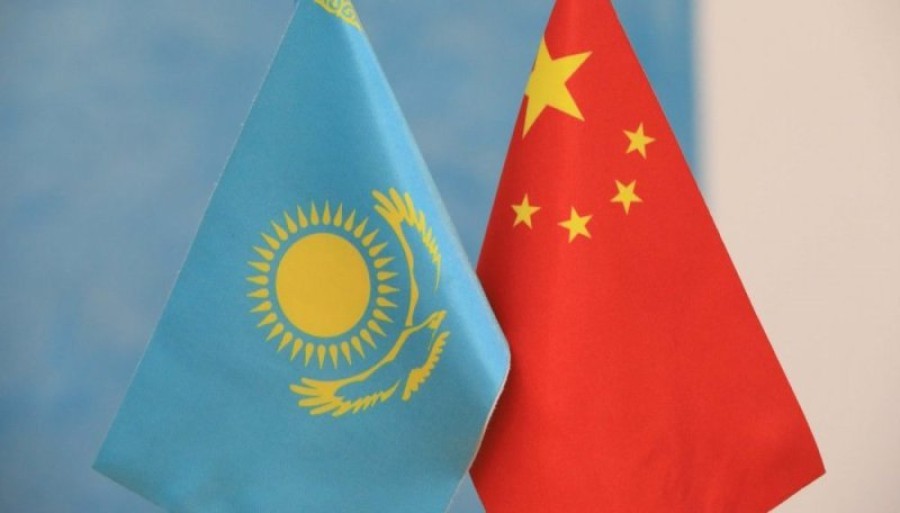
When China lifted pandemic-era restrictions on travel to Vietnam in March 2023, the Vietnamese welcomed the news as it promised to increase tourism revenues and boost their economy. Prior to COVID restrictions, Vietnam had hosted 5.8 million tourists from China in 2019, and generated income in excess of $5 billion. Despite centuries of conflict, the Chinese and Vietnamese governments embraced the motto, “bury the past, open up the future,” and encouraged their people to be pragmatic and capitalize on the opportunities presented by bilateral economic cooperation. Kazakhstan can likewise build on furthering existing opportunities for economic cooperation with China, such as visa-free travel, which came into effect in November 2023. China, the second largest economy in the world, has a growing middle class that is in search of new travel destinations. Kazakhstan, in turn, possesses many attractive sites that have the potential to become profitable tourism spots. One aspect of this initiative could be the additional hiring and vocational training of tourism personnel, with specific attention given to Chinese tourists. The number of Chinese tourists visiting Kazakhstan has already been growing since the start of last year, and reached 85,000 YTD by November 2023. On average, each Chinese tourist spends $100 a day in Kazakhstan. According to People’s Daily, Chinese tourists are becoming more interested in traveling to countries along the Belt and Road Initiative (BRI), and Kazakhstan is among them. Convenient visa-free travel, geographic proximity, picturesque sites, low travel expenditures, and the availability of flights all make Kazakhstan an attractive destination. Moreover, tourism companies in China now offer tours that include Kazakhstan. Possible fears among the hosting population that tourists could overstay their visas can be alleviated through the implementation of the relevant regulations in the above-mentioned agreement on visa-free travel, which limits tourists’ stay to 30 days, and allows for a 90-day cumulative stay within 180 days. As relationships develop between these two large nations in Asia, the people of Kazakhstan can adopt the pragmatic approach of the Vietnamese with respect to the opportunities arising from increased tourism with China.   Aizada Nuriddenova is an Assistant Professor at the Social Sciences Department, SDU University, Kazakhstan and currently is a visiting scholar at the Central Asia Program, George Washington University.

Akim of Mangystau Calls for Calm after Mass Swan Die-out

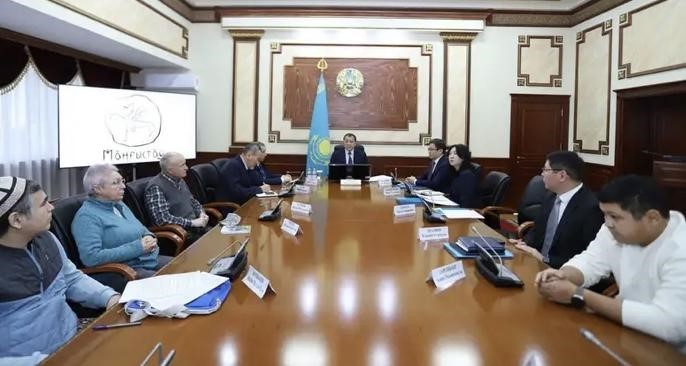
On January 18th, the Akim of Mangystau (head of the regional government), Nurlan Nogaev met with environmental activists from Mangystau and ornithologists from Almaty. The main topic of discussion was the pressing issue of the mass die-out of swans on Lake Karakol, as reported by the press service of the Akimat. According to the latest data, as of January 18th the number of dead swans in Mangystau has reached 1,018 birds, 41 of which were found on the seashore in the Karakiyan district, and the rest on the lake itself. According to the biological scientist and ornithologist, Victoria Kovshar, despite the fact that the peak of bird flu has already passed, this figure will only continue to grow. "Bird flu is a phenomenon widespread all over the world. Instances of this disease are regularly recorded on the Caspian Sea, as was the case two years ago when black-footed boobies and Caspian terns died en masse. At the time, it was assumed that the cause was related to oil emissions, but a government commission found that bird flu was to blame. “The virus usually targets certain species of birds, for example, in 2015 there was a bird flu that affected the dalmatian pelican without affecting the pink pelican, which nests with it in the same colonies and is directly related. It follows that the death of swans on Lake Karakol is not a unique case. We can see that mostly young individuals which were unprepared for the winter have died here. This is a natural process that is not subject to manual intervention. Saving swans now is comparable to if you were to confront an avalanche with your bare hands. It is important to prevent the infection of poultry such as ducks and geese, and it should be noted that the virus can remain active in the carcasses of dead birds for a prolonged period of time. However, given the extremely low temperatures on the lake currently, this would not be the case.”[/vc_column_text][vc_single_image image="13639" img_size="full" el_class="scond-image" parallax_scroll="no" woodmart_inline="no"][vc_column_text woodmart_inline="no" text_larger="no"]According to the head of the regional territorial inspection of the Committee for Veterinary Control and Supervision of the Ministry of Agriculture, Temirbek Nurtazin, veterinary services are regularly monitoring the epizootic situation among poultry, and as of now no cases have been found among poultry in private farms. Speaking after his briefing, the head of the region, Nurlan Nogaev said he is concerned about the significant number of swan deaths, but urged against an overly emotional reaction. "I thank the experts, Victoria Kovshar and Fedor Karpov, for their active participation in the search for the real cause of swan deaths on Lake Karakol,” Nogaev said. “The situation around this issue is of public interest, and I also express my gratitude to the eco-activists involved in solving the problem. A team of scientists is expected to arrive in the coming months to study the biodiversity of this unique body of water. It is important that experts, including ornithologists, are involved in gathering information.”...

USAID Provides $1.4 Million to Strengthen Central Asia’s Power Sector

On January 10th, the United States Agency for International Development (USAID) handed over $1.4 million of modern energy sector management equipment and software to the Coordinating Dispatch Center (CDC) Energia in Tashkent. This cutting-edge technology will allow CDC Energia’s dispatchers to display relevant information for maintaining the region’s energy regime, the U.S. Embassy in Uzbekistan reported. This investment will enhance Central Asia’s ability to manage and monitor electricity flows to ensure the stability of the power grid and foster increased opportunities for the regional trade in electricity. It will also modernize the work of CDC Energia as a regional Systems Operator, which faces an increasing number of challenges in connection with the intensive integration of renewable energy sources and the introduction of the electricity and capacity market in Central Asia. The Deputy Minister of Energy of Uzbekistan, Akmal Jumanazarov, U.S. Ambassador to Uzbekistan, Jonathan Henick, USAID/Uzbekistan Mission Director, David Hoffman, and the Head of CDC Energia, Khamidilla Shamsiev attended the ceremony. Ambassador Henick emphasized Uzbekistan’s prominent role in the region’s energy sector, stating that “Uzbekistan plays a vital role in the region due to its central geographical location, abundant energy resources, and key infrastructure. As Central Asia’s power system expands and becomes more complex, innovative solutions are imperative for energy sector development planning. Together, we are creating the foundation for a sustainable future to address the complex challenges of energy transition.” This delivery of modern equipment was possible through USAID’s flagship regional energy project, Power Central Asia. With a total budget of $39 million over a five-year period, the project aims to improve the performance of the energy sector, expedite clean energy development, and enhance energy security and resiliency through greater regional connectivity and expanded cross-border electricity trade. Through this project alone, USAID has leveraged $2.2 billion in clean energy investments and facilitated the installation of 2,241 megawatts of clean energy capacity across Central Asia to date. The equipment’s installation is a significant step to achieving a more resilient and efficient energy landscape in Uzbekistan and the broader region, aligning with the high-level priorities outlined in the joint decree by the presidents of the U.S. and all five Central Asian nations. In a joint statement, the parties made it known that “Through C5+1 programs such as USAID Power Central Asia, the United States and Central Asian states will unlock the economic benefits of regional clean energy trade and a clean economy future.”

ADB and Kompanion Bank to Boost Financing of Women-Led and Small Businesses in Kyrgyzstan

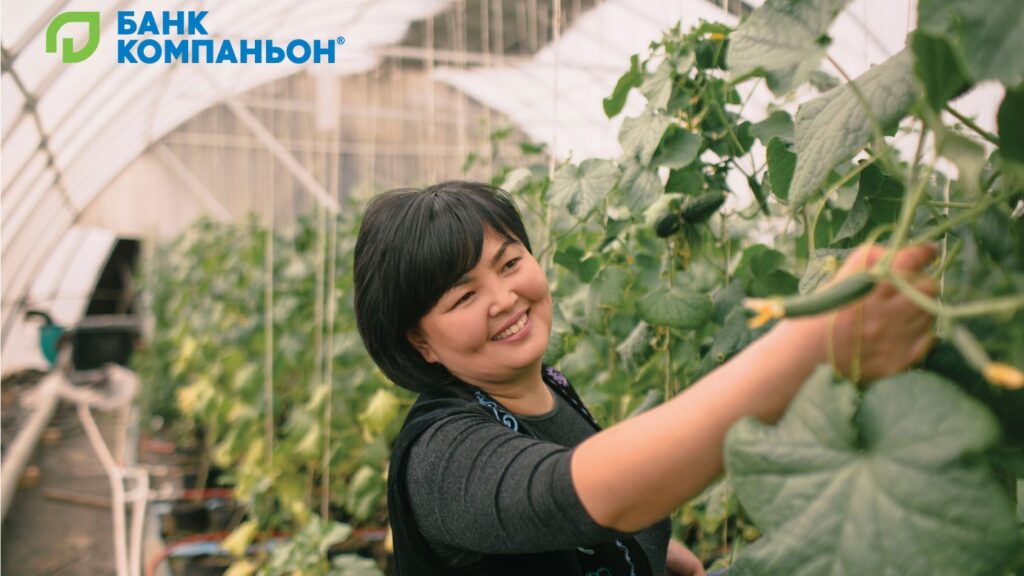
As reported in a news release on its website, on December 28th the Asian Development Bank (ADB) and Kompanion Bank Closed Joint Stock Company on December 28th signed off a loan of up to $5 million in local currency financing to boost micro, small, and medium-sized enterprises (MSMEs) in Kyrgyzstan, especially those owned or led by women. Established in 2004, Kompanion Bank is one of the large commercial banks in the Kyrgyz Republic and dominates the MSME market through its wide network with 93 branches across the country. More than half of Kompanion’s portfolio is with micro and small enterprises. “Women account for about a third of entrepreneurs in the Kyrgyz Republic, but they nevertheless face significant challenges in accessing financial services and credit,” said ADB Director General for Private Sector Operations, Suzanne Gaboury. “This partnership with Kompanion Bank will help bridge the financing gap for women-led small businesses, as well as provide a strong case for the sustainability of local currency lending to these companies.” To strengthen development impact and address finance and bankability constraints, transactions incorporate a credit guarantee from the Asian Development Fund’s (ADF) Private Sector Window facility (PSW) of up to $2.3 million. ADB will also provide technical assistance to Kompanion Bank to enhance its digital capabilities and operational efficiency. “We are happy to be a partner with ADB in this initiative to support micro and small entrepreneurs in the Kyrgyz Republic. We believe that our experience in the MSME market will allow us to make a significant impact on the local economy, and we look forward to working closely with ADB for the benefit of our clients and the community,” said Kompanion Bank CEO, Margarita Cherikbaeva. ADB will also help Kompanion Bank to develop a gender action plan to promote gender equality and women’s empowerment in its business activities. Key activities will include increasing the number of women borrowers and delivering training on improved agricultural practices and digital and financial literacy for female clients.