• KGS/USD = 0.01144 0%
  • KZT/USD = 0.00215 0%
  • TJS/USD = 0.10599 -0.28%
  • UZS/USD = 0.00008 0%
  • TMT/USD = 0.28571 0%
  • KGS/USD = 0.01144 0%
  • KZT/USD = 0.00215 0%
  • TJS/USD = 0.10599 -0.28%
  • UZS/USD = 0.00008 0%
  • TMT/USD = 0.28571 0%
  • KGS/USD = 0.01144 0%
  • KZT/USD = 0.00215 0%
  • TJS/USD = 0.10599 -0.28%
  • UZS/USD = 0.00008 0%
  • TMT/USD = 0.28571 0%
  • KGS/USD = 0.01144 0%
  • KZT/USD = 0.00215 0%
  • TJS/USD = 0.10599 -0.28%
  • UZS/USD = 0.00008 0%
  • TMT/USD = 0.28571 0%
  • KGS/USD = 0.01144 0%
  • KZT/USD = 0.00215 0%
  • TJS/USD = 0.10599 -0.28%
  • UZS/USD = 0.00008 0%
  • TMT/USD = 0.28571 0%
  • KGS/USD = 0.01144 0%
  • KZT/USD = 0.00215 0%
  • TJS/USD = 0.10599 -0.28%
  • UZS/USD = 0.00008 0%
  • TMT/USD = 0.28571 0%
  • KGS/USD = 0.01144 0%
  • KZT/USD = 0.00215 0%
  • TJS/USD = 0.10599 -0.28%
  • UZS/USD = 0.00008 0%
  • TMT/USD = 0.28571 0%
  • KGS/USD = 0.01144 0%
  • KZT/USD = 0.00215 0%
  • TJS/USD = 0.10599 -0.28%
  • UZS/USD = 0.00008 0%
  • TMT/USD = 0.28571 0%

Viewing results 3961 - 3966 of 5747

Russian-Kyrgyz Development Fund to Finance Projects Worth $140 Million

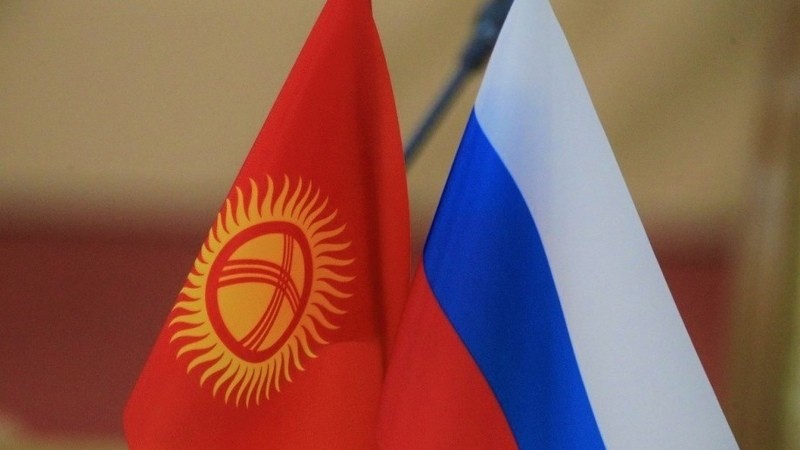
The Russian-Kyrgyz Development Fund (RKDF) has said it will finance both new and existing projects in Kyrgyzstan totaling more than $140 million in 2024. The Fund will focus on strategic sectors of the economy: industry, infrastructure development in education and healthcare, logistics, agriculture and agro-processing, strengthening food security, and energy independence. Work in the country’s regions will continue and be expanded, for which the Fund’s Council approved financing of $1 million. “The strategic decision to approve the budget will allow the Fund to continue operating as usual. The RKDF has the necessary amount of resources, and we will continue to accept new applications. We hope that the number and quality of interesting, important and necessary projects for the country will grow, and the Fund, by financing them, will continue to contribute to the development of the economy,” stated Artem Novikov, Chairman of the Board of the RKDF. Member of the RKDF Council, and Minister of the Economy and Commerce of Kyrgyzstan, Daniyar Amangeldiev said that compared to the previous year, the Fund’s overall project portfolio in Kyrgyzstan will be increased by 50%.

Uzbek Foreign Ministry Summons Russian Ambassador over Annexation Comments

According to the press service of the Ministry of Foreign Affairs, the Uzbek Foreign Ministry has called upon the Russian Ambassador, Oleg Malginov, expressing concern over the proposal made by Zakhar Prilepin, co-chairman of the Fair Russia – For Truth Party, regarding the Republic’s potential accession to the Russian Federation. The Uzbek Ministry emphasized that such a proposal is deliberately provocative and could have adverse effects on the relationship between the peoples of both countries. "During the meeting, the representative of Russia was informed in principle that in our country the statement of the co-chairman of the Fair Russia - For Truth Party, Zakhar Prilepin, at a conference at the Rossiya Segodnya press center regarding a proposal to annex the territory of Uzbekistan to Russia was received with a sense of deep concern," the statement says, noting that such thoughtless remarks by party leaders of a friendly country such as the Russian Federation do not correspond to the spirit of comprehensive strategic partnership and alliance between Uzbekistan and Russia. In turn, Malginov "with full responsibility" stated that Prilepin's remarks do not reflect the official position of the leadership of the Russian Federation "in relation to friendly and independent Uzbekistan." The Ambassador emphasized that the “sovereignty, independence and territorial integrity of the Republic of Uzbekistan have never been questioned." Malginov also noted that the Russian Foreign Ministry plans to comment on this incident in the near future. Prilepin has previously proposed the annexation of Uzbekistan and other territories of the former USSR to Russia, stating that "Since two million of your citizens are on our territory, we claim your territory. Because most of your people are here… Who will forbid us to do anything useful on the territory of the Eurasian territory after the parade in Kiev? No one," Prilepin has also said that he would continue to promote the topic of "disavowing documentation about the collapse of the Soviet Union." Deputies from Uzbekistan asked the Ministry of Foreign Affairs to send a letter warning about criminal liability for encroachments on the constitutional system of Uzbekistan.

Mutual Direct Investments Among Central Asian Countries Growing

Mutual Direct Investments Among Central Asian Countries Growing On December 19th, the Eurasian Development Bank (EDB) said it is continuing its series of EDB Monitoring of Mutual Investments (MMI) publications. The MMI encompasses a database of investment projects, containing detailed information on mutual direct investments in Eurasia, covering Armenia, Azerbaijan, Belarus, Georgia, Kazakhstan, the Kyrgyz Republic, Moldova, Russia, Tajikistan, Turkmenistan, Uzbekistan, and Ukraine. EDB analysts observe that the Eurasian countries’ FDI stock reached U$48.8 billion in mid-2023, following a 5.4% increase in 2022, and with continued growth in 2023. Kazakhstan reinforced its status as the regional leader in terms of inward mutual direct investment stock, with a share of 27.2% as of June 2023 against 26.6% in 2021, followed by Uzbekistan (19.8%), Belarus (12.0%), Russia (9.8%), and Azerbaijan (8.7%). EDB researchers highlighted that FDI stock within Central Asia totaled U$1.1 billion by the end of 1H 2023, marking a 1.8-fold increase compared to 2016. The key areas of mutual capital investments are extractive industries, manufacturing, and financial services. The leading domestic investors in the region are Kazakhstan and Uzbekistan. In the medium term, uncertainties may persist in the dynamics of Eurasia’s mutual investments. EDB analysts note the following factors that will shape medium-term trends in mutual investments: The “neighborhood effect” - the share of Eurasian Economic Union countries in Eurasia’s mutual investments will continue to grow; Dynamic growth in manufacturing. Commencement of production of higher added value products in the countries of the region will be the main driver of growth; and Greater attractiveness of the transport and logistics sector due to shifts in commodity flows and Central Asian countries’ focus on developing dry ports, logistics hubs, and distribution centers.

EBRD to Allocate €200 Million for Development of Youth Businesses in Central Asia

EBRD to Allocate €200 Million for Development of Youth Businesses in Central Asia The European Bank for Reconstruction and Development (EBRD) has launched a program aimed at developing youth businesses in Central Asia and Mongolia, and will allocate $218 million over seven years to ensure access to financing and training for young entrepreneurs. The program is aimed at the development of micro, small and medium-sized businesses under the guidance of young people aged 18 to 35 years. Companies will receive financing through 20 partner financial institutions, whilst participants will also be able to receive trainings, access various events, and use consulting services. The investments is set to be complemented by a package of up to €30 million in grants and concessional co-financing. The EBRD notes that many young people in Central Asia have entrepreneurial skills, but do not have economic opportunities. According to the bank's estimates, only 10% of young people have the necessary education and work skills. "Solving this problem is important for Central Asia, where small and medium—sized enterprises account for almost half of total employment and almost 40% of regional GDP," the EBRD emphasized. The program is funded by the Government of Kazakhstan, the Small Business Foundation, and the European Union.

Central Asia’s Growing Economic and Strategic Importance Comes to Fore

The Central Asian region has experienced a tremendous economic transformation since the beginning of the century. Its aggregate gross domestic product (GDP) now totals $397 billion, growing 8.6-fold since the year 2000. Its share in global GDP in purchasing power parity (PPP) has also increased 1.8 times. The GDP per capita has tripled as the labor pool has grown to almost 80 million, representing a 1.4-fold increase since 2000. The region’s strategic importance, particularly thanks to its geographic position bridging major economies of Europe and Asia, makes it a key player in geopolitical dynamics. Central Asia’s dependence on commodity exports and remittances has so far limited its integration into global value-chains. The Central Asia Regional Economic Co-operation (CAREC) Program, established by the Asian Development Bank (ADB), plays an important role in fostering regional development and co-operation. CAREC includes the five Central Asia countries (namely Kazakhstan, Kyrgyzstan, Uzbekistan, Tajikistan and Turkmenistan) plus Afghanistan, Azerbaijan, China, Georgia, Mongolia and Pakistan. CAREC also partners with five multilateral international institutions in addition to the ADB (which serves as its Secretariat). These are the European Bank for Reconstruction and Development (EBRD), International Monetary Fund (IMF), Islamic Development Bank (IsDB), United Nations Development Program (UNDP) and the World Bank (a.k.a. International Bank for Reconstruction and Development or IBRD). The Program has constructively helped the countries of Central Asia to address challenges in trade governance. Nevertheless, inefficiencies in cross-border transport and customs procedures continue to hinder their commercial exchanges with one another as well as with external partners. CAREC’s current policy-implementation priorities are integration of regional trade, digitization, climate change, regional co-operation, development of financial technologies and financing in the water sector. There is still significant potential for further development given that the region’s trade within itself has been growing faster than its foreign trade. Enhancing Central Asia’s role in the global economy will require the implementation of co-operative initiatives already identified, especially in infrastructure. Such construction of new physical plants, as well as the renovation and building-out of those that already exist, is crucial for enhancing economic growth and sustainability. This strategy will leverage the region’s strengths such as its strategic location and resource endowments. In 2023, Central Asia’s economic growth is projected to remain relatively steady at 3.9 percent, but this may still be affected by the global challenges of weak external demand, rising inflation and supply-chain disruptions. These global economic conditions, along with the uncertainties that they engender, reflect continuing burdens of the ongoing post-COVID recovery as well as the effects of the war in Ukraine, which significantly impacts the region. In addition to the ADB, the IBRD also focuses on various development initiatives in Central Asia that aim to support regional infrastructure development and the strengthening of cross-border co-operation. These are implemented through relatively low-profile initiatives such as the Central Asia Water and Energy Program (CAWEP) to enhance energy and water security and the Central Asia Hydrometeorology Modernization Project (CAHMP) to improve weather, climate and hydrological services. The IBRD thus aims to increase...

U.S. and Central Asian Countries Focus on Protecting Rights of People with Disabilities

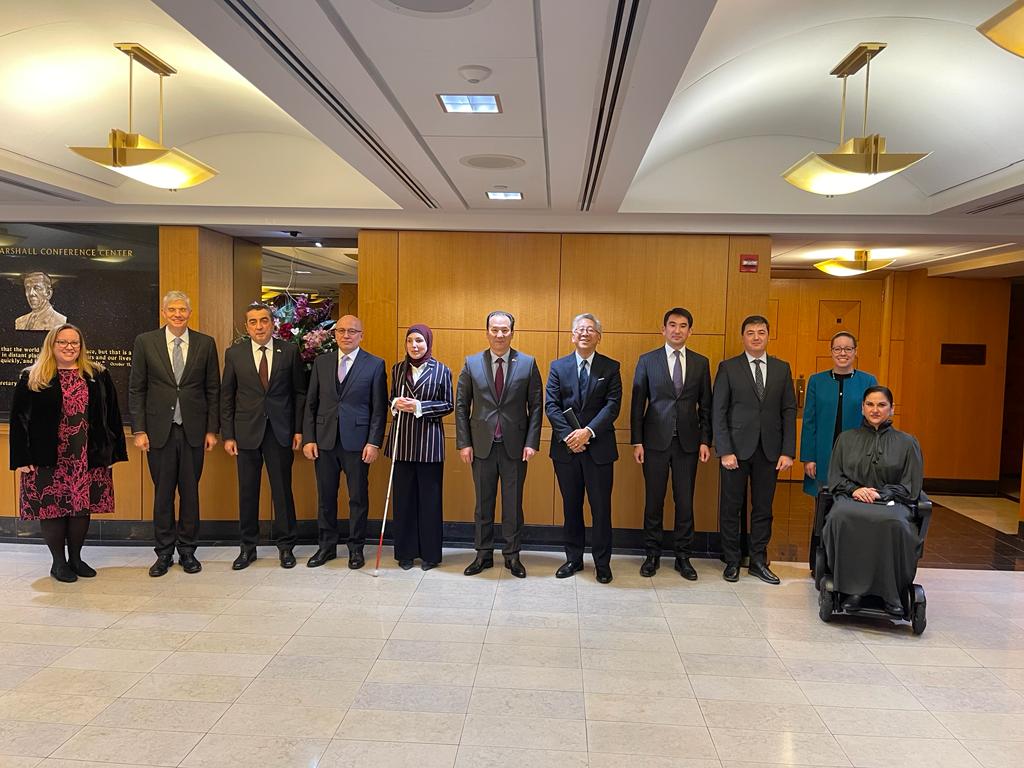
On December 11th, the U.S. Department of State hosted a meeting of representatives of C5+1 countries dedicated to protecting the rights of people with disabilities and finding practical solutions to their problems. The C5+1 diplomatic platform represents the U.S. Government’s holisitc approach to Central Asia, jointly engaging all five Central Asian nations. The meeting was attended by Sara Minkara, Special Adviser to the President of the United States on the International Rights of Persons with Disabilities, Donald Lu, Assistant Secretary of State, Deputy Assistant Secretary John Mark Pommersheim, and representatives of government agencies of the USA. The Ambassadors of Kazakhstan, Kyrgyzstan, Tajikistan, and Uzbekistan to the United States also spoke during the meeting, which was moderated by Minkara, who shared her experience and recommendations on ensuring protection of the rights of persons with disabilities. U.S. Assistant Secretary of State, Donald Lu stressed the importance of increasing cooperation within the C5+1 format on the rights of persons with disabilities in a multilateral format. Following the meeting, the participants agreed on joint actions in this direction.