• KGS/USD = 0.01144 0%
  • KZT/USD = 0.00215 0%
  • TJS/USD = 0.10640 0%
  • UZS/USD = 0.00008 0%
  • TMT/USD = 0.28530 0%
  • KGS/USD = 0.01144 0%
  • KZT/USD = 0.00215 0%
  • TJS/USD = 0.10640 0%
  • UZS/USD = 0.00008 0%
  • TMT/USD = 0.28530 0%
  • KGS/USD = 0.01144 0%
  • KZT/USD = 0.00215 0%
  • TJS/USD = 0.10640 0%
  • UZS/USD = 0.00008 0%
  • TMT/USD = 0.28530 0%
  • KGS/USD = 0.01144 0%
  • KZT/USD = 0.00215 0%
  • TJS/USD = 0.10640 0%
  • UZS/USD = 0.00008 0%
  • TMT/USD = 0.28530 0%
  • KGS/USD = 0.01144 0%
  • KZT/USD = 0.00215 0%
  • TJS/USD = 0.10640 0%
  • UZS/USD = 0.00008 0%
  • TMT/USD = 0.28530 0%
  • KGS/USD = 0.01144 0%
  • KZT/USD = 0.00215 0%
  • TJS/USD = 0.10640 0%
  • UZS/USD = 0.00008 0%
  • TMT/USD = 0.28530 0%
  • KGS/USD = 0.01144 0%
  • KZT/USD = 0.00215 0%
  • TJS/USD = 0.10640 0%
  • UZS/USD = 0.00008 0%
  • TMT/USD = 0.28530 0%
  • KGS/USD = 0.01144 0%
  • KZT/USD = 0.00215 0%
  • TJS/USD = 0.10640 0%
  • UZS/USD = 0.00008 0%
  • TMT/USD = 0.28530 0%

Viewing results 601 - 606 of 899

Uzbekistan: Successful Reforms in Environmental Protection and Waste Management

Uzbekistan is carrying out consistent and effective reforms in the field of waste management, improving the quality of services provided to the population and combating environmental pollution. The Decree of the President “On measures to improve the waste management system and reduce its negative impact on the environmental situation” is a significant step that will become the starting point for a new stage of development in this area, Minister of Ecology, Environmental Protection and Climate Change, Aziz Abdukhakimov emphasized. “The main goal is to further improve the quality of household waste management services, bringing the level to international standards, increasing the level of waste processing, preventing accumulation in landfills, minimizing the negative impact on the environment, achieving the ‘zero waste’ principle and other tasks. This decree is very important today, when environmental problems associated with climate change are escalating," he stated. According to the decree, a number of measures will be taken to further improve waste management and prevent environmental pollution. In particular, as part of the integrated Safe City system, the detection of environmental violations using cameras will be introduced. Entrepreneurs will be given the right to photograph and video record environmental violations and be able to report this to the state environmental control inspectorate in a manner similar to the right to identify violations of traffic rules. Citizens will have the opportunity to independently install photographic and video recording equipment at the sites of spontaneous landfills at their own expense. Reports of violations will be encouraged with a reward of 20% of any fine levied. From the beginning of 2024, minimum tariffs for waste collection will be regularly reviewed, and services will be combined into a single system. It is expected that there will be a substantial increase in liability for violating the rules on the dumping of waste, with the possibility of confiscation of items and devices used to carry out such violations written into the measures. The document also establishes administrative responsibility for the use of chemical, biological and bacteriological agents during the construction or reconstruction of buildings which leads to damage to the environment. In order to improve sanitary and hygienic conditions for residents, increase the attractiveness of tourist areas and reduce the negative impact on the environment, entrepreneurs will be allowed to install sanitary and hygiene points in public places, social buildings, and specially designated areas. The distribution of permits for the installation of such points will be carried out through electronic auctions. Entrepreneurs who process or dispose of waste in an environmentally friendly way will be allocated “green subsidies.”

New Multi-Story Buildings in Uzbekistan Now Have to Install Solar Panels

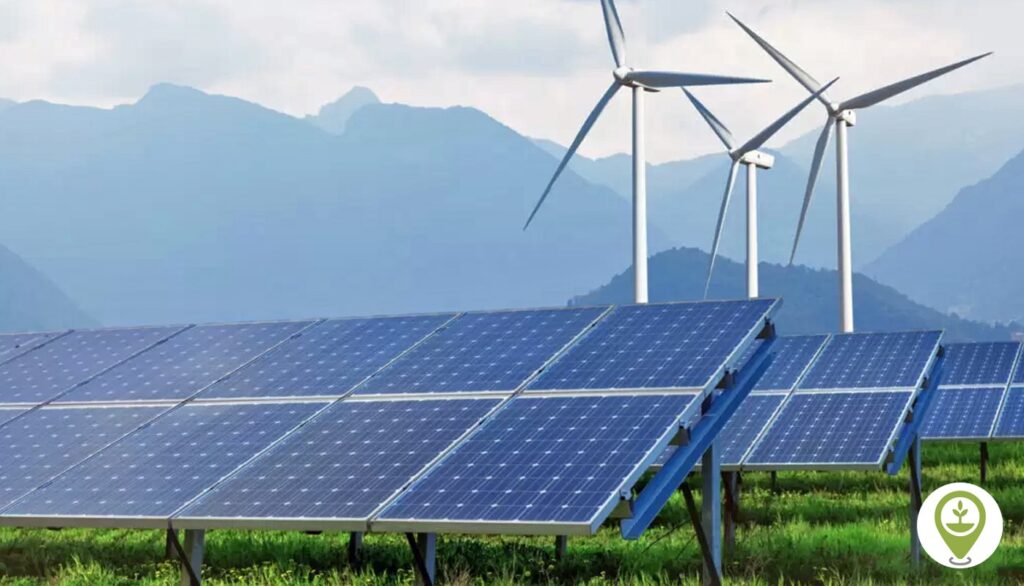
According to the law, there is now a requirement to install solar panels on at least 50% of the free part of roofs of new multi-story buildings, the Ministry of Energy of Uzbekistan has stated. The government recently announced a program to encourage the installation of low-power solar panels (up to 50 kW) in households in the regions of the nation. The program provides subsidies to citizens for electrical energy produced by their solar panels. In addition, persons who have installed renewable energy sources are also exempt from land and property tax on plots occupied by such renewable energy devices. In recent years, Uzbekistan has experienced increasing electricity shortages, especially in the cold winter months, against the background of the country’s growing population and depleting natural gas reserves. This has prompted the government to embark on a large-scale program to introduce wind and solar power plants. In 2024, Uzbekistan plans to increase the total capacity of solar power plants to 2.6 gigawatts, wind farms to 900 megawatts, and launch energy storage devices with a capacity of 400 megawatts.

Illegally Captured Migratory Birds Set Free

The Department of Ecology in Tashkent's Ohangaron district uncovered the illegal capture of eleven migratory birds. The investigation revealed that individuals had engaged in unlawful bird hunting within the Geolog mahalla area of the Ohangaran district. Subsequent inquiries led to the identification of the perpetrators. Each individual involved was issued an administrative protocol under part 1 of Article 90 of the Administrative Code, resulting in a fine of 3.4 million som ($275). Ongoing raids will continue to address such activities.[/vc_column_text][vc_single_image image="13537" img_size="full" el_class="scond-image" parallax_scroll="no" woodmart_inline="no"][vc_column_text woodmart_inline="no" text_larger="no"]Previously, in November, activists highlighted an incident involving the unlawful hunting of a protected bird of prey within mountain reserves. In a message posted on its Telegram channel, the Ekologuz group urged the Committee for Ecology and Environmental Protection of Uzbekistan and the Ministry of Internal Affairs to identify the individuals responsible and provide an official response regarding the situation. The Taskara bird involved in this incident holds a place in Uzbekistan's Red Data Book, signifying its endangered status and the need for stringent conservation measures.

Uzbekistan to Improve Efficiency of Water Use in Agriculture

At a government meeting on January 4th, President of Uzbekistan, Shavkat Mirziyoyev listened to proposals aimed at improving the efficiency of water use in agriculture. At the meeting it was stated that in the current condition of an increasingly worsening shortage of water resources, special attention needs to be paid to its rational use. In recent years, 472,000 hectares has been converted to using drip irrigation, 48,000 to sprinkler irrigation, and water-saving technologies have been introduced on 97,000 hectares. As a result of these measures, two billion cubic meters of water were saved in 2023 alone, which is equal to the annual consumption of the Bukhara region. Starting this year, the payment for one cubic meter of water supplied to the field has been set at U$0.008, as the time has come to change the idea that has been established in the minds of many people that water is free, officials said at the meeting. In this regard, it was proposed to organize settlements with water consumers on a differentiated basis. In particular, from 2025 it is planned that a lower tax coefficient be applied to farmers who have installed water meters and introduced water-saving technologies, and a higher rate be applied to those who have failed to do so. The meeting also discussed measures to further stimulate the introduction of water-saving technologies, including opening a preferential credit line under which loans will be issued at a rate of 14% for a period of five years with a two-year grace period. Mirziyoyev approved this proposal, and gave instructions for the scope of water conservation work to be expanded.

Kazakhstan Now Chairs International Fund for Saving Aral Sea

From 2024, the chairmanship of the International Fund for Saving the Aral Sea (IFAS) has passed to Kazakhstan, after President Kassym-Jomart Tokayev was elected as head of IFAS until the end of 2026, the Kazakh Ministry of Water Resources and Irrigation said. The International Fund for Saving the Aral Sea, which includes Kazakhstan, Tajikistan, Turkmenistan, and Uzbekistan, is engaged in the implementation of joint interstate environmental, scientific and practical programs and projects aimed at saving the Aral Sea and improving the environmental situation in the region, as well as solving common social and environmental problems.[/vc_column_text][vc_single_image image="12017" img_size="full" el_class="scond-image" parallax_scroll="no" woodmart_inline="no"][vc_column_text woodmart_inline="no" text_larger="no"]“We are aiming to deepen cooperation both with the states of Central Asia and other international organizations and financial institutions,” said the Minister of Water Resources and Irrigation of Kazakhstan, Nurzhan Nurzhigitov. “This year we plan to begin the second phase of the project to preserve the Northern Aral Sea, implemented together with the World Bank. Saving the Aral Sea is a task that can only be accomplished through the joint efforts of all IFAS founding states. In the next three years, we intend to achieve significant results in this direction.” Speaking in September 2023 in Dushanbe at a meeting of the Council of Heads of State–Founders of the International Fund for Saving the Aral Sea, Tokayev said that IFAS has become the most important institution facilitating regional cooperation on issues of transboundary water resources sharing, as well as solving environmental and socio-economic problems in the Aral Sea basin. Tokayev also emphasized the need to create a mechanism for long-term and sustainable cooperation for the effective use of water and energy resources in Central Asia, taking into account the interests of all countries in the region. To ensure transparency of water use in the region and strengthen the dialogue and friendship between Central Asian nations, Tokayev proposed the development of a work plan which would introduce a unified automated system of accounting, monitoring, management and distribution of water resources in the Aral Sea basin. Tokayev also called on Kyrgyzstan to resume its full participation in IFAS.

Air Pollution in Tashkent Reaches “Very Harmful” Level

The level of air pollution in Tashkent rose to “very harmful,” with an increase in the concentration of toxic substances in the atmosphere. According to the latest information from the international service IQAir, at 18:00 on January 3rd, Tashkent recorded an air quality index of 223, placing the capital second in the world in terms of cities with the highest levels of air pollution, between Delhi (273), and above Dhaka (220). According to data from this time, the concentration of particulate matter PM2.5 reached 173 μg/m3. Air quality in the city was rated as "very unhealthy." The highest level of pollution was recorded in the Yunusabad district of the capital. The situation is fluctuating wildly, however, and by 18:00 local time on the evening of January 4th, Tashkent had dropped to number 37 on the rankings, with an air quality index of 67.