• KGS/USD = 0.01144 0%
  • KZT/USD = 0.00216 0%
  • TJS/USD = 0.10456 0%
  • UZS/USD = 0.00008 0%
  • TMT/USD = 0.28490 0%
  • KGS/USD = 0.01144 0%
  • KZT/USD = 0.00216 0%
  • TJS/USD = 0.10456 0%
  • UZS/USD = 0.00008 0%
  • TMT/USD = 0.28490 0%
  • KGS/USD = 0.01144 0%
  • KZT/USD = 0.00216 0%
  • TJS/USD = 0.10456 0%
  • UZS/USD = 0.00008 0%
  • TMT/USD = 0.28490 0%
  • KGS/USD = 0.01144 0%
  • KZT/USD = 0.00216 0%
  • TJS/USD = 0.10456 0%
  • UZS/USD = 0.00008 0%
  • TMT/USD = 0.28490 0%
  • KGS/USD = 0.01144 0%
  • KZT/USD = 0.00216 0%
  • TJS/USD = 0.10456 0%
  • UZS/USD = 0.00008 0%
  • TMT/USD = 0.28490 0%
  • KGS/USD = 0.01144 0%
  • KZT/USD = 0.00216 0%
  • TJS/USD = 0.10456 0%
  • UZS/USD = 0.00008 0%
  • TMT/USD = 0.28490 0%
  • KGS/USD = 0.01144 0%
  • KZT/USD = 0.00216 0%
  • TJS/USD = 0.10456 0%
  • UZS/USD = 0.00008 0%
  • TMT/USD = 0.28490 0%
  • KGS/USD = 0.01144 0%
  • KZT/USD = 0.00216 0%
  • TJS/USD = 0.10456 0%
  • UZS/USD = 0.00008 0%
  • TMT/USD = 0.28490 0%

Viewing results 763 - 768 of 1292

Kazakhstan Intensifies Efforts to Combat Extremism

There appears to be a small, but growing problem with terrorism and extremism in Kazakhstan. More than 30 people from regions around the country have been detained in Kazakhstan so far in 2024, and in March, Russia’s Federal Security Service (FSB) killed two Kazakh citizens who were in Russia, allegedly to carry out a terrorist attack. In response, the country’s Committee for National Security (KNB) had conducted dozens of raids. Kazakhstan’s government gave the KNB additional powers to monitor the internet, and authorities are tightening the law on religion. Kazakhstan’s southern neighbors, Tajikistan, Turkmenistan, and Uzbekistan, border Afghanistan. Tajikistan and Uzbekistan have had problems with the Taliban and other militant groups during the last 25 years. These include domestic terrorist groups, the Islamic Movement of Uzbekistan and the Tajik-led Jamaat Ansarullah, both of which have been based in northern Afghanistan. Kazakhstan has largely avoided problems with Islamic radicals. Citizens from all the Central Asian states have gone to Afghanistan and Middle Eastern countries to join jihadist groups, including a small number of Kazakh citizens. Turkey extradited a 22-year-old Kazakh citizen back to Kazakhstan on January 27, 2024. The Kazakh national, according to the KNB, was a “native of the Turkestan region [who] went to Syria in 2020, where he joined one of the armed groups operating there.” The Islamic State of Iraq and Syria (ISIS) released a propaganda video in November 2014 that showed Kazakh nationals, including children, in a training camp in Syria. The video described them as “some of our newest brothers from the land of Kazakhstan.” A group of some 25 men whom authorities said were Islamic militants staged attacks in the northwestern Kazakh city of Aktobe, near the Russian border in early June 2016. The group robbed two stores that sold hunting rifles and were involved in shoot-outs with the police and soldiers. At least 25 people were killed, most of them the attackers. Deputies in Kazakhstan’s Mazhilis, the lower house of parliament, voiced concerns in October 2023 that radical forms of Islam were spreading in Kazakhstan. Controversial MP Yermurat Bapi said followers of these radical Islamic groups were taking over bazaars in the Atyrau, Aktobe, Mangystau, Ulytau, and Almaty provinces. Bapi and 13 other deputies called on the government and KNB to take measures against these groups and stem extremist and terrorist propaganda from being disseminated inside Kazakhstan. On February 17, 2024, the KNB staged a combined 49 raids on eight unspecified religious extremist groups in the Aktobe, Atyrau, East Kazakhstan, Zhambyl, West Kazakhstan, Turkestan, and Zhetysu provinces. The KNB said it detained 23 people and seized weapons, ammunition, religious literature, narcotics, and cash. On April 1, 2024, the KNB detained a man in the Caspian coastal city of Aktau and found material for making explosives. According to the KNB, the suspect was a follower of a “radical religious ideology,” and was planning to carry out a terrorist attack.” At the start of July, five people were detained in KNB raids in the Atyrau and...
How Limits on Electricity Use will Impact Uzbekistan

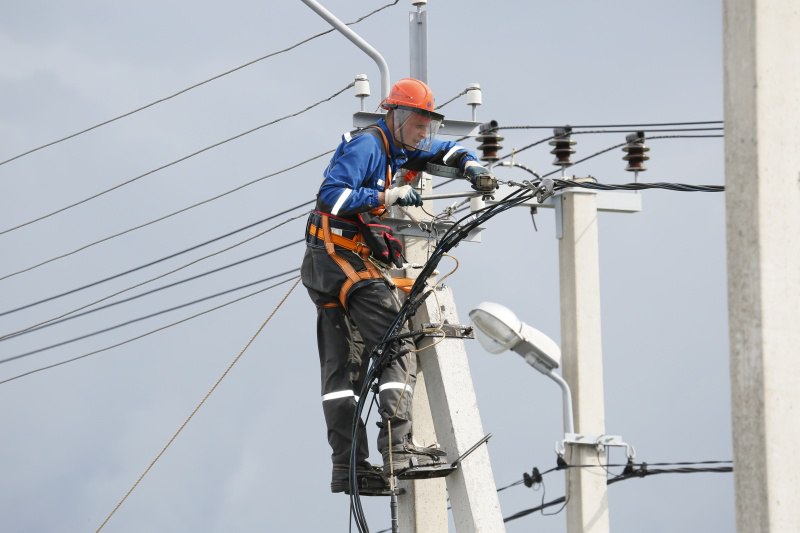
This year, Uzbekistan implemented reforms aimed at modernizing and optimizing energy consumption, including a new scheme introduced by the Cabinet of Ministers of the Republic of Uzbekistan. Entitled “Additional measures to introduce market mechanisms in the fuel and energy sector,” the scheme comprises a new pricing structure for fuel and energy resources for 2024-2025, alongside revised basic standards for monthly household electricity and natural gas consumption, starting May 1, 2024. Under the new regulations, residents must pay 450 UZS (3.6 cents) for each kilowatt used up to 200 kWh per month and 900 UZS (7.2 cents) for 201 kWh to 1,000 kWh per month. If energy consumption increases, the price changes accordingly. Household consumers living in apartment buildings and dormitories equipped with centralized electric plates for cooking will be charged 225 UZS (1.8 cents) for up to 200 kWh per month, from 201 kWh to 1,000 kWh – 450 UZS (3.6 cents). Negative reaction to the move has been widespread with numerous complaints posted on social networks such as Instagram and Facebook, demanding the cancellation of the limit of up to 200 kWh. One of the key protests is that the number of family members was not considered when setting the limit and that it will need to increase in the colder months of autumn-winter. Residents also commented they will need to save up to pay for their bills and one Facebook post commented that the 200-kWh limit should be cancelled or at least increased to 500 kWh. In response  to public outcry, Uzbekistan's Ministry of Energy  issued an official statement announcing that there was no reason to revise its decision and reported that since 71% of the population consumed less than 200 kW of electricity in June, the limit was realistic. When interviewed by TCA on the situation, Umida Ahadova from the Navoi region, commented, “Four people live in our family, and electricity is mainly used for housework. Since it is summer, we often use the air conditioner to cool the house. But the electricity consumption rarely exceeds the set limit of 200 kW." Another interviewee Roziboyeva, who shares a rented house in Tashkent with seven friends said, “Eight girls have lived in a 3-room apartment for almost a year, but our energy consumption is only slightly more than 150 kW. That said, we don’t use air conditioners to heat and cool the house." According to the ministerial statement , 1 kWh of electricity costs 895 UZS (7.1 cents) (without VAT). The state reimburses 552.4 UZS (4.4 cents) for each kWh of electricity supplied to the population within the basic norm and 102.1 UZS (0.81 cents) from 201 kW to 1000 kWh. “It should be said that consumers' electricity savings have increased due to increasing tariffs, " claimed the ministry. " As a result, the load on the system is reduced, people’s electricity systems are cut, and accidents are also decreasing." Research conducted by Asia-Plus last year showed that Kazakhstan has the highest electricity tariff among Central Asian countries....

Nursultan Nazarbayev Stripped of Academy of Sciences Membership

News that the first president of Kazakhstan, Nursultan Nazarbayev, has been stripped of his status as a member of the Academy of Sciences of Kazakhstan, was announced by Minister of Science and Higher Education, Sayasat Nurbek. Nurbek explained that in 2023, Kazakhstan's current president, Kassym-Jomart Tokayev, decided to create a new Academy of Sciences with just nine members and in the process,  'reset' the status of former academy members. Nursultan Nazarbayev was awarded the status of academician of the Academy of Sciences of Kazakhstan in 1995 and in 2011, whilst participating in a scientific forum at the academy, received the honourable title of “Scientist of the Century.” The loss of his membership of the academy is the most recent example of Nazarbayev's fall from grace. In July last year, he was deprived of his position as head of the supreme board of trustees of autonomous educational organizations. Then, this spring, a waxwork of the first president, installed six years ago in the State Military History Museum of the Armed Forces of Kazakhstan in Astana, disappeared. Previously, the monument to Nursultan Nazarbayev, inaugurated on his 80th birthday in 2020, was dismantled from the territory of the National Defense University in Astana, in tandem with the removal of another memorial to the man from the National Museum.

Kyrgyz Labor Migrants Now Welcome in Sardinia

The Center for Employment of Citizens Abroad has signed a partnership agreement with the Italian association of farmers, Coldiretti Sardegna, which stipulates that labor migrants from Kyrgyzstan can work in Sardinia. The Italian association is interested in attracting Kyrgyz citizens to work in agriculture, with preference being given to married couples. A representative from the Center for Employment of Citizens Abroad stated that “social packages were discussed, including housing, legal presence, and health insurance. Moreover, after moving to Italy, employers expressed that training in the Italian language will be provided.” Baktybek Kudaberdiyev, director of the Center, said this is the first agreement with Italian companies on hiring Kyrgyz people. “We are confident that this agreement will become the basis for successful and long-term cooperation, benefiting both sides,” Kudaberdiyev stated. The cooperation agreement was organized by the Kyrgyz ambassador to Italy, Taalai Bazarbayev. Coldiretti Sardegna is a trade union representing Italian enterprises working in Sardinia's agriculture and agri-food sectors.

Kazakhstan Refuses to Finance an Artificial Rain Project over the Aral Sea

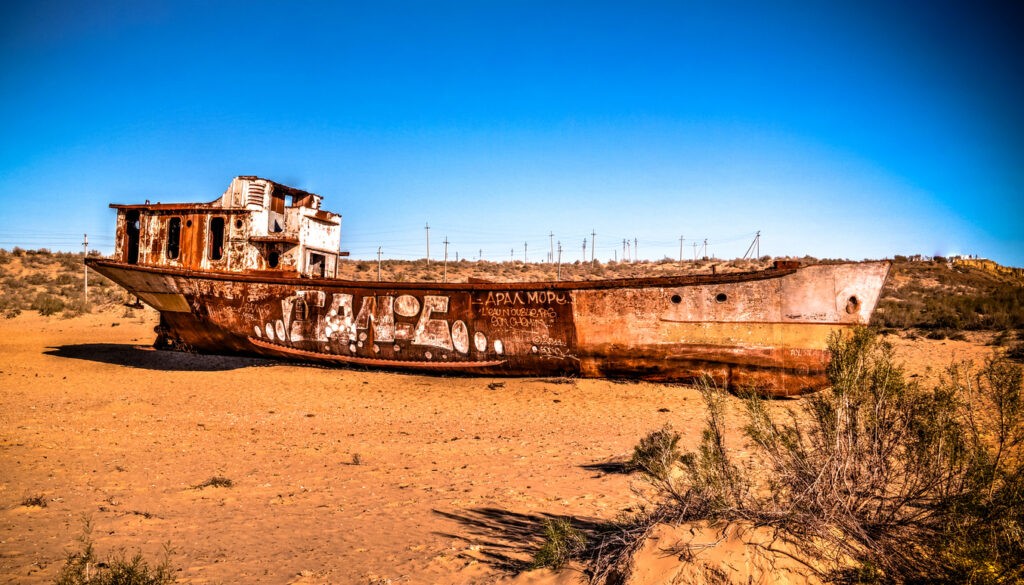
Kazakhstan's Ministry of Agriculture has decided not to support a project by inventor Altay Ainabek aimed at bringing artificial rain over the Aral Sea to revive it. At a recent government briefing, the deputy minister for agriculture, Azat Sultanov, answered journalists' questions about public interest in the project. Sultanov said that the decision not to fund the project is related to environmental and legal issues. Firstly, artificially inducing precipitation could negatively affect the ecosystems and natural resources of the region where the experiment will be conducted, leading to unintended consequences and environmental harm. In addition, according to Sultanov, the legality and legitimacy of using such technologies is questionable. The agriculture ministry does not yet have a scientific conclusion and does not have sufficient experience in this area. These factors make it impossible to finance such projects from the state budget. The deputy minister added: “We have researched the law many times. Specialists from abroad have already come to us with questions. You probably know that in Mangistau and West Kazakhstan regions 2-3 years ago, there were problems with water. Then, it was suggested to cause precipitation to make it rain. However, there are several aspects to this problem. On the one hand, there are environmental issues; it's nature. Even though it rained in one place, it can cause harm in another.” In 2021, artificially inducing rain was tested for the first time in Mangistau. The sprinkler system works using Clear Sky Manager technology. However, a little later, it became known that the installations affected the amount of rainfall. Abnormal rains led to floods and river overflows in the traditionally arid region, so the experiment was halted.

EFSD to Build Nine Schools in Kyrgyzstan

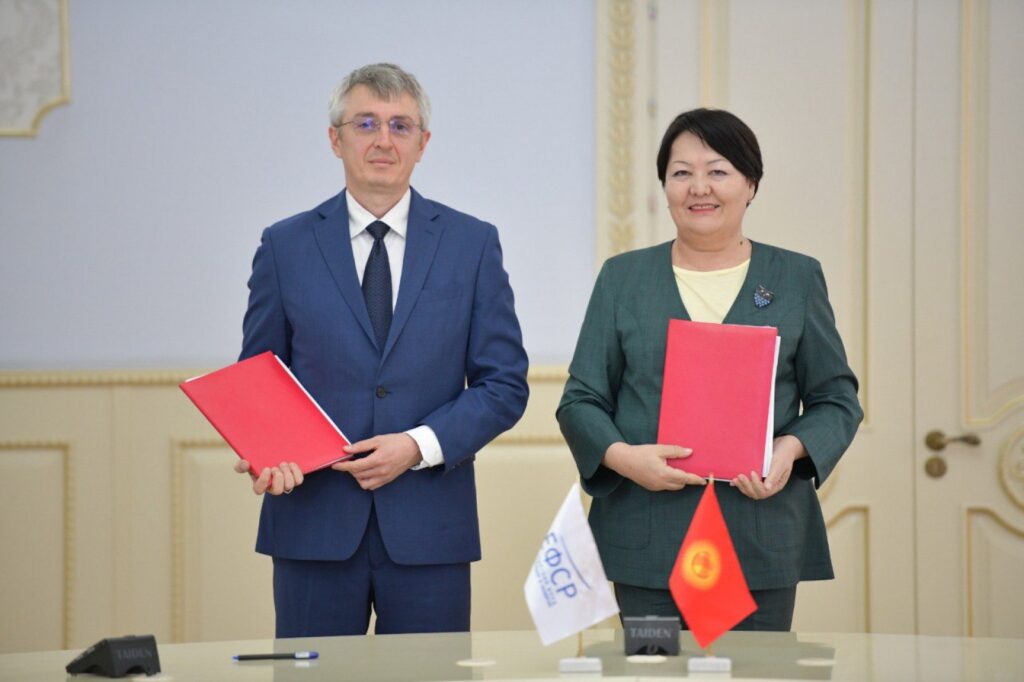
On July 23, Dogdurkul Kendirbaeva, Minister of Education and Science of Kyrgyzstan, and Andrey Shirokov, Executive Director of the Project Unit at the Eurasian Fund for Stabilization and Development (EFSD), signed an agreement to construct and fully equip nine secondary schools in Kyrgyzstan on a grant basis. The EFSD is a financial institution established in 2009 by Armenia, Belarus, Kazakhstan, Kyrgyzstan, Russia, and Tajikistan to promote economic and financial stability in its member states. The document was signed following a meeting between Andrey Shirokov and Akylbek Japarov, Chairman of the Kyrgyz Republic's Cabinet of Ministers, during which the latter reiterated the parties' commitment to cooperate on the implementation of projects prioritized by his country. In addition to the schools,  a $60 million project will be launched to provide drinking water to 32 villages in the southern Osh region. Other proposed initiatives include improving the country’s irrigation system and purchasing ambulances. EFSD is also invested in cooperating on improvements to Kyrgyzstan's roads and as stated by Japarov, “the planned Aral–Suusamyr highway project is expected to reconstruct approximately 80 km of the road connecting the Bishkek–Osh and North-South transport corridors, vital to the Kyrgyz Republic. The successful implementation of this project will promote the socio-economic development of the Naryn and Talas regions and the remote areas of the Chui region, reduce travel times, and significantly improve road safety in the country."