• KGS/USD = 0.01144 0%
  • KZT/USD = 0.00194 0%
  • TJS/USD = 0.10879 -0.18%
  • UZS/USD = 0.00008 0%
  • TMT/USD = 0.28490 0%
  • KGS/USD = 0.01144 0%
  • KZT/USD = 0.00194 0%
  • TJS/USD = 0.10879 -0.18%
  • UZS/USD = 0.00008 0%
  • TMT/USD = 0.28490 0%
  • KGS/USD = 0.01144 0%
  • KZT/USD = 0.00194 0%
  • TJS/USD = 0.10879 -0.18%
  • UZS/USD = 0.00008 0%
  • TMT/USD = 0.28490 0%
  • KGS/USD = 0.01144 0%
  • KZT/USD = 0.00194 0%
  • TJS/USD = 0.10879 -0.18%
  • UZS/USD = 0.00008 0%
  • TMT/USD = 0.28490 0%
  • KGS/USD = 0.01144 0%
  • KZT/USD = 0.00194 0%
  • TJS/USD = 0.10879 -0.18%
  • UZS/USD = 0.00008 0%
  • TMT/USD = 0.28490 0%
  • KGS/USD = 0.01144 0%
  • KZT/USD = 0.00194 0%
  • TJS/USD = 0.10879 -0.18%
  • UZS/USD = 0.00008 0%
  • TMT/USD = 0.28490 0%
  • KGS/USD = 0.01144 0%
  • KZT/USD = 0.00194 0%
  • TJS/USD = 0.10879 -0.18%
  • UZS/USD = 0.00008 0%
  • TMT/USD = 0.28490 0%
  • KGS/USD = 0.01144 0%
  • KZT/USD = 0.00194 0%
  • TJS/USD = 0.10879 -0.18%
  • UZS/USD = 0.00008 0%
  • TMT/USD = 0.28490 0%
15 December 2025

Viewing results 4441 - 4446 of 3569

Tajik Islamic State Member Ilhomi Sayrahmanzoda Captured in Italy

Italian police have arrested a Tajik member of the Islamic State (IS) terrorist group, according to a report by the ANSA news agency. According to police in Rome, 32-year-old Ilhomi Sayrahmanzoda was arrested at the city's Leonardo da Vinci–Fiumicino Airport after arriving on a flight from the Dutch city of Eindhoven. He had been wanted internationally since 2014 for fighting for IS in the war in Syria. Italian police established that Sayrahmanzoda was still an active member of IS, and had been using various aliases, connected with passports of Uzbekistan, Kyrgyzstan and Ukraine, to hide from law enforcement agencies. €2,000 in cash was confiscated from him, as well as a mobile phone, with which investigators are planning to identify whether Sayrahmanzoda had any connections in Italy. “His arrival in Rome raises troubling questions: did he have anything planned here? Has he hired anyone before? Were they waiting for him? His citizenship was a key factor in his arrest on March 22 amid heightened tensions surrounding the Crocus City Hall bombing. However, so far, there are no elements that indicate his involvement in this movement,” the ANSA report said. Italy is currently considering Tajikistan's request to extradite Sayrahmanzoda. Italian interior minister Matteo Piantedosi said the arrest was “a very important result, the result of an effective preventive action against the threat of terrorism.”

Kyrgyzstan Continues to Combat Drug Shortages

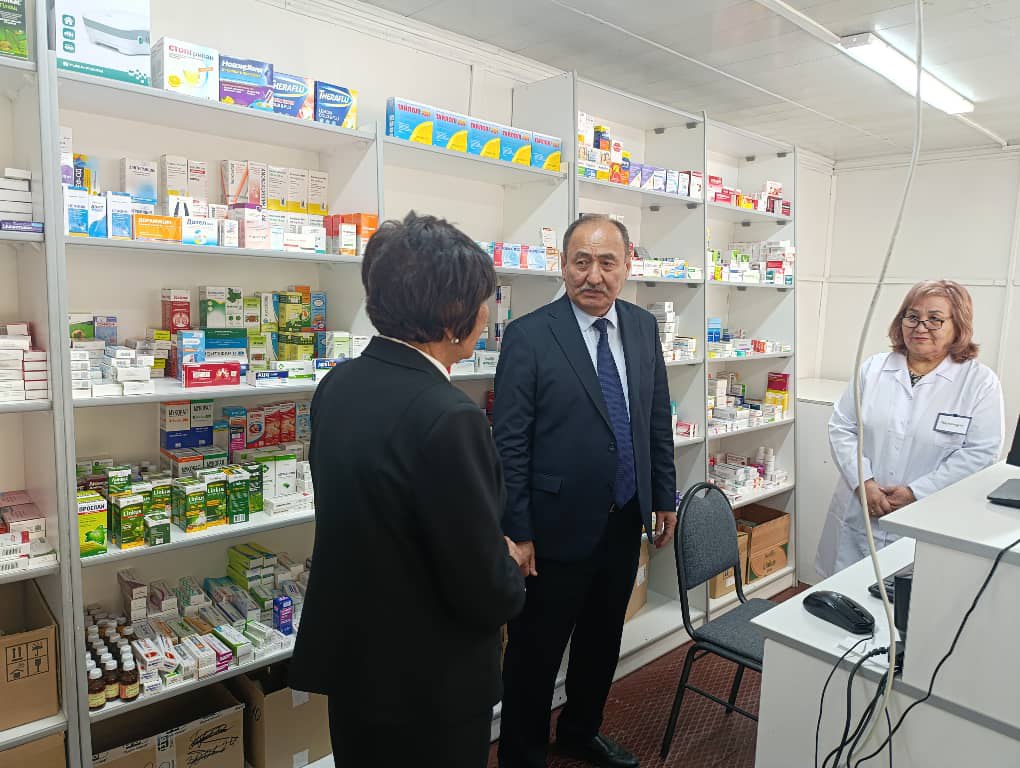
Health Minister of the Kyrgyz Republic, Alymkadyr Beishenaliyev has told local media that hospitals are 70-80% stocked with medicines, with hospitals in the Issyk-Kul region suffering the worst from short supplies. "There is a list of vital medicines, which we provide 100%. But doctors prescribe drugs which I, a medic, have never heard of; these are scarce drugs. Doctors used to get bonuses from private pharmacies [for prescribing them] - we are fighting this and it is impossible to change it in a short time," Beishenaliyev said. Kyrgyzstan's medical trade union reported that the country's hospitals lacked basic medicines and basic drugs. As of today, 290 medical organizations have applied for the necessary drugs, but are yet to receive them. Earlier this week, the Times of Central Asia reported about the difficult situation concerning the availability of drugs. Minister Beishenaliyev emphasized that the government is working to ensure hospitals have all the necessary drugs for the second quarter of 2024, promising that the problem would be resolved by 15 April. However, the head of Kyrgyzstan's medical trade union, Bermet Baryktabasova, criticized the statement made by the minister, saying that antibiotics, hormones, diuretics, anti-epileptic, psychotropic, cardiac and anti-asthma drugs are needed every day. It's medically advisable to have a three-month supply on hand, she said, adding that intensive care units need these drugs every minute, not next quarter. This year, to ensure timely and quality medical care, the Compulsory Medical Insurance Fund (CMIF) allocated 443.7 million sum ($5 million) for the purchase of medicines and medical devices.

No Central Asian Country Can Cope With Floods, Droughts On Its Own, Expert Tells TCA

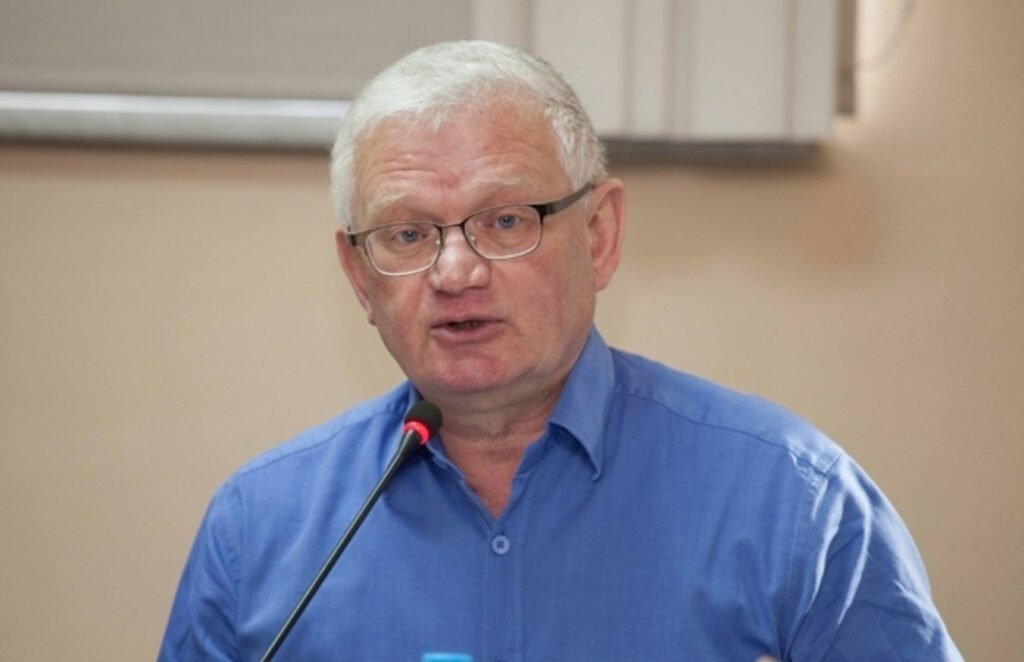
Lack of funds, the predominantly commodity-based nature of their economies, and the inability to reach agreement at a national level make the Central Asian republics vulnerable to natural disasters, Dr. Petr Svoik, Ph.D, a Kazakhstani economist and former head of the Anti=monopoly Policy Committee has told the Times of Central Asia.   Between Low Water and Flood Last year was marked by a drought in Kazakhstan, and at a critical moment for farmers, neighboring Kyrgyzstan stopped supplying water from the Kirov reservoir to the Zhambyl region, with the Kyrgyz authorities explaining that they were forced to cut off the water supply because of a severe shortage of water resources in the Chu and Talas Rivers for their own agricultural producers. Additionally in 2023, experts stated that the entire Eurasian region is entering a period of low water levels, which means agricultural and livestock sectors are threatened with permanent damage from drought. For Kazakhstan, the water problem is particularly acute, as many of the main water arteries are trans-boundary. This is true not only of the southern regions, but also along the Caspian Sea, which is supplied by Russia's Volga River, and the regions dependent on the Ural River in northwest Kazakhstan, which are at risk of drying up. However, the spring of 2024 has been marked by historic flooding. As of today, according to Kazakhstan's Ministry of Emergency Situations, ten regions of Kazakhstan are subject to flooding, with even multi-story buildings flooded in the regional centers of Kostanay, Aktobe and Atyrau. In a few days, according to the Ministry of Emergency Situations, a "wave" from Russia, where the major cities of Orsk and Orenburg are in danger, will come to Kazakhstan. Such a natural disaster hasn't happened in about 80 years, President Tokayev said. Drought and floods carry extraordinary costs, not to mention social damage. Every year, Kazakhstani villagers claim they are on the brink of ruin, and the state budget allocates significant funds to support them. As for floods, according to the World Bank, more than 1.1 million people have been affected in the five Central Asian states alone since the collapse of the Soviet Union. Each year, natural disasters in the region cause more than $10 billion in losses and affect the lives of nearly 3 million people. In Kazakhstan alone, 1.5 million people are at risk from river overflows, according to the Ministry of Emergency Situations. The country has allocated 7 billion tenge ($15.653 billion) for flood control in 2024 - but these funds are inadequate.   Political and Economic Losses  According to Petr Svoik, floods represent reputational losses for the authorities. The population loses property and faith in the authorities' ability to do something. Moreover, floods by definition have a high degree of predictability because of meteorological forecasts. "What is the problem of predicting the volume of water discharge in a couple of weeks, taking into account which reservoirs will overflow, and which ones need to be strengthened? For some reason, the authorities do not use...

Kyrgyzstan Court Moves Four Journalists from Prison to House Arrest

BISHKEK, Kyrgyzstan - Four journalists in Kyrgyzstan who were jailed in January on suspicion of inciting mass unrest have been moved to house arrest, while four others accused in the same case remain in pretrial detention. A district court in Bishkek ordered the release on Tuesday of the former employees of Temirov Live, which supporters say is being targeted by the government because of its reports – some on YouTube - on alleged corruption involving senior officials. Police concluded that Temirov Live reports “contain signs of calls for mass chaos,” according to media outlet Politklinika. The four journalists transferred from jail to house arrest are Tynystan Asypbekov, Saipidin Sultanaliev, Joodar Buzumov, and Maksat Tajibek uulu. Those still in jail are Temirov Live director Makhabat Tajibek kyzy; two other journalists with the outlet, Aike Beishekeyeva and Azamat Ishenbekov, and a former Temirov Live journalist, Aktilek Kaparov. A total of 11 former and current Temirov Live workers face charges in the case that could send them to jail for years if they are convicted. Free speech advocates say the prosecution is part of an increasingly restrictive rollback from a time when media enjoyed relative freedom in Kyrgyzstan. The conditions of the journalists still in prison came under further scrutiny this past weekend when Makhabat Tajibek kyzy, the Temirov Live director, alleged that she and other detainees not involved in her case were beaten. Authorities deny the allegation.

The New Silk Road

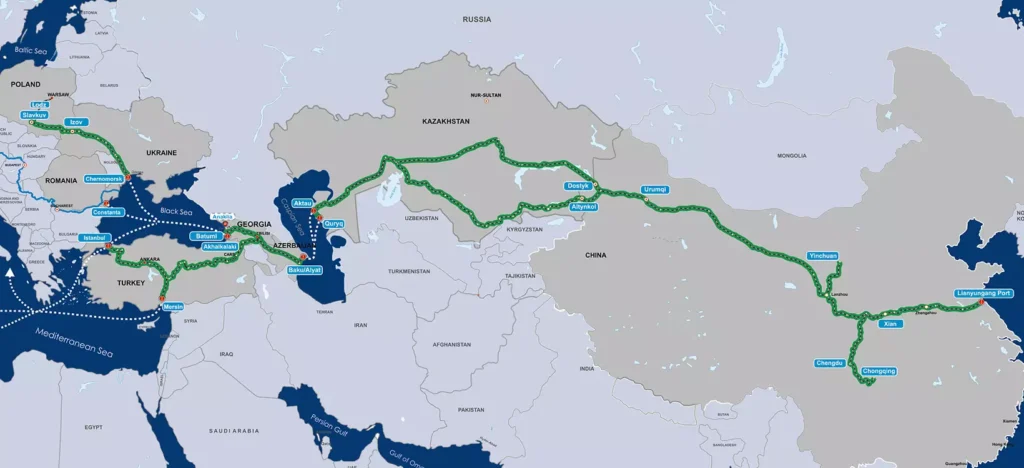
In light of the current geopolitical situation in the world, many countries are puzzled by the search for new alternative transport routes. One of these is the Trans-Caspian International Transport Route (TITR), which runs through China, Kazakhstan, the Caspian Sea, Azerbaijan, Georgia, and further to Turkey and European countries. New transport corridors through which goods and raw materials can be exported by all modes of transport are a vital task for many countries, today. Such routes must first of all be safe, beneficial to all partners, and economically feasible. The TITR, or the “Middle Corridor”, as it is also called, falls into these criteria. It was conceived more than ten years ago and began operating in 2017. In recent years, this route has been experiencing a new round of development, and this is not surprising since it connects East and West whilst bypassing Russia. Today, this is a flagship cooperation project for many states. This transport artery, connecting China, Central Asia and Europe, can become a continental bridge of the Belt and Road, halving the time of cargo transportation and significantly reducing transport costs. The route encompasses 11,000 km of rail, and includes ten seaports. It originates in China at the port of Lianyungang, passing through Xi'an to Urumqi, through Kazakhstan - from the dry ports of Khorgos and Dostyk - to the ports of Aktau and Kuryk, the Azerbaijan (port of Alyat), Georgia (Tbilisi), and then through the Black Sea it continues onto Europe. It is noteworthy that this route is multimodal, that is, rail, sea and road transport can be used. The current capacity of the Trans-Caspian international transport route is 6 million tons per year. By 2025, it is planned to reach a level of 10 million tons per year. So, the potential is great. Assessing all possibilities, interested states intend to invest financial resources in the further development of this corridor and the expansion of its port and railway infrastructure, which will have a positive impact on the quality of services provided and reduce transportation times. Each side – China, Turkey, Azerbaijan and Kazakhstan – has its own benefit, and these countries have something to offer each other in much larger volumes than the current supplies. China intends to develop its western provinces, providing them with access to regional markets. Azerbaijan sees an opportunity to strengthen its transit role and become the largest transport hub. Türkiye, in turn, continues to extend its influence in Azerbaijan and Central Asia. As for Kazakhstan, there are fears that attacks by the Ukrainian Army on Russian oil refineries could lead to a blockage of the Caspian Pipeline Consortium (CPC), which supplies Kazakh oil to international markets. In this regard, a huge amount of work is being done to diversify, and the Trans-Caspian International Transport Route comes in handy here. The Kazakh company, KazMunaiGas has already purchased tankers, and there are agreements with Azerbaijan on access to the Baku-Supsa and Baku-Tbilisi-Ceyhan pipelines, through which Kazakhstan can transport about 2 million tons...

Five Kazakhstani Banks Improve Their Positions in S&P Rating

S&P Global Ratings, one of the "big three" global ratings agencies, has revised its outlook and upgraded the ratings for five banks in Kazakhstan -- Halyk Bank, Kaspi Bank, Bank CenterCredit, ForteBank and Nurbank. S&P experts pointed out that in recent years Kazakhstan's banking sector has demonstrated increased resilience to macroeconomic risks, especially against the backdrop of increasing geopolitical instability in the region. Asset quality and the financial performance of banks have significantly exceeded analysts' expectations. As a result, S&P improved its economic risk assessment and revised the industry risk trend to "Positive." For example, as of the beginning of 2024, the share of overdue loans (more than 90 days overdue) was only 3% of the total portfolio -- significantly lower than in previous years. Comparing the banking sector with the segment of microfinance institutions (MFIs), it is clear that MFIs are in a more attractive shape. The share of delinquencies in MFIs is growing, which indicates an inherently higher risk profile in their loan portfolios. It's possible that the adoption by Kazakh parliament of a law on risk minimization in lending -- and protecting borrowers' rights -- could remedy the situation. According to the National Bank of Kazakhstan, the level of loan application approvals remains moderate, indicating a careful approach to issuing loans and control over their repayment by banking structures. Also complicating the retail and corporate lending landscape is the high key rate in Kazakhstan, which was cut to 14.75% in February from 15.25%.