• KGS/USD = 0.01144 0%
  • KZT/USD = 0.00212 0%
  • TJS/USD = 0.10456 0.19%
  • UZS/USD = 0.00008 0%
  • TMT/USD = 0.28490 0%
  • KGS/USD = 0.01144 0%
  • KZT/USD = 0.00212 0%
  • TJS/USD = 0.10456 0.19%
  • UZS/USD = 0.00008 0%
  • TMT/USD = 0.28490 0%
  • KGS/USD = 0.01144 0%
  • KZT/USD = 0.00212 0%
  • TJS/USD = 0.10456 0.19%
  • UZS/USD = 0.00008 0%
  • TMT/USD = 0.28490 0%
  • KGS/USD = 0.01144 0%
  • KZT/USD = 0.00212 0%
  • TJS/USD = 0.10456 0.19%
  • UZS/USD = 0.00008 0%
  • TMT/USD = 0.28490 0%
  • KGS/USD = 0.01144 0%
  • KZT/USD = 0.00212 0%
  • TJS/USD = 0.10456 0.19%
  • UZS/USD = 0.00008 0%
  • TMT/USD = 0.28490 0%
  • KGS/USD = 0.01144 0%
  • KZT/USD = 0.00212 0%
  • TJS/USD = 0.10456 0.19%
  • UZS/USD = 0.00008 0%
  • TMT/USD = 0.28490 0%
  • KGS/USD = 0.01144 0%
  • KZT/USD = 0.00212 0%
  • TJS/USD = 0.10456 0.19%
  • UZS/USD = 0.00008 0%
  • TMT/USD = 0.28490 0%
  • KGS/USD = 0.01144 0%
  • KZT/USD = 0.00212 0%
  • TJS/USD = 0.10456 0.19%
  • UZS/USD = 0.00008 0%
  • TMT/USD = 0.28490 0%

Viewing results 4711 - 4716 of 5755

A Greater Role for Kazakhstan’s Media

On June 27, in the lead-up to Mass Media Workers' Day, Kazakhstan’s President Kassym-Jomart Tokayev took to the stage to address a gathering of journalists and media professionals. His engagement underscored the government’s response to the public’s increasing attention to a more liberalized media landscape. Western observers, having taken a renewed interest in former Soviet states amidst Russia’s invasion of Ukraine, are pushing these countries for progress, particularly on press freedoms. The European Center for Press Freedoms criticized the passage of Georgia’s foreign agent law that drove of tens of thousands of citizens to protest in the streets. Amnesty International condemned raids of journalists’ offices and homes in Kyrgyzstan. Reporters Without Borders downgraded Uzbekistan’s position in its State of Press Freedom Index to “very serious”. Kazakhstan has also received its fair share of Western criticism about freedom of the country’s media. Human Rights Watch reports that “although Kazakhstan’s new mass media law has some amendments that should improve the status quo, its ambiguity and the restrictive nature of other provisions threaten to create obstacles to the work of local and foreign journalists”. Government attitudes towards the media vary widely along the periphery of Russia and the former Soviet Union. In Kazakhstan, despite ongoing challenges and shortcomings, it is increasingly seen as the fourth estate, providing citizens with the information they need to check the government’s power. Increasing media influence on society and elected officials Indeed, Tokayev referred to the media as the “fourth estate” in his address, expanding on its growing roles and responsibilities in building “a just and fair Kazakhstan”. He acknowledged the media provides a “pluralism of opinion (which) is exactly what we strived for from the beginning, (and) is our fundamental achievement,” noting that it can “criticize the activities of the authorities”. He called it the “voice of the people, the messenger of the nation, and the spiritual support of society,” adding that it can “shape the legal culture”. A recent example of the media’s influence in the legal realm in Kazakhstan can be seen in the aftermath of Saltanat Nukenova’s murder by her husband, who is a former Minister of the Economy. This tragic story garnered an enormous reaction in Kazakhstani media and resulted in calls for legislation to protect women against domestic violence. Consequently, in April 2024, the President signed what became known as “Saltanat’s Law”, and the former minister was sentenced to 24 years in prison. A burgeoning media space, but some challenges remain According to the TCA’s count, over a hundred independent media outlets operate in Kazakhstan through sites and social media channels. They express a wide range of opinions, including criticizing government activities. On the other hand, the government maintains the right to revoke their license to operate inside Kazakhstan. In the last year, for instance, the Ministry of Culture and Information has blocked digital currency platform, Coinbase.com, as well as an LGBTQ+ site for children called Selftanu.kz, and the Russian news portal Sputnik24. In this environment, the June 27 ceremony did...
Top Kazakh Businessman Denies Allegations about Greek Island Fire

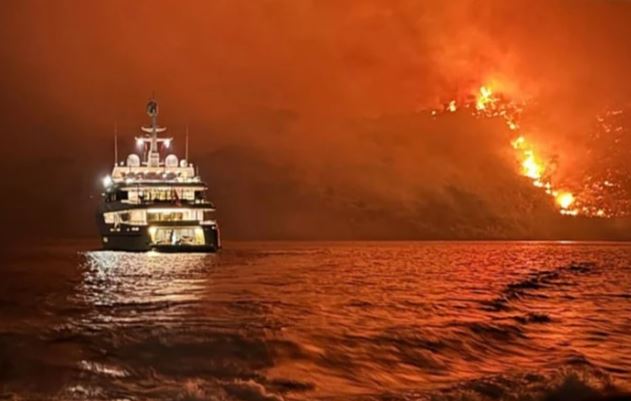
One of Kazakhstan’s wealthiest business executives has denied any wrongdoing in connection with a forest fire that was allegedly caused by fireworks on the Greek tourist island of Hydra. Daniyar Abulgazin, who has shares in multiple Kazakh energy and other companies, said he had rented the luxury boat named Persefoni I that has been linked by Greek prosecutors to the fire on June 21. However, he said he and his group left Greece as previously scheduled on June 22 after speaking with “representatives of the Greek authorities,” who made no claims against them in connection with the fire. Some of his guests had already left Greece on the morning of June 21, according to Abulgazin. “It came as a complete surprise to us to learn of the allegations that followed in the press upon our return, and I categorically deny any wrongdoing,” Abulgazin, who had returned to Kazakhstan, said in a statement that was released by DRD Partnership, a London-based communications firm. Greek prosecutors have charged the captain and 12 crewmembers of the boat with arson and eight Kazakh passengers who were on the vessel face charges of complicity in arson, according to Greek media reports. Several reports said Greek investigators found the remains of firecrackers on a Hydra beach and concluded that passengers from the Persefoni I were on the beach around the time of the fire, which burned an estimated 300 acres. The case has stirred anger in Greece, which is enduring high summer temperatures and a string of forest fires. Some commentators questioned how the Kazakh tourists were able to leave Greece before an investigation of the fire had barely begun. Some Greek media outlets said prosecutors were investigating the initial handling of the matter by Greek authorities. They have also mentioned Abulgazin and the names of some of the other Kazakh passengers on the boat in their reports, posting photos of them on broadcasts and websites. Abulgazin referred to “incorrect and misleading” media reports, expressed regret about the fire and promising to cooperate with the Greek investigation. “Neither I nor my guests performed any actions that could lead to a fire. We strictly followed the fire safety rules established on the yacht. Neither I nor my guests asked the crew of the yacht or other third parties to take any actions that could lead to a fire,” he said. Abulgazin has shares in Qazaq Oil, SinoOil and Gas Energy gas station networks as well as other operations and his worth is estimated at $380 million, according to Forbes Kazakhstan. His wife, Aidan Suleimenova, has interests in fashion companies and shopping centers in Kazakhstan. DRD Partnership, the firm that released Abulgazin’s statement about the fire, says it focuses on “building value for our clients and protecting their reputations at moments of challenge and change.”

Participants at SCO Summit in Astana to Adopt New Security Paradigm

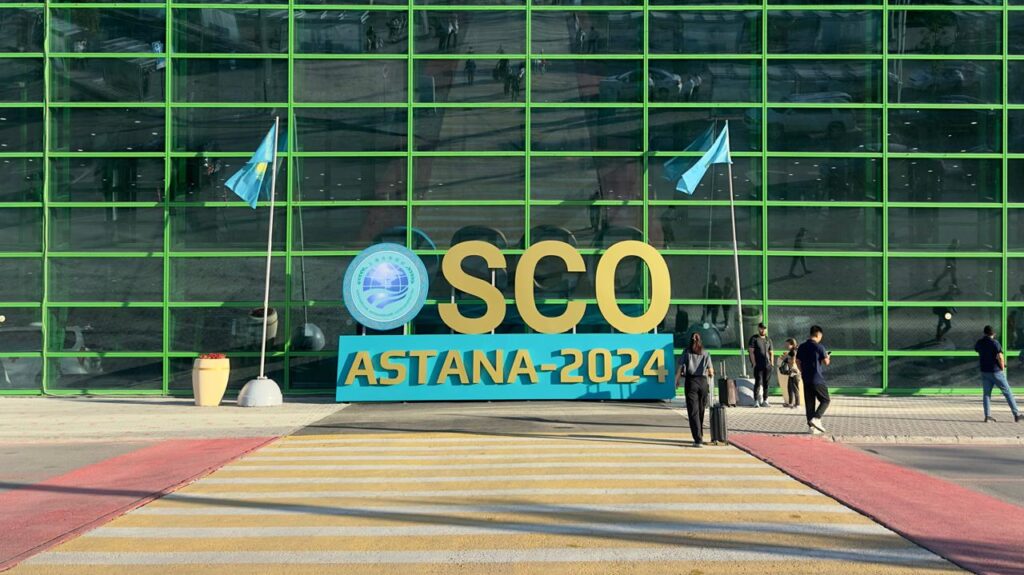
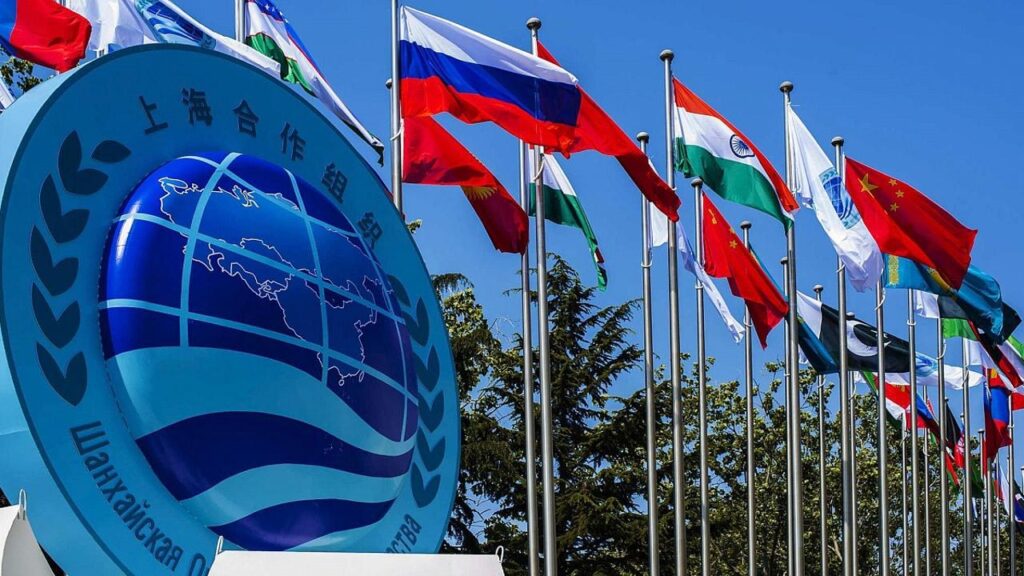
Participants at the Shanghai Cooperation Organization (SCO) summit in Astana will appeal to the world community to start an honest and open dialogue and adopt a new security paradigm, Kazakh President Kassym-Jomart Tokayev has stated in an interview with the Xinhua news agency. The SCO summit will be held in Astana on July 3-4, and member states, observers, and dialog partners will participate. U.N. Secretary-General, António Gutterish will also be in attendance. The SCO currently has nine member states: China, India, Iran, Kazakhstan, Kyrgyzstan, Pakistan, Russia, Tajikistan, and Uzbekistan. Afghanistan, Belarus, and Mongolia hold observer status, though Belarus is expected to become a full member of the Organization at the upcoming summit. According to Tokayev, the summit is expected to make strategically important decisions regarding the organization's future. "The main areas of interaction for the medium term will be defined, and initiatives will be developed for the adequate and timely response to current challenges and threats," Tokayev stated. The president also noted that the summit's final decisions will fully embody the fundamental principles of the "Shanghai spirit": friendship, mutual trust, mutual benefit, and the consideration of each other's interests. "Participants of the summit in Astana will appeal to the world community to start an honest and open global dialog, adopt a new security paradigm, create a fair economic environment, and make the necessary efforts to protect the planet's purity," he added. The President also stated that 2024 was declared the SCO Year of Ecology on the initiative of Kazakhstan. "International documents in ecology, protection of natural territories, ecotourism, combating climate change have been developed and are planned for adoption," Tokayev added. Earlier, the official representative of the Ministry of Foreign Affairs of the People's Republic of China reported that Chinese President Xi Jinping will participate in the 24th meeting of the Council of Heads of State of the SCO in Astana. At the invitation of the President of Kazakhstan, Kassym-Jomart Tokayev, and the President of Tajikistan, Emomali Rahmon, President Xi Jinping will also visit these two countries.

SCO Summit in Astana: Will the West Accept the Role of the “Middle Powers”?

Kazakhstan will chair the Shanghai Cooperation Organization (SCO) summit in Astana on July 3-4. During the event, significant global initiatives are expected to be proposed. Will Modi attend? Kazakhstan has been chairing the SCO since July 2023, and following this summit the organization's presidency will pass to China. The SCO was founded in 2001 by the leaders of China, Russia, Kazakhstan, Tajikistan, Kyrgyzstan, and Uzbekistan. In 2017, India and Pakistan became members of the organization, whilst Iran joined in 2022, and Belarus is expected to join the SCO in the summer of 2024. The association's main tasks are to strengthen stability, fight terrorism and drug smuggling, develop economic cooperation and energy, and promote scientific and cultural partnerships. The summit in Astana is expected to be attended by heads of state and government of 15 countries: Kazakhstan, Iran, China, Kyrgyzstan, Pakistan, Russia, Tajikistan, Uzbekistan, Belarus, Mongolia, Azerbaijan, Qatar, UAE, Turkey and Turkmenistan. U.N. Secretary-General Antonio Guterres will also participate. According to foreign media, Indian Prime Minister Narendra Modi intends to avoid the summit. In particular, The Federal reports that the main reason for his decision is an unwillingness to be surrounded by anti-American attitudes. "Although it has not been officially announced yet, unofficially, Indian diplomats have confirmed that Modi will not attend the SCO summit. Foreign Minister, S. Jaishankar will represent India in Kazakhstan instead," the publication reported. Since the SCO includes China, Russia, and Iran, whose relations with the U.S. remain strained, anti-American statements are possible, even likely, during the summit, and Modi does not want to be associated with them. Nevertheless, in his conversation with President Tokayev, he expressed support for the activities of the SCO and his intention to cooperate. Solving global problems The SCO unites countries with a combined population of about 3.5 billion people, so its members face the full range of contemporary problems: terrorism, geopolitical tensions, environmental pollution, climate change, and underdeveloped logistics. In particular, Kazakh President Kassym-Jomart Tokayev has emphasized that Afghanistan's situation deserves close attention during the upcoming summit. According to Tokayev, it is essential to continue efforts to prevent a humanitarian crisis in Afghanistan and create the conditions for its long-term stabilization. Political analysts say that Kazakhstan is making quite an effort to bring stability to Afghanistan. The republic is supplying food so that a real controlling force can begin to build a relatively stable government and further reduce the risks from terrorist activity and migration. In his policy statements, President Tokayev called on countries like Kazakhstan to actively promote their role as participants in global processes as responsible players on the world stage. "In today's world, gripped by increased geopolitical turbulence and ongoing conflicts, multilateral solutions are in demand more than ever. Armed clashes in Europe, the Middle East, and Africa are claiming the lives of hundreds of thousands of people at a time when global challenges such as climate change have left millions hungry, unprotected, and displaced. These conflicts appear intractable, and the hope of overcoming them is fading. Against...

SCO Summit in Astana: Correspondents from China Global Television Network, Times of Central Asia Discuss Upcoming Meeting

National leaders and other dignitaries from over 20 countries will be in the Kazakh capital of Astana this week for the annual summit of the Shanghai Cooperation Organization (SCO). The Times of Central Asia will be covering the SCO Summit live on 3 and 4 July from the city’s Palace of Peace and Reconciliation. The SCO is a political, security and economic alliance in the wider Eurasia region. This year’s Summit host Kazakhstan was a founding member of the Organization in 2001, alongside China and Russia, and its Central Asian neighbors Kyrgyzstan, Tajikistan and Uzbekistan. The last time the Summit was held in Astana, in 2017, India and Pakistan became full members. There are currently nine full member states, four observer states, and 14 dialogue partners, covering half of the world’s population, and almost a third of global GDP. This year's Summit will have significant implications for regional and global affairs. It is likely to produce initiatives aimed at reducing trade barriers, and promoting investments between SCO member states. High on the agenda will be the Belt and Road Initiative (BRI) – a crucial framework for enhancing connectivity and economic ties between China and its Central Asian partners. Other anticipated outcomes include new initiatives on climate change and sustainable development, as well as strengthened cultural and educational exchanges. Upon the initiative of Kazakhstan’s President Kassym-Jomart Tokayev, 2024 has been named the SCO “Year of Ecology”. Ahead of the Astana Summit, The Times of Central Asia’s senior editor Jonathan Campion spoke with an anchor from China Global Television Network, Mr Zhong Shi, about the role of the Shanghai Cooperation Organization plays in the Central Asia region. Their talk can be viewed in full in the videos below. In response to The Times of Central Asia’s question about what makes the SCO different from other alliances that the countries of Central Asia are aligned with, Mr Zhong explained that: “The SCO has been truly effective in combatting what we call the three enemies of all members, namely terrorism, extremism and separatism. There have been joint military drills conducted to enhance the coordination among armed forces”. Listen to Mr Zhong’s full response below: [video width="1920" height="1080" mp4="https://timesca.com/wp-content/uploads/2024/06/fullscreen-Zhong-Shi-answer-2-questions.mp4"][/video]   [video width="1920" height="1080" mp4="https://timesca.com/wp-content/uploads/2024/06/tw0-windows-Zhong-Shi-answer-2-questions.mp4"][/video] In turn, Mr Campion gave The Times of Central Asia’s perspective on the upcoming Summit. Asked about the impact that the Belt and Road Initiative has had on Central Asia, he replied: "Central Asia is evolving as a land bridge component to the Belt and Road Initiative linking China to the Caspian Sea. We’re seeing that investments in transport infrastructure are unlocking the region’s vast natural resources. With the world making a green transition, Kazakhstan stands out, as it has an abundance of critical materials – or green metals as they are known – that are used in the components of green technologies.” Listen to Mr Campion’s full response below: [video width="1920" height="1080" mp4="https://timesca.com/wp-content/uploads/2024/06/Jonathon-answer-Q2.mp4"][/video]   [video width="1920" height="1080" mp4="https://timesca.com/wp-content/uploads/2024/06/Jonathon-answer-Q3.mp4"][/video]  

Qosh Tepa Canal Threatens Water Balance in Central Asia

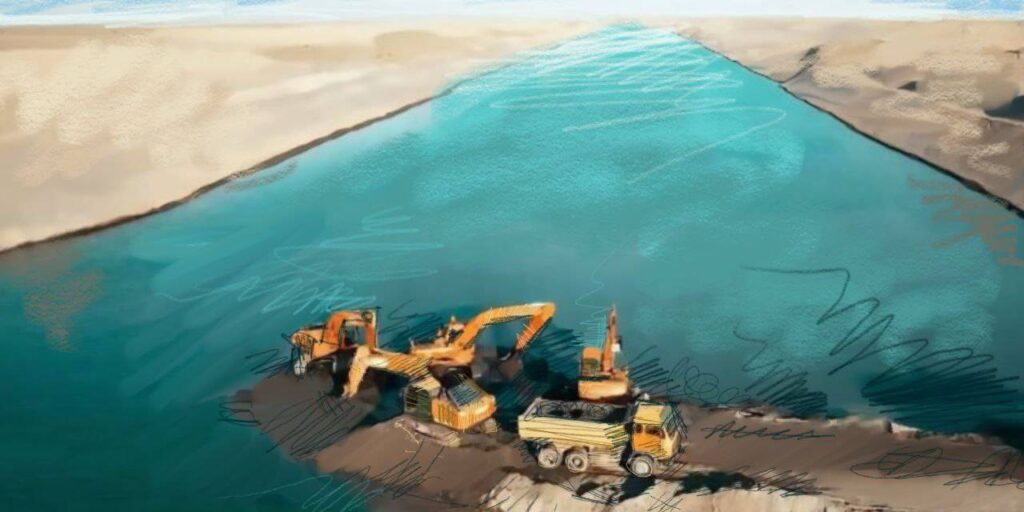
The construction of the Qosh Tepa Canal may threaten Central Asia's water balance and the region must address the issue. The warning, given by Nikolay Podguzov, Chairman of the Board of the Eurasian Development Bank which is involved in projects affecting the region's water balance, was reported  by AKI press. According to experts, the Qosh Tepa Canal, currently under construction in Afghanistan, receives ten cubic kilometers of water per year from general drainage, and also, the Amu Darya river. Marat Imonkulov, Secretary of the Kyrgyz Security Council, said that a reduction of water in the Amu Darya will inevitably lead to an increase in water taken from the Syr Darya river for agriculture and other needs. Some analysts claim that under such a scenario, Central Asia will face a chronic water shortage. Although not one of its members, the EDB, reminded Afghanistan that the construction of the canal is being implemented by the state on its territory and Podguzov stressed, “The states mutually resolve issues related to relations through diplomatic channels. But we have to solve the problem together. I believe that the countries will agree." Analysts seek to resolve the situation by developing digital water accounting, water conservation, and proper treatment of the region's resources. The Qosh Tepa Canal project, conducted by the Taliban and currently underway in northern Afghanistan, is a significant initiative in managing the Amu Darya's water resource but during its first phase, has raised concerns among Central Asian countries. Heeding specialists' forecasts, the President of Uzbekistan, Shavkat Mirziyoyev, said that the construction of the Qosh Tepa Canal will change the water regime and balance in Central Asia.