• KGS/USD = 0.01144 0%
  • KZT/USD = 0.00212 0%
  • TJS/USD = 0.10456 0.19%
  • UZS/USD = 0.00008 0%
  • TMT/USD = 0.28490 0%
  • KGS/USD = 0.01144 0%
  • KZT/USD = 0.00212 0%
  • TJS/USD = 0.10456 0.19%
  • UZS/USD = 0.00008 0%
  • TMT/USD = 0.28490 0%
  • KGS/USD = 0.01144 0%
  • KZT/USD = 0.00212 0%
  • TJS/USD = 0.10456 0.19%
  • UZS/USD = 0.00008 0%
  • TMT/USD = 0.28490 0%
  • KGS/USD = 0.01144 0%
  • KZT/USD = 0.00212 0%
  • TJS/USD = 0.10456 0.19%
  • UZS/USD = 0.00008 0%
  • TMT/USD = 0.28490 0%
  • KGS/USD = 0.01144 0%
  • KZT/USD = 0.00212 0%
  • TJS/USD = 0.10456 0.19%
  • UZS/USD = 0.00008 0%
  • TMT/USD = 0.28490 0%
  • KGS/USD = 0.01144 0%
  • KZT/USD = 0.00212 0%
  • TJS/USD = 0.10456 0.19%
  • UZS/USD = 0.00008 0%
  • TMT/USD = 0.28490 0%
  • KGS/USD = 0.01144 0%
  • KZT/USD = 0.00212 0%
  • TJS/USD = 0.10456 0.19%
  • UZS/USD = 0.00008 0%
  • TMT/USD = 0.28490 0%
  • KGS/USD = 0.01144 0%
  • KZT/USD = 0.00212 0%
  • TJS/USD = 0.10456 0.19%
  • UZS/USD = 0.00008 0%
  • TMT/USD = 0.28490 0%

Viewing results 4771 - 4776 of 5755

Prominent Political Figure Akbarsho Iskandarov Detained in Tajikistan

The former Chairman of the Supreme Soviet of Tajikistan, Akbarsho Iskandarov, has been detained in Dushanbe. During the wave of conflicts in the early 1990s, he took over as the Chairman of Parliament and served as Tajikistan's acting president. In recent years, he worked at the Institute of Philosophy, Political Science, and Law of the Academy of Sciences. Prior to this, for many years he served as Ambassador Extraordinary and Plenipotentiary of Tajikistan to Turkmenistan, Kazakhstan, and Mongolia. The General Prosecutor's Office summoned Akbarsho Iskandarov for questioning on June 13 and 14, following which they did not release him. The reason he was interviewed and the grounds on which he has been detained are unknown. "Investigators of the General Prosecutor's Office questioned about 50 people during these days and released them on their recognizance, while Akbarsho Iskandarov was not released," a source stated. Officials and relatives of Akbarsho Iskandarov have refused to comment. Iskandarov was detained after MP Saidjafar Usmonzoda and former Foreign Minister Hamrokhon Zarifi were also held in custody. It is not known whether these detentions are related.

Kyrgyzstan to Build New Checkpoint on Border with China

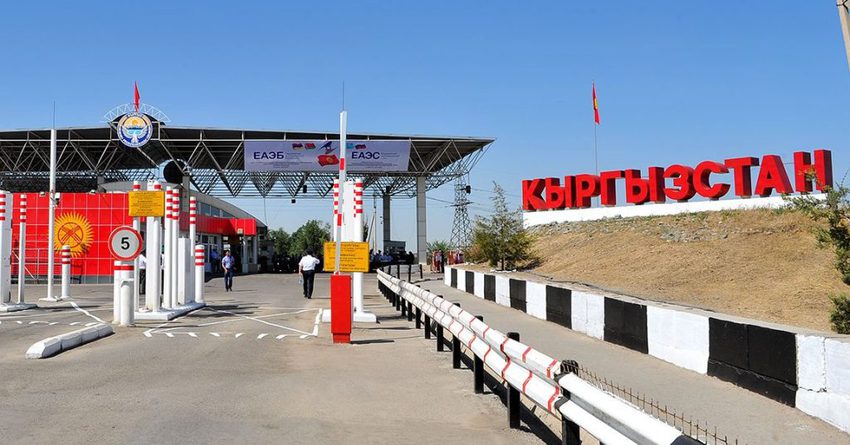
A bill regarding ratification of the intergovernmental agreement to open a new checkpoint named "Bedel" on the border with China was submitted to the Jogorku Kenesh (Parliament) by the Cabinet of Ministers of Kyrgyzstan. This move is aimed at facilitating border crossings, enhancing trade relations, and improving bilateral cooperation between Kyrgyzstan and China. Establishing the Bedel checkpoint is expected to streamline customs processes and boost economic activity in the region. The authorities in the Kyrgyz Republic have claimed the new checkpoint will reduce the delivery time of goods from the Xinjiang Uyghur Autonomous Region in China as compared to the current Kashgar—Torugart—Naryn—Bishkek transportation corridor. It is also assumed that trade turnover with China will increase exponentially. According to reports, Kyrgyzstan plans to allocate approximately 77.9 million som ($896,000) from the state budget towards the creation of the checkpoint.

Border Dispute No More: Are Bishkek and Dushanbe Ready to Make Peace?

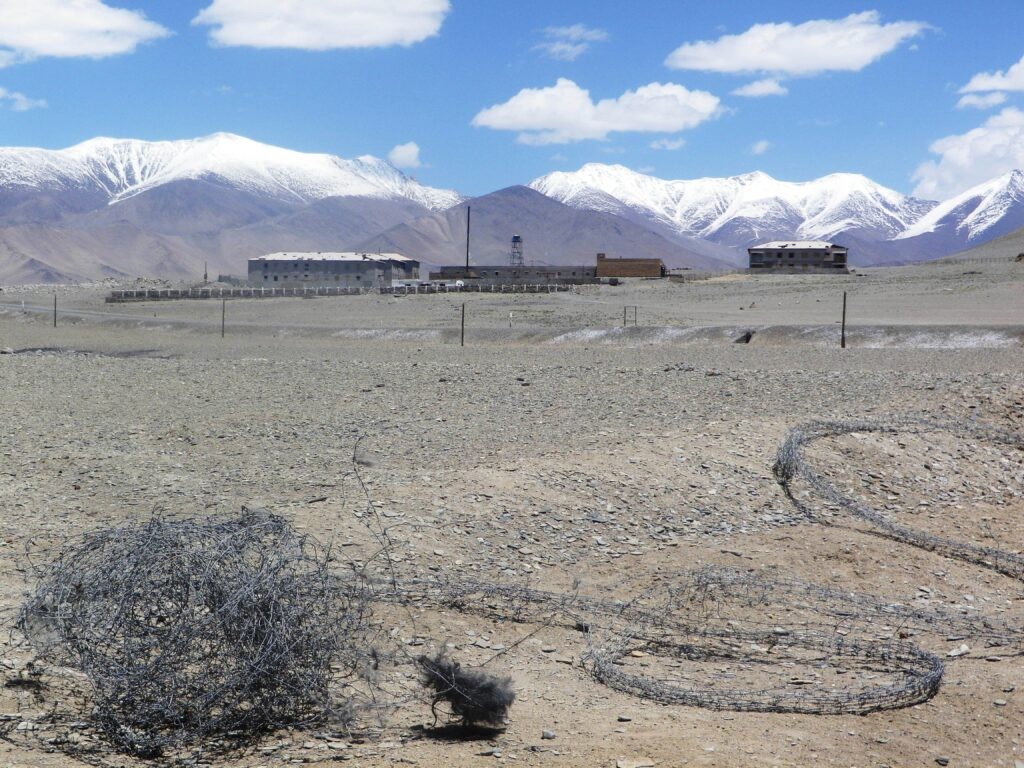
Kyrgyzstan and Tajikistan have long been restless neighbors from Tashkent and Astana's point of view. In many respects, Kazakhstan and Uzbekistan forced the current rapprochement of the Central Asian republics, as expressed on the outer perimeter in the C5+1 format, where the region strives to put forward a consolidated position. After all, investment does not come to problematic areas. The problem border The main sticking point in relations between Bishkek and Dushanbe stretches for almost a thousand kilometers - the border between the two states - the demarcation of which, following the collapse of the USSR, neither the government of Kyrgyzstan or Tajikistan was concerned about. There were enough problems to deal with: falling living standards, civil war in Tajikistan, and endless revolutions in Kyrgyzstan. To date, the border has still not been fully demarcated, causing problems for residents of both states over access to water, pastures, and roads. Disputed territories accounted for about 30% of the border between the two countries. The first alarm bells sounded back in 2014 - in January and May of that year there were armed incidents on the border between northern Tajikistan's in Sughd Province and Kyrgyzstan's Batken Province. Tajiks and Kyrgyz have lived compactly in this densely populated area for centuries. Tajik villages neighbor Kyrgyz villages, there are exclaves such as Vorukh, and the border can crisscross roads, presenting difficulties for traveling. "In Soviet times, people moved around quietly when the borders were conditional. Residents on both sides had free access to pastures and arable land. There were no problems along the watershed. If lands were given by the republics to each other for some purpose, local authorities knew where and whose land was located. With the collapse of the Union, the whole system ceased to function. And the problems of open unmarked borders became more acute," political observer Negmatullo Mirsaidov explained in a commentary for the BBC Russian Service after the January 2014 clash. Time passed, but the situation did not change, and a new aggravation occurred in the first year of the COVID-19 pandemic. Then, clashes were repeated with depressing regularity, and in 2022 came a military incursion by Tajik soldiers into a Kyrgyz border village with the seizure of administrative buildings. Armed clashes broke out all along the border and Russia intervened, forcing the parties to negotiate. Central Asia then picked up the baton, trying to melt the ice of hostility between the skirmishing neighbors. In early February, Tajik President Emomali Rahmon met with Kyrgyz Foreign Minister, Zheenbek Kulubaev, in Dushanbe. According to the press service of the head of Tajikistan, "Over the past four months, the parties have agreed on the design and working description of about 196 kilometers of the state border and to date have determined about 90% of the line of its passage." Considering that the Tajik-Kyrgyz border is about 980 kilometers long, about 100 kilometers remain to be agreed upon. Before the clash in 2022, more than 300 kilometers of the border were considered disputed....

Kazakhstan Pushes New Measures to Utilize its Transit Potential

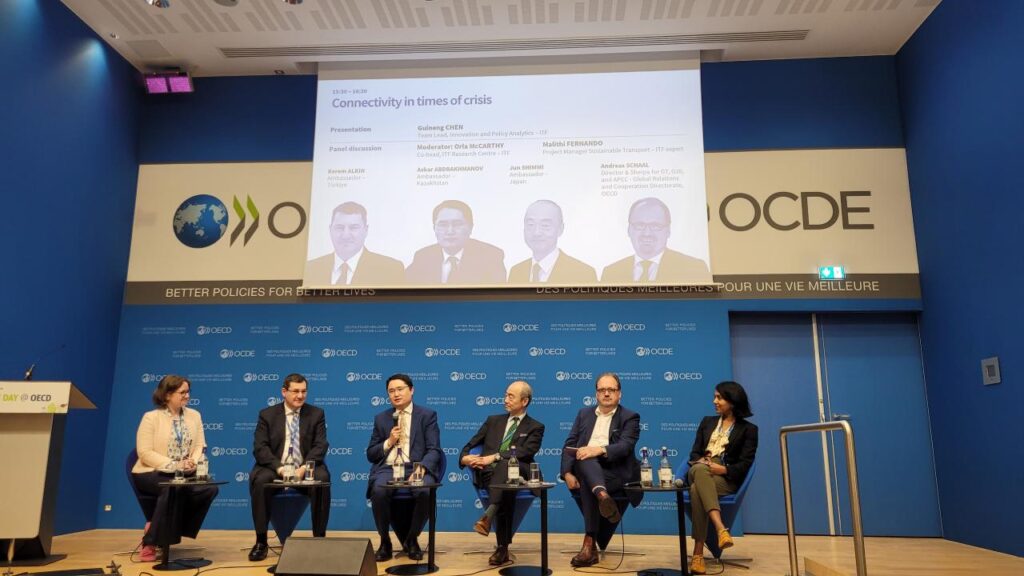
On June 20, Permanent Delegate of Kazakhstan to International Organizations in Paris, Askar Abdrakhmanov, attended the International Transport Forum (ITF) Day at the Organization for Economic Co-operation and Development (OECD) headquarters. In his presentation on “Connectivity in Times of Crisis,” Ambassador Abdrakhmanov focused on Kazakhstan’s measures to further develop its transport infrastructure and international freight transportation, and Astana’s efforts to develop transport cooperation with the country’s neighbouring states. Regarding the potential of both old and new routes, Abdrakhmanov highlighted the construction of second tracks on the Dostyk – Moynty railway on the Kazakhstan and China border, a container hub and dredging projects at Aktau and Kuryk seaports, a new Darbaza – Maktaral railway line with further access through Uzbekistan, Turkmenistan and Iran to the Persian Gulf and the Indian Ocean, and functioning the eastern branches of the North-South corridor. Special attention was paid to the Trans-Caspian International Transport Route (TITR), widely known as the Middle Corridor. He emphasized the importance of the recent joint government venture to establish a single, unified operation of cargo transportation along the Middle Corridor, as well as the launch of the TITR Coordination Platform with the participation of Central Asian states, the South Caucasus, and the European Commission. “The current geopolitical situation has created new economic and logistical challenges for Kazakhstan and other countries in the region, and the answers to them lie in closer cooperation with our neighbours and international partners,” stated the Kazakh diplomat. The International Transport Forum (ITF) at the OECD is an intergovernmental organization with 69 member countries which serves as a think tank for transport policy and organizes annual summits of transport ministers. Kazakhstan has been an ITF member  since 2017.    

Results of Visit of the U.S. Trade Representative to Kazakhstan

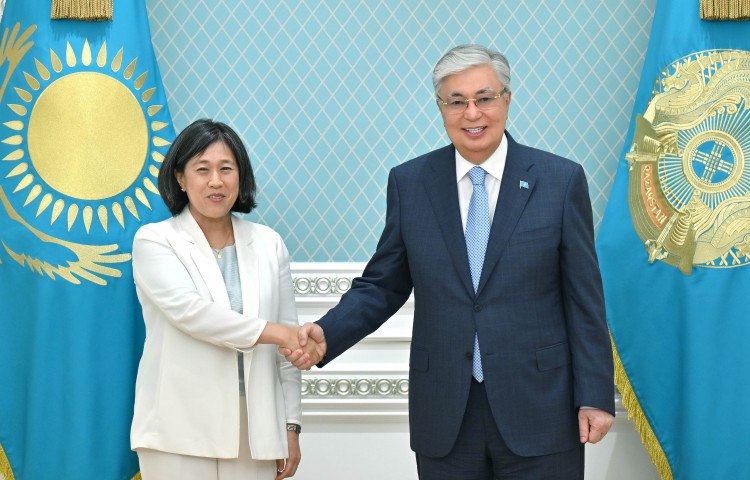
By Vagit Ismailov President of Kazakhstan Kassym-Jomart Tokayev, Deputy Prime Minister Serik Zhumangarin, Minister of Trade and Integration Arman Shakkaliev, Minister of Labor and Social Protection Svetlana Zhakupova, and other officials met with U.S. Trade Representative Catherine Tye. The United States and Kazakhstan reaffirmed their commitment to expanding and diversifying bilateral trade relations. Both sides pledged to deepen cooperation in agriculture and make progress in the near term. This includes increasing U.S. meat and poultry production capacity, optimizing the issuance of digital export certificates, and facilitating increased shipments of U.S. agricultural equipment to Kazakhstan. Tye noted Kazakhstan's interest in repealing the Jackson-Vanik amendment and expressed support for the U.S. Congress' efforts to update the Generalized System of Preferences program. She also recognized the program's importance in diversifying Kazakhstan's trade. The U.S. and Kazakhstan pledged to strengthen joint work on regional connectivity and increase the capacity of the Trans-Caspian Trade Route. The parties discussed increasing bilateral engagement to create diverse, secure, and sustainable supply chains. They stressed the importance of continuous cooperation in trade facilitation, including the harmonization and digitization of customs processes. Tye noted the contribution of U.S. companies' supply of high-quality products and the development of alternative trade routes. She also thanked Kazakhstan for the success of the 15th meeting of the Board of the U.S.-Central Asia Trade and Investment Framework Agreement (TIFA). The working groups noted progress on several issues, including sanitary and phyto-sanitary measures, customs procedures, intellectual property protection, women's economic empowerment, and digital trade. Tye further emphasized the importance of a transparent and consultative regulatory process in regional harmonization. Kazakhstan and the U.S. reaffirmed their commitment to utilize the TIFA mechanism further to deepen trade and investment ties between the U.S. and Central Asia. The U.S. also expressed interest in working closely with Kazakhstan to support internationally recognized labor rights, including promoting workers' rights to freedom of association and collective bargaining. The United States and Kazakhstan pledged to continue working to achieve concrete trade results, maintaining the positive momentum of the bilateral trade and investment relationship.

Firefighters Evacuate People from Burning High-Rise in Astana

A large fire broke out at a 26-storey building in Kazakhstan’s capital on Saturday, sending dense clouds of smoke billowing across the city. Firefighters evacuated people, including a three-month-old baby, from the Rixos Khan Shatyr Residences in Astana, the Ministry of Emergency Situations said. It posted photographs and video of firefighters escorting people into the street and using a crane and hose to extinguish the flames. Much of the blaze appeared to be on part of the building’s outer covering material. Built by Turkish company Sembol Construction, the building is on Turan Avenue and near the Khan Shatyr shopping and entertainment center, which has a distinctive cone-like structure. “Fully equipped apartments and high-level finishes, full range of services and infrastructure, as well as comfortable and spacious offices will be a hallmark of the project,” Sembol Construction said when the building project was underway. Eight people, including one child, were evacuated from the building. According to the official representative of the Ministry of Emergency Situations of the Republic of Kazakhstan Dinara Nurgalieva, there was no information about the severely injured. A firefighting headquarters has been set up at the scene, with firefighters continuing to extinguish not only the cladding of the building, but also working inside the complex. The causes of the fire have not yet been reported, and specialists continue to work at the scene.