• KGS/USD = 0.01144 0%
  • KZT/USD = 0.00202 0%
  • TJS/USD = 0.10399 -0.29%
  • UZS/USD = 0.00008 0%
  • TMT/USD = 0.28490 0%
  • KGS/USD = 0.01144 0%
  • KZT/USD = 0.00202 0%
  • TJS/USD = 0.10399 -0.29%
  • UZS/USD = 0.00008 0%
  • TMT/USD = 0.28490 0%
  • KGS/USD = 0.01144 0%
  • KZT/USD = 0.00202 0%
  • TJS/USD = 0.10399 -0.29%
  • UZS/USD = 0.00008 0%
  • TMT/USD = 0.28490 0%
  • KGS/USD = 0.01144 0%
  • KZT/USD = 0.00202 0%
  • TJS/USD = 0.10399 -0.29%
  • UZS/USD = 0.00008 0%
  • TMT/USD = 0.28490 0%
  • KGS/USD = 0.01144 0%
  • KZT/USD = 0.00202 0%
  • TJS/USD = 0.10399 -0.29%
  • UZS/USD = 0.00008 0%
  • TMT/USD = 0.28490 0%
  • KGS/USD = 0.01144 0%
  • KZT/USD = 0.00202 0%
  • TJS/USD = 0.10399 -0.29%
  • UZS/USD = 0.00008 0%
  • TMT/USD = 0.28490 0%
  • KGS/USD = 0.01144 0%
  • KZT/USD = 0.00202 0%
  • TJS/USD = 0.10399 -0.29%
  • UZS/USD = 0.00008 0%
  • TMT/USD = 0.28490 0%
  • KGS/USD = 0.01144 0%
  • KZT/USD = 0.00202 0%
  • TJS/USD = 0.10399 -0.29%
  • UZS/USD = 0.00008 0%
  • TMT/USD = 0.28490 0%

Viewing results 5221 - 5226 of 5252

Kazakhstan Increases Furniture Exports

According to a report by the Kazakh Ministry of Industry and Construction, in 2023, Kazakhstan exported furniture valued at $13.7 million; an increase of 31% since the previous year. The prime market for Kazakh furniture is found in former Soviet countries and in 2023, to meet demand, domestic enterprises produced goods worth a total of 82.6 billion tenge; 28% more than in 2022. The most popular product was kitchen furniture, with an increase in volume of 50.4%, followed by wooden office furniture with an increase in volume of 5.4%. In comparison to 2022, the importation of furniture last year dropped by 5.3%; an indication of Kazakhs’ increasing preference for locally made products. In 2023, the industry generated a total of $537.4 million and invested of 17 billion tenge in production. With statistics showing a 3.9-fold increase compared to 2022, the future of Kazakhstan’s furniture manufacturers looks comfortable.

Uzbekistan-China Trade on the Rise

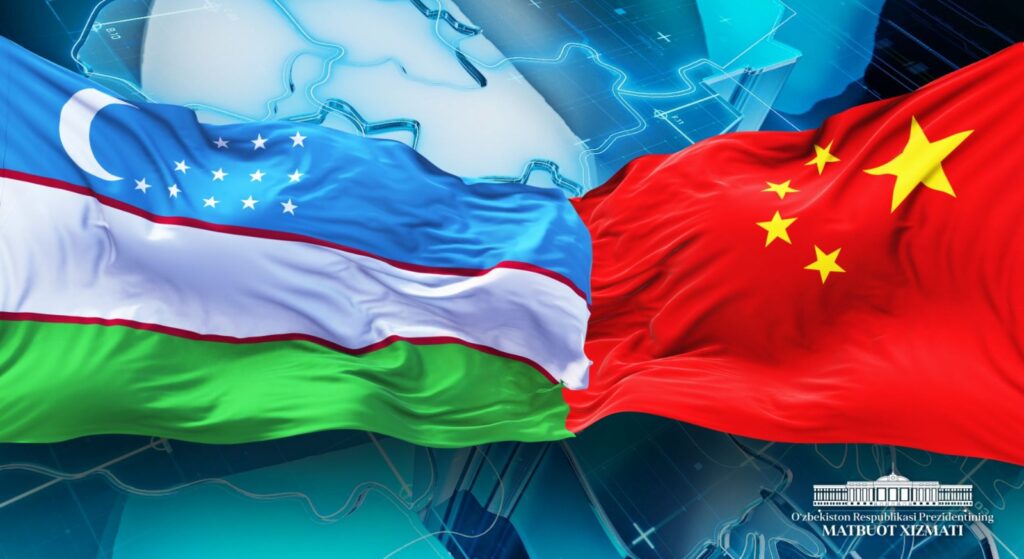
Uzbekistan and China are poised to increase bilateral trade to $20 billion a year. The statement, quoted by the news portal Novosti Uzbekistana (nuz.uz) was given by given by Obid Khakimov, director of Uzbekistan’s Center for Economic Research and Reforms (CERR) at the conference ‘Uzbekistan and China: promoting mutually beneficial cooperation for the benefit of the two countries’ peoples.’ In 2023, China ranked top amongst Uzbekistan's partners in trade, with a share of 22%. Over the past 7 years, Uzbekistan’s trade turnover with China has increased almost threefold from $4.8 billion to $13.7 billion; exports have risen from $2 billion to $2.5 billion, and imports from $2.7 billion to $11.3 billion. The analysis by the CERR illustrates Uzbekistan’s potential to increase its exports to China by substituting products currently sourced in large volumes from third world countries. In the main, these comprise fruit, vegetables and other foods, textiles, copper, and chemicals. Uzbekistan is especially interested in collaborative projects with China for the deep processing of locally mined strategic raw materials, and the implementation of socially important programs based on partnerships between public and private sectors. The early construction of the China-Kyrgyzstan-Uzbekistan railway, which by cutting the distance travelled by 900km, will reduce the delivery time of cargo by 7-8 days, is another area of key importance to Uzbekistan. According to Uzbekistan’s Statistics Agency, in 2023, China’s contribution of 25.6% was the largest of the total sum of foreign investments and loans in Uzbekistan. In comparison, the contribution from Russia was 13.4%; Saudi Arabia, 7.9%; Turkey, 6.4%; the United Arab Emirates, 5.8%, and Germany, 4.3%.

Kazakh-European Proposal for CRM and Green Hydrogen Strategy

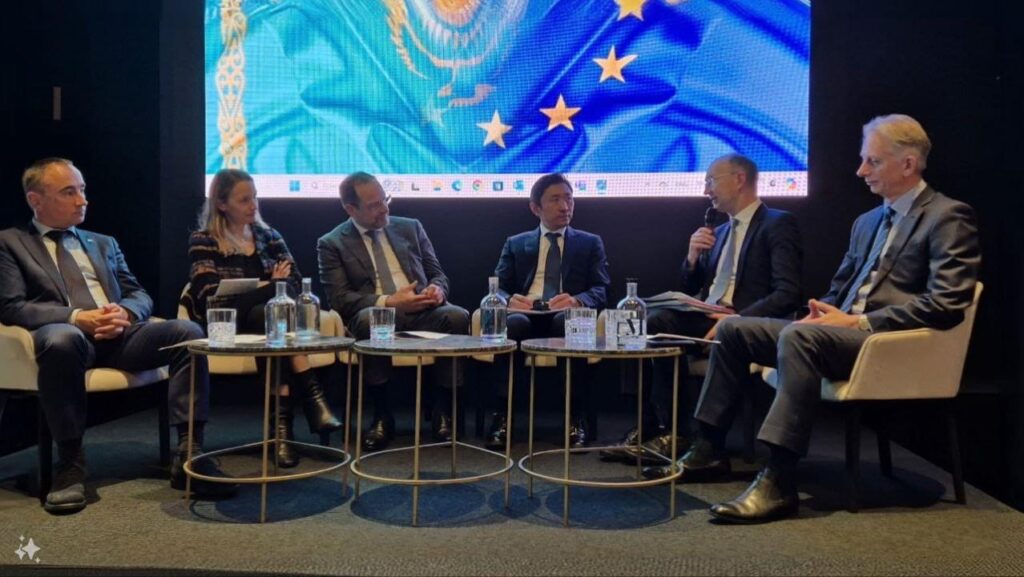
Some 60 high-ranking officials from the European Union and representatives of the EU business community attended a meeting on March 5th organized by the Kazakh Embassy in Belgium. A high-level event, its key focus was Kazakh-European cooperation on critical raw materials (CRM), green hydrogen and batteries. In November 2022, Kazakhstan and the European Union signed a Memorandum of Understanding on sustainable raw materials, batteries, and renewable hydrogen value chains, and adopted a Roadmap for its implementation in 2023. At the meeting on March 5th, Bolat Akchulakov, energy advisor to the president of Kazakhstan, emphasized the importance of the Kazakhstan-EU Memorandum of Understanding for strategic partnership in achieving common objectives of green transition. Luc Devigne, deputy managing director for Eastern Europe and Central Asia of the European External Action Service (EEAS), praised the development of the Kazakhstan-EU relationship as a “success story of cooperation.” Referencing the EU’s readiness to further strengthen this partnership, he stated that it would ensure both the sustainability of supply chains and the achievement of common goals regarding climate change. As part of the event, Kazakhstan’s national company Kazakh Invest presented a report on CRM at its Brussels office. Kazakhstan produces 19 of the 34 critical raw materials listed by the European Union. Kazakh manufacturers currently supply the EU with beryllium, tantalum, and titanium but have the potential to further exploit the country's cache of other raw materials. By establishing plants to process reserves of nickel, cobalt, manganese, and lithium, Kazakh enterprises will be able to produce batteries, essential for electric vehicles.

Great Women in the History of the Kyrgyz Republic

Nestled in the heart of Central Asia, Kyrgyzstan boasts a rich tapestry of history woven by extraordinary women who have played pivotal roles in shaping the nation. From political pioneers to cultural icons, these women have left an indelible mark on the nation. To mark International Women’s Day, we remember some great women in the history of Kyrgyzstan, acknowledging their contribution and enduring impact.  Kurmanjan Datka[/vc_column_text][vc_single_image image="15382" img_size="full" el_class="scond-image" parallax_scroll="no" woodmart_inline="no"][vc_column_text woodmart_inline="no" text_larger="no"]Photo: Carl Gustav Mannerheim Known as the "Queen of the South," Kurmanjan Datka, the “Tsaritsa of Alai” was a courageous and noble woman who was not afraid to break with tradition. An important politician, in the second half of the eighteen century Kurmanjan ruled over the region wisely. Seeking both compromise and fighting for the rights of her people, she played a crucial role in unifying the Kyrgyz tribes during a tumultuous period, when her leadership and diplomacy skills were instrumental in maintaining peace. Aside from Kurmanjan, no other woman has ever been honored with the title "Datka" - meaning "general" - in the history of Kyrgyzstan. Kurmanjan was the only woman to rule over the Kyrgyz nation. Recognized as the "mother of the nation," 2011 was declared the year of Kurmanjan Datka in the Republic, where her face adorns banknotes. Olga Manuilova[/vc_column_text][vc_single_image image="15302" img_size="full" el_class="scond-image" parallax_scroll="no" woodmart_inline="no"][vc_column_text woodmart_inline="no" text_larger="no"]Photo: ilgeri.kg Olga Manuilova's contributions were valued highly by the Government of the Kyrgyz SSR, which in 1954 recognized her with the prestigious title, People's Artist of the Kyrgyz SSR. In acknowledgment of her outstanding work, she was also honored with many other awards, including the Order of the Red Banner of Labor, the Badge of Honor, and the medal For Valorous Labor. Additionally, Manuilova received commendations in the form of diplomas from the Supreme Soviet of the Republic. Among her notable creations were artistic masterpieces such as "Builders of the Great Chui Canal," "In Aid of the Front" from 1942, and a monument to General Panfilov, which entwined her work with the fate of the nation. These remarkable works earned Manuilova the distinguished title of "Honored Art Worker of the Kyrgyz SSR." This recognition underscored the significant impact of her artistic endeavors and highlighted her exceptional role in contributing to the cultural and artistic heritage of Kyrgyzstan. In 1973, a main belt asteroid was named after her. Urkuya Salieva[/vc_column_text][vc_single_image image="15305" img_size="full" el_class="scond-image" parallax_scroll="no" woodmart_inline="no"][vc_column_text woodmart_inline="no" text_larger="no"]Illustration: limon.kg At the age of just seventeen, in 1927 Salieva became the secretary of her local Komsomol cell in the Osh Oblast, indicating her early inclination towards political activism. The following year, she defied societal expectations by assuming the role of chairperson for the council of her birth village of Murkut. Displaying exceptional leadership, Salieva was elected chairperson of the Kyzyl-Asker collective farm despite opposition from affluent individuals who underestimated her ability to navigate the challenges of this role. Showing devotion to her people, Salieva worked tirelessly to surpass all expectations, securing a seat on the Central Executive Committee of the Kyrgyz...

Great Women in the History of Kazakhstan

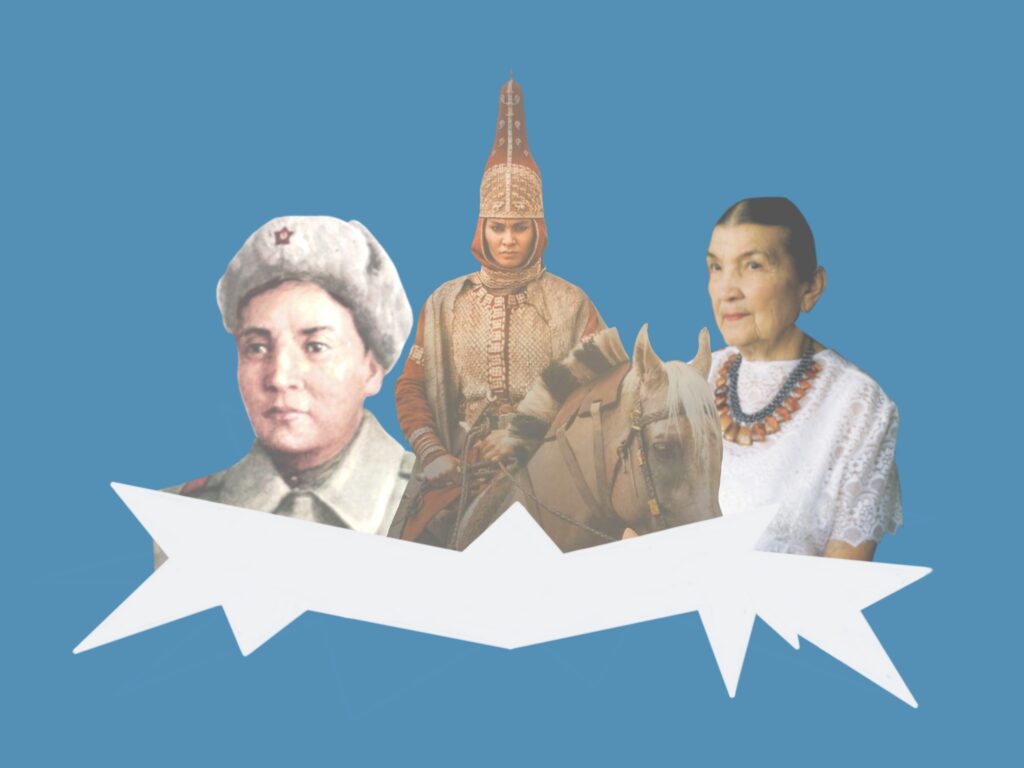
Women have played an important role in the history of Kazakhstan, making a significant contribution to the development of the country. They have shown courage, determination and talent in various walks of life, from politics and education to culture. Today, their role is being recognized, and women in Kazakhstan are becoming more aware of their actions than ever before. "I have always been inspired by our women, the women of the great steppe," Karina from Taraz told TCA, "especially in the field of culture, because at that time, such professions were considered solely for men. Thanks to them, we now have the opportunity not only to work in such professions, but also to become respected individuals." "Because of them, I have the opportunity to become whatever I want to be," Alina from Astana told TCA. "Their talent and drive has given freedom to the next generation." Today, on International Women's Day, we take a look at some of the outstanding women whose lives have had a fundamental impact on the course of the nation's history. Tomyris[/vc_column_text][vc_single_image image="15001" img_size="full" el_class="scond-image" parallax_scroll="no" woodmart_inline="no"][vc_column_text woodmart_inline="no" text_larger="no"]A still from the movie, "Tomyris" The name of Tomyris, the Queen of the Massagetes, is well-known in the culture of Kazakhstan, and is a source of pride and inspiration for Kazakhstani women. Queen Tomyris fought the mighty Persian king, Cyrus the Great, demonstrating her military prowess and intransigence. Tomyris won the battle, in which most of the Persian Army was destroyed. According to a legend, she placed Cyrus’ head in a wine fur filled with blood, saying: "You thirsted for blood, king of the Persians, so drink it now to your heart's content." Thus, Tomyris brought peace to her people. Nazipa Kul zhanova[/vc_column_text][vc_single_image image="15002" img_size="full" el_class="scond-image" parallax_scroll="no" woodmart_inline="no"][vc_column_text woodmart_inline="no" text_larger="no"]Photo: kaznu.kz Nazipa Kul zhanova was the first accredited female teacher in Kazakhstan and the first female journalist on the editorial staff of Yenbekshi Kazakh (Working Kazakh). An educator, ethnographer and translator, she became the preeminent specialist in the preparation of the Kazakh alphabet. Among other things, her philosophical articles addressed the role of a woman's place in public life and in the family. A proponent of the importance of education and the active participation of women in the progress and development society, Kulzhanova stated that "A woman is the mother of the people. Only an educated, skillful, free woman is able to raise her people to the level of advanced nations." Nagima Arykova[/vc_column_text][vc_single_image image="15003" img_size="full" el_class="scond-image" parallax_scroll="no" woodmart_inline="no"][vc_column_text woodmart_inline="no" text_larger="no"]Photo: Rate.kz Nagima Arykova was an outstanding woman stateswoman and one of the leading lights of the women's movement in Kazakhstan. She was the author of "The Role of a Woman Commissioner" and "The Struggle for the Rights of Working Women in Kazakhstan." Arykova was the editor of the newspaper Kazakh capital, and was the first woman to become a leading member of the government of Kazakhstan. Manshuk Mametova[/vc_column_text][vc_single_image image="15004" img_size="full" el_class="scond-image" parallax_scroll="no" woodmart_inline="no"][vc_column_text woodmart_inline="no" text_larger="no"]Photo: pochta-polevaya.ru Manshuk Mametova was a machine-gunner during the Second World War and...

IMF Releases Latest Kyrgyzstan Report

The International Monetary Fund (IMF) has published a Kyrgyzstan country report, according to which the country's economy grew steadily in 2023, mainly due to expansion of construction and trade. Collection of tax revenues has also improved, and inflation has decreased. The IMF highlighted that due to the Covid-19 pandemic, rising global food and energy prices, exacerbated by the war in Ukraine, drove inflation in Kyrgyzstan to surge in 2022. From February 2020 to February 2023 inflation rose by 10 percentage points to 16.2%, which represented a ten-year peak for the republic. However, authorities have now managed to tame the situation. "Inflation in Kyrgyzstan almost halved from 14.7 percent in December 2022 to 7.3 percent in December 2023, thanks to which food and fuel prices fell markedly," the IMF said in its report. The IMF expects production to grow in Kyrgyzstan in the near future -- which will also have a positive impact on inflation. In the medium term, according to their data, the volume of production in the republic will grow by 4% per year. Despite weak performance in the sectors of agriculture and gold mining, the country's economy continues to grow -- and showed a growth rate of 5% at the end of 2023. The leading industries were trade and construction, followed by transportation and communications. "An unexpected inflow of labor and income from Russia, as well as a significant increase in trade with that country -- mainly re-exports of goods from China to Russia -- has boosted domestic development and increased domestic demand for goods and services," the IMF stressed. Still, core inflation in the country remains high, which is one of the main drivers of poverty. According to official data, a third of the country's population lives below the poverty line. Despite a strong recovery from the pandemic, poverty and inequality remain significant challenges for the Kyrgyz economy, which remains vulnerable to shocks, according to the IMF. Without higher and more inclusive growth, it will take decades for the republic to reach the income levels of Europe's emerging economies, IMF specialists warned. Meanwhile, IMF experts see headline risks for the Kyrgyz economy in further escalation of the war in Ukraine. Russia is currently Kyrgyzstan's largest trade partner, alongside China. Exports of Kyrgyz goods to Russia account for half of the country's foreign trade, and the Kyrgyz economy is heavily dependent on remittances from migrants working there. However, due to Western sanctions, the Russian economy may weaken, which will affect both remittances to Kyrgyzstan and bilateral trade -- therefore delivering a harsh and broad impact to the entire Kyrgyz economy.