• KGS/USD = 0.01144 0%
  • KZT/USD = 0.00210 0%
  • TJS/USD = 0.10528 0.19%
  • UZS/USD = 0.00008 0%
  • TMT/USD = 0.28490 0%
  • KGS/USD = 0.01144 0%
  • KZT/USD = 0.00210 0%
  • TJS/USD = 0.10528 0.19%
  • UZS/USD = 0.00008 0%
  • TMT/USD = 0.28490 0%
  • KGS/USD = 0.01144 0%
  • KZT/USD = 0.00210 0%
  • TJS/USD = 0.10528 0.19%
  • UZS/USD = 0.00008 0%
  • TMT/USD = 0.28490 0%
  • KGS/USD = 0.01144 0%
  • KZT/USD = 0.00210 0%
  • TJS/USD = 0.10528 0.19%
  • UZS/USD = 0.00008 0%
  • TMT/USD = 0.28490 0%
  • KGS/USD = 0.01144 0%
  • KZT/USD = 0.00210 0%
  • TJS/USD = 0.10528 0.19%
  • UZS/USD = 0.00008 0%
  • TMT/USD = 0.28490 0%
  • KGS/USD = 0.01144 0%
  • KZT/USD = 0.00210 0%
  • TJS/USD = 0.10528 0.19%
  • UZS/USD = 0.00008 0%
  • TMT/USD = 0.28490 0%
  • KGS/USD = 0.01144 0%
  • KZT/USD = 0.00210 0%
  • TJS/USD = 0.10528 0.19%
  • UZS/USD = 0.00008 0%
  • TMT/USD = 0.28490 0%
  • KGS/USD = 0.01144 0%
  • KZT/USD = 0.00210 0%
  • TJS/USD = 0.10528 0.19%
  • UZS/USD = 0.00008 0%
  • TMT/USD = 0.28490 0%

Viewing results 5821 - 5826 of 5826

Recent murder in Kazakhstan draws attention to domestic violence and gender discrimination

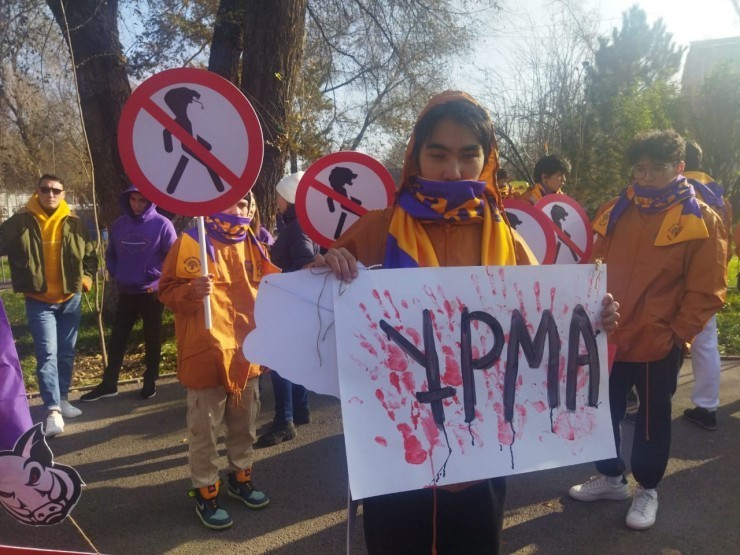
A very public tragedy in Kazakhstan put on display domestic violence at its worst. A quarrel in a restaurant in Astana on the evening of November 8th is reported to have resulted in the death of Saltanat Nukenova, the 31-year-old wife of Kuandyk Bishimbayev. Bishimbayev, who served as Minister of National Economy under former President Nazarbayev, was detained on the same day for suspected murder and remains under arrest awaiting trial. On November 11th, Saltanat was buried in Pavlodar. This appalling incident highlighted the urgent need for stronger protections against domestic violence. An authorized rally was held in Almaty in late November. Around 200 participants came out onto the square behind the Sary Arka cinema, holding posters and chanting slogans against domestic violence. The event was organized by a public movement called Zhana Adamdar and the attendees mostly included young people and students from the movement. Relatives of Saltanat Nukenova also took part. The participants wanted to raise awareness about fighting any manifestation of violence against women and children. Most of the attendees were dressed in the same style, and many of them had scarves with the inscription “Say no to the animal world,” which was also the title of the rally. Speakers at the event detailed the most resonant cases of violence in recent times while the organizers of the rally held a small flash mob and arranged an installation with mannequins in cages with animal masks on them. A minute of silence was observed in honour those who died as a result of violence. Progress in protecting women What proceeded this public tragedy hopefully presents a silver lining. A month later, on December 8, Kazakhstan's current President Kassym-Jomart Tokayev signed a Decree to strengthen human rights with concrete steps towards preventing violence and promoting gender equality. The Decree instructs Kazakhstan’s government to take systematic measures to promote equal rights and opportunities in all spheres of society, as well as to overcome all forms and manifestations of gender discrimination. The decree also encompasses legislation to deter domestic violence and promotes equal rights and safety for both men and women in the Republic of Kazakhstan, as endorsed by UN Security Council resolution 13251. It further involves legislative measures to tighten criminal liability in cases of domestic violence, which have now been implemented. These measures aim to hold perpetrators accountable and ensure that victims can get justice. Additionally, offenders of domestic violence may be required to undergo comprehensive psychological correction as part of their rehabilitation process. The Decree also asks for creating specialized units within the Ministry of Internal Affairs staffed with female officers, who can enhance the effectiveness of combating domestic violence. While the timing of the Decree coincided with the aftermath of Saltanat’s death, there are signs that these steps may have already been in the works. President Tokayev had voiced concerns about domestic violence before the current headlines emerged. At a meeting in the Ministry of Internal Affairs in June 2023, for example, he had affirmed that “comprehensive...
Uzbekistan’s Transition to Market Economy to Accelerate

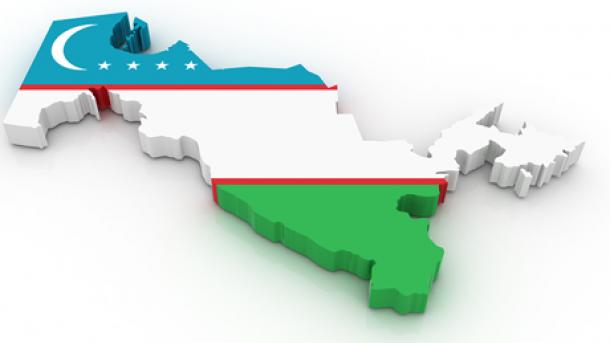
Uzbekistan’s Transition to Market Economy to Accelerate The World Bank’s Board of Executive Directors on December 8th approved a Development Policy Operation to financially support the Government of Uzbekistan in implementing a new generation of economic, social, and climate reforms. The objective of these reforms is to expedite the country’s transition to a market economy, ensuring that economic opportunities are accessible to all citizens and creating a strong foundation for sustained growth. In Uzbekistan, despite significant progress in the transition to a market economy, there is a need to complete this process and to shift urgently towards a greener and more equitable economic model which would help the country achieve its development and environmental goals. The government aims to halve the poverty rate by 2026, and elevate the country to the status of an upper-middle-income economy by 2030. Achieving these objectives requires much faster growth, which is possible through reducing state control over the economy and empowering the private sector to become the primary driver of economic development. “The World Bank’s new operation supports key government priorities, including reducing state dominance in crucial sectors such as agriculture, railway, chemicals, and energy,” said Marco Mantovanelli, World Bank Country Manager for Uzbekistan. “This will allow for greater private sector participation in the given areas. The operation also aims to strengthen social and legal protection for vulnerable groups, and address pressing issues of climate change and environmental protection.” The World Bank will provide financial support to the government through a combination of highly concessional and low-cost loans totaling $800 million. The financing will offer the government a low-cost, long-term repayment option compared to what would be available in international financial markets, resulting in a significantly lower loan repayment cost. This, in turn, will free up more resources for the country’s urgent development priorities. “The Government has a strong commitment to reforms that will transform Uzbekistan into a more open and competitive market economy. The World Bank is supporting the country in achieving this goal by providing the necessary expertise, international experience, and financing,” said Jasur Karshibaev, Deputy Minister of the Economy and Finance of Uzbekistan. The financing from the World Bank operation will support the government’s reforms and actions in a number of critical areas, including: Energy sector: Establishing an independent energy regulator and implementing energy tariff reform to improve the energy sector’s performance, enhance the efficient use of energy resources, attract private investment in modernizing energy infrastructure, and promoting competition and private sector participation in the industry. Railway sector: Undertaking institutional reforms in the railway sector to modernize price setting for passenger and freight transportation and strengthen competition and the institutional environment in the industry. Chemical sector: Establishing a framework for institutional reforms in the chemicals sector and privatizing FerganAzot JSC, a large state-owned chemical plant, to liberalize the sector, attract private investments for its modernization, and enhance competition and efficiency in the industry. Agriculture sector: Abolishing the crop placement system for all crops to promote greater diversity and productivity in crop...

ADB to Help Improve Agribusiness Value Chains in Kyrgyzstan

As per a press release on its website, on December 7th the Asian Development Bank (ADB) has said it is providing a $20 million loan and a $20 million grant to the Kyrgyz Republic to help small and medium-sized agribusinesses improve their processing and storage capacity and reduce post-harvest handling losses through inclusive, resilient, and climate-adaptive horticultural value chains. “The project will enhance the resilience of farmers, including women, against market volatility, natural hazards and climate change, and increase household and national food security,” said ADB Director General for Central and West Asia, Yevgeniy Zhukov. “By equipping them with climate-smart agricultural technologies and strengthening value chains, farmers and all stakeholders along the value chains will be able to minimize resource cost and increase profitability.” The Climate-Resilient Agricultural Value Chain Development Project will provide long-term funds to qualified participating financial institutions to extend structured loans for horticulture value chain investments, including fruit and vegetables. Aiyl Bank, the most prominent bank financing the country’s agriculture sector, has been selected as the first financial institution to participate in this project. “About 80% of small businesses in the Kyrgyz Republic are currently funded by family, friends, and informal sources,” said ADB Principal Natural Resources and Agriculture Specialist, Giap Minh Bui. “To stimulate private investment in modernizing agricultural value chains, it is critical that local banks have access to stable long-term funding sources and offer a range of term-lending products that are appropriate for and affordable to horticulture entrepreneurs, including women.” Aside from establishing modern processing, storage and refrigerated facilities, the project will also help establish contract farming arrangements between farmers and processors and/or exporters; train women business-owners; and implement measures to facilitate cross-border trade and branding for products that are unique to the Kyrgyz Republic. These measures aim to increase profitability for horticultural producers and agribusiness enterprises, and strengthen market linkages to increase national food security.

EBRD Supports Capital Markets in Kazakhstan

The European Bank for Reconstruction and Development (EBRD) on December 6th said it is further developing the financial markets in Kazakhstan by introducing a new local currency interest rate swap derivative - an Overnight Indexed Swap (OIS) - in which the overnight rate is exchanged for a fixed interest rate. An inaugural one-year OIS transaction, based on the Tenge Overnight Index Average (TONIA), was closed with one of the country’s largest lenders, Bank CenterCredit (BCC). The OIS market will allow banks and investors to better manage their interest rate risk, thus making the financial system more stable and financial markets in Kazakhstan more attractive. “The EBRD and Kazakhstan are making significant progress in the development of financial markets. This transaction reconfirms the role of TONIA as the interest rate benchmark in the country, stimulates local currency lending, and encourages more TONIA-linked swaps,” the EBRD’s Treasurer, Axel van Nederveen said. The EBRD believes the new derivative instrument fills an important gap in capital markets and is keen to participate in the development of this, not only as part of its commitment to local currency financial markets, but also as an active participant.

Turkmenistan-Iraq Natural Gas Deal: A Complex Balancing Act

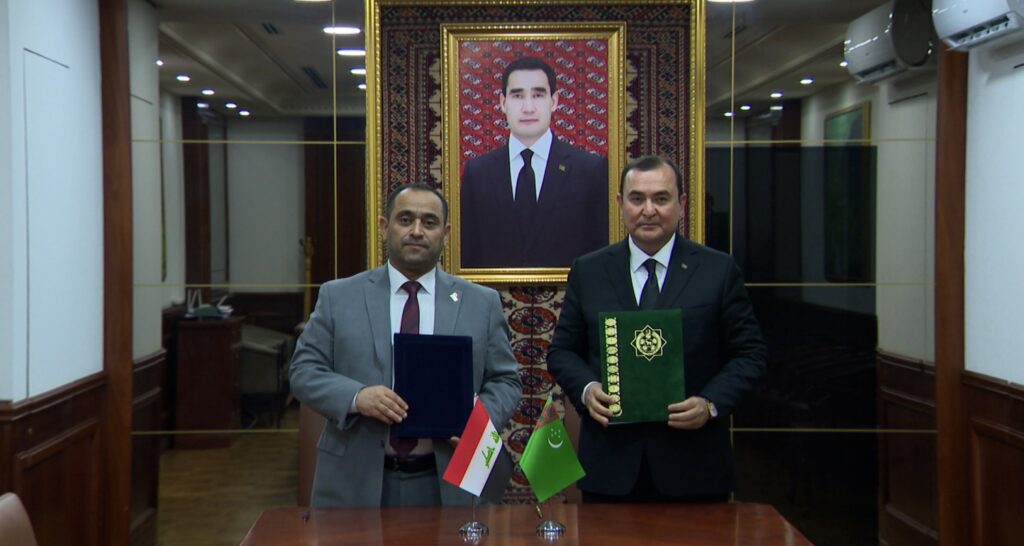
The recent natural gas deal between Turkmenistan and Iraq has sparked both excitement and concern in the energy world. On November 8, representatives from the State Concern Türkmengaz met with a delegation from Iraq, led by the Minister of Electricity Ziad Ali Fadel, to discuss the export of natural gas from Turkmenistan to Iraq. As with any major energy agreement, this deal carries significant implications for both countries and the region as a whole. This opinion piece explores the positive aspects, potential challenges, and wider implications of the Turkmenistan-Iraq natural gas deal. The Turkmenistan-Iraq natural gas deal presents several positive aspects for both countries. Economically, the agreement opens up new opportunities for trade and investment, providing a boost to the economies of both nations. Additionally, it strengthens diplomatic relations between Turkmenistan and Iraq, fostering closer ties and collaboration in other areas. Moreover, the deal has the potential to enhance energy security in Iraq, diversifying its energy sources and reducing dependence on a single supplier. For Turkmenistan, this agreement represents an opportunity to tap into new markets and expand its natural gas exports. While the deal offers numerous benefits, it also comes with potential challenges and drawbacks. From Iraq's perspective, one concern is the possibility that it becomes overly dependent on Turkmenistan for its energy needs. This could create vulnerabilities and limit Iraq's flexibility in the energy market. Disputes over pricing and payment terms may also arise as aligning the expectations of both parties can be a complex process. Additionally, the agreement may face infrastructure and logistical challenges, such as ensuring efficient transportation and distribution of the natural gas. The influence of regional politics on the deal is another factor to consider, as geopolitical dynamics may impact its implementation. The Turkmenistan-Iraq natural gas agreement has the potential to significantly impact the regional energy market. It may alter the dynamics of gas supply and demand in the region, affecting other players and stakeholders. The agreement could prompt neighboring countries to evaluate their own energy strategies and explore new partnerships. Additionally, the deal could contribute to greater energy cooperation and integration in the region, paving the way for future collaborations and joint projects. As we consider the implications of this gas deal, it is crucial to examine its environmental impact and public opinion. The environmental consequences of increased natural gas extraction and consumption should be carefully assessed to ensure sustainable practices. Additionally, public opinion in both countries will play a significant role in shaping the perceptions and outcomes of the deal. Public engagement and transparency are vital to ensure that the interests and concerns of the citizens are taken into account. The Turkmenistan-Iraq natural gas deal represents a complex balancing act.  It ultimately offers economic benefits, strengthens diplomatic relations, and enhances energy security while also raising concerns about energy dependency, pricing disputes, and logistical hurdles. The agreement will have implications for the regional energy market, influencing the strategies of neighboring countries and reshaping energy dynamics. As the process unfolds, it is crucial to...

Turkmen-U.S. Business Forum Held in Ashgabat

On December 5th, the tenth Turkmen-American business forum was held in Ashgabat, which was attended by the heads and representatives of relevant government and business structures of Turkmenistan and the United States, Turkmenistan’s Government website stated. According to the post, the forum demonstrated the focus of Turkmenistan and the United States on the further progressive development of mutually beneficial cooperation which meets common interests, the Turkmen Foreign Ministry said. The US delegation, headed by Executive Director of the Turkmenistan-US Business Council, Eric Stewart, included executives and representatives of well-known companies, including Case New Holland Industrial, Climate Compass LLC, Honeywell, John Deere, Palo Alto Networks, Visa, and Westport Trading Europe Ltd. The participants noted that the foreign policy course implemented by Turkmenistan under the leadership of President Serdar Berdimuhamedov, based on the principles of positive neutrality, increases the attractiveness of the Turkmen market for foreign investors. The priority areas of the Turkmen-US partnership include the energy sector, transport and communications, the agro-industrial sector, high technology, and the investment sector. At the same time, approaches to realizing the potential of trade and economic partnership were reviewed and identified, and plans for joint work in key areas were outlined. Special emphasis was placed on intensifying business ties. One of the results of the forum was the signing of a Memorandum of Understanding between Case New Holland Industrial and Turkmen entrepreneurs.