• KGS/USD = 0.01144 0%
  • KZT/USD = 0.00213 0%
  • TJS/USD = 0.10562 0%
  • UZS/USD = 0.00008 0%
  • TMT/USD = 0.28530 0%
  • KGS/USD = 0.01144 0%
  • KZT/USD = 0.00213 0%
  • TJS/USD = 0.10562 0%
  • UZS/USD = 0.00008 0%
  • TMT/USD = 0.28530 0%
  • KGS/USD = 0.01144 0%
  • KZT/USD = 0.00213 0%
  • TJS/USD = 0.10562 0%
  • UZS/USD = 0.00008 0%
  • TMT/USD = 0.28530 0%
  • KGS/USD = 0.01144 0%
  • KZT/USD = 0.00213 0%
  • TJS/USD = 0.10562 0%
  • UZS/USD = 0.00008 0%
  • TMT/USD = 0.28530 0%
  • KGS/USD = 0.01144 0%
  • KZT/USD = 0.00213 0%
  • TJS/USD = 0.10562 0%
  • UZS/USD = 0.00008 0%
  • TMT/USD = 0.28530 0%
  • KGS/USD = 0.01144 0%
  • KZT/USD = 0.00213 0%
  • TJS/USD = 0.10562 0%
  • UZS/USD = 0.00008 0%
  • TMT/USD = 0.28530 0%
  • KGS/USD = 0.01144 0%
  • KZT/USD = 0.00213 0%
  • TJS/USD = 0.10562 0%
  • UZS/USD = 0.00008 0%
  • TMT/USD = 0.28530 0%
  • KGS/USD = 0.01144 0%
  • KZT/USD = 0.00213 0%
  • TJS/USD = 0.10562 0%
  • UZS/USD = 0.00008 0%
  • TMT/USD = 0.28530 0%

Viewing results 5935 - 5940 of 6074

Central Asia Particularly Vulnerable to Climate Risks, Primarily Due to Water Scarcity, Says EDB

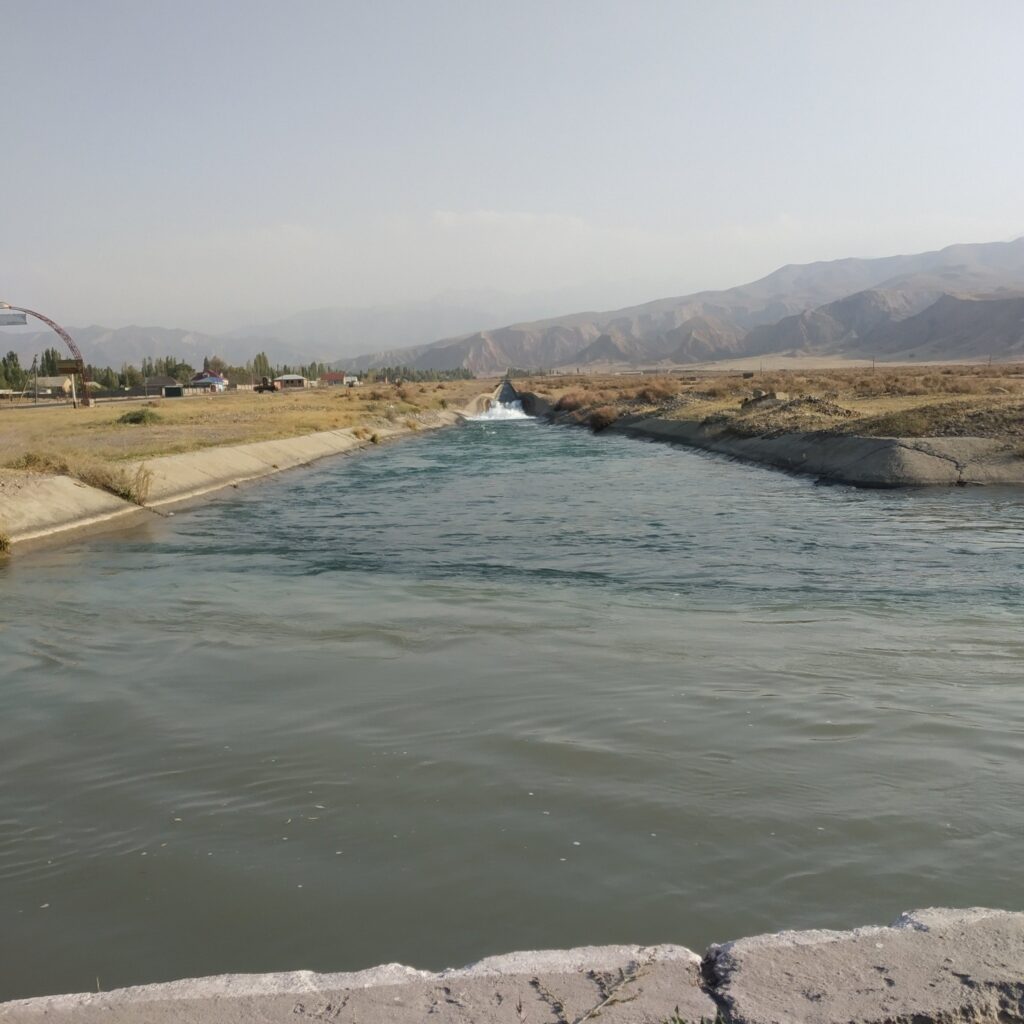
By 2050, the available resources in the Syr Darya and Amu Darya basins – the region’s two largest sources of water - situated in southern Kazakhstan and along Uzbekistan’s southern border with Turkmenistan - could decrease by 10% to 15%. Water shortages inevitably impact the region’s agricultural sector, which relies on water as a critical factor in food production, the Eurasian Development Bank (EDB) has stated in a news release. The reduction in wheat yields in seven oblasts of Kazakhstan could result in direct economic losses exceeding U$1.2 billion by 2030. These concerns were highlighted by Conrad Albrecht, Managing Director and Head of the Directorate of Sustainability at the Eurasian Development Bank (EDB) during the recent Seventh North and Central Asia Multistakeholder Forum on the Implementation of the SDGs in Almaty. “Kazakhstan, being the only Eurasian nation to have implemented a carbon pricing system, faces the additional challenge of a potential carbon tax amounting to U$250 million. Most economies in the region rely heavily on carbon-intensive industries, necessitating a transition towards more sustainable production methods”, Albrecht said. He also pointed out that the region’s carbon dioxide (CO2) emissions significantly exceed its contribution to the global economy in terms of both GDP and population. However, countries such as Armenia, the Kyrgyz Republic, Tajikistan and Uzbekistan have a share of global CO2 emissions lower than their share of the world’s population, indicating that the region’s economies are critically carbon intensive. “All countries in the Eurasian region are taking climate change extremely seriously, acknowledge their direct contribution to the global agenda and are ready to make ambitious commitments to decarbonization”, Albrecht stressed. “Nevertheless, Central Asian countries still require substantial support from multilateral development banks, and while climate finance to the region is increasing, it remains significantly smaller compared to other low- and middle-income countries”.


Promoting Sustainable Development in Central Asia: Key Highlights from the Eurasian Development Bank’s Roundtable

According to a press release issued by the Eurasian Development Bank (EDB), on November 16th, 2023, Almaty, Kazakhstan, served as the venue for a critical roundtable hosted by the EDB, titled "Promoting Sustainable Development in Central Asia". This gathering saw the participation of representatives from a wide range of international organizations and multilateral development banks. Attendees included the likes of the World Bank, the Asian Development Bank, the Asian Infrastructure Investment Bank, the Islamic Development Bank, FAO, UNIDO, UNEP, ESCAP, UNDP, the World Health Organisation, the International Fund for Saving the Aral Sea, and CICA. The agenda was packed with discussions revolving around irrigation, water challenges, environmental and social standards of international financial institutions, and case studies that showcased collaborations in project implementation12. The EDB's latest report, "Efficient Irrigation and Water Conservation in Central Asia", was introduced during the roundtable's first session. Nikolai Podguzov, Chairman of the EDB Management Board, underscored the essential interrelationship between water, food, and energy in Central Asia. He declared the development of the region’s water and energy resources as a strategic priority for the EDB. He also expressed concerns over an impending water deficit in Central Asia within the next five years, urging for collective action supported by multilateral development banks3. Tatiana Proskuryakova, the Regional Director for Central Asia at the World Bank, also spoke at the event. She emphasized the importance of sustainable development in Central Asia to international organizations and multilateral financial institutions. She revealed that the World Bank has allocated approximately a quarter of its $12 billion investment portfolio in Central Asia to water, energy, and environmental sectors. This proportion is expected to rise to almost half in the near future4. Following this, Evgeny Vinokurov, EDB Chief Economist, presented the study "Efficient Irrigation and Water Conservation in Central Asia". He proposed a ten-step solution to address the prevalent issues. The steps include establishing an International Water and Energy Consortium; fostering collaboration among multilateral banks; creating a regional cluster to produce irrigation equipment; consolidating efforts to strengthen cooperation with Afghanistan; using PPP instruments; instituting proper water accounting; gradually integrating investment charges into the tariff structure; improving land conditions; implementing digital technology, and leveraging state-of-the-art irrigation technology and laser levelling.

Kazakh Citizen Sentenced to Over Six Years for Joining Wagner Mercenary Group

The Qaraghandy regional court in central Kazakhstan sentenced a local resident, Aleksei Shompolov, to six years and eight months in prison for joining Russia's Wagner mercenary group and fighting against Ukrainian forces in May in Bakhmut, where he was injured, RFE/RL's Kazakh Service reported on November 28th. The 34-year-old, who pleaded guilty, was arrested after arriving back in Kazakhstan, where it is a crime to serve as a mercenary abroad. Shompolov's sentence was upheld on November 15th, the court said, adding that his payment from Wagner - 205,590 roubles ($2,300) – had been confiscated.

Armenian PM to Stay Away from CIS Summit in Bishkek

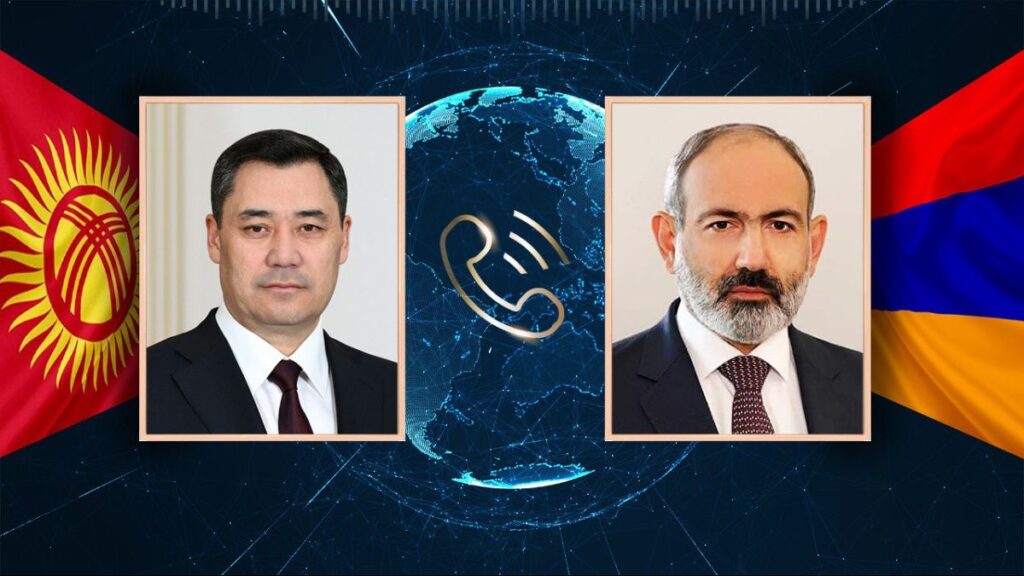
As reported by RFE/RL, Armenian Prime Minister Nikol Pashinyan has opted out of the upcoming summit of the Council of the Leaders of the Commonwealth of Independent States (CIS), slated to be held in Bishkek, the capital of Kyrgyzstan, on October 13. According to the Kyrgyz presidential office on October 10, Pashinyan conveyed to Kyrgyz President Sadyr Japarov his inability to attend the gathering during a phone conversation. This absence underscores a widening gap between Yerevan and Moscow, particularly as Russian President Vladimir Putin is set to participate in the summit. Earlier, Armenia had announced the non-participation of its troops in the ongoing military exercises led by the Russia-led Collective Security Treaty Organization (CSTO) in Kyrgyzstan.

Authorities Close Religious Institutions in Batken Region

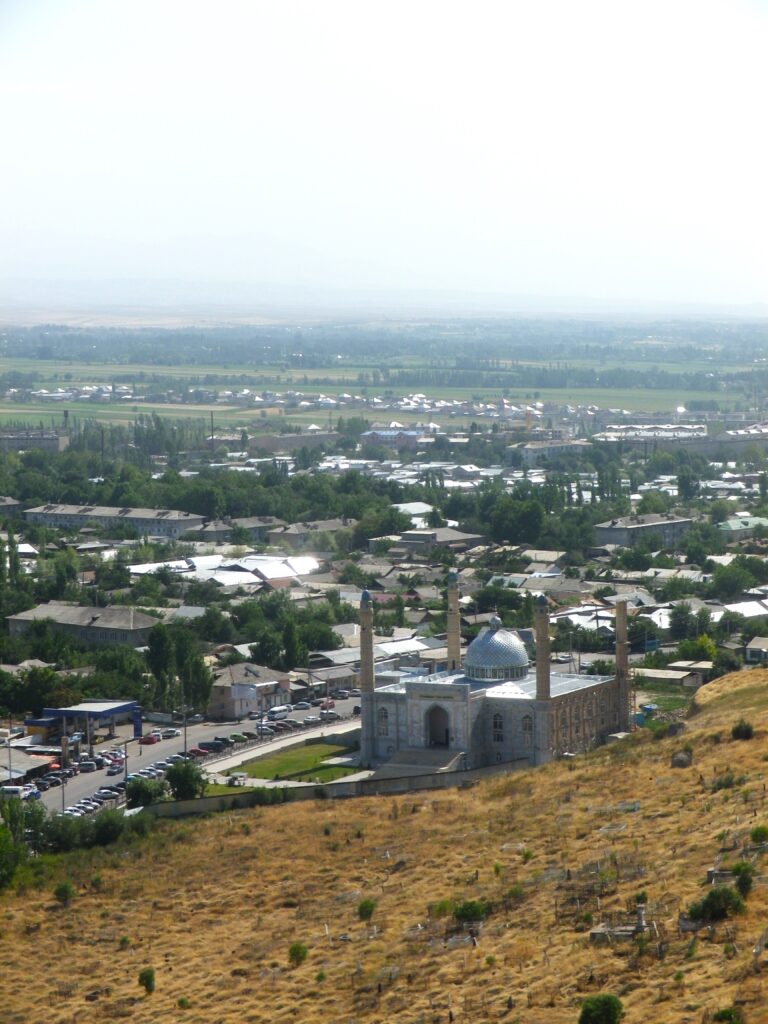
On October 10th, Kyrgyzstan’s State Committee of National Security - comprising representatives from the State Committee of National Security, the Emergency Ministry, the Interior Ministry, Health Ministry, the Grand Mufti's office, other state entities and the regional government stated that it had closed 32 mosques and five religious schools in the southern region of Batken. This came following an assessment examining the potential presence of radical Islamic ideology and extremist viewpoints within the religious institutions. Situated on the southern slope of Solomon’s Throne in Osh, Kyrgyzstan’s largest mosque has the capacity to hold 20,000. Built in the 2010s with funds from Saudi Wahhabis, it was inaugurated by former President Atambayev, who, like other regional leaders before him, had been wooed by promises of Saudi money. Sunni supremacists wishing to revert to the seventh-century ways of Mohammed, Wahhabi missionaries first arrived in Central Asia in 1912, setting up cells in Tashkent and the Fergana Valley. Declaring holy war not only on the West, but also on other Muslims, the Wahhabis labelled all who disagreed with them heretics. Having suffered lean times under the Communists, now they were back and loaded with oil money. Of the Osama Bin Laden school of thought, their goal is to destroy secularism and create a region-wide caliphate based on Sharia law, this despite the fact there has never been an Islamic state in Central Asia. Amongst the Wahhabi’s affiliates are the Islamic Movement of Uzbekistan, formed in the early nineties by Tohirijon Yuldashev, a twenty-four-year-old college drop-out, and Juma Namangani, an ex-Soviet paratrooper turned train robber. Raising funds by kidnapping Japanese geologists and American mountaineers, in 2000 the IMU briefly took Osh, holding its mayor for ransom and coming within striking distance of its goal of seizing Tashkent. With the IMU largely absorbed into the Afghan Taliban, ignored warnings of the impending 9/11 attacks on America are said to have emanated from Yuldashev, who like Namangani, has since been killed. Looking to engage those alienated by state-appointed imams, who as a recent recruit noted, offer only ‘prayers for a bigger cotton harvest and instructions for how to go to the bathroom properly,’ the IMU are currently calling for a jihad in Southern Kyrgyzstan. With the IMU mainly moved into Afghanistan and Pakistan, in June of 2014, after swearing allegiance to ISIS, the organization claimed responsibility for the attack on Jinnah International Airport in Karachi, Pakistan, which left 36 dead. There are currently upwards of two thousand ISIS recruits from Central Asia, with the movement's hierarchy focused on recruiting more disaffected Uzbeks.

USAID and Aga Khan Foundation Improve Access to Water and Sanitation in Bartang Valley

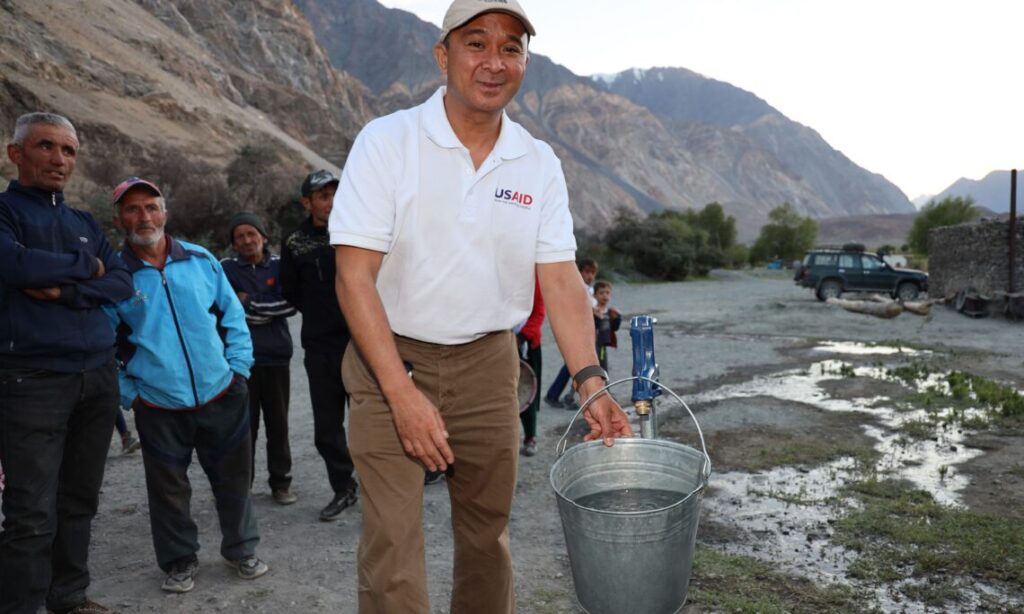
As outlined in a press release on its website, the United States Agency for International Development (USAID) and the Aga Khan Foundation (AKF) in partnership with the Government of Tajikistan completed and inaugurated a new drinking water supply system and a school latrine in two villages of Rushan’s Bartang valley. The drinking water supply systems will provide uninterrupted access to clean water for 72 households (397 people) in Pasor and Bopasor villages. Additionally, 40 schoolchildren and teachers will have access to sanitary toilets in school #40 of Bopasor village, the U.S. Embassy in Tajikistan said. In the remote mountainous villages of Pasor and Bopasor, lack of access to potable water was a significant problem. Although the villages are blessed with an abundance of water, the absence of infrastructure forced the residents to fetch water from a distance of 500-800 meters at an elevation of 3,000 meters above sea level during harsh winters that last for five months. The USAID and AKF joint partnership, Thrive Tajikistan, works hand-in-hand with the Government of Tajikistan and people of the Bartang Valley to tackle this monumental challenge. To date, Thrive Tajikistan has provided 14 potable water supply systems and 14 school latrines in Farkhor, Hamadoni, Nosiri Khusrav, Panj, Qubodiyon, Roshtqala, Shahritus, and Rushan districts. These systems provide 43,558 people with access to clean drinking water and improved sanitation and hygiene services to 8,344 people. The five-year (2018-2023) “Thrive Tajikistan: Partnership for Socio-Economic Development” program expands the partnership between USAID, AKF and the Government of Tajikistan to improve the quality of life for people in all 16 districts of Tajikistan along the country’s border with Afghanistan in Khatlon province and Gorno-Badakhshan Autonomous Oblast.