
• KGS/USD = 0.01143 -0%
  • KZT/USD = 0.00198 -0%
  • TJS/USD = 0.10899 0.65%
  • UZS/USD = 0.00008 -0%
  • TMT/USD = 0.28490 -0.28%
  • KGS/USD = 0.01143 -0%
  • KZT/USD = 0.00198 -0%
  • TJS/USD = 0.10899 0.65%
  • UZS/USD = 0.00008 -0%
  • TMT/USD = 0.28490 -0.28%
  • KGS/USD = 0.01143 -0%
  • KZT/USD = 0.00198 -0%
  • TJS/USD = 0.10899 0.65%
  • UZS/USD = 0.00008 -0%
  • TMT/USD = 0.28490 -0.28%
  • KGS/USD = 0.01143 -0%
  • KZT/USD = 0.00198 -0%
  • TJS/USD = 0.10899 0.65%
  • UZS/USD = 0.00008 -0%
  • TMT/USD = 0.28490 -0.28%
  • KGS/USD = 0.01143 -0%
  • KZT/USD = 0.00198 -0%
  • TJS/USD = 0.10899 0.65%
  • UZS/USD = 0.00008 -0%
  • TMT/USD = 0.28490 -0.28%
  • KGS/USD = 0.01143 -0%
  • KZT/USD = 0.00198 -0%
  • TJS/USD = 0.10899 0.65%
  • UZS/USD = 0.00008 -0%
  • TMT/USD = 0.28490 -0.28%
  • KGS/USD = 0.01143 -0%
  • KZT/USD = 0.00198 -0%
  • TJS/USD = 0.10899 0.65%
  • UZS/USD = 0.00008 -0%
  • TMT/USD = 0.28490 -0.28%
  • KGS/USD = 0.01143 -0%
  • KZT/USD = 0.00198 -0%
  • TJS/USD = 0.10899 0.65%
  • UZS/USD = 0.00008 -0%
  • TMT/USD = 0.28490 -0.28%
07 December 2025

Viewing results 1 - 6 of 7

Kazakhstan-China Agricultural Research Center to Open in Key Grain-Producing Region

A Kazakhstan-China Agricultural Research Center will be established in the North Kazakhstan region, one of the country's top three grain-producing areas. The initiative was announced by region's governor Gauez Nurmukhambetov following a business delegation’s visit to China. “Last week, a business delegation from our region visited the People’s Republic of China and held meetings with leading Chinese investors. As a result, seven strategic memoranda were signed, opening new economic opportunities for our region. These agreements include the construction of new factories and the creation of a Kazakh-Chinese agricultural research center,” Nurmukhambetov said at a press conference. The region continues to post record harvests. In 2025 it harvested 6.5 million tons of grain, nearly a quarter of Kazakhstan’s total gross harvest of 27.1 million tons. Nevertheless, the region is actively diversifying its agricultural profile. Sugar beet cultivation is expanding, with experimental plots from Asyl Farms showing strong crop adaptation. Based on this success, plans are underway to build a processing facility capable of handling 1 million tons of raw material annually, producing up to 200,000 tons of sugar. In the Kyzylzhar district, Salar Farm is building a plant for processing granulated alfalfa with an annual capacity of 60,000 tons. The main export markets include China and other Central Asian countries. The facility is scheduled to open in 2026. The region is also home to Maslo-Del, an oil extraction plant with an annual processing capacity of 370,000 tons of oilseeds and a production output of 120,000 tons, much of which is exported. Alongside its growth in crop production, the region is making notable progress in livestock farming. “SK Agro will construct the largest cattle farm in Central Asia, with a herd of 10,000 and a state-of-the-art Carousel milking system,” said Nurmukhambetov. “The farm is expected to increase milk production by 68 million tons annually. This will raise the share of milk produced by agricultural enterprises in Kazakhstan to 70%.” He noted that in Belarus, modern farms account for 77% of milk production, in China around 70%, and in European countries more than 93%. North Kazakhstan region aims to boost its share of the country’s total milk output to 20%. Meanwhile, 17 projects valued at $555.6 million are underway in the Qyzyljar special economic zone. Agricultural cooperation with China continues to grow. Kazakhstan views China as a key export destination for its processed agricultural products. In November, QazTrade signed a partnership agreement with Optimize Integration Group, one of China’s largest food importers, responsible for 18% of the country's frozen meat imports. In a related development, a joint Kazakh-Chinese veterinary laboratory was opened in East Kazakhstan region in October 2025. The facility is designed to streamline and accelerate export procedures for agricultural goods.
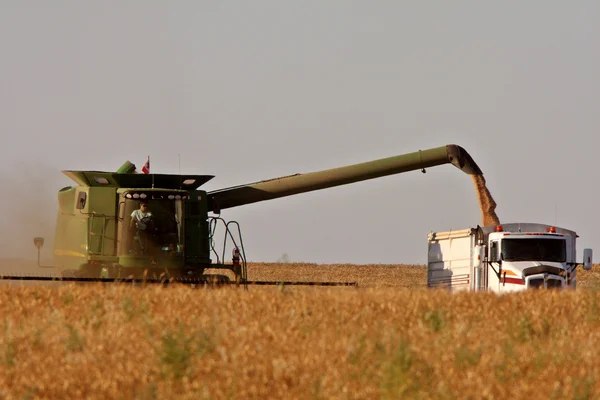
Kazakhstan Aims to Boost Grain Exports to China to Two Million Tons Annually

Kazakhstan plans to increase its grain exports to China to two million tons per year in the coming years, President Kassym-Jomart Tokayev announced at the eighth meeting of the Kazakhstan-China Business Council in Beijing. “Kazakhstan has the sixth-largest area of arable land in the world and ranks among the top ten grain exporters globally. Our country exports over ten million tons of wheat and approximately two million tons of flour each year. The Chinese market is of great interest to us, and Kazakhstan possesses the resources and capacity to export up to two million tons of grain to China annually,” Tokayev stated. According to Kazakhstan Temir Zholy, the national railway operator, grain exports to China reached 1.7 million tons in 2023. Strengthening Agro-Industrial Cooperation Beyond raw grain exports, Astana places significant emphasis on developing joint processing enterprises. Tokayev highlighted ongoing projects by China’s Dalian Group, which is establishing a grain processing plant in the Akmola Region, and the Fufeng Group, which is developing a corn processing facility in the Zhambyl Region. Products from both plants are intended for the Chinese and European markets. The president also invited Chinese investors to collaborate in the sectors of organic farming and livestock breeding. Expanding Transport Corridors Tokayev underscored the strategic importance of enhancing transport and logistics corridors as part of the Belt and Road Initiative, noting that 85% of all land freight between China and Europe currently transits through Kazakhstan. The opening of a second track on the Dostyk-Moyinty rail section this year is expected to increase the capacity of the China-Europe corridor fivefold. The president also emphasized the rising significance of the Trans-Caspian International Transport Route (TITR), also known as the Middle Corridor. In 2023, freight volume along the TITR reached 4.5 million tons, an increase of 62% compared to 2022. Kazakhstan aims to raise this volume to ten million tons in the near future. “Through joint efforts, we have already implemented major infrastructure projects, the Kazakh-Chinese logistics terminal at the port of Lianyungang and the dry port in Xi’an. For Chinese companies, leveraging Kazakhstan’s transit potential opens up significant opportunities,” Tokayev said. The Times of Central Asia previously reported that Kazakhstan and China have also begun digitizing customs declaration procedures for transit cargoes along the TITR, aiming to reduce delays at border crossings.

Central Asian Nations Boost Joint Fight Against Locusts

Kazakhstan, Uzbekistan, and Kyrgyzstan have committed to strengthening their cooperative efforts in combating locust infestations. The agreement emerged during the 55th meeting of the European and Mediterranean Plant Protection Organization (EPPO) working group, where officials from the three nations convened to enhance collaboration, adhere to international plant health standards, and expedite information exchange. According to Kazinform, Saken Kanybekov, acting head of Kazakhstan’s State Inspection Committee, engaged in discussions with his counterparts from Uzbekistan and Kyrgyzstan, sharing insights and experiences on managing seasonal locust outbreaks. A key innovation introduced at the meeting was Locust.uz, an online platform developed by Uzbekistan. This system maps locust egg-laying sites and pesticide spraying operations, utilizing GPS tracking to monitor equipment movement. This functionality enables experts to rapidly assess situations and respond swiftly, aiming to prevent the widespread dissemination of locusts. The three countries pledged increased focus on border areas, which are common pathways for pest migration. They plan to regularly exchange updates on locust conditions, research findings, and ongoing control measures. A further objective is to integrate their digital systems to facilitate more effective data sharing, including plant health certificates. The Times of Central Asia previously reported on Kazakhstan's broader efforts to bolster cooperation with neighboring countries, including Kyrgyzstan, Uzbekistan, Russia, and China, to curb locust outbreaks. Joint inspections along the Kazakh-Uzbek border have, to date, found no signs of infestation. Kazakhstan is also closely monitoring its northern border with Russia and has scheduled additional inspections in other regions for June. As of June 2, Kazakhstan had surveyed over 6.1 million hectares of farmland, representing 35.6% of its target, and treated nearly 1 million hectares with pesticides. The country has deployed a significant arsenal of 443 spraying units, including 55 ultralight aircraft and 49 agricultural drones, to manage the pest. Locust-damaged land in Kazakhstan has seen a notable increase, rising from 514,000 hectares in 2020 to 1.6 million hectares in 2023, with projections indicating a further rise in 2024. The UN Food and Agriculture Organization (FAO) warns that over 25 million hectares of farmland and 20 million people across Central Asia and the South Caucasus are at risk from locust threats.

Kazakhstan Joins Regional Efforts to Control Locust Infestations

Recognizing that locust migration transcends national borders, Kazakhstan is strengthening cooperation with neighboring countries, Kyrgyzstan, Uzbekistan, Russia, and China, to monitor and mitigate the threat of locust outbreaks. Kazakhstan’s Ministry of Agriculture has launched joint monitoring operations with Kyrgyzstan to survey border regions for signs of grasshopper swarms, which pose a serious risk to agricultural production. Deputy Minister of Agriculture Ermek Kenzhekhanuly confirmed that early assessments have not identified any immediate threat of locust migration into Kazakhstan from the south. “We have begun joint monitoring with the Kyrgyz side along sections of our southern border. While major infestations are concentrated in southern Kyrgyzstan, no threat of locust movement toward Kazakhstan has been detected so far,” said Kenzhekhanuly. Earlier, similar inspections were carried out along the Kazakh-Uzbek border, with no outbreaks reported to date. Kazakhstan is also actively monitoring its northern border with Russia. Surveys have already been completed in the Abay and North Kazakhstan regions, with no evidence of locust spread. Additional monitoring is scheduled for June in the Aktobe, Atyrau, West Kazakhstan, Kostanay, East Kazakhstan, and Pavlodar regions. To date, there have been no confirmed cases of locust activity near Kazakhstan’s border with China. As of June 2, Kazakhstan has surveyed 6.1 million hectares of farmland, 35.6% of its target area for 2025 and has treated 971,500 hectares with pesticides, representing 46.3% of the planned 2.1 million hectares designated for potential infestation. To combat locust outbreaks, Kazakhstan has deployed 443 units of spraying equipment, including 55 ultralight aircraft and 49 agricultural drones. In Kyrgyzstan, the Ministry of Water Resources, Agriculture, and Processing Industry has similarly declared no current threat of locust incursion. Joint monitoring efforts with Uzbekistan have not identified risks in border regions. However, Kyrgyz authorities reported localized infestations covering 60,000 hectares across multiple regions in late May. Aerial and ground-based pesticide treatments have been deployed in response. According to the UN Food and Agriculture Organization (FAO), locust outbreaks threaten over 25 million hectares of farmland across Central Asia and the South Caucasus, impacting the livelihoods of approximately 20 million people.

Uzbekistan Sends Over 26 Tons of Free Seed to Afghan Farmers

Uzbekistan has delivered more than 26 tons of certified agricultural seeds to Afghan farmers and agricultural organizations, according to the Uzbek Ministry of Agriculture. The donation is part of an ongoing effort to strengthen regional cooperation and reflects President Shavkat Mirziyoyev’s foreign policy priority of fostering close relations with neighboring countries. The seed shipment, provided by Uzbekistan’s Center for Seed Development, includes 5 tons of cotton seeds (sufficient for 200 hectares), 20 tons of rice seeds (for 100 hectares), 500 kilograms of mung beans (25 hectares), 187 kilograms of vegetable seeds, and 600 kilograms of melon seeds. All varieties are certified, high-quality, and adapted to the agro-climatic conditions of Afghanistan. Earlier this year, a delegation led by Afghanistan’s Minister of Agriculture, Irrigation, and Livestock visited Uzbekistan. The group toured agricultural enterprises and research institutions in Tashkent and Samarkand, gaining insights into digital farming tools, modern irrigation systems, and advanced food processing technologies. The Uzbek Ministry of Agriculture noted that the seed aid will contribute to improving food security in Afghanistan, stimulate rural employment, and help introduce new farming technologies. Agricultural cooperation has become a cornerstone of bilateral economic relations. In 2023, trade between the two countries totaled $866 million. That figure rose to $1.1 billion in 2024, with over $1 billion attributed to Uzbek exports. Approximately 550 Afghan-invested businesses are currently operating in Uzbekistan.
