• KGS/USD = 0.01144 0%
  • KZT/USD = 0.00198 -0%
  • TJS/USD = 0.10903 0.18%
  • UZS/USD = 0.00008 0%
  • TMT/USD = 0.28571 0%
  • KGS/USD = 0.01144 0%
  • KZT/USD = 0.00198 -0%
  • TJS/USD = 0.10903 0.18%
  • UZS/USD = 0.00008 0%
  • TMT/USD = 0.28571 0%
  • KGS/USD = 0.01144 0%
  • KZT/USD = 0.00198 -0%
  • TJS/USD = 0.10903 0.18%
  • UZS/USD = 0.00008 0%
  • TMT/USD = 0.28571 0%
  • KGS/USD = 0.01144 0%
  • KZT/USD = 0.00198 -0%
  • TJS/USD = 0.10903 0.18%
  • UZS/USD = 0.00008 0%
  • TMT/USD = 0.28571 0%
  • KGS/USD = 0.01144 0%
  • KZT/USD = 0.00198 -0%
  • TJS/USD = 0.10903 0.18%
  • UZS/USD = 0.00008 0%
  • TMT/USD = 0.28571 0%
  • KGS/USD = 0.01144 0%
  • KZT/USD = 0.00198 -0%
  • TJS/USD = 0.10903 0.18%
  • UZS/USD = 0.00008 0%
  • TMT/USD = 0.28571 0%
  • KGS/USD = 0.01144 0%
  • KZT/USD = 0.00198 -0%
  • TJS/USD = 0.10903 0.18%
  • UZS/USD = 0.00008 0%
  • TMT/USD = 0.28571 0%
  • KGS/USD = 0.01144 0%
  • KZT/USD = 0.00198 -0%
  • TJS/USD = 0.10903 0.18%
  • UZS/USD = 0.00008 0%
  • TMT/USD = 0.28571 0%
05 December 2025

Viewing results 1 - 6 of 7

China Opens Market to Kazakhstan Pork Exports

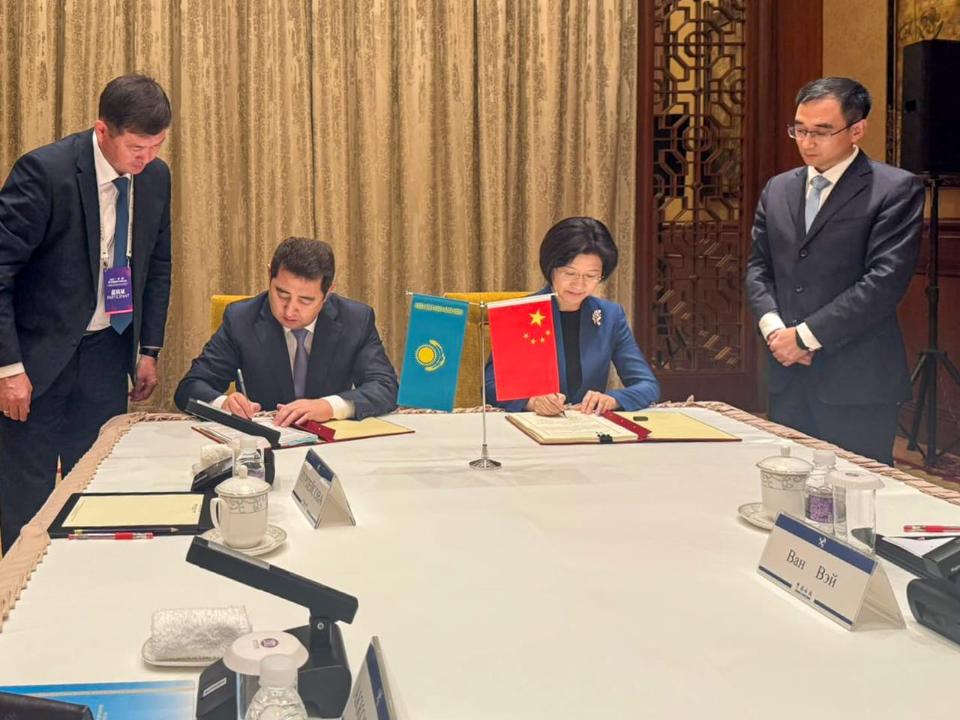
Kazakhstan has secured approval to begin exporting pork to China following the signing of a bilateral protocol on inspection, quarantine, and food safety standards. The agreement was formalized on October 15 in Shanghai by Kazakh Minister of Agriculture Aidarbek Saparov and Sun Meijun, Head of the General Administration of Customs of China. This marks the first time Kazakh pork producers have been granted access to the Chinese market. The agreement allows for the export of frozen, chilled, thermally processed pork products, and offal, signaling a major milestone for Kazakhstan’s agricultural sector. During the Shanghai meeting, the two officials also discussed expanding access for other Kazakh agricultural goods. Saparov highlighted Kazakhstan’s commitment to meeting China’s stringent food safety and quality standards. According to the Ministry of Agriculture, bilateral agricultural trade reached $992.3 million in the first seven months of 2025, a 28 percent increase on the same period in 2024. For comparison, total trade in 2024 amounted to $1.4 billion. This protocol follows a similar agreement signed in May 2025 that opened the Chinese market to Kazakh poultry exports. Currently, more than 2,800 Kazakh enterprises are registered with China’s General Administration of Customs and authorized to export goods to the country. On October 15, Kazakhstan’s Food Contract Corporation signed a memorandum of cooperation in Shanghai with China’s Shandong Hi-Speed Qilu Eurasia Railway Express Co. Ltd. The agreement aims to expand Kazakh exports of grain, animal feed, and oilseeds through a contract farming model, under which Chinese firms purchase future harvests from Kazakh producers at the sowing stage. Minister Saparov noted that Kazakhstan has the capacity to export 3-4 million tons of grain and feed flour to China annually. As previously reported by The Times of Central Asia, a new joint Kazakh-Chinese veterinary laboratory was recently launched in East Kazakhstan. The facility is intended to streamline agricultural export procedures and accelerate inspections for goods entering the Chinese market.
Kazakhstan to Launch Agricultural Marketplace for Businesses

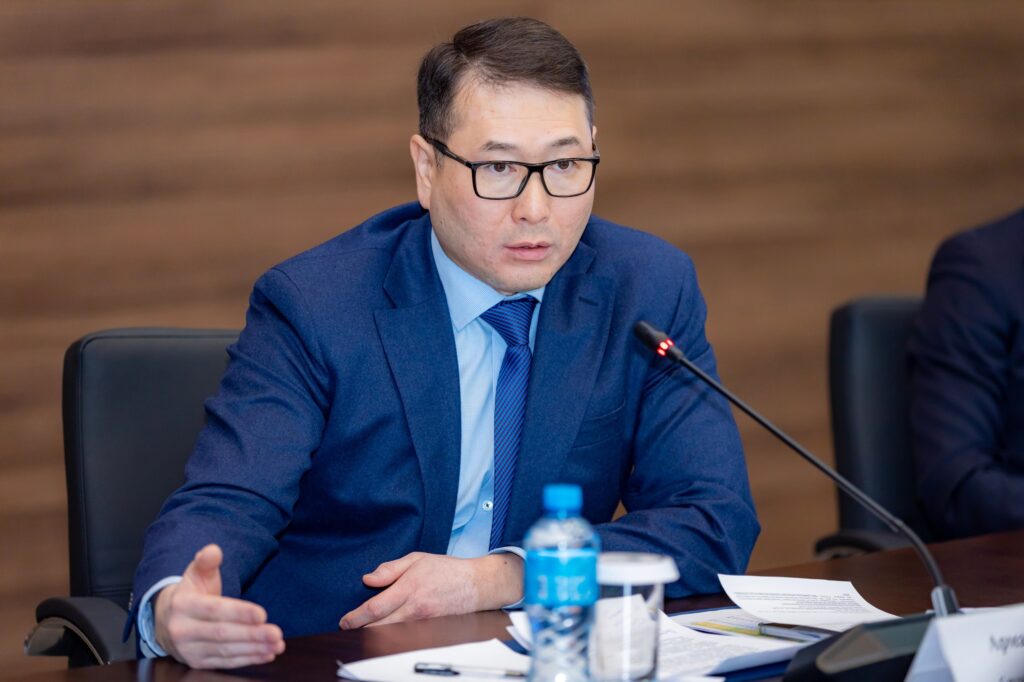
Kazakhstan’s Ministry of Trade and Integration is developing a domestic digital platform aimed at streamlining the purchase of agricultural products, reducing their cost, and enhancing government oversight of the agricultural sector. Speaking at a government meeting on August 5, Minister of Trade and Integration Arman Shakkaliev said a pilot project is currently underway to introduce a nationwide information system for tracking goods, implemented in partnership with the national telecom operator, Kazakhtelecom JSC. The goal is to ensure a transparent and accessible supply of socially important food products to the population. “This project aggregates real-time data on the stock and volume of such goods, based on invoices across the supply chain,” Shakkaliev stated. “Using this system, we are creating an innovative agri-marketplace that will provide digital connectivity between producers, retail chains, and government agencies, eliminating intermediaries and opaque schemes.” The ministry is also preparing to launch a domestic B2B platform to facilitate wholesale imports, primarily from China, and support small and medium-sized enterprises. Plans include the introduction of digital tools, streamlined procedures, and integration with suppliers via direct channels, including JD.com and Alibaba. Full implementation will require removing technical certification barriers with the Chinese side. According to Shakkaliev, over 25 million fiscal receipts are generated daily in Kazakhstan. In response, the ministry will launch a dedicated module to monitor trade markups by analyzing electronic invoices and cash register receipts. “The system will enable monitoring of purchase and retail prices, identifying price anomalies, assessing markup levels by category, region, and supplier, and detecting potential shortages in a timely manner,” he explained. Further digital initiatives include expanding Kazakhstan’s product labeling system. By the end of 2025, motor oils will be subject to digital labeling, followed by beer in February 2026, light industry goods in March, and jewelry by December. From 2027, biologically active supplements (BAS) will also be included. Shakkaliev said these reforms are expected to boost trade volumes, reduce the shadow economy, and increase labor productivity in the retail sector. As previously reported by The Times of Central Asia, Kazakhstan launched a domestic online marketplace, Teez, in December 2024, offering next-day delivery and opening pick-up points in 24 cities across the country.

Kazakhstan Proposes Digital Platform for SCO Agricultural Trade

At a recent gathering of agricultural ministry officials from Shanghai Cooperation Organization (SCO) member states in Beijing, Kazakhstan’s Deputy Minister of Agriculture, Yermek Kenzhekhanuly, proposed establishing a unified digital platform to streamline and enhance agricultural trade across the bloc. According to the Ministry of Agriculture of the Republic of Kazakhstan, the country exported $5.1 billion worth of agricultural products in 2024, a 3.9% year-on-year increase to 16.1 million tons. Notably, 69% of this trade involved nine SCO member countries, underscoring both regional interdependence and the potential for expanded agricultural cooperation. The SCO includes Kazakhstan, China, Russia, Belarus, India, Iran, Kyrgyzstan, Pakistan, Tajikistan, and Uzbekistan. “We view the agricultural sector as an area for strategic partnership, not competition,” Kenzhekhanuly stated. He emphasized Kazakhstan's readiness to help develop a unified agricultural space grounded in trust, coordination, and complementarity. The proposed digital platform would incorporate tools for electronic certification, logistics tracking, and product traceability. The Kazakh delegation also stressed the importance of harmonizing technical regulations and phytosanitary standards to facilitate mutual trade and eliminate non-tariff barriers. The meeting concluded with the signing of the Protocol of the Tenth Meeting of SCO Ministers of Agriculture, reaffirming the member states' commitment to deepening cooperation in the agricultural sector. As previously reported by The Times of Central Asia, Kazakhstan is also working to diversify its agricultural export markets, including recent wheat shipments to North Africa.

Watermelon Prices Plummet in Uzbekistan as Early Harvest Floods Market

Wholesale watermelon prices in Uzbekistan have dropped nearly threefold in just one week, marking the steepest weekly decline in at least five years, according to a report by EastFruit. EastFruit analysts attribute the sharp drop to an early and abundant harvest. Between May 16 and 22, large volumes of freshly harvested watermelons entered the wholesale markets in Tashkent, about a week earlier than in 2024, resulting in a supply surge. On May 23, the average wholesale price stood at 7,000 Uzbek sums per kilogram (approximately $0.54), the highest level for that time of year since 2021. By May 30, prices had fallen to just 2,500 sums per kilogram ($0.20), representing a near threefold decrease in just seven days. Despite the dramatic drop, end-of-May prices were still 25% higher than the same period in 2023, though only half the price recorded in late May 2024. Export Prospects Remain Strong The price decline is expected to stimulate watermelon exports. Since 2020, fresh watermelons have become one of Uzbekistan’s key fruit and vegetable exports. In 2023, the country set a record by exporting 104,700 tons. Shipments remained robust in 2024, reaching 98,500 tons, just 6% below the all-time high. As previously reported by The Times of Central Asia, Kyrgyzstan recently signed a trade agreement with a leading Uzbek dried fruit exporter, paving the way for regular food exports to Europe and the Persian Gulf. Ecofruit, a major Uzbek agricultural producer, has also expressed strong interest in Kyrgyz nuts and dried fruits, citing their high quality and natural purity.

Kazakhstan and Kyrgyzstan Seek to Increase Agricultural Trade

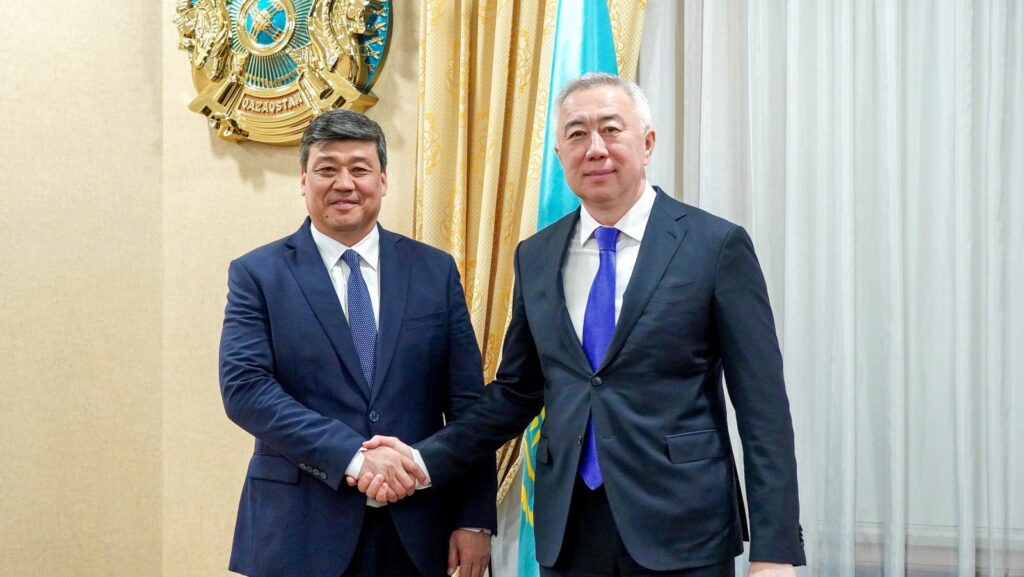
Kazakhstan and Kyrgyzstan have agreed to establish a "green-light corridor" for the export of Kyrgyz agricultural products to Kazakhstan, as well as for the supply of early spring fruits and vegetables from Kyrgyzstan.  The agreement was discussed during an April 25 meeting in Astana between Kyrgyzstan’s Deputy Chairman of the Cabinet of Ministers and Minister of Water Resources, Agriculture and Processing Industry, Bakyt Torobayev, and Kazakhstan’s Deputy Prime Minister and Minister of National Economy, Serik Zhumangarin. Kazakh and Kyrgyz officials agreed to jointly determine the list and volumes of agricultural products required by Kazakhstan. Zhumangarin and Torobayev also discussed introducing tariff discounts on rail transportation for Kyrgyz food and agricultural products intended for export and transit through Kazakhstan. The officials noted the steady growth of Kazakh-Kyrgyz trade, which reached $1.7 billion last year. Zhumangarin proposed expanding the range of Kazakh goods exported to Kyrgyzstan.  "We are ready to increase the export of Kazakhstani products across 195 commodity items by more than $260 million," Zhumangarin stated. He also suggested increasing the export of Kazakh grain and oilseeds to Kyrgyzstan.