
• KZT/USD = 0.00226
  • TJS/USD = 0.10820
  • UZS/USD = 0.00009
  • TMT/USD = 0.29760
  • KZT/USD = 0.00226
  • TJS/USD = 0.10820
  • UZS/USD = 0.00009
  • TMT/USD = 0.29760
  • KZT/USD = 0.00226
  • TJS/USD = 0.10820
  • UZS/USD = 0.00009
  • TMT/USD = 0.29760
  • KZT/USD = 0.00226
  • TJS/USD = 0.10820
  • UZS/USD = 0.00009
  • TMT/USD = 0.29760
  • KZT/USD = 0.00226
  • TJS/USD = 0.10820
  • UZS/USD = 0.00009
  • TMT/USD = 0.29760
  • KZT/USD = 0.00226
  • TJS/USD = 0.10820
  • UZS/USD = 0.00009
  • TMT/USD = 0.29760
  • KZT/USD = 0.00226
  • TJS/USD = 0.10820
  • UZS/USD = 0.00009
  • TMT/USD = 0.29760
  • KZT/USD = 0.00226
  • TJS/USD = 0.10820
  • UZS/USD = 0.00009
  • TMT/USD = 0.29760
28 September 2026

Viewing results 1 - 6 of 2

Kyrgyzstan’s Asman Airlines Considers COMAC Jets

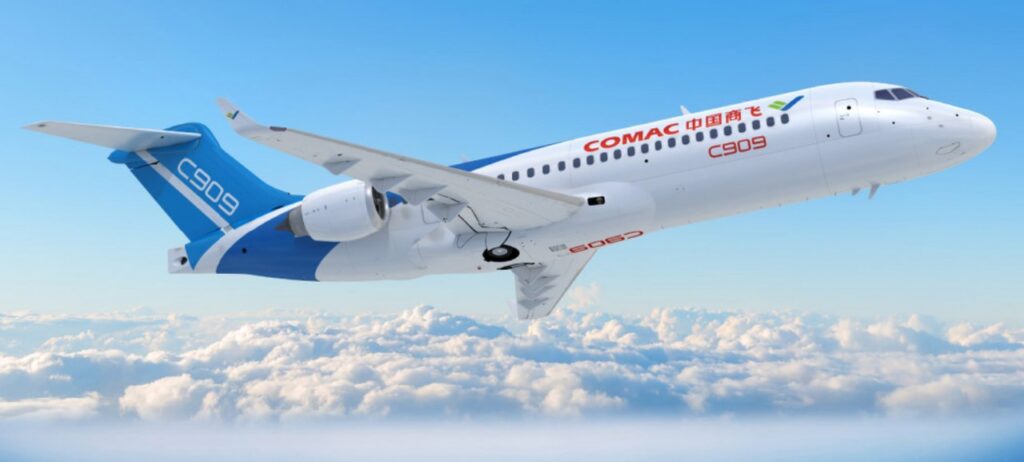
Kyrgyzstan’s state-owned Asman Airlines is considering C909 and C919 jets from the Commercial Aircraft Corporation of China (COMAC) while pursuing separate plans to add Airbus A321 aircraft for international routes. Under the proposed cooperation, COMAC will provide technical and commercial information on the two aircraft, while the sides assess whether they would be economical to operate on Asman’s existing and planned routes. Airline representatives will also visit COMAC’s production facilities in Shanghai. The talks will also cover certification. Before Asman could operate either jet, Kyrgyzstan’s State Civil Aviation Agency is expected to help validate its type certificate, the safety approval for the aircraft design. The C909 is a regional jet seating 78 to 97 passengers, with a range of about 1,380 to 2,300 miles. COMAC says it is suited to short and narrow runways and high-altitude airports, a feature that could be useful in mountainous Kyrgyzstan. The C919 is a considerably larger single-aisle jet seating 158 to 192 passengers, with a range of about 2,530 to 3,450 miles. It competes in the same broad market as the Airbus A320 and Boeing 737 families. Both models are already in commercial service. COMAC said in February that more than 200 C909 and C919 aircraft had been delivered in total. The C909 has also entered service with airlines in Southeast Asia. The C919’s expansion outside China has been slower. It is certified by the Civil Aviation Administration of China, while European certification remains incomplete. In January, the European Union Aviation Safety Agency confirmed that its pilots had conducted validation flights of the C919 in Shanghai. Asman Airlines currently operates three Canadian-built Dash 8 Q400 turboprops, each seating up to 80 passengers, primarily on domestic and short regional routes. In July, the airline resumed seasonal flights between Almaty and Issyk-Kul. Asman’s parent company, Airports of Kyrgyzstan, signed a deal with BBAM Aircraft Leasing & Management in March to acquire two Airbus A321 aircraft for the carrier. The airport operator said in July that Asman plans to add eight A321s over five years, with the first two forming the initial stage. The European Commission removed all airlines certified in Kyrgyzstan from the EU Air Safety List in June, ending restrictions imposed in 2006. Removal from the list does not automatically authorize flights to the European Union; carriers still need suitable aircraft and the necessary operating approvals. Kyrgyzstan has also been restoring regional airports and domestic routes. Between 2021 and 2025, passenger traffic at the country’s airports increased by 52%, while the number of flights rose by 53%. Five airports were operating in 2021; the government said in March 2026 that all 11 were operational.


Kyrgyz Airlines See EU Flight Ban Lifted After Two Decades

The European Commission has removed all air carriers certified in Kyrgyzstan from the EU Air Safety List, ending restrictions first imposed in 2006. The decision opens a route back into European Union (EU) airspace for airlines certified in Kyrgyzstan. Regular flights cannot start on the delisting alone. Each airline will still need aircraft suited to European routes and approval to operate under EU rules. The change came through the EU’s 48th update to the Air Safety List. After the update, 154 airlines remain banned from EU skies. The list also identifies 16 countries where the EU says national aviation authorities lack adequate safety oversight. Airlines certified in Kyrgyzstan were added to the list in October 2006 under Commission Regulation (EC) No 1543/2006. That decision followed a European expert mission to Kyrgyzstan from September 10 to 15, 2006. The EU found that the country’s civil aviation authority lacked enough capacity to apply and enforce safety standards under the Chicago Convention. It also found that most of the carriers inspected held Kyrgyzstan-issued air operator certificates but did not have their principal place of business in the country. The 2006 decision placed all air carriers certified by Kyrgyzstan’s aviation authorities under a blanket ban. Last September, The Times of Central Asia reported that 16 carriers from Kyrgyzstan were still on the list, out of 169 banned airlines worldwide. Kyrgyzstan moved through the final stage of the EU review process over the past year. Last October, the State Civil Aviation Agency under the Cabinet of Ministers of the Kyrgyz Republic held a technical meeting with the Commission. In February, the agency submitted evidence on the revised Kyrgyz Air Code, along with new rules for airline certification and recertification. An EU assessment team visited Kyrgyzstan from March 23 to 27. It examined how the new legal framework worked in practice and reviewed the recertification of airlines. The team also checked the SCAA’s oversight of operators and visited AeroStan Air Company LLC and Avia Traffic Company. The Commission Implementing Regulation credited the agency with significant progress in applying the revised Air Code and related aviation legislation. The new legal framework gave it an acceptable basis for certification and oversight. The EU still identified weaknesses. Recurrent training and document control were not yet consistent enough, while oversight procedures needed clearer standardization. Some aircraft safety checks still require attention, including non-destructive testing at approved maintenance organizations. Kyrgyzstan reduced the number of active operators before the EU decision. Between December 2025 and February 2026, all certified air carriers went through a full reassessment. Active air operator certificates fell from 21 to eight. The SCAA said only carriers able to meet the new safety and regulatory requirements kept their certificates. The decision followed the EU Air Safety Committee meeting in Brussels from May 19 to 21. By then, Kyrgyzstan had closed 19 of 23 observations from the March assessment and seven of 12 recommendations. The remaining items were described as being at an advanced stage. The removal has renewed attention...