
• KZT/USD = 0.00221
  • TJS/USD = 0.10830
  • UZS/USD = 0.00008
  • TMT/USD = 0.29760
  • KZT/USD = 0.00221
  • TJS/USD = 0.10830
  • UZS/USD = 0.00008
  • TMT/USD = 0.29760
  • KZT/USD = 0.00221
  • TJS/USD = 0.10830
  • UZS/USD = 0.00008
  • TMT/USD = 0.29760
  • KZT/USD = 0.00221
  • TJS/USD = 0.10830
  • UZS/USD = 0.00008
  • TMT/USD = 0.29760
  • KZT/USD = 0.00221
  • TJS/USD = 0.10830
  • UZS/USD = 0.00008
  • TMT/USD = 0.29760
  • KZT/USD = 0.00221
  • TJS/USD = 0.10830
  • UZS/USD = 0.00008
  • TMT/USD = 0.29760
  • KZT/USD = 0.00221
  • TJS/USD = 0.10830
  • UZS/USD = 0.00008
  • TMT/USD = 0.29760
  • KZT/USD = 0.00221
  • TJS/USD = 0.10830
  • UZS/USD = 0.00008
  • TMT/USD = 0.29760
13 October 2026

Viewing results 1 - 6 of 2

Ted Kennedy’s 1978 Visit to Kazakhstan in Archival Photos

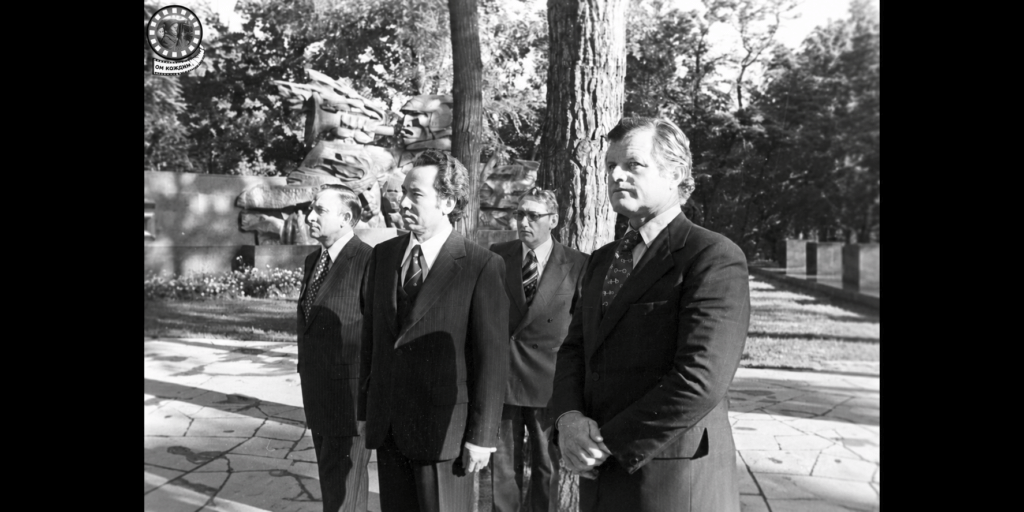
United States Senator Ted Kennedy’s visit to Alma-Ata in 1978 came at a time when foreign tourists were much less common in Central Asia than they are today. Most tourists from Western countries came through Intourist, the Soviet state travel organization that handled foreign visitors. Private enterprise was largely absent from the Soviet economy, although limited forms of individual work were legally permitted. But high-ranking visitors sometimes came to the region as official guests, most often to take part in international events. [caption id="attachment_57860" align="aligncenter" width="1024"] Edward Kennedy (second from left) at a World Health Organization congress.[/caption] In September 1978, Kennedy, the brother of former U.S. President John F. Kennedy, visited Alma-Ata, then the capital of the Kazakh Soviet Socialist Republic (Kazakh SSR). He had first visited the Soviet Union in April 1974 and met with Leonid Brezhnev, general secretary of the Communist Party of the Soviet Union. During that trip, Kennedy discussed arms control and Soviet emigration policy and advocated a comprehensive nuclear test ban. [caption id="attachment_57864" align="aligncenter" width="1024"] Kennedy with surgeon K. Ormantayev at the WHO-UNICEF International Conference on Primary Health Care.[/caption] The senator also took part in the International Conference on Primary Health Care in Alma-Ata, jointly sponsored by the World Health Organization (WHO) and the United Nations Children's Fund. The conference adopted the Declaration of Alma-Ata, which identified primary health care as the key to achieving "Health for All" and as an integral part of national health systems. More than 3,000 delegates attended; 134 governments and 67 international organizations and agencies were represented. [caption id="attachment_57862" align="aligncenter" width="1024"] Kennedy (second from left) with Kazakh SSR Health Minister T. Sharmanov (second from right) and Zh. Kaliev, chairman of Kaz-ODKS (far right), at the airport.[/caption] Amid the Soviet Union’s Cold War with Western countries and its intensifying rivalry with China, the conference had a clear political dimension. David A. Tejada de Rivero, WHO deputy director-general from 1974 to 1985 and twice Peru's minister of health, noted that "the choice of Alma-Ata was due to two fundamental considerations: the dynamism and leadership of Kazakhstan's minister of health (Toregeldy Sharmanov was Minister of Health of the Kazakh SSR), and the ability to prepare the necessary physical infrastructure at very short notice. Alma-Ata, which means 'father of apples,' was in the republic where the Soviet Union had its Cold War space programs. It was also close to China." [caption id="attachment_57863" align="aligncenter" width="1024"] Kennedy with A. Akpayev (center) and Zh. Kaliev (right) at the Medeo high-altitude skating rink.[/caption] Of course, people both inside the Soviet Union and abroad showed enormous interest in every detail of the stay of such a high-ranking guest from the U.S., a senator from a distant country across the ocean who bore such a famous name. For example, Dinmukhamed Kunaev, then first secretary of the Central Committee of the Communist Party of Kazakhstan, recalled his meeting with Kennedy in his book O moem vremeni (About My Time): "...He liked the capital of Kazakhstan, and especially the Memorial of Glory...

Yurts, Throat Singing, and Aport Apples at Almaty City Day

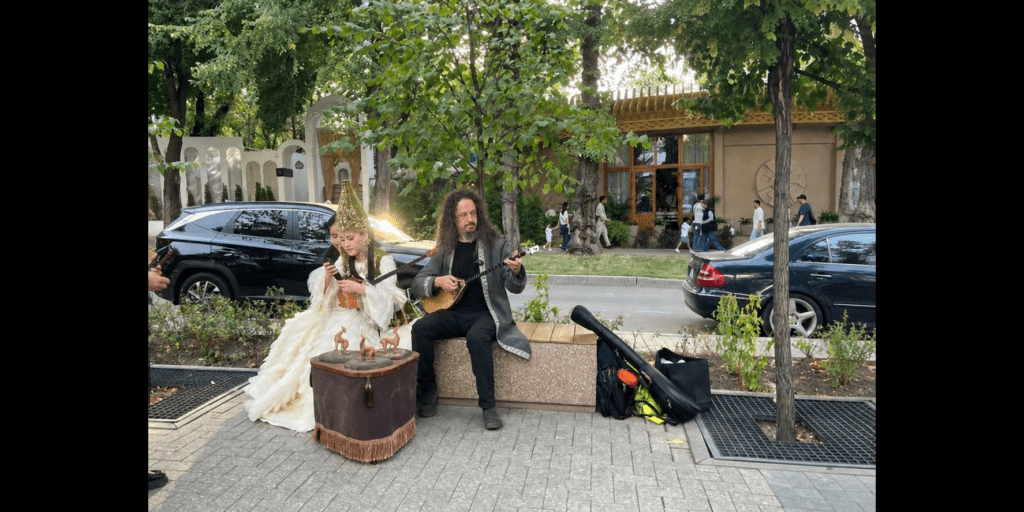
On Sunday, September 20, yurts, market stalls, activity areas, and stages lined Panfilov Street, extending downhill from the building that houses the Kazakh-British Technical University (KBTU). The flow of people barely thinned until evening. Almaty celebrates City Day on the third Sunday of September. This year, concerts and festivals were held on Astana and Abai squares, Zhibek Zholy Street, outside the Alatau Theater of Traditional Art, and across all eight districts. The busiest program unfolded on Panfilov Street in the historic center. The main stage was set up near the KBTU building. Completed in 1957, it was the seat of the Supreme Soviet of the Kazakh Soviet Socialist Republic and later housed the parliament of independent Kazakhstan. It was here on December 16, 1991, that the constitutional law declaring Kazakhstan’s independence was adopted. The concert had no strict division by genre. Traditional throat singing, a vocal technique in which a singer produces a low note while bringing out higher overtones, gave way to folk dancing, followed by pop performers. The crowd remained dense as people moved between the main stage and nearby venues. Music changed along the length of Panfilov Street as visitors moved downhill. Some performers played outside the official program, while dombra musicians could be found beyond the festival area in other parts of the city. [caption id="attachment_56530" align="aligncenter" width="1280"] One of several music stages along the city streets.[/caption] At the Alma Digital area, traditional competitions were given a digital twist. In the archery event, the bow was real, but the target appeared on an LED screen, and the system displayed the arrow’s speed after each shot. In the tug-of-war challenge, a wall replaced the opposing team, while a screen measured the force applied in kilograms. Lines of children formed at both activities, regularly joined by adults. Yurts along the street offered felt goods, textiles, jewelry, and dombras. Children played games and watched performances, while other areas featured crafts, films, environmental projects, sports, and food. [caption id="attachment_56535" align="aligncenter" width="1280"] Traditional textiles.[/caption] An exhibition of archival photographs documented Almaty from the days of Verny through the postwar period. Visitors lingered over the images, trying to identify familiar streets and intersections. A separate area was devoted to the Alma Qala festival, where apples from farms around Almaty were brought for sale. According to Kazinform, more than 200 tons of fruit were supplied for the fair, ranging from widely grown varieties to the now much rarer Almaty Aport. The region’s connection to apples predates Aport, reaching back to Malus sieversii, the wild apple that still grows in the Tian Shan mountains and is recognized as the main progenitor of the modern cultivated apple. Genetic research traces the origins of domesticated apples to Central Asia and shows how other wild species contributed to their genetic makeup as cultivated varieties spread westward along the Silk Road. [caption id="attachment_56536" align="aligncenter" width="1280"] Apples gave Almaty its name.[/caption] Aport arrived in Verny in the 19th century and flourished in the foothills around the city, where its...