Viewing results 1 - 6 of 2
Kazakhstan will introduce joint liability for banks and mobile operators in cases of internet fraud involving their infrastructure, President Kassym-Jomart Tokayev announced during an extended meeting of the country’s law enforcement agencies. Addressing the growing threat of cybercrime, Tokayev emphasized the importance of prevention, noting that many internet and phone scams originate from well-organized criminal networks operating abroad, complicating investigation and prosecution. “Preventive measures are therefore crucial. Last year, a modern anti-fraud center was established at the National Bank of Kazakhstan to detect and block suspicious transactions,” Tokayev said. “We are now introducing joint liability for banks and mobile operators in fraud cases involving their infrastructure.” Tokayev also raised concerns over citizens' involvement in money laundering schemes. “Fraudsters lure people into laundering operations by offering rewards for access to their bank accounts. Many comply without considering the severe legal consequences,” he noted. A major enabler of these crimes is the widespread use of SIM cards registered under false identities. According to the president, nearly 100,000 such cases have been detected so far in 2025. The National Bank reported that since July 2024, the anti-fraud center has frozen over 63,000 suspicious transactions worth 2.5 billion tenge (approximately $4.83 million). Common schemes include telephone scams (22%), fake investment platforms (19%), and misuse of so-called “dropper” cards (19%).Continue reading
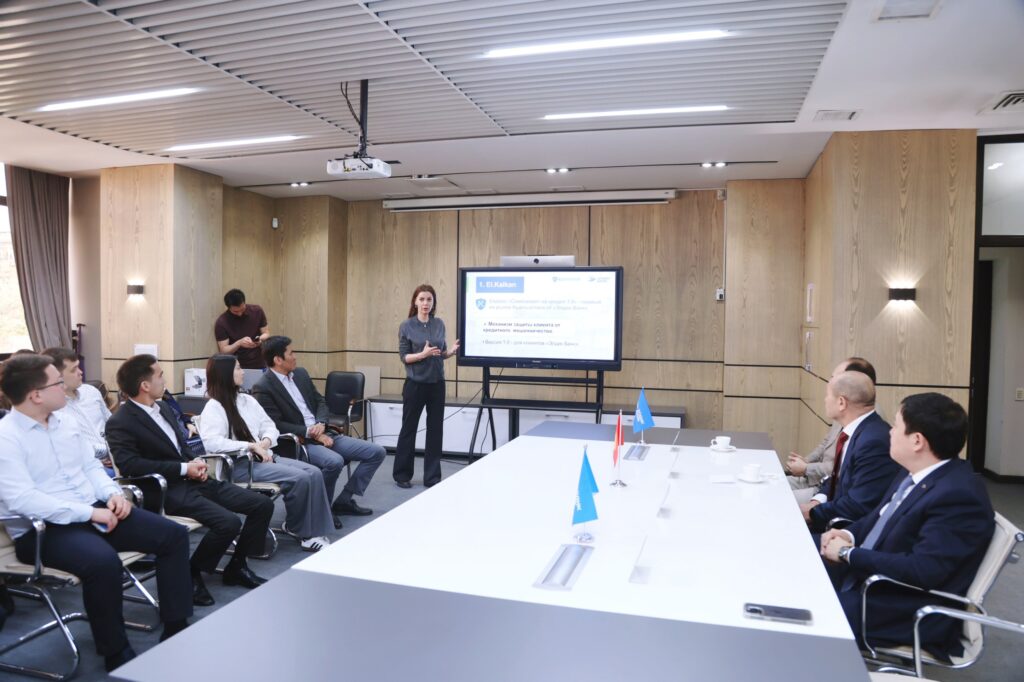
For the first time in Kyrgyzstan’s financial market, a state-owned bank has introduced a self-limitation service on loans, aiming to strengthen cybersecurity and protect citizens from financial fraud. A New Step Toward Cybersecurity According to the Union of Banks of Kyrgyzstan, Eldik Bank, a state-owned institution, has launched a digital self-limitation service for its clients. The bank believes the mechanism could significantly enhance cybersecurity across the entire banking sector, especially if commercial and other state banks adopt the initiative as well. Earlier, the National Bank of the Kyrgyz Republic (NBKR) had started examining international experiences regarding self-prohibition of online loans and the feasibility of implementing such a practice domestically. The NBKR notes that a self-ban mechanism could not only shield customers from fraud but also encourage more informed decision-making when applying for loans. The Union of Banks of Kyrgyzstan has called on the wider banking community to collaborate on this initiative, advocating for a shared database of clients who have opted to limit their access to new loans. Learning from Regional Experiences In an interview with The Times of Central Asia, Anvar Abdraev, President of the Union of Banks of Kyrgyzstan, explained that the move was motivated largely by a global rise in banking fraud. “Russia and Kazakhstan have already introduced such a service in their banks. Statistics in these countries show that a large number of financially literate people use this service, probably because of the recent increase in bank fraud around the world,” Abdraev said. He added that promoting financial literacy and offering additional protective mechanisms is becoming a crucial component of banking policy across the region. Legislative Efforts Underway The mechanism is currently being actively promoted within Kyrgyzstan’s parliament. A draft bill to formalize the introduction of self-limitation on loans has been submitted for public discussion. “The Union of Banks is also participating in the discussions and is part of the working group drafting the legislation,” Abdraev said. “We aim to create a comprehensive digital platform where, alongside self-limitation, additional customer protection mechanisms would be operational.”