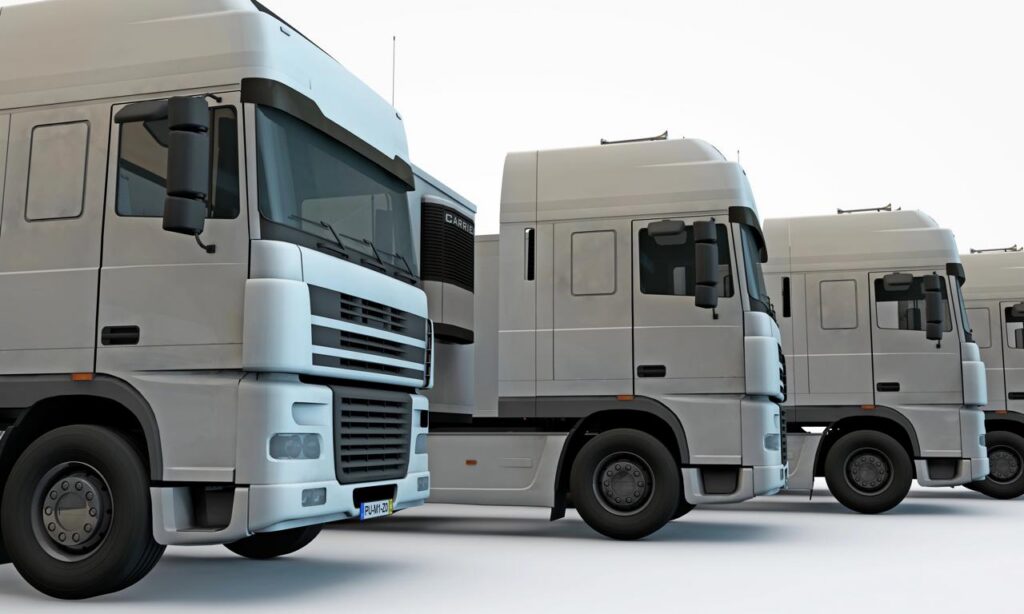
Kazakhstan to Produce SITRAK Autonomous Heavy Trucks
Kazakhstan plans to begin producing autonomous SITRAK heavy-duty tractor units within three years as it expands domestic vehicle manufacturing and industrial cooperation with China. Industry and Construction Minister Yersayin Nagaspayev announced the plan at a government meeting on July 21. Nagaspayev said the project was among the agreements reached during President Kassym-Jomart Tokayev’s July 15–17 visit to China. "By 2028, Kazakhstan plans to implement new projects to expand passenger and commercial vehicle production. Agreements reached during the presidential visit to China include the organization of production for Li Auto, Omoda, and Jaecoo vehicles, the manufacture of autonomous Sitrak tractor units, and the development of a nationwide network of high-speed charging stations together with BYD," Nagaspayev said. SITRAK is the premium heavy-truck brand developed between 2009 and 2011 by Chinese manufacturer Sinotruk in partnership with Germany's MAN. The brand’s C7H tractor units, available in 4×2, 6×2, and 6×4 configurations, together with its heavy-duty construction dump trucks, are among the most popular Chinese commercial vehicles in Kazakhstan. The minister did not disclose the planned production site or expected manufacturing capacity. Kazakhstan already assembles Scania and HOWO heavy trucks at an automotive plant in Saran, near the central city of Karaganda. Nagaspayev said Kazakhstan's automotive sector is expected to produce 190,000 vehicles of all types in 2026, surpassing the previous record of more than 171,000 vehicles set in 2025. The government also plans to increase the share of locally made automotive components. Domestic producers already make tires and engine components, as well as batteries and bus parts. Seats and multimedia systems are also produced locally. New projects are underway to manufacture bumpers and wiring harnesses, along with wheels and automotive paint. To support further industrial development, Kazakhstan recently adopted legislation introducing the legal concept of an industrial cluster. The country's largest automotive and manufacturing clusters are currently located in Kostanay, Saran, and Almaty, according to the minister. Artificial intelligence is also playing an increasingly important role in Kazakhstan's manufacturing sector. Nagaspayev said all 11 operating automobile plants in the country have introduced AI-based systems for quality control and industrial safety. An AI-powered situational center has also been established to monitor manufacturing operations, analyze information from surveillance cameras, sensors, and industrial information systems, detect potential emergencies and operational risks, and help factory managers respond before incidents occur. As previously reported by The Times of Central Asia, Kazakhstan and Russia launched a pilot cross-border driverless freight transport corridor in May, marking another step toward the wider adoption of autonomous commercial transport across the region.