• KZT/USD = 0.00219
  • TJS/USD = 0.10840
  • UZS/USD = 0.00008
  • TMT/USD = 0.29850
  • KZT/USD = 0.00219
  • TJS/USD = 0.10840
  • UZS/USD = 0.00008
  • TMT/USD = 0.29850
  • KZT/USD = 0.00219
  • TJS/USD = 0.10840
  • UZS/USD = 0.00008
  • TMT/USD = 0.29850
  • KZT/USD = 0.00219
  • TJS/USD = 0.10840
  • UZS/USD = 0.00008
  • TMT/USD = 0.29850
  • KZT/USD = 0.00219
  • TJS/USD = 0.10840
  • UZS/USD = 0.00008
  • TMT/USD = 0.29850
  • KZT/USD = 0.00219
  • TJS/USD = 0.10840
  • UZS/USD = 0.00008
  • TMT/USD = 0.29850
  • KZT/USD = 0.00219
  • TJS/USD = 0.10840
  • UZS/USD = 0.00008
  • TMT/USD = 0.29850
  • KZT/USD = 0.00219
  • TJS/USD = 0.10840
  • UZS/USD = 0.00008
  • TMT/USD = 0.29850
23 November 2026

Viewing results 1 - 6 of 2

Kazakhstan and China Discuss $200 Million Fund for Middle Corridor

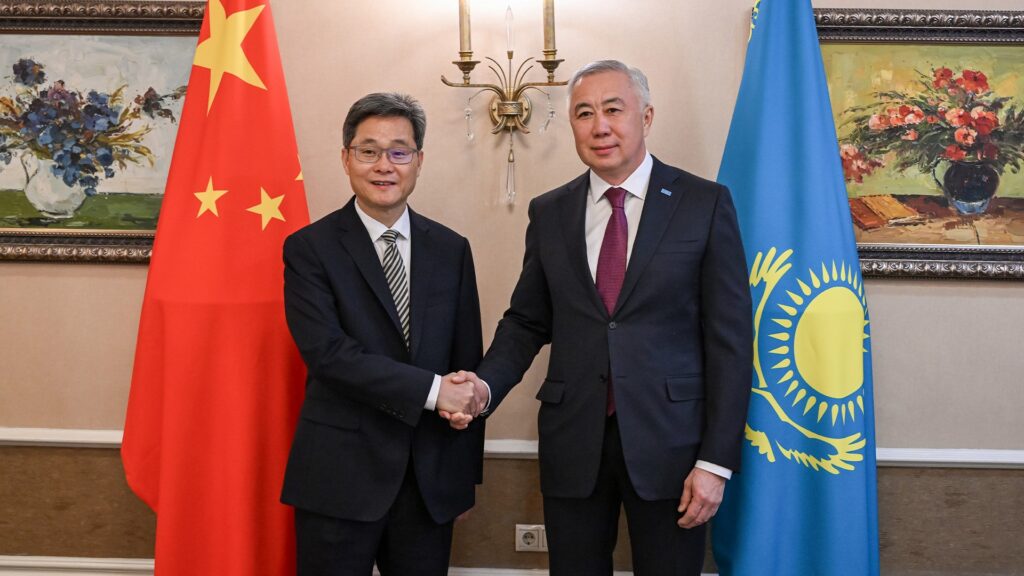
Kazakhstan and China are discussing a joint investment fund with a preliminary target of up to $200 million to develop the Trans-Caspian International Transport Route, the Kazakh government said on November 2. The route, also known as the Middle Corridor, connects China and Europe through Kazakhstan, the Caspian Sea, Azerbaijan, and Georgia. It combines rail and maritime transport, offering shippers an alternative to overland routes through Russia. Kazakhstan’s Deputy Prime Minister and Minister of National Economy Serik Zhumangarin discussed the fund with Chinese Finance Minister Lan Fo’an on the sidelines of the second Tianshan Forum for Central Asia Economic Cooperation in Almaty. According to the government, Kazakhstan first proposed the fund during a meeting between President Kassym-Jomart Tokayev and Chinese President Xi Jinping in Shanghai in July 2026. The Middle Corridor carried 4.12 million metric tons of freight in 2025, down approximately 8% from 4.48 million metric tons a year earlier. Kazakhstan plans to increase the route’s annual capacity to 10 million metric tons by 2028. Zhumangarin proposed designating financial institutions from both countries to agree on the fund’s operating principles. The government statement named Kazakhstan’s Baiterek National Investment Holding and China’s Silk Road Fund as prospective participants. In September, Baiterek reported that preliminary terms had been signed for a fund involving Silk Road Fund and Baiterek’s subsidiary Qazaqstan Investment Corporation, also targeting up to $200 million. That plan envisaged raising $100 million initially and directing at least 70% of investments to projects in Kazakhstan. The November 2 statement did not clarify whether this arrangement and the Middle Corridor proposal concerned the same fund. The government described the Middle Corridor fund as one of three joint financing mechanisms under development. The other two are Kazakh Invest Fund, being developed with Silk Road Finance Corporation, and arrangements for loans and project insurance involving financial institutions from both countries. Zhumangarin proposed coordinating these mechanisms through a single point of contact, described as a “window” for project financing and insurance, without establishing a separate organization. “This will make it possible to put together a comprehensive financing package for each priority project, including long-term lending, insurance coverage, guarantees, financing in yuan and, where necessary, equity participation,” Zhumangarin said. The government said several pilot projects would be selected to test the arrangement but did not name them. Separately, the two sides discussed potential infrastructure financing from the Export-Import Bank of China. Kazakhstan’s Ministry of Finance listed the expansion of Almaty’s metro, the development of Astana’s transport infrastructure, construction of the Center–West highway, and upgrades to the capital’s water supply systems among the projects discussed. It did not say whether any would receive funding under the proposed investment fund. The November 2 government statement did not disclose how much each country would contribute to the Middle Corridor fund or how ownership would be divided, and it gave no launch date.

Kazakhstan to Increase Legal Protections for Investors

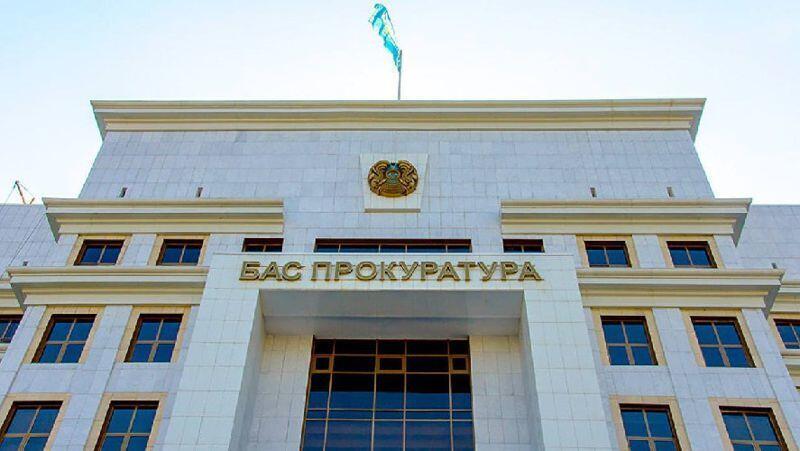
Kazakhstan plans to increase legal protections for investors by appointing dedicated investment prosecutors in the regions and major cities and creating a platform under the Prosecutor General’s Office to resolve disputes between investors and state agencies before they reach court. The measures were announced by Vice Minister of National Economy Arman Kassenov during a briefing in Astana as part of efforts to improve the country’s investment climate and attract more foreign capital. “To achieve this, a special platform for pre-trial settlement of disputes will be created under the Prosecutor General’s Office,” Kassenov said. “This mechanism is intended to help resolve disagreements quickly without lengthy court proceedings.” Investment prosecutors will be appointed at the regional level. Their responsibilities will include assisting investment projects, protecting investors’ rights, and providing legal assistance during major projects. Kazakhstan consists of 20 administrative territorial units: 17 regions and the cities of republican significance Astana, Almaty, and Shymkent. The initiative follows the adoption of amendments by Kazakhstan’s parliament that expand the role of the Prosecutor General in protecting investors’ rights. Under the new legislation, the Prosecutor General will also act as the country’s Investment Ombudsman, responsible for safeguarding the legal interests of domestic and foreign investors. Regional investment prosecutors are expected to be drawn from existing regional prosecutors and equivalent prosecutors in the three cities of republican significance. The government is also seeking to expand its international investment promotion work. Kazakhstan plans to open overseas representative offices in major financial and investment centers to attract investors and assist potential projects at an early stage. Kassenov said an investment service has already been established within Baiterek National Managing Holding JSC. It comprises four sector-specific investment directorates responsible for preparing projects and transferring them to the national investment promotion agency, Kazakh Invest. A new investor support center, Kazakhstan Investment House, will also be established within Kazakh Invest. According to Kassenov, the center will operate as a one-stop shop for investors throughout project implementation, helping reduce administrative barriers and speed up decision-making. The government is also working with the private sector to identify investment opportunities with strong import-substitution and export potential. Kazakhstan also plans to expand the use of its National Digital Investment Platform, which allows authorities to monitor investment projects in real time, track deadlines, and address emerging issues more efficiently. The reforms are part of Kazakhstan’s strategy to attract much higher levels of investment in the coming years. Earlier, authorities announced plans to nearly triple investment in the economy by 2029 as part of efforts to accelerate economic growth and diversification.