
• KZT/USD = 0.00223
  • TJS/USD = 0.10850
  • UZS/USD = 0.00008
  • TMT/USD = 0.29850
  • KZT/USD = 0.00223
  • TJS/USD = 0.10850
  • UZS/USD = 0.00008
  • TMT/USD = 0.29850
  • KZT/USD = 0.00223
  • TJS/USD = 0.10850
  • UZS/USD = 0.00008
  • TMT/USD = 0.29850
  • KZT/USD = 0.00223
  • TJS/USD = 0.10850
  • UZS/USD = 0.00008
  • TMT/USD = 0.29850
  • KZT/USD = 0.00223
  • TJS/USD = 0.10850
  • UZS/USD = 0.00008
  • TMT/USD = 0.29850
  • KZT/USD = 0.00223
  • TJS/USD = 0.10850
  • UZS/USD = 0.00008
  • TMT/USD = 0.29850
  • KZT/USD = 0.00223
  • TJS/USD = 0.10850
  • UZS/USD = 0.00008
  • TMT/USD = 0.29850
  • KZT/USD = 0.00223
  • TJS/USD = 0.10850
  • UZS/USD = 0.00008
  • TMT/USD = 0.29850
19 November 2026

Viewing results 1 - 6 of 2

Reports of Suspected Plague in Russia Prompt Central Asian Health Checks

Reports surrounding the death of an employee at an anti-plague research institute in Russia’s Irkutsk region have prompted health authorities across Central Asia to tighten sanitary controls and review preparedness measures. Russian officials have not confirmed that the employee contracted plague or that a laboratory accident occurred. Kazakhstan, Kyrgyzstan, Tajikistan, and Uzbekistan have nevertheless announced additional checks or heightened readiness in response. Officials across the region say there is no cause for alarm, but the response reflects the sensitivity that remains around cross-border infectious disease threats after the COVID-19 pandemic. What Is Known Russian authorities have released few details, but reports say an employee at the anti-plague institute in Shelekhov, near Irkutsk, accidentally broke a test tube containing live bacteria. That employee, a female aged 27 or 28, was hospitalized on September 29, but she died on October 2. The hospital where she was treated was reportedly placed under quarantine, and nearly 200 people who might have come into contact with her are under medical observation. There are also reports that four more hospitals are under quarantine, with some 100 people hospitalized as a precaution. Russian officials deny these reports and say health specialists are on the ground in the area investigating and have urged the public to wait for an official assessment of the situation and not spread rumors. The Response in Central Asia Kazakhstan shares a 7,800-kilometer border with Russia; the distance from far northeastern Kazakhstan to Irkutsk is more than 1,500 kilometers. While that is comforting, the distance from Kazakhstan to Wuhan, China, is some 3,600 kilometers, and the coronavirus that originated in Wuhan in 2019 eventually reached Kazakhstan and everywhere else in the world. On October 5, Kazakhstan’s Health Ministry said it was aware of the reports from Irkutsk, was following the situation closely, and had ordered closer checks at border crossings and other entry points. “Sanitary and quarantine controls are being conducted at state border crossing points,” a Health Ministry statement said, “No individuals with elevated temperatures, signs of illness, or suspected highly dangerous infections have been detected across any mode of transport.” The Health Ministry said the chances of plague, or “pneumonia of undetermined etiology” crossing Kazakhstan’s borders were low. Kyrgyzstan’s Health Ministry also said it had ordered close checks of people entering the country in response to reports about the situation in Irkutsk. “Specialists monitor individuals, vehicles, and cargo crossing the border to prevent the importation and spread of infectious diseases, including highly dangerous infections,” the Health Ministry said. The same measures are being implemented in Tajikistan. Said Davlatzoda, the head of the Health Ministry’s Department of Sanitary-Epidemiological Safety, Emergency Situations and Emergency Medical Care, said orders went out that every person crossing into Tajikistan must have their body temperature measured. Workers from the department have been instructed to ask people arriving whether they are experiencing symptoms such as nausea and vomiting, headache, weakness, and muscle and joint pain. Personnel from the Sanitary-Epidemiological Safety Department have also been told to wear disposable hazmat...
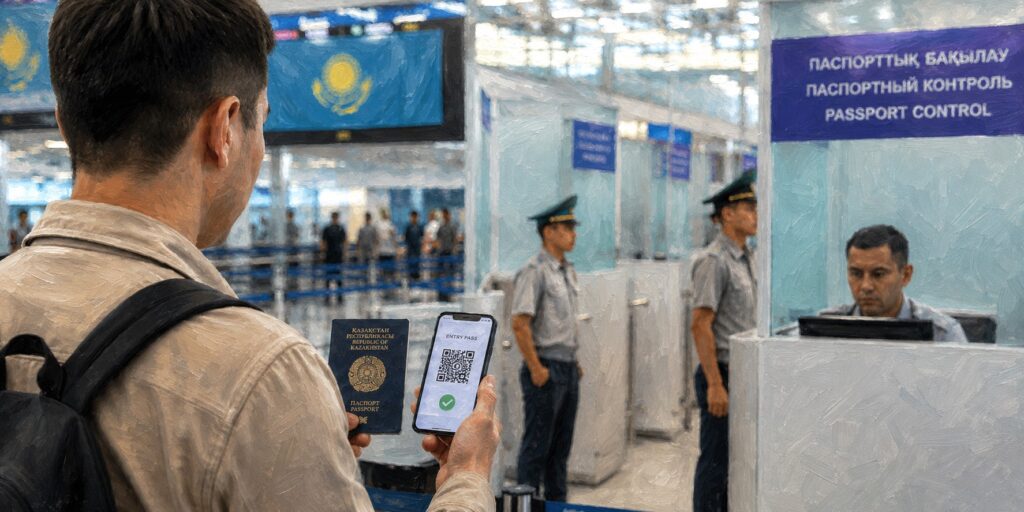

Kazakhstan Proposes Rules for Paid Electronic Entry Permits

Kazakhstan's Interior Ministry has opened public consultation on rules for a paid electronic entry permit for foreign visitors. The ministry has proposed a phased rollout between August and December 2026, but the published summary leaves several basic questions unanswered. The proposal was posted on July 31, and remains open for comments until August 17. It would amend Kazakhstan's 2012 rules governing the entry, stay, and departure of foreign nationals. The ministry says the system will provide "transparency, speed, and completeness [in] recording the cross-border movements of foreign nationals.” However, the consultation page does not display the proposed amendments, an explanatory note, or a comparative table. Rather, it shows an information summary and one attachment labeled as a Russian-language table, leading one public commenter, Andrei Sukhanov, to ask: "Where is the draft itself? Or is only its title being discussed?" That omission makes it impossible to establish several important terms from the consultation. The page does not state the fee, the nationalities covered, the grounds for refusal, the appeal process, or the date when permits would become mandatory. It also fails to explain whether visa holders would need a further separate authorization. The legal basis for introducing paid electronic entry permits already exists: President Kassym-Jomart Tokayev signed Law No. 326-VIII on June 24. The law was first published on June 25, and most of its provisions take effect on August 25. The law defines an electronic entry permit as a digital document granting a foreign citizen or stateless person the right to enter Kazakhstan or transit its territory. The Interior Ministry will issue, refuse, or cancel permits in coordination with the National Security Committee. Foreign citizens and stateless persons entering Kazakhstan will undergo identification and authentication, including the processing of personal and biometric data for a digital immigration profile. The government will set the fee and payment procedure. The law directs half of the revenue toward migration and border-control technology, while the other half will support domestic and inbound tourism. The Interior Ministry's summary says differentiated charges would fund technical maintenance, digital infrastructure upgrades, and personal-data protection. It gives no amounts or categories, meaning travelers cannot assess the cost. Kazakhstan is already testing the permit through the QazETA platform. During the pilot, the Electronic Travel Authorization is recommended rather than compulsory for citizens of visa-exempt countries. Applicants are asked to submit requests through the mobile app at least 72 hours before travel, and an authorization remains valid for 180 days. An ETA does not extend the permitted length of stay or guarantee admission, with border officials retaining the final decision. The current pilot exempts holders of diplomatic and service passports, members of official delegations, and accredited diplomats. The government has not announced when the pilot will end or published the list of countries that will face a mandatory requirement. A local report in July said Kyrgyzstan had sought clarification on whether the system would cover citizens of Eurasian Economic Union states. Kazakhstan has not published a decision on that point. The...