
• KGS/USD = 0.01144 0%
  • KZT/USD = 0.00205 0%
  • TJS/USD = 0.10785 0.09%
  • UZS/USD = 0.00008 0%
  • TMT/USD = 0.28571 0.28%
  • KGS/USD = 0.01144 0%
  • KZT/USD = 0.00205 0%
  • TJS/USD = 0.10785 0.09%
  • UZS/USD = 0.00008 0%
  • TMT/USD = 0.28571 0.28%
  • KGS/USD = 0.01144 0%
  • KZT/USD = 0.00205 0%
  • TJS/USD = 0.10785 0.09%
  • UZS/USD = 0.00008 0%
  • TMT/USD = 0.28571 0.28%
  • KGS/USD = 0.01144 0%
  • KZT/USD = 0.00205 0%
  • TJS/USD = 0.10785 0.09%
  • UZS/USD = 0.00008 0%
  • TMT/USD = 0.28571 0.28%
  • KGS/USD = 0.01144 0%
  • KZT/USD = 0.00205 0%
  • TJS/USD = 0.10785 0.09%
  • UZS/USD = 0.00008 0%
  • TMT/USD = 0.28571 0.28%
  • KGS/USD = 0.01144 0%
  • KZT/USD = 0.00205 0%
  • TJS/USD = 0.10785 0.09%
  • UZS/USD = 0.00008 0%
  • TMT/USD = 0.28571 0.28%
  • KGS/USD = 0.01144 0%
  • KZT/USD = 0.00205 0%
  • TJS/USD = 0.10785 0.09%
  • UZS/USD = 0.00008 0%
  • TMT/USD = 0.28571 0.28%
  • KGS/USD = 0.01144 0%
  • KZT/USD = 0.00205 0%
  • TJS/USD = 0.10785 0.09%
  • UZS/USD = 0.00008 0%
  • TMT/USD = 0.28571 0.28%

Viewing results 1 - 6 of 122

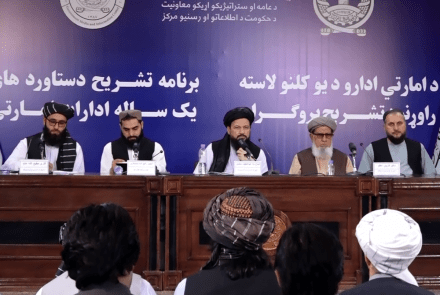
Taliban Announces Revision of Borders With Central Asian Countries

According to the acting Afghan Minister of Energy and Water Resources, Abdul Latif Mansour, Afghanistan's borders with Central Asian countries, which have been eroded, will be revised. "Due to floods, our borders with Tajikistan, Uzbekistan, and Turkmenistan were eroded. We are working to restore these borders and have already discussed this issue with our supreme leader," Mansour said. However, it is still unclear whether the neighboring states have been notified. Mansour stressed that the plan to revise the borders, developed on the instructions of the Islamic Emirati leader, Haibatullah Akhundzad, will be implemented jointly with the ministries of the Interior, Foreign Affairs, Defense, and the General Intelligence Directorate. Mansour did not disclose the details of the strategy, but the ministry spokesman assured those assembled that Afghanistan's actions on water resources management will not harm neighboring countries. It should be noted that the borders of Tajikistan, Uzbekistan, and partially Turkmenistan, along with Afghanistan, run along the Amu Darya River. When the Taliban returned to power in Afghanistan, construction of the Qosh-Tepa irrigation canal, which originates from the Amu Darya, began. Once completed, the canal will supply water to the agricultural northern provinces of Faryab and Balkh. Additionally, land for three projects will be allocated, including provisions for Jawzjan. These plans have raised concerns in neighboring Central Asian countries, especially Uzbekistan and Turkmenistan, which depend on water from the Amu Darya. However, the Afghan authorities argue they have a legal right to their share of the river's flow, which they have not yet utilized.
Illegal Underground Tunnel Unearthed on Uzbekistan-Kazakhstan Border

An illegal underground tunnel has been discovered in the border area of  Tashkent and Kazakhstan, according to the State Security Service of Uzbekistan (SSS). It is noted that SSS employees were quick to call a meeting to cooperate with the “Tashkent-Aero” specialized customs complex's  border troops and military personnel. The gathering exposed a cross-border criminal group's illegal importation of large quantities of substandard drugs from India through Kazakhstan to Uzbekistan. The drugs were brought into Almaty's international airport via the Delhi-Tashkent-Almaty air route. The stash was then delivered to the Dostlik settlement in the  Saryogoch district of the  Turkestan region, Kazakhstan, and transferred onwards to Tashkent's  Orikzor neighbourhood, through a secret underground route. The horde comprised 17,048 drugs, produced in India under 107 brands including Albumin, Remdesivir, and Meropenem. Valued at 1 billion 94 million UZS (approximately $87,096.82), the drugs were retained as evidence against the smugglers who are currently being held in detention. Running a distance of 310 meters, the underground tunnel is a sophisticated construction furnished with  air ventilation,  lighting , carts, and ropes for cargo transportation. In a previous post, The Times of Central Asia reported on the discovery of another secret tunnel connecting Kyrgyzstan and Uzbekistan.

Kyrgyzstan to Build New Checkpoint on Border with China

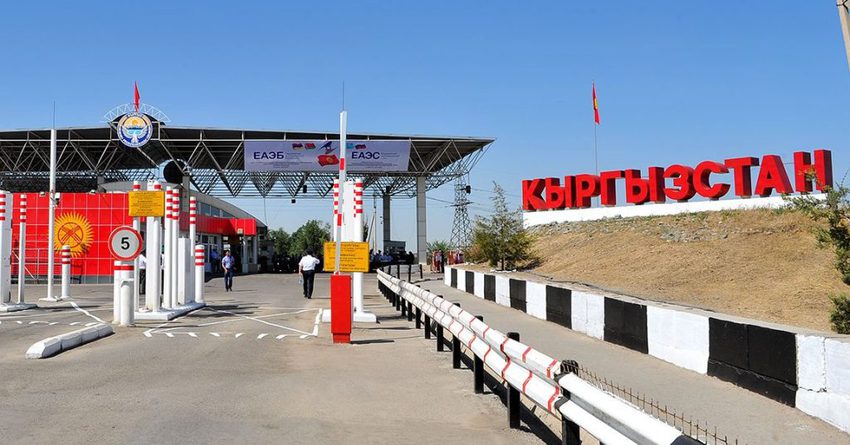
A bill regarding ratification of the intergovernmental agreement to open a new checkpoint named "Bedel" on the border with China was submitted to the Jogorku Kenesh (Parliament) by the Cabinet of Ministers of Kyrgyzstan. This move is aimed at facilitating border crossings, enhancing trade relations, and improving bilateral cooperation between Kyrgyzstan and China. Establishing the Bedel checkpoint is expected to streamline customs processes and boost economic activity in the region. The authorities in the Kyrgyz Republic have claimed the new checkpoint will reduce the delivery time of goods from the Xinjiang Uyghur Autonomous Region in China as compared to the current Kashgar—Torugart—Naryn—Bishkek transportation corridor. It is also assumed that trade turnover with China will increase exponentially. According to reports, Kyrgyzstan plans to allocate approximately 77.9 million som ($896,000) from the state budget towards the creation of the checkpoint.

Authorities Find Secret Tunnel Connecting Kyrgyzstan and Uzbekistan

Another underground passage has been found in the Jalal-Abad region of Kyrgyzstan, which was being used to illegally transport both people and contraband goods into neighboring Uzbekistan. The suspects involved have been arrested. That's according to a report from news outlet, Kaktus, which references information from the press service of the Department of Internal Affairs of Kyrgyzstan's Osh region. On April 5, officers of the Ministry of Internal Affairs of Osh region arrested a female citizen of Uzbekistan who illegally crossed the Kyrgyz border. During the investigation, it turned out that she crossed the international border into Kyrgyzstan through a secret tunnel connecting the two countries. The police opened a criminal case under Article 168 of the Criminal Code of Kyrgyzstan on “Organization of illegal migration, illegal importation of migrants.” On the night of April 12, a local citizen was arrested in the Nooken district suspected of organizing illegal crossings of the Kyrgyz-Uzbek border for payment. According to police, during the arrest, specially marked currency and night vision binoculars were confiscated. In addition, 87 boxes of narcotics with an initial value of about $30,000 dollars were found in his house. This is the third secret underground passageway discovered, with two secret underground tunnels connecting the city of Khanabad, Andijan region (Uzbekistan), with Bekabad village, Suzok district, Jalalabad region (Kyrgyzstan) having previously been identified. Members of a cross-border criminal group consisting of citizens of Uzbekistan and Kyrgyzstan were captured. On March 17 of this year, a Kyrgyz citizen took a total of 813 mobile phone devices in 16 bags to Uzbekistan using an underground tunnel, and tried to take 1.745 kilograms of gold bars and jewelry out of the country. They were apprehended with physical evidence.

Hundreds of Cargo Trucks Queued Up at Kyrgyzstan Border to Enter Kazakhstan

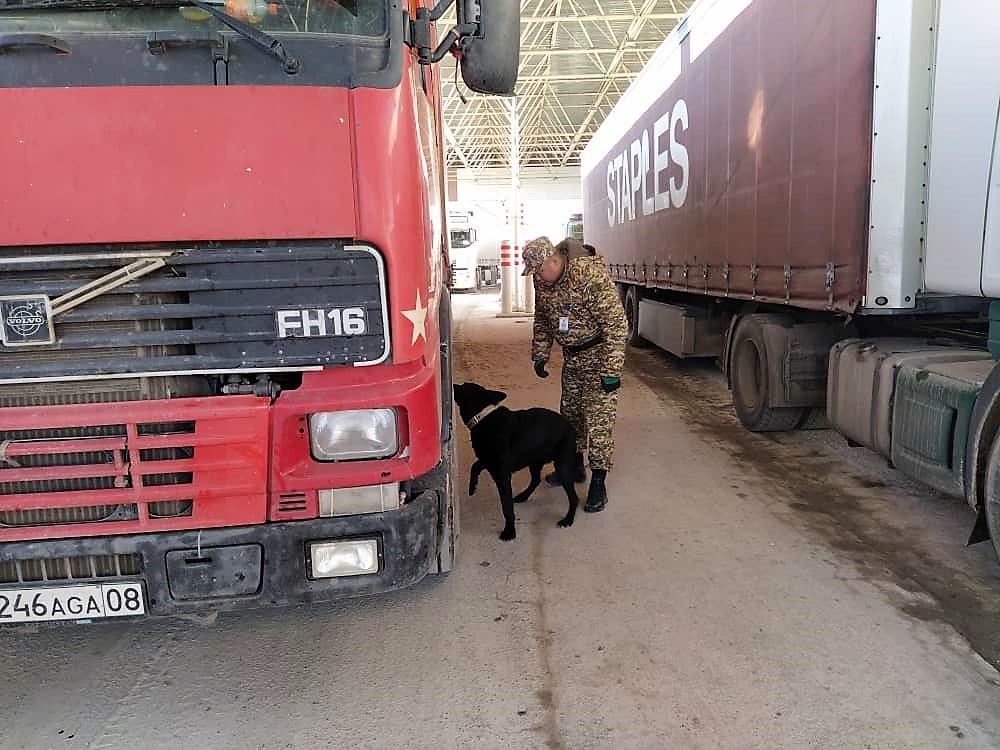
At the main vehicle checkpoint in Kyrgyzstan for crossing into Kazakhstan, the Ak-Tilek checkpoint, border guards counted 430 trucks queuing, while only 342 vehicles passed through the checkpoint yesterday. At the neighboring checkpoint on the border with Kazakhstan, about 90 trucks are in line. Customs officers on both sides deny involvement in the traffic jams that have formed at the border. All checkpoints on the Kyrgyzstan-Kazakhstan state border are operating normally, according to the Information and Communications Department of the Border Guard Service of the State National Security Committee of Kyrgyzstan. "Both from the side of the Border Service of the Kyrgyz Republic and from the side of the Border Service of the Republic of Kazakhstan there are no restrictions for the passage of cargo vehicles," the Kyrgyz Border Service said. Border guards attributed the queue at the border to the start of the spring season. Following the New Year holidays (February 10th-17th) in China, the transit of goods to Russia through Kyrgyzstan usually increases in spring, and agricultural products begin to appear, first meat and later, vegetables and fruit. According to Kyrgyz border guards, cargo vehicles with perishable products and animals are crossing the checkpoint out of turn. For every day of idle time, merchants say, they lose more than a hundred dollars. Queues of trucks are not uncommon at the Kyrgyz-Kazakh state border. There have been cases when truckers from Kyrgyzstan carrying cargo to Russia had to wait at the border for weeks. The reasons for these long queues can be attributed to numerous causes. For example, last summer about 500 trucks queued at the border, and representatives from the Eurasian Economic Commission came to the site to sort out the situation. Kazakh customs officers attributed the long wait to a special operation to catch drug traffickers. Another time, Kazakhstan's customs officers didn't allow trucks from Kyrgyzstan to pass without navigation seals - which are GPS-enabled locks on cargo containers - which would have helped Kazakhstani authorities track the movements of goods. Each time, the two sides blamed the other. The Kyrgyz side believes that the Kazakhs artificially create obstacles at the border to weaken competition from Kyrgyzstan, and the Kazakh authorities accuse Kyrgyz truckers of unwillingness to comply with Astana's requirements and submitting fraudulent documents for cargo. Because of this, both truck drivers and cargo owners suffer, especially if they are transporting fresh fruits and vegetables, which can spoil before reaching their destination, which is most often in Russia. Kyrgyz merchants claim to be looking for alternative routes to deliver their cargo to Russia.

Enclaves, Exclaves, and Soviet Mapmakers

Representatives of the Kyrgyz Republic and Tajikistan met in Bishkek on February 5th to complete negotiations on another 3.71 km of the common state border, the press service of the Cabinet of Ministers of the Kyrgyz Republic has reported. The next meeting will be held in Tajikistan, with no date yet specified. Currently, approximately 90% of the border has been demarcated, with the remaining 10% still considered disputed. A long-standing source of conflict between the two nations, it is emblematic of the problem that even the length of the border - sometimes cited as being 975-kilomtres long, and at others times 972-kilomteres - is rarely agreed upon. As of January 2023, Tajikistan’s President Rahmon stated that 614-kilometres had been settled upon, backtracking on a previously stated figure of 664. In a sign of thawing relations, however, on November 9th 2023, the Cabinet of Ministers of the Kyrgyz Republic announced that a further 17.98 kilometers of the border had been agreed. With its scant natural resources and dwindling water supplies, the border between Kyrgyzstan and Tajikistan has been the scene of numerous skirmishes for many years. In 2014, all borders between Kyrgyzstan and Tajikistan were closed indefinitely to Kyrgyz and Tajik citizens following clashes over a bypass road in disputed territory; mortars were fired and both armies suffered casualties. Trouble spilled over again throughout 2021 and 2022, reportedly starting over a water dispute in the Vorukh enclave, and leaving an unknown number in the hundreds killed, and up to 136,000 people evacuated. An enduring example of the chaos left behind by the USSR, the arbitrary division of Central Asia into Soviet Socialist Republics wholly disregarded existing cultural and geographical realities. This is exemplified by Stalin's application of Lenin’s policy on the “self-identification of working people,” a classic divide-and-rule play which saw culturally Tajik cities such as Samarkand and Bukhara being incorporated into Uzbek territory. In exchange, Tajikistan was given the inhospitable Khojand landmass surrounding the Fan Mountains. As late as 1989, Tajikistan petitioned Mikhail Gorbachev for the ‘return’ of Samarkand and Bukhara. This haphazard division also isolated around 100,000 residents in the Ferghana Valley from their central governments, creating eight large enclaves. Although three of these enclaves had populations fewer than 10,000 and two were used exclusively for pastures, the remaining three - Sokh (Uzbekistan within Kyrgyzstan), Vorukh (Tajikistan within Kyrgyzstan), and Shakhimardan (Uzbekistan within Kyrgyzstan) have repeatedly proven problematic, particularly when countries enforce strict border regulations in response to disputes and disagreements over demarcation arrangements. These enclaves have been hotbeds for conflict: between 1989 and 2009, the Ferghana Valley witnessed approximately 20 armed conflicts, and in 2014 alone, Kyrgyzstan reported 37 border incidents.
