• KGS/USD = 0.01144 0%
  • KZT/USD = 0.00204 0%
  • TJS/USD = 0.10571 -0.28%
  • UZS/USD = 0.00008 0%
  • TMT/USD = 0.28490 -0.28%
  • KGS/USD = 0.01144 0%
  • KZT/USD = 0.00204 0%
  • TJS/USD = 0.10571 -0.28%
  • UZS/USD = 0.00008 0%
  • TMT/USD = 0.28490 -0.28%
  • KGS/USD = 0.01144 0%
  • KZT/USD = 0.00204 0%
  • TJS/USD = 0.10571 -0.28%
  • UZS/USD = 0.00008 0%
  • TMT/USD = 0.28490 -0.28%
  • KGS/USD = 0.01144 0%
  • KZT/USD = 0.00204 0%
  • TJS/USD = 0.10571 -0.28%
  • UZS/USD = 0.00008 0%
  • TMT/USD = 0.28490 -0.28%
  • KGS/USD = 0.01144 0%
  • KZT/USD = 0.00204 0%
  • TJS/USD = 0.10571 -0.28%
  • UZS/USD = 0.00008 0%
  • TMT/USD = 0.28490 -0.28%
  • KGS/USD = 0.01144 0%
  • KZT/USD = 0.00204 0%
  • TJS/USD = 0.10571 -0.28%
  • UZS/USD = 0.00008 0%
  • TMT/USD = 0.28490 -0.28%
  • KGS/USD = 0.01144 0%
  • KZT/USD = 0.00204 0%
  • TJS/USD = 0.10571 -0.28%
  • UZS/USD = 0.00008 0%
  • TMT/USD = 0.28490 -0.28%
  • KGS/USD = 0.01144 0%
  • KZT/USD = 0.00204 0%
  • TJS/USD = 0.10571 -0.28%
  • UZS/USD = 0.00008 0%
  • TMT/USD = 0.28490 -0.28%
17 February 2026

Viewing results 1 - 6 of 12

C5+1: Diplomats and Executives Define Investment Path

Before the historic White House meetings on November 6 between President Trump and the five Central Asian presidents, U.S. and regional diplomats and business leaders met at the Kennedy Center on the occasion of the C5+1 Business Forum, hosted by the U.S. Department of State, to launch a new chapter of cooperation, with a focus on strengthening commercial and investment ties in energy, finance, and manufacturing. Deputy Secretary of State Christopher Landau, who moderated the panel discussion, said economic engagement is returning to the center of U.S. foreign policy. “The purpose of foreign policy is to increase the prosperity of the American people by finding opportunities for mutually beneficial economic and commercial interchange,” he said. Executives from Chevron, Citi, Freedom Holding, and Uzbekistan’s UzAvtosanoat described how decades of partnership  had demonstrated the wisdom of making strategic investments in the region. These partnerships continue to reshape  the economic and financial landscape for the better.  Participants highlighted Central Asia’s economic stability, solid reserves, and consistent policies, and were confident in faster growth to be driven by increased capital flows and by regional projects like Kazakhstan’s Tengiz oil expansion. Both sides promised to translate diplomacy into dealmaking. Landau further noted that under President Trump and Secretary of State Marco Rubio, the State Department has elevated commercial diplomacy to a core mission. He stressed that mutual respect, win-win agreements, and consistent engagement are key to driving results. Central Asians have waited decades for this: action, not talk. Two-way trade and investment are now front and center. Chevron Points to Long-Term Energy Investment Chevron Corp. Chief Executive Mike Wirth said the company’s 30-year presence in Kazakhstan remains one of its largest international operations. Chevron was the first major U.S. investor to enter the country after independence and is now the biggest foreign investor. The US$ 48 billion Future Growth Project at Kazakhstan’s Tengiz oilfield, co-managed by Chevron and 50%-partner Tengizchevroil LLP, is up and running with expansion underway. “Our history is really founded on relationships and trust,” Wirth said. “The most enduring aspect of it (our work) is the respect and love that our American employees have for the culture and people of Kazakhstan.” He said more than 500 Kazakh employees have trained in Chevron operations worldwide, many of whom now hold senior roles in government and industry. Citi Expands Access to Global Capital Citi’s Managing Director Stephanie von Friedeburg outlined the bank’s activities in Central Asia, where it began operations more than three decades ago. Citi now serves about 800 corporate clients across the region, supporting private companies, governments and state-owned enterprises with strategic planning, capital issuance, and risk management services. The bank has arranged Eurobond sales for the Kyrgyz Republic and Tajikistan and handled more than US$40 billion in fundraising for Kazakhstan since 2014. In Uzbekistan, Citi has supported 19 capital-market transactions and advised the government on improving its credit rating. “We help countries understand how rating agencies look at them (and) how to improve their ratings,” von Friedeburg said. “That allows them...
Daines, Gor, Meredov Launch C5+1 Talks on Next-Gen U.S.–Central Asia Ties

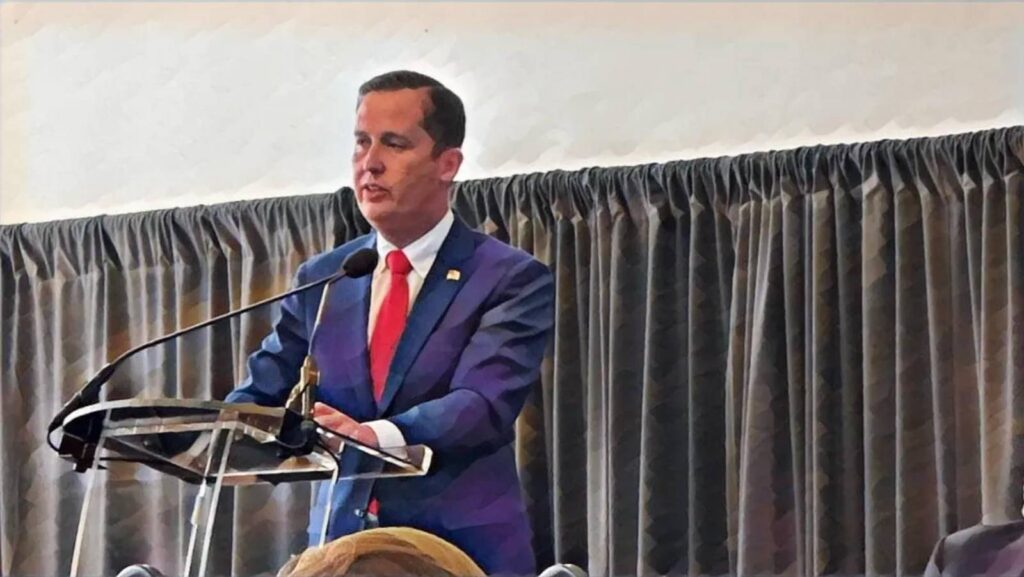
Washington, D.C. — The United States and the five nations of Central Asia – Kazakhstan, Kyrgyzstan, Tajikistan, Turkmenistan and Uzbekistan – marked a decade of partnership on Thursday with an opening panel at the C5+1 Tenth Anniversary Business Conference hosted by the U.S. Department of State. U.S. Senator Steve Daines (Montana), Sergio Gor, the newly appointed U.S. Special Envoy for South and Central Asia and Ambassador to India and Rashid Meredov, Turkmenistan’s Foreign Minister kicked things off with a bold forward-looking vision centered on deeper economic cooperation, net two-way investment flows, and a bolstered U.S. commitment to the region. Held at the Kennedy Center’s REACH campus, the session brought together senior U.S. officials, and Central Asian leaders and private sector companies to deepen a decade of growing cooperation, building on Trump’s transactional approach and first term achievements. Celebrating a Decade of Cooperation U.S. Senator Steve Daines, who moderated the session, not only praised the C5+1 platform’s record of achievements since 2015 but went further. He called the anniversary “a momentous occasion for our nations” to move forward in friendship and a sense of pragmatism, anchored in growing commerce, new investments, cultural exchange, and security cooperation. Daines emphasized that relations with the C5 countries are “vitally important for our national security and prosperity,” adding that the event aimed to pave the way for stronger, results-driven partnerships. Turning to the next speaker, Ambassador Sergio Gor, Daines offered unusually personal remarks, describing him as “truly one of the closest confidants of President Trump.” He noted that “Mr. Gor’s nomination demonstrates President Trump and his administration’s commitment to fostering closer ties between all of our nations.” Daines expressed eagerness to work with  “Sergio and the rest of President Trump’s team” to build upon the successes of previous US-Central Asian relations. U.S. Envoy Stresses Renewed Engagement In his address, Ambassador Sergio Gor,  underscored the administration’s renewed commitment to the region. He recounted that he and Deputy Secretary of State Christopher Landau had visited Kazakhstan and Uzbekistan just last week, praising the hospitality and partnership shown by both governments. Gor extended his appreciation to Kazakhstan, which he noted had “recently become a sponsor of the Kennedy Center,” and thanked Ambassador Richard Grenell for hosting the forum. Gor emphasized that “this President is making this partnership a top priority,” adding that the focus on the five Central Asian nations “is something that has been ignored in past administrations.” According to Gor, President Trump “has made a commitment and has instructed every individual here within the U.S. government to make sure [Central Asia] gets the priority that it deserves.” He emphasized the need to ramp up energy cooperation, open new trade avenues, and secure supply chains for critical minerals. “We are committed to further developing Central Asia’s vast mineral wealth and advancing critical-mineral security,” Gor underscoring C5+1’s shift from dialogue to deliverables and mutual cooperation. He also previewed the White House leaders’ meeting and dinner scheduled for later in the day, noting that several “historic deals” in commerce...

Deals, Not Declarations: U.S.–Central Asia Cooperation at Summit Crossroads

A landmark summit between the United States and the five Central Asian republics is scheduled for November 6 in Washington, D.C., bringing together the presidents of Kazakhstan, Kyrgyzstan, Tajikistan, Turkmenistan, and Uzbekistan. It will be the second leaders-level C5+1 meeting with a U.S. president—the first took place on the sidelines of the UN General Assembly in 2023—and the first time the format is hosted in the U.S. capital. The gathering also marks the 10th anniversary of the C5+1 diplomatic platform that connects Central Asia with Washington. The summit comes at a pivotal moment geopolitically; Russia remains consumed by its war in Ukraine, whilst China continues to expand its Belt and Road footprint across Eurasia. As the region’s strategic importance grows, both the United States and the Central Asian states see an opportunity to recalibrate their relationships, each approaching the meeting with distinct priorities and expectations. Washington’s Agenda: Critical Minerals and Connectivity For the United States, this summit is about converting diplomatic engagement into tangible deliverables. Officials want to see results in three main areas: critical minerals, regional connectivity, and security coordination. Congress and the administration view the region’s reserves of antimony, tungsten, uranium, and rare earth elements as essential to securing U.S. supply chains. During his October 2025 visit to Kazakhstan and Uzbekistan, Deputy Secretary of State Christopher Landau emphasized expanding cooperation on critical minerals and trade diversification. The Trump administration has prioritized these resources as part of a broader effort to reduce dependence on China. Trade routes are also in focus. The U.S. supports the Middle Corridor, a trans-Caspian route that links Central Asia with the South Caucasus and Europe. Infrastructure investments that bypass Russia are strategically important, and Washington wants to help harmonize customs and logistics to make that corridor more viable. These priorities form part of a wider push to anchor the region in transparent, market-based supply chains that connect Central Asia more directly with Western markets. Kazakhstan: Trade Normalization and Resource Investment Central Asia’s largest economy, Kazakhstan is expected to push for permanent normal trade relations with the U.S. The country still faces Cold War-era restrictions under the Jackson-Vanik amendment – as do Tajikistan, Turkmenistan, and Uzbekistan - with Astana long having viewed its repeal as a key milestone. That push has taken on new importance after Washington imposed a 25% tariff on Kazakh imports in mid-2025 - though Kazakh exports were exempted shortly thereafter - a move viewed by officials in Astana as inconsistent with efforts to expand economic cooperation. Kazakhstan is also looking to the U.S. for support in developing its mineral wealth. President Kassym-Jomart Tokayev’s government is actively mapping new rare earth deposits, and Washington has recently backed a private American bid to reopen Kazakhstan’s long-idle tungsten mine at Upper Kairakty, underscoring growing U.S. interest in Central Asia’s critical minerals sector. The two sides are also expanding industrial ties: in September 2025, Astana signed a $4.2 billion deal with U.S. rail manufacturer Wabtec to modernize Kazakhstan’s locomotive fleet and develop regional transport corridors...

Tokayev Meets with U.S. Envoys Ahead of C5+1 Summit

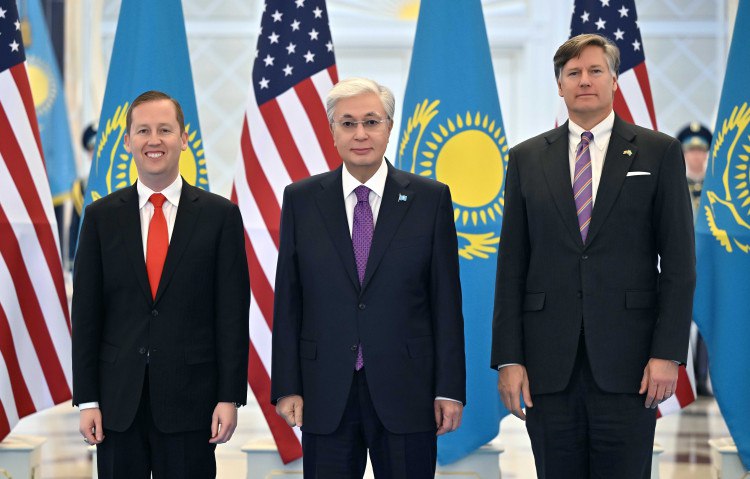
Kazakhstan's President Kassym-Jomart Tokayev met in Astana with Sergio Gor, U.S. Special Representative for South and Central Asia, and Christopher Landau, U.S. Deputy Secretary of State, to discuss the future of the Kazakh-American expanded strategic partnership and preparations for the upcoming C5+1 summit in Washington. Tokayev expressed confidence that the summit, scheduled for November 6, would be productive in setting priorities for long-term cooperation. He emphasized Kazakhstan’s commitment to strengthening trade, economic, and investment ties with the United States. Tokayev also conveyed his appreciation to U.S. President Donald Trump for the invitation to the summit. He voiced Kazakhstan’s support for the domestic and foreign policies pursued by the Trump administration and praised its role in promoting global peace and security. Sergio Gor delivered Trump’s greetings and reaffirmed the strategic importance of Central Asia in U.S. foreign policy. He noted that the upcoming summit is expected to elevate bilateral cooperation to a new level. The leaders discussed opportunities for deepening cooperation in energy, critical minerals, digitalization, and the development of transport and logistics infrastructure. Earlier in their visit, the U.S. delegation traveled to Almaty, where Gor and Landau met with local business leaders and executives from American companies operating in Kazakhstan. They also toured the Museum of Modern Art, the Shymbulak ski resort, and the Medeu high-altitude ice rink. “Almaty is Kazakhstan's largest city and financial capital, located at the foot of the Zailiyskiy Alatau mountains. Just half an hour’s drive from the city is the world-famous Shymbulak ski resort, where we enjoyed warm Kazakh hospitality. I’m starting to feel at home here, surrounded by golden eagles and my new Kazakh friends!” Landau wrote on social media. The date of the C5+1 summit was first reported in media outlets before being confirmed through official correspondence between Tokayev and Trump. Uzbek media later corroborated the event, citing sources close to President Shavkat Mirziyoyev’s administration, followed by confirmation from Kyrgyz President Sadyr Japarov.