
• KGS/USD = 0.01144 0%
  • KZT/USD = 0.00208 0%
  • TJS/USD = 0.10442 0.19%
  • UZS/USD = 0.00008 0%
  • TMT/USD = 0.28530 0%
  • KGS/USD = 0.01144 0%
  • KZT/USD = 0.00208 0%
  • TJS/USD = 0.10442 0.19%
  • UZS/USD = 0.00008 0%
  • TMT/USD = 0.28530 0%
  • KGS/USD = 0.01144 0%
  • KZT/USD = 0.00208 0%
  • TJS/USD = 0.10442 0.19%
  • UZS/USD = 0.00008 0%
  • TMT/USD = 0.28530 0%
  • KGS/USD = 0.01144 0%
  • KZT/USD = 0.00208 0%
  • TJS/USD = 0.10442 0.19%
  • UZS/USD = 0.00008 0%
  • TMT/USD = 0.28530 0%
  • KGS/USD = 0.01144 0%
  • KZT/USD = 0.00208 0%
  • TJS/USD = 0.10442 0.19%
  • UZS/USD = 0.00008 0%
  • TMT/USD = 0.28530 0%
  • KGS/USD = 0.01144 0%
  • KZT/USD = 0.00208 0%
  • TJS/USD = 0.10442 0.19%
  • UZS/USD = 0.00008 0%
  • TMT/USD = 0.28530 0%
  • KGS/USD = 0.01144 0%
  • KZT/USD = 0.00208 0%
  • TJS/USD = 0.10442 0.19%
  • UZS/USD = 0.00008 0%
  • TMT/USD = 0.28530 0%
  • KGS/USD = 0.01144 0%
  • KZT/USD = 0.00208 0%
  • TJS/USD = 0.10442 0.19%
  • UZS/USD = 0.00008 0%
  • TMT/USD = 0.28530 0%

Viewing results 1 - 6 of 6

Rare Earth Diplomacy: Critical Minerals Set to Top Agenda at C5+1 Summit

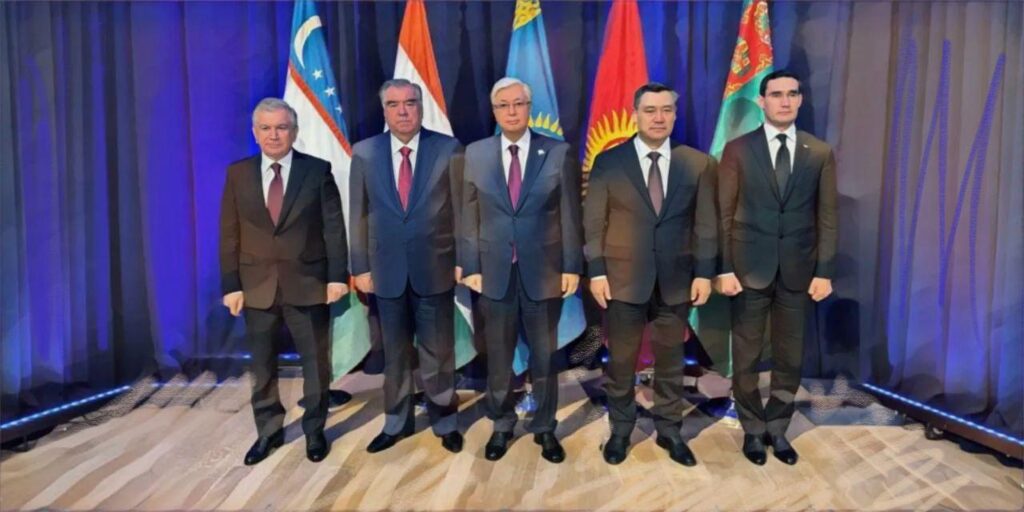
The announcement of an upcoming C5+1 summit in Washington between the United States and the Central Asian republics has taken much of the regional and U.S. political establishment by surprise. A swift visit by U.S. Special Envoy for South and Central Asia Sergio Gor and Deputy Secretary of State Christopher Landau to Uzbekistan and Kazakhstan was seemingly necessary to coordinate the summit’s agenda. Notably, Kazakhstan appears prepared to play a leading role on one of the summit’s most pressing issues. The summit, scheduled for November 6 in Washington, was first revealed through media channels before being confirmed through official correspondence between Kazakh President Kassym-Jomart Tokayev and U.S. President Donald Trump. Uzbek media later confirmed the meeting, citing sources within the administration of President Shavkat Mirziyoyev, and this was followed by Kyrgyzstan's President Sadyr Japarov. It is notable that shortly after Tokayev’s correspondence with Trump became public, the Kazakh president held a phone call with Russian President Vladimir Putin. Officially, the two discussed Tokayev’s upcoming visit to Moscow. This was their second such call in less than two weeks, the previous taking place on October 14. There is speculation that the Washington summit may have been a key topic of discussion. During meetings in Tashkent with Gor and Landau - Uzbekistan being the first stop on their tour - Mirziyoyev reportedly discussed a broad set of topics. However, the issue of “critical materials,” particularly rare earth metals, stood out. It is increasingly clear that rare earths will be a central focus of Trump’s engagement with Central Asian leaders. [caption id="attachment_38242" align="aligncenter" width="1600"] Sergio Gor and Christopher Landau at the Shymbulak ski resort in Almaty; image: Akorda[/caption] Trump has previously drawn attention for high-stakes diplomacy involving rare earth metals, including a controversial deal with Ukrainian President Volodymyr Zelensky and later discussions with Russian President Vladimir Putin in Anchorage. Most recently, during the first leg of his Asia tour, Trump met with Japanese Prime Minister Sanae Takaichi and concluded a rare earth metals agreement, despite the challenges associated with extracting these materials, which are often found underwater. Against this backdrop, Kazakhstan appears well-positioned to take the lead in terms of rare earth elements. President Tokayev first proposed developing rare earth metal deposits in his September 2023 address, “The Economic Course of Fair Kazakhstan.” In 2024, Kazakh geologists identified 38 promising solid mineral deposits, including the Kuyrektykol site in the Karaganda region, which contains substantial reserves. Tokayev returned to the issue in January 2025, during an extended government meeting, criticizing the cabinet for delays and emphasizing Kazakhstan’s untapped potential in rare earth extraction and processing. In April, during the Central Asia-European Union summit, Tokayev met with European Commission President Ursula von der Leyen, who congratulated him on the discovery of a major deposit in Kazakhstan. The topic also featured at the Central Asia-Italy summit in May, where Tokayev proposed creating a regional research center to consolidate data on rare earth deposits across Central Asia. “The creation of joint ventures, technology transfer, and the localization...

Tokayev Backs Azerbaijan to Join Central Asia-U.S. Summit

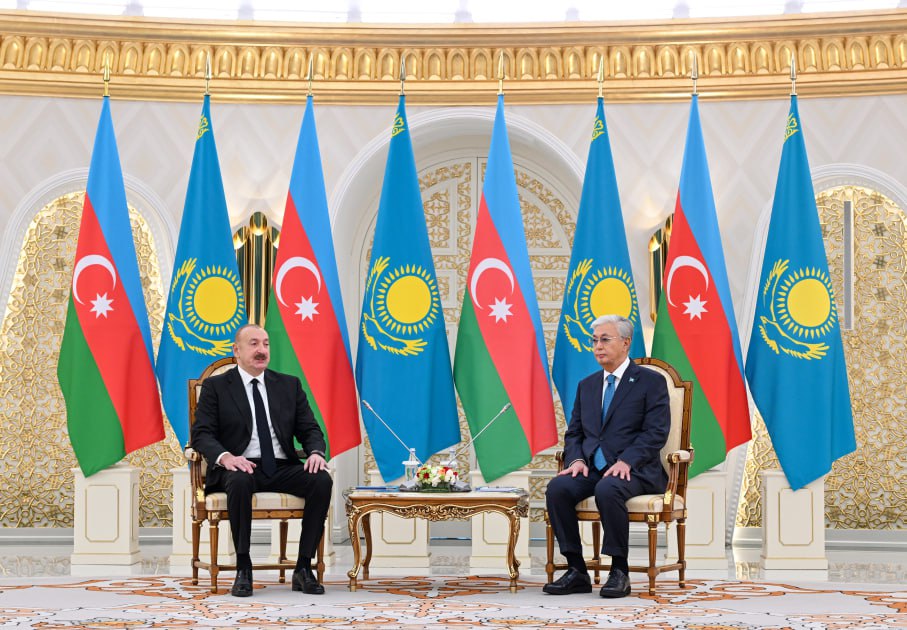
Kazakhstan’s President Kassym-Jomart Tokayev has said he would welcome Azerbaijan’s participation in the upcoming Central Asia-U.S. Summit in Washington. In an exclusive comment to Azerbaijani outlet Minval Politika, Tokayev praised Azerbaijan’s regional role and even called the country a “natural part of Greater Central Asia.” “I consider Azerbaijan’s participation in such an important forum desirable. Given its energy resources, favorable geographic location, strategic vision, and the political will of President Ilham Aliyev, this country plays a crucial role in the South Caucasus and beyond, essentially becoming a regional transport, logistics, and energy powerhouse,” Tokayev said. “Azerbaijan can be considered a natural part of Greater Central Asia. I also consider President Donald Trump’s initiative to hold a summit in Washington in the very near future to be very timely and worthy of support. I am confident this event will be productive and mutually beneficial,” the Kazakh leader noted.  The planned summit on November 6 falls under the C5+1 format that brings together the U.S. and the five countries of Central Asia. It will mark the first such gathering held in Washington, after an initial presidential meeting took place on the sidelines of the UN General Assembly in 2023. Donald Trump has formally invited the leaders of Kazakhstan, Kyrgyzstan, Tajikistan, Turkmenistan, and Uzbekistan to attend. The meeting will coincide with the tenth anniversary of the C5+1 diplomatic platform, which was launched in 2015 to deepen cooperation between Central Asia and the U.S. on security, economic and other issues. Tokayev’s remarks about Azerbaijan reflect a growing view that Azerbaijan is increasingly integrated with Central Asia. In recent years, Baku has been invited to Central Asian heads-of-state consultative summits as a special participant, underscoring what analysts call the “growing importance of the South Caucasus as a gateway for Central Asia to European markets”. During the most recent Central Asia leaders’ meeting in Astana in August, Azerbaijan was designated a key partner in regional initiatives, and Aliyev stressed that Azerbaijan and the Central Asian countries “represent a single historical, cultural, and geopolitical space” with deep-rooted ties. That brotherly affinity is reinforced by Turkic cultural links and mutual strategic interests. Tokayev himself, in talks with Aliyev, has called Azerbaijan “a regional power” and “a fraternal state” for Kazakhstan. Azerbaijan indeed wields significant influence as an energy and transport hub connecting Eurasia. The country is a major oil and gas producer that has steadily expanded exports to Europe, and it anchors the Trans-Caspian trade routes linking China and Central Asia to the West via the Caucasus. Since Russia’s 2022 invasion of Ukraine disrupted traditional east–west corridors, the so-called Middle Corridor -- running from Central Asia across the Caspian Sea through Azerbaijan -- has taken on greater importance. Kazakhstan and Azerbaijan have positioned themselves as “key actors” in this reconfigured Eurasian logistics network that bypasses Russian territory. The United States is also paying close attention to these routes: officials have indicated that the Washington summit will spotlight development of the Trans-Caspian corridor, with the U.S. “keen to promote logistics...