• KGS/USD = 0.01144 0%
  • KZT/USD = 0.00201 0%
  • TJS/USD = 0.10581 0%
  • UZS/USD = 0.00008 0%
  • TMT/USD = 0.28571 0%
  • KGS/USD = 0.01144 0%
  • KZT/USD = 0.00201 0%
  • TJS/USD = 0.10581 0%
  • UZS/USD = 0.00008 0%
  • TMT/USD = 0.28571 0%
  • KGS/USD = 0.01144 0%
  • KZT/USD = 0.00201 0%
  • TJS/USD = 0.10581 0%
  • UZS/USD = 0.00008 0%
  • TMT/USD = 0.28571 0%
  • KGS/USD = 0.01144 0%
  • KZT/USD = 0.00201 0%
  • TJS/USD = 0.10581 0%
  • UZS/USD = 0.00008 0%
  • TMT/USD = 0.28571 0%
  • KGS/USD = 0.01144 0%
  • KZT/USD = 0.00201 0%
  • TJS/USD = 0.10581 0%
  • UZS/USD = 0.00008 0%
  • TMT/USD = 0.28571 0%
  • KGS/USD = 0.01144 0%
  • KZT/USD = 0.00201 0%
  • TJS/USD = 0.10581 0%
  • UZS/USD = 0.00008 0%
  • TMT/USD = 0.28571 0%
  • KGS/USD = 0.01144 0%
  • KZT/USD = 0.00201 0%
  • TJS/USD = 0.10581 0%
  • UZS/USD = 0.00008 0%
  • TMT/USD = 0.28571 0%
  • KGS/USD = 0.01144 0%
  • KZT/USD = 0.00201 0%
  • TJS/USD = 0.10581 0%
  • UZS/USD = 0.00008 0%
  • TMT/USD = 0.28571 0%
24 February 2026

Viewing results 1 - 6 of 9

Kazakh Startup Higgsfield Becomes AI Unicorn, Signaling Nation’s Tech Aspirations

When Kazakh AI startup Higgsfield announced an $80 million funding round this month, its valuation soared past $1.3 billion, officially granting it “unicorn” status. For Silicon Valley observers, it marked another chapter in the ongoing boom in AI. But for Kazakhstan, a country seldom spotlighted in global tech circles, the milestone carries broader significance: the emergence of a homegrown company with global reach and competitiveness. Higgsfield was co-founded by 29-year-olds Erzat Dulat and Alex Mashrabov. The startup focuses on AI-generated video tools tailored for marketing and social media use and currently reports annual revenue of $200 million. Remarkably, the company reached $10 million in recurring revenue within just a few weeks, a rare achievement, even in the fast-paced AI sector. Leading venture capital firms, including Accel, GFT Ventures, and Menlo Ventures, cited this momentum as a key factor behind their investment. Rather than competing directly with giants like OpenAI or Google, Higgsfield leverages existing AI models to build practical tools for businesses. Its platform targets marketers, creative agencies, and social media professionals, an expanding segment that some analysts believe could rival traditional entertainment industries like Hollywood in both scale and value. The company’s success has not gone unnoticed by Kazakhstan’s leadership. President Kassym-Jomart Tokayev recently met with Dulat and Murat Abdrakhmanov, founder of the venture capital platform MA7 Ventures, to discuss artificial intelligence’s role in government, economic development, and national tech strategy. Tokayev praised Higgsfield as a model of Kazakh innovation with global potential and reaffirmed the country’s goal of becoming a launchpad for IT companies that can scale internationally without relocating abroad. Dulat noted that roughly 95% of Higgsfield’s workforce is Kazakh, highlighting the strength of the country’s domestic talent pool. He also expressed readiness to partner with the government on workforce development and AI-focused education initiatives. Abdrakhmanov emphasized that building a strong venture capital ecosystem is essential to Kazakhstan’s technological future and argued that the country is well-positioned to play a greater role in global investment networks. The meeting reflects a broader shift among emerging tech economies: instead of serving merely as consumer markets, they are increasingly aiming to foster globally competitive companies while retaining talent and intellectual property at home. [caption id="attachment_43381" align="aligncenter" width="936"] Higgsfield’s team @digitalbusiness.kz[/caption] Nonetheless, challenges remain. The AI-generated video market is highly competitive. Higgsfield plans to scale its team from 70 to 300 employees by year’s end, a move that will test its organizational capacity. Regulatory and ethical concerns around synthetic media also remain unresolved. Still, Higgsfield’s rapid rise underscores that AI innovation is no longer confined to traditional power centers like Silicon Valley, Beijing, or Europe. It offers a compelling example of Kazakhstan’s growing ambition to establish itself as a meaningful player in the global technology economy. For U.S. investors and tech analysts, it’s a reminder that the future of AI may be shaped as much by emerging markets as by established ones.

Where Motherhood Meets Innovation: The Kyrgyz Startup Mama Space

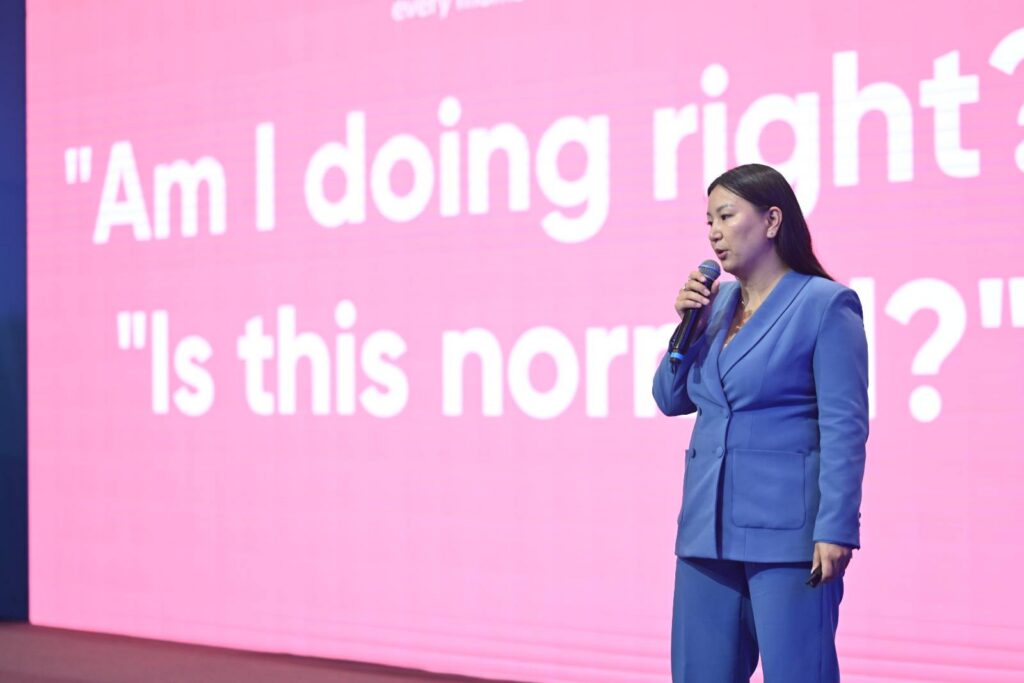
Female tech founders face a lot more challenges globally, and Kyrgyzstan's startup ecosystem is unfortunately no exception. Being a nascent stage ecosystem makes things even worse: according to IFC, in emerging markets, only 11% of seed funding goes to startups with women on their founding team. Despite such significant barriers, there is a generation of female founders with global ambitions. One of them is Gulnaza Khalmanbetova, who is using technology to make pregnancy and motherhood more peaceful. Mama Space provides an ecosystem for pregnancy and motherhood. Its pregnancy tracker covers every stage, providing an entire library of up-to-date, medically approved articles and educational videos. An AI chatbot can answer questions about pregnancy with evidence-based knowledge. And there is a loyal online community where every mother can find support and understanding. “It was my second experience of pregnancy that prompted me to create the app. My second pregnancy was complicated and could have ended in tragedy. During one of the surgeries, in the fifth month of pregnancy, I promised myself that if everything went well for me and my unborn son, I would do everything possible to ensure that every mother could find support and not be left alone with her problems. This is how the idea of Mama Space was born — a platform designed so that every woman can go through the stages of motherhood with reliable informational support,” recalled Gulnaza Khalmanbetova, CEO and Founder of Mama Space. [caption id="attachment_43418" align="aligncenter" width="1600"] All images provided by Mama Space[/caption] In December 2025, during the Digital Startup Awards in Tashkent, Mama Space was named “Best Women-Founded Startup” -- one of the many awards Mama Space has collected so far. Khalmanbetova had previously had a successful career in the international development sector. Those organising, optimizing, and networking skills came in handy when entering the unpredictable path of a startup founder, with an aim to help women who are planning a pregnancy, are currently pregnant, or have recently given birth. One of the sources of ideas for startup founders is trying to solve problems they face themselves. This was exactly the case with Mama Space. During her first pregnancy, which brought anxiety and difficulties with finding proper information, Khalmanbetova was inspired to organise a community of mothers with an event to celebrate pregnancy and motherhood. She named the event Mama Fest, which now brings together hundreds of women to celebrate motherhood.  Mama Space is a textbook example of a successful launch. The MVP -- the minimal viable product -- was ready in three months, despite the fact that Khalmanbetova and her team still had their full-time jobs. And Khalmanbetova, traditionally for startup founders, has to wear a number of hats and utilise all her skills, from programming and business development to graphic design and running social media. Given that the product is directly related to health, the startup relies on science and professional doctors. Mama Space partners with the Kyrgyz Association of Obstetricians, Gynecologists, and Neonatologists. In June 2024, Mama Space won the 'Unicorn...

Kyrgyz Startup Designs ‘Growave’, an E-Commerce Tool to Retain Customers on Shopify

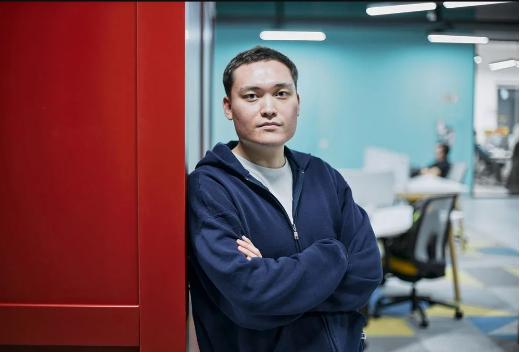
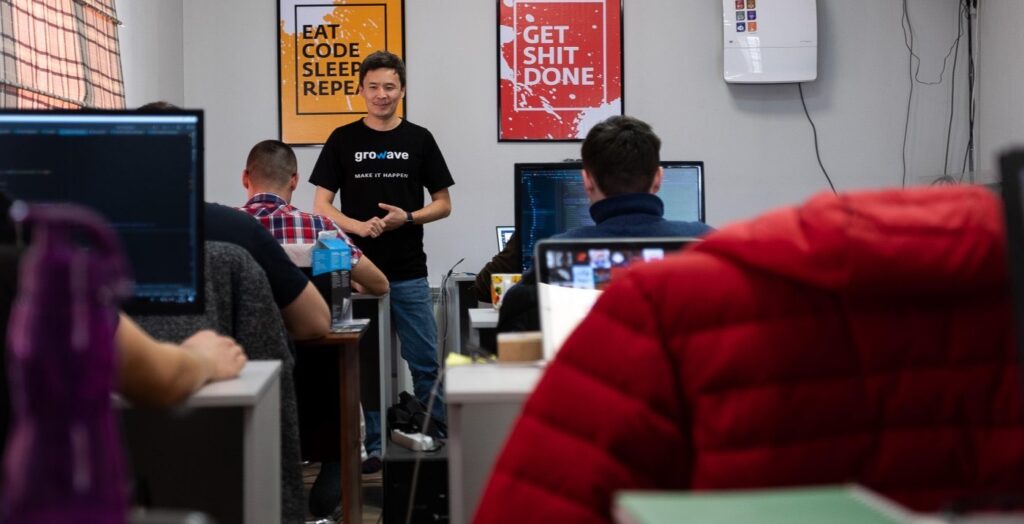
Eldar Galiev is the CEO and Co-Founder of Growave, a Kyrgyz startup that helps companies retain customers on the retail platform Shopify.  “There were times in my life when I seriously thought about moving abroad. The deciding factor [in staying] was the realisation that many people close to me live in the Kyrgyz Republic. That is something to be cherished. That is why I stayed here”, explained Galiev in 2020. Success after several failures Galiev started his career early. During his sophomore year, he started working for the software company Skalfa. Like many talented founders, he left university during his senior year to focus on building his own products. Growave was not the first company Galiev started. “My first serious project, Hire-Experts, came after three years of working at a product company. At that point, I decided to start my own business and found a startup. The first two attempts failed. The third one, Hire-Experts, turned out to be more or less successful — it later became a company that develops software solutions for online communities,” Galiev said in 2021. This experience helped Galiev when he decided to build Growave in 2014. Growave is a family startup; Galiev created the company with his wife, Munara, and brother Ermek. Their skillsets complement each other, with Galiev overtaking business development, Munara handling HR and finance, and Ermek leading on the tech side.  Galiev and his co-founders saw an opportunity when they couldn’t find products focusing on relationships between brands and their customers. Galiev understood that the local markets were too small and went straight to building a global product from scratch. The team did not have experience of being sellers themselves, so the first iterations of the product did not perform very well.  Soon, they came up with a free plan for customers, which helped them gain their first 500 clients. And with feedback collected from them, they managed to build something that customers actually needed. Now, Growave is a marketing platform for e-commerce, helping companies to retain their customers with an all-in-one solution including loyalty, referrals, wishlists, reviews, and Instagram UGC. Galiev believes that it is not only advertising that is important, but also building long-term relationships with customers. This, in turn, prompts customers to stay loyal to certain Shopify sellers. [caption id="attachment_38510" align="aligncenter" width="1280"] Image: Growave[/caption] 'Bootstrapping' ninjas Unlike many global startups, Growave has not raised any external funding from VCs to date, making the company an amazing example of bootstrapping -- growing a business without external funding. In 2017, three years after its launch, Growave became profitable. Before that, Growave had gone through a turbulent time when the co-founders had to invest their income from other projects.  This great example of bootstrapping now has 60+ employees. Still, Galiev is talking to VCs to get their feedback about the startup and to pitch Growave as a solution for their portfolio companies. Now Growave can boast a customer base of over 15,000 companies from more than 150 countries. Over half of...