


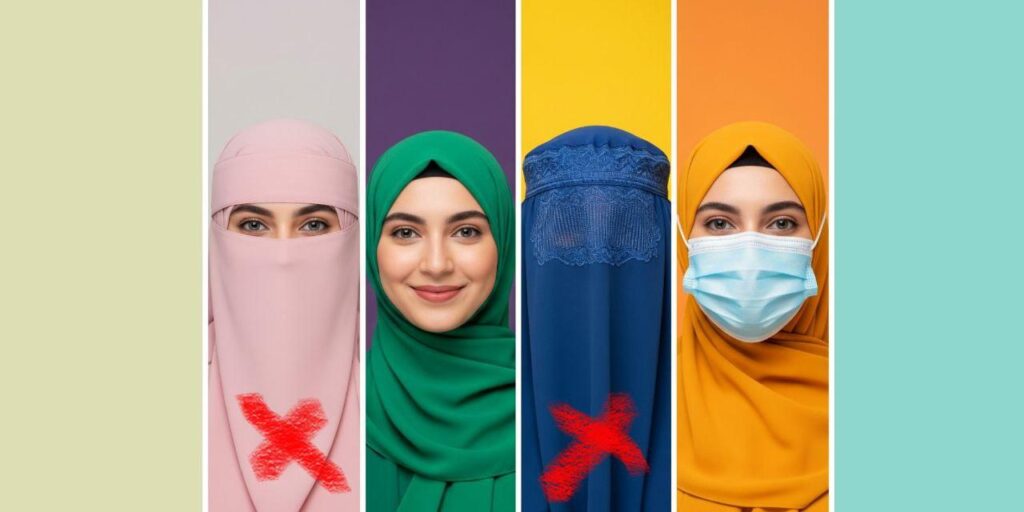
Kazakhstan Moves to Ban Face-Coverings in Public
On June 25, Kazakhstan’s Mazhilis, the lower house of parliament, approved amendments to the law “On the Prevention of Offenses,” introducing a new provision that prohibits wearing clothing that obscures the face in public places. While the regulation applies broadly, the most contentious element is its effective ban on the niqab, a religious garment that leaves only the eyes visible. This legislative move echoes ongoing debates in Kazakhstan and across Central Asia, where secular norms are enshrined in law but tensions persist over religious expression. Medical Masks Exempt Earlier, on June 19, Senator Nauryzbay Baikadamov clarified that the amendments would exempt face coverings worn for medical reasons, weather protection, or professional duties. According to Baikadamov, the law aims to enhance public safety and assist in crime prevention. While accessories such as balaclavas are included in the ban, the central controversy surrounds the prohibition of the niqab. The Scarf of Discord Understanding the distinctions among various forms of religious dress is critical to the current debate. The niqab is a face veil that leaves only the eyes uncovered, while the burqa (or paranji), typically worn in Afghanistan, covers the entire face with a mesh screen over the eyes. Burqas are rarely seen in Kazakhstan. Niqabs and black, floor-length dresses have become more visible on Kazakhstan’s streets in recent years, reflecting broader religious shifts. By contrast, the hijab, a headscarf that leaves the face exposed, has become commonplace and enjoys broader acceptance. While niqabs are widely seen as foreign to Kazakh culture, hijabs hold a more complex status. Historically, Kazakh women did not cover their faces, a fact supported by pre-revolutionary photographs. The niqab is viewed by many as an imported practice, largely linked to Islamic teachings from Arab countries. The hijab, however, is often seen as consistent with Kazakh traditions. As such, attempts to ban it have repeatedly stirred controversy. Religious Tensions in Schools In the fall of 2023, more than 150 schoolgirls in the Atyrau region refused to attend classes in protest against a hijab ban. Similar incidents were reported in other southern regions. Authorities reported that the situation was resolved after consultations with parents, but ambiguity remained regarding the scope of the restrictions, particularly whether the hijab was included. President Kassym-Jomart Tokayev ultimately addressed the issue, reaffirming Kazakhstan’s secular identity. “This principle must be strictly observed in all spheres, including education. School is, first and foremost, an educational institution where children come to gain knowledge. Religious beliefs, on the other hand, are a choice and a private matter for each citizen,” Tokayev stated. Still, the legal and cultural status of the hijab remains unresolved. While school uniform policies emphasize secular dress, enforcement is inconsistent, and experts warn of renewed conflict. Religious scholar Asylbek Izbaev noted, “It is not so important what a girl wears on her head as what she thinks.” A Regional Trend Kazakhstan’s move is part of a broader trend across Central Asia. In January 2025, Kyrgyz President Sadyr Japarov signed a law banning face-covering clothing. In...

