• KZT/USD = 0.00221
  • TJS/USD = 0.10860
  • UZS/USD = 0.00008
  • TMT/USD = 0.29850
  • KZT/USD = 0.00221
  • TJS/USD = 0.10860
  • UZS/USD = 0.00008
  • TMT/USD = 0.29850
  • KZT/USD = 0.00221
  • TJS/USD = 0.10860
  • UZS/USD = 0.00008
  • TMT/USD = 0.29850
  • KZT/USD = 0.00221
  • TJS/USD = 0.10860
  • UZS/USD = 0.00008
  • TMT/USD = 0.29850
  • KZT/USD = 0.00221
  • TJS/USD = 0.10860
  • UZS/USD = 0.00008
  • TMT/USD = 0.29850
  • KZT/USD = 0.00221
  • TJS/USD = 0.10860
  • UZS/USD = 0.00008
  • TMT/USD = 0.29850
  • KZT/USD = 0.00221
  • TJS/USD = 0.10860
  • UZS/USD = 0.00008
  • TMT/USD = 0.29850
  • KZT/USD = 0.00221
  • TJS/USD = 0.10860
  • UZS/USD = 0.00008
  • TMT/USD = 0.29850
03 November 2026

Viewing results 1 - 6 of 3

China-Uzbekistan Economic Ties Expand as U.S. Seeks New Deals

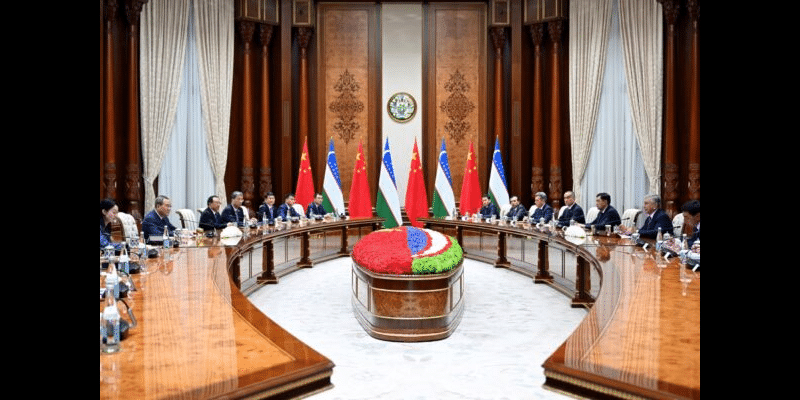
Chinese Premier Li Qiang visited Uzbekistan on October 17–18, just ahead of United States Secretary of State Marco Rubio, who arrived in Samarkand on October 18 with a delegation of American business leaders seeking new contracts. While China already has a substantial presence in Uzbek manufacturing and energy, Washington is seeking to expand American involvement in critical minerals and technology. The visits highlight the growing competition between the world's two largest economies for influence in Central Asia. On October 17, President Shavkat Mirziyoyev received Li Qiang. According to the Uzbek presidential administration, the portfolio of joint projects backed by firm agreements has reached nearly $60 billion. More than 6,000 joint ventures with Chinese participation have been established in Uzbekistan. China is Uzbekistan's largest trading partner. Bilateral trade totaled approximately $16–18 billion in 2025, according to Chinese and Uzbek figures. China accounted for 23% of Uzbekistan's total foreign trade turnover in January–August 2026. Railway Through Kyrgyzstan Construction of the China–Kyrgyzstan–Uzbekistan railway was another topic of discussion. Work officially began in December 2024. The route will cross mountainous areas of Kyrgyzstan and connect the railway networks of China and Uzbekistan. The 304-kilometer section through Kyrgyzstan alone is estimated to cost $4.7 billion and will require 50 bridges and 29 tunnels. Uzbekistan is landlocked, making the cost and timing of its international freight shipments heavily dependent on transit conditions in neighboring countries. The railway through Kyrgyzstan will provide an additional route, reducing reliance on transit through Kazakhstan and potentially shortening journeys between China and Uzbekistan. Beijing considers the railway part of its efforts to develop overland connections under the Belt and Road Initiative. Rubio Arrives with American Business Delegation On October 19, Rubio attended talks in Samarkand under the C5+1 format, bringing together the U.S. and Kazakhstan, Kyrgyzstan, Tajikistan, Turkmenistan, and Uzbekistan. Rubio said nearly 300 American businesses were represented in Samarkand. Companies were discussing agreements potentially worth billions of dollars, with concrete announcements expected following the meetings. Among Washington's priorities are critical minerals used in advanced technologies, including electronics and batteries. The U.S. is seeking new sources of raw materials and opportunities to process them outside China. Beijing holds a dominant position in processing several of these materials, and American companies are interested in alternative suppliers. Uzbekistan's mineral deposits include copper and uranium. For Tashkent, an important question is whether American investment will bring new processing facilities and jobs or concentrate mainly on extracting and exporting raw materials. Speaking to reporters in Samarkand, Rubio said the U.S. was not asking Central Asian countries to end cooperation with other partners. Washington intends to compete for contracts and investment projects. Chinese Enterprises and American Contracts The gap between China and the U.S. is particularly stark in trade. According to the Office of the U.S. Trade Representative, American goods trade with Uzbekistan totaled just $1.05 billion in 2025, less than one-fifteenth of the value of Uzbekistan's trade with China. Including services, U.S.–Uzbek trade reached approximately $1.7 billion. Economic cooperation with the U.S. is developing through...
Uzbekistan’s AI Module Reaches Orbit Aboard Samarqand-2028 Satellite

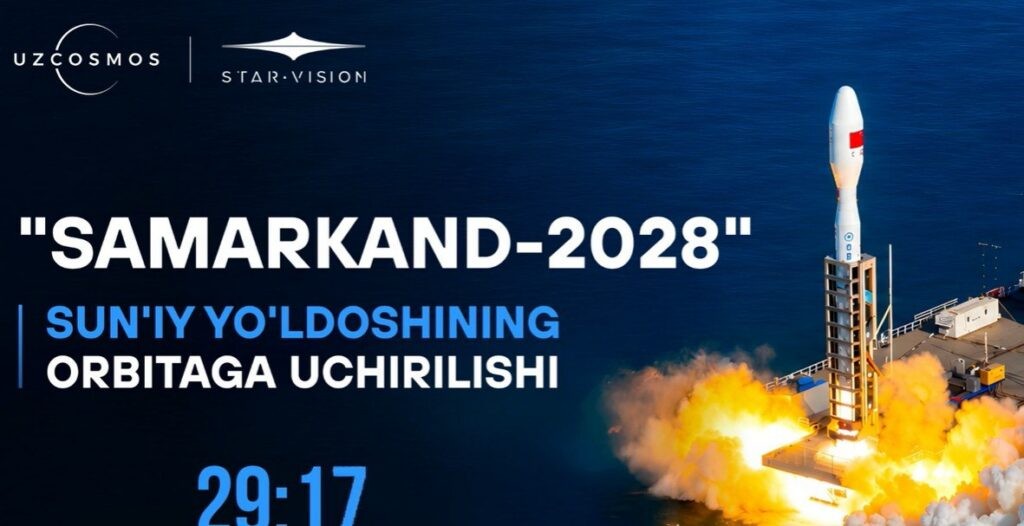
A Chinese-built Earth observation satellite carrying artificial intelligence developed by Uzbek specialists was launched from a sea platform off China’s Shandong province on August 5. The Samarqand-2028 satellite was launched alongside Lampung-1, another Earth observation satellite from China’s STAR.VISION Aerospace. A livestream showed the rocket lifting off from the platform. STAR.VISION developed Samarqand-2028, while specialists from Uzbekistan’s national space agency, Uzbekcosmos, created its onboard AI module. Uzbekcosmos said this was the first time Uzbek specialists had participated in developing artificial intelligence for a satellite. Samarqand-2028 carries a hyperspectral sensor that records reflected light in 22 wavelength bands. A conventional color image records visible light in only three broad bands, while the additional bands can reveal details difficult to see with the human eye. Uzbekcosmos plans to use the images to create national maps of cotton and wheat cultivation and make initial assessments of air quality. As The Times of Central Asia reported on August 4, processing images onboard the satellite could reduce the amount of data transmitted to Earth and allow useful information to reach officials more quickly. Samarqand-2028 is separate from Uzbekistan’s first national scientific satellite, Mirzo Ulugbek. Seven Uzbek engineers studying at Kyushu Institute of Technology in Japan have begun developing the 6U satellite, which is scheduled for launch in 2028. The program is intended to train specialists and establish a domestic satellite engineering team. The next stage will be commissioning Samarqand-2028 and testing whether its AI module functions as intended in orbit. Its practical value will depend on whether Uzbek institutions can convert the imagery into useful information for agriculture and environmental monitoring.

Uzbekistan-China Satellite Project Advances with AI Module

Uzbek engineers are developing an onboard artificial intelligence module for a new Earth observation satellite being built in partnership with a Chinese aerospace company. The satellite, named Samarqand-2028, is being developed under an agreement between Uzbekistan’s national space agency, Uzbekcosmos, and China’s STAR.VISION Aerospace. The Chinese company is developing the satellite itself, while Uzbek specialists are working on an onboard AI system that will help process the information it collects. The spacecraft will use hyperspectral imaging, which can detect features invisible to the human eye. Uzbekcosmos said the satellite could be used to monitor agriculture and the environment, as well as provide information for other parts of the economy. The project could include the creation of national maps showing where cotton and wheat are grown. It remains unclear when the satellite will be launched. It was expected to enter orbit in May 2026, but that target passed without a launch. In its latest update, Uzbekcosmos referred only to an upcoming launch and did not provide a revised date. Samarkand was selected to host the 2028 International Astronautical Congress in October 2025. It will be the first time the event, one of the world’s largest annual gatherings for the space industry, has been held in Central Asia. Hosting the congress will bring international attention to Uzbekistan’s space ambitions. Its longer-term impact, however, will depend on whether projects such as Samarqand-2028 help Uzbek specialists develop skills and build technology that can be used inside the country. The government has identified the space sector as one of the country's emerging high-technology priorities and is using the 2028 congress to showcase those ambitions. As The Times of Central Asia previously reported, Uzbekistan is also preparing to launch its first domestically developed scientific satellite and has begun a program to train the country’s first astronaut.
