


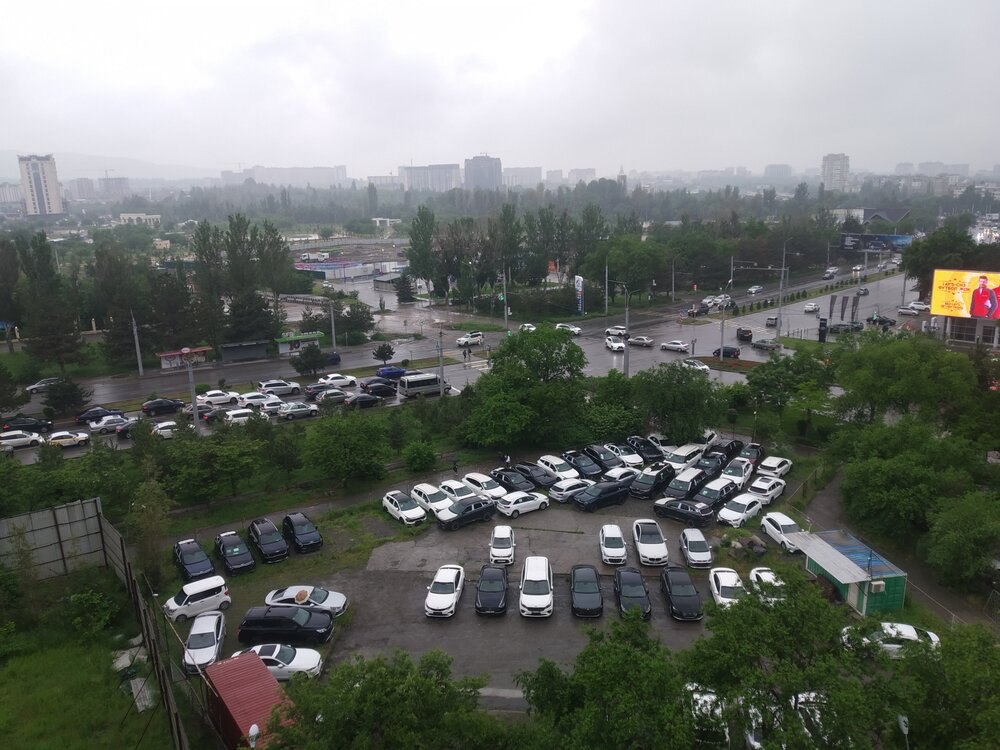
Bishkek Proposes Curbs on Private Car Use
Bishkek authorities are proposing a shift in the capital’s transport policy by prioritizing public transport and gradually reducing reliance on private cars. A draft presidential decree prepared by the Bishkek mayor’s office has been released for public consultation. The proposal calls for a long-term transport development program, the creation of an interagency coordination headquarters, upgrades to road infrastructure, new traffic management schemes, and continued investment in the city’s municipal public transport network. Its stated objective is to reduce chronic traffic congestion and improve air quality in the capital. According to the explanatory note accompanying the draft, Bishkek’s road network is no longer capable of handling current traffic volumes. When the city was originally planned, its streets were designed to accommodate around 50,000 vehicles. Today, more than 400,000 vehicles are registered in Bishkek alone, with thousands more entering the city each day from surrounding districts and neighboring regions. Opportunities to expand the road network remain limited. The city has substantially modernized its public transport fleet in recent years. Since 2022, Bishkek has purchased new buses and electric buses. Around 1,300 municipal buses and electric buses now operate on city routes each day, carrying approximately 800,000 passengers. Despite these improvements, more than 500,000 residents continue to rely on private cars. The authors of the draft argue that the current use of road space remains inefficient. A single bus can carry up to 50 passengers while occupying only slightly more road space than several private cars, which generally carry between one and four people. The draft decree does not introduce immediate restrictions on motorists. Instead, it establishes a legal framework for future measures aimed at reducing private vehicle use in the city’s most congested areas. Under the proposal, the mayor-led headquarters could launch pilot traffic restrictions, paid parking schemes, and priority lanes for public transport. Its decisions would be binding on state and municipal bodies. The proposed reforms follow last year’s controversy over Bishkek’s decision to phase out its trolleybus system. After dismantling the overhead power lines, the authorities planned to convert the remaining trolleybus fleet into electric buses. However, the conversion tender failed twice after attracting no bids, forcing the municipality to consider alternative approaches. The decision to abandon the trolleybus network drew criticism from environmental organizations and some transport experts. City officials had also previously considered restricting traffic based on odd and even vehicle registration numbers but abandoned the proposal following public criticism. Reducing traffic is also viewed as an important tool for tackling air pollution. According to official estimates, between 600,000 and 700,000 vehicles operate in Bishkek each day, including those entering the city from elsewhere, while more than half of the vehicle fleet is over 15 years old. Road transport accounts for around 30% of air pollution in the capital. The Times of Central Asia previously reported that Bishkek’s air pollution had once again become the subject of parliamentary debate, with lawmakers attributing the worsening environmental situation primarily to the rapid growth in vehicle numbers, an aging vehicle fleet,...
