

• KGS/USD = 0.01143 0%
  • KZT/USD = 0.00206 0%
  • TJS/USD = 0.10811 -0.18%
  • UZS/USD = 0.00008 0%
  • TMT/USD = 0.28571 0%
  • KGS/USD = 0.01143 0%
  • KZT/USD = 0.00206 0%
  • TJS/USD = 0.10811 -0.18%
  • UZS/USD = 0.00008 0%
  • TMT/USD = 0.28571 0%
  • KGS/USD = 0.01143 0%
  • KZT/USD = 0.00206 0%
  • TJS/USD = 0.10811 -0.18%
  • UZS/USD = 0.00008 0%
  • TMT/USD = 0.28571 0%
  • KGS/USD = 0.01143 0%
  • KZT/USD = 0.00206 0%
  • TJS/USD = 0.10811 -0.18%
  • UZS/USD = 0.00008 0%
  • TMT/USD = 0.28571 0%
  • KGS/USD = 0.01143 0%
  • KZT/USD = 0.00206 0%
  • TJS/USD = 0.10811 -0.18%
  • UZS/USD = 0.00008 0%
  • TMT/USD = 0.28571 0%
  • KGS/USD = 0.01143 0%
  • KZT/USD = 0.00206 0%
  • TJS/USD = 0.10811 -0.18%
  • UZS/USD = 0.00008 0%
  • TMT/USD = 0.28571 0%
  • KGS/USD = 0.01143 0%
  • KZT/USD = 0.00206 0%
  • TJS/USD = 0.10811 -0.18%
  • UZS/USD = 0.00008 0%
  • TMT/USD = 0.28571 0%
  • KGS/USD = 0.01143 0%
  • KZT/USD = 0.00206 0%
  • TJS/USD = 0.10811 -0.18%
  • UZS/USD = 0.00008 0%
  • TMT/USD = 0.28571 0%

Viewing results 1 - 6 of 7

Kazakhstan’s Domestic Trade Growth Slows as Consumer Demand Weakens

The growth of domestic trade in Kazakhstan slowed markedly in early 2026, reinforcing signs of weakening consumer activity and increased business caution. According to the National Statistics Bureau, the trade sector expanded by only 3.4% in January–February, compared with 6% during the same period a year earlier. Growth slowed significantly, affecting both wholesale and retail trade. Analysts at Halyk Finance believe the trend reflects deeper economic processes rather than a short-term fluctuation. “The dynamics at the start of the year point to a cooling of aggregate demand and economic activity,” Halyk Finance said. Wholesale trade, a key indicator of business activity, showed the most pronounced slowdown. Growth fell to 3.8%, down from 6.6% a year earlier. In the first two months of the year, the volume of wholesale transactions reached $9.6 billion. However, the structure of trade indicates a predominance of non-food and industrial goods, reflecting weaker corporate demand. Experts also note that declining oil production has exerted additional pressure on the sector, directly affecting wholesale sales volumes. The situation in retail trade remains mixed. Overall growth stood at 2.6%, driven largely by large retail chains. Sales in organized retail increased by 3.7%, while turnover among individual entrepreneurs and traditional markets continued to decline, falling by 1%. This trend reflects ongoing structural changes in the sector. The market is gradually shifting in favor of large retail players, while small businesses face growing competitive pressure. Changes in consumer spending patterns are also evident. Sales of food products rose by 9.1%, whereas non-food sales increased by only 0.2%, despite accounting for the majority of retail turnover. This suggests that households are becoming more cautious, focusing spending on essential goods and postponing purchases of more expensive items. Another indicator of weakening demand is the rise in inventory levels. As of early March, inventories totaled approximately $2.5 billion, equivalent to around 77 days of sales. Combined with slower turnover, this points to a softening of consumer demand. Overall, analysts note that domestic trade continues to grow, but the pace of expansion is slowing and becoming less sustainable. Business activity remains subdued, consumers are saving more, and the market is gradually shifting toward more formal retail participants. The Times of Central Asia previously reported that the government is considering support measures for key sectors, including dairy and baking, in an effort to curb inflation and sustain demand.
Central Asia Records Over 6% Growth as Trade with Russia Expands

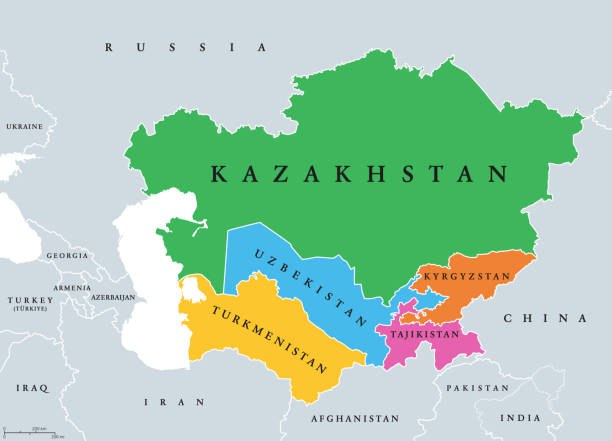
Central Asian economies concluded 2025 with growth exceeding 6%, significantly outpacing major developed markets such as the United States and the Eurozone, where expansion stood at approximately 1.6% and 1.1%, respectively, according to Turkish newspaper Yeni Şafak. The figure aligns with the World Bank who puts regional expansion at 6.2% and the Eurasian who Development Bank (EDB) estimates growth at 6.6%. Economists attribute the region’s performance to strong domestic demand, active state investment programs, infrastructure development, and rising exports of raw materials and industrial goods. Kazakhstan and Uzbekistan accounted for the largest contributions to overall growth, supported by large-scale public investment initiatives and expanding foreign trade. By contrast, the U.S. and European economies experienced slower growth amid high interest rates, inflationary pressures, and weaker consumer demand. Uzbek economist Mirkomil Kholboyev, writing on his Telegram channel, said the trend reflects deeper structural factors. “In general, the average real growth in Central Asia has almost always been higher than in the United States or Europe, with the exception of 2021,” he wrote. “Beyond short-term effects, lower-income countries like ours tend to grow faster than high-income economies. In wealthier countries, the return on additional capital has declined, while in our region capital remains scarce, allowing investments to generate higher returns. Demographic growth is also higher here, and the steady expansion of the labor force serves as an additional driver of economic growth.” Trade data indicate that Central Asia’s economic ties with Russia have strengthened in recent years. In 2021, the region accounted for 3.2% of Russia’s imports. By the first 10 months of 2025, that share had risen to 4.6%. Over the same period, Central Asia’s share of Russian exports increased from 5.6% to 7%. Overall, during the first 10 months of 2025, Central Asia ranked as Russia’s third-largest import partner and fourth-largest export destination. Before the war in Ukraine, the region ranked seventh among Russia’s import partners and fourth in exports. Although Russia’s economy remains significantly larger, reaching approximately $2.1 trillion in 2024 and exceeding the combined size of Central Asian economies by about 4.4 times, the increase in trade shares over the past four years is notable. Kholboyev also noted that part of the rise in imports is attributable to re-export activity.

Kyrgyz Lending Surges 55% as Consumer Demand Fuels Growth

From January to May 2025, the volume of new loans issued by commercial banks in Kyrgyzstan rose by 55 percent, according to the Eurasian Development Bank’s (EDB) June macroeconomic forecast. The sharpest increase was recorded in consumer lending, which more than doubled during the period, rising by 2.1 times. As a result, the total loan portfolio of the Kyrgyz banking sector grew by nearly one-third. “High lending rates are supporting domestic demand: retail trade and public catering increased by 25.3 percent during the first five months of the year. Consumer activity will continue to drive economic growth,” the EDB report  states. Similar findings were previously released by the National Bank of the Kyrgyz Republic (NBKR), though with some differences in specific figures. According to the NBKR, net profits of Kyrgyz banks from January to May totaled 12 billion som (approximately 137 million USD). The overall loan portfolio reached 404 billion som (around 4.6 billion USD), with overdue loans amounting to 7.3 billion som (83.5 million USD), or 1.8 percent of the total. The deposit base also showed strong growth: citizens deposited roughly 700 billion som (8 billion USD), reflecting a 17.7 percent increase since the start of the year. Efforts to reduce dollarization have also shown progress. The share of foreign currency assets in banks’ loan portfolios fell by 1.5 percentage points to 18.5 percent. Meanwhile, the proportion of household deposits held in foreign currency declined by 4.6 percentage points to 38.4 percent. According to EDB analysts, several key factors are driving Kyrgyzstan’s economic momentum. These include rising global gold prices, strong domestic consumption, and increased investment. Based on these trends, the bank has revised its 2025 GDP growth forecast for Kyrgyzstan upward by 1.6 percentage points. The country’s economy is now projected to grow by 10.3 percent this year.
