• KZT/USD = 0.00225
  • TJS/USD = 0.10850
  • UZS/USD = 0.00009
  • TMT/USD = 0.29850
  • KZT/USD = 0.00225
  • TJS/USD = 0.10850
  • UZS/USD = 0.00009
  • TMT/USD = 0.29850
  • KZT/USD = 0.00225
  • TJS/USD = 0.10850
  • UZS/USD = 0.00009
  • TMT/USD = 0.29850
  • KZT/USD = 0.00225
  • TJS/USD = 0.10850
  • UZS/USD = 0.00009
  • TMT/USD = 0.29850
  • KZT/USD = 0.00225
  • TJS/USD = 0.10850
  • UZS/USD = 0.00009
  • TMT/USD = 0.29850
  • KZT/USD = 0.00225
  • TJS/USD = 0.10850
  • UZS/USD = 0.00009
  • TMT/USD = 0.29850
  • KZT/USD = 0.00225
  • TJS/USD = 0.10850
  • UZS/USD = 0.00009
  • TMT/USD = 0.29850
  • KZT/USD = 0.00225
  • TJS/USD = 0.10850
  • UZS/USD = 0.00009
  • TMT/USD = 0.29850
01 October 2026

Viewing results 1 - 6 of 73

Uzbekistan Searches for Two Chechens Accused of Allamjonov Assassination Attempt

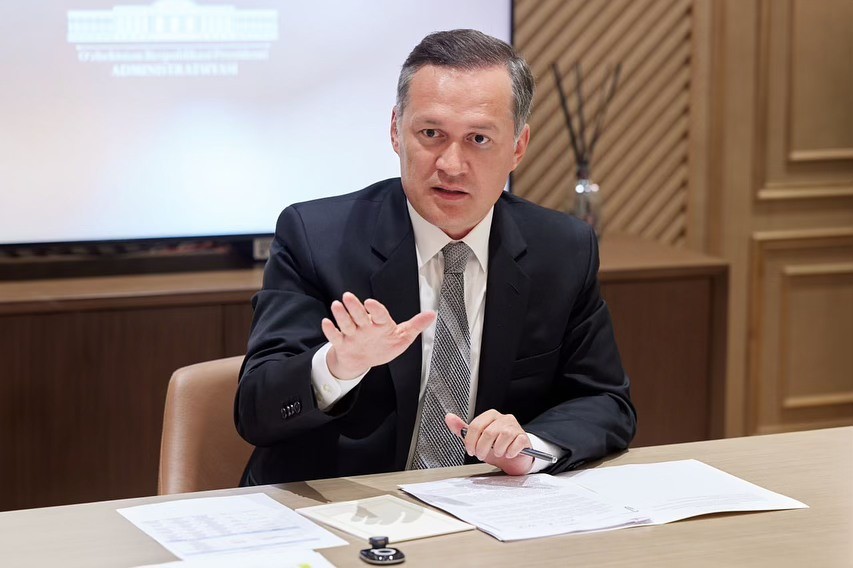
Uzbekistan has placed two Chechen residents, Bislan Rasayev and Shamil Temirkhanov, on Interpol’s wanted list in connection with an alleged assassination attempt. According to Vzglyad.uz, the two men are accused of multiple crimes and were allegedly offered $1.5 million to kill Komil Allamjonov, the former head of the Information Policy Department of the Presidential Administration, and Dmitry Li, head of the National Agency for Prospective Projects (NAPP). Rasayev, 36, and Temirkhanov, 31, reportedly attempted to assassinate Allamjonov. Investigators allege that the pair entered Uzbekistan via separate routes -- one crossing the Uzbek-Kyrgyz border illegally and the other entering through the Dostlik checkpoint -- while following instructions from their clients. The case gained attention following reports of an armed attack on October 26. According to the Prosecutor General's Office, the incident occurred outside Tashkent, on Ifor Street in the Qibray district. Unidentified individuals fired multiple shots at a Range Rover driven by a man identified as "S.S." before fleeing the scene. The investigation has revealed material evidence collected at the crime scene, in vehicles used by the suspects, and at their places of residence. These findings have been critical to the case. Authorities have identified seven individuals connected to the crime. While five suspects are currently in custody, Rasayev and Temirkhanov remain at large. Some media outlets have speculated about possible links to Chechen leader Ramzan Kadyrov, though no official confirmation has been provided.

Tajikistan Captures Four Suspected of Konibodom Night Murders

Tajikistan's Prosecutor General's Office has announced that it has detained four men in connection with a series of murders that have terrified the town of Konibodom, in the country's northern Sughd region. The office's statement says that operational and investigative measures led to the arrest of four Tajik citizens. The detainees are: Solehjon Khudojberdiev, born in 1998, a resident of Firuzoba Jamoat, Gulbog village; Akhajon Tukhtaev, born in 1997, also from Firuzoba Jamoat, Gulbog village; Bakhtiyor Ravshanov, born in 1988, a resident of Lohuti Jamoat, Sanchidzor village; Manuchehr Odilov, born in 1996, in M. Abdulloyev street, Khamroboyev Jamoat. All four are residents of Konibodom. The Prosecutor General's Office said that the investigation is being conducted under the direct supervision of the country's top leadership. Earlier this year, The Times of Central Asia reported that Konibodom residents had endured a wave of night murders in the spring. Between late March and late May, 13 people -- ethnic Tajiks, and Kyrgyz from the region near the Kyrgyz border -- were killed. The victims, ranging from children to the elderly, were murdered in different parts of the town. While authorities initially claimed the suspects had been caught and the killings had stopped, violence returned in December. On December 9, six more people were murdered, followed by four more found dead in their homes on December 16.

Moldovan Businessmen Hail Tokayev’s Role in Resolving Stati Dispute

On December 18, the protracted legal dispute between Kazakh authorities and Moldovan businessmen Anatol and Gabriel Stati over oil and gas assets was finally resolved. Following the agreement, the Stati representatives expressed gratitude to Kazakh President Kassym-Jomart Tokayev for his leadership in reaching the settlement. The Ministry of Justice of Kazakhstan reported that the resolution concludes a legal saga that spanned 15 years and impacted Kazakhstan's reputation as an investment-friendly nation. The ministry stated that the government, the National Bank of Kazakhstan, and the Stati parties, with the support of Tristan Oil’s leading creditors, successfully finalized the settlement process. “The signed Final Settlement Agreement forms the basis for the termination of all ongoing disputes, with no possibility of reopening them in the future. The specific terms of the agreement remain confidential,” the Ministry of Justice emphasized. Daniel Chapman, CEO of Argentem Creek Partners - investment manager for funds that are creditors of Tristan Oil Limited, the Stati family’s investment vehicle - praised the resolution. “This settlement and Kazakhstan’s approach to ensuring a fair resolution underscore the country’s respect for investor rights. We thank President Tokayev for his leadership, which has positively reshaped how foreign investors view Kazakhstan. We look forward to collaborating on new projects,” Chapman said. Kazakhstan’s Minister of Justice, Azamat Yeskarayev, noted the settlement’s significance for the nation’s economic future. “The resolution of this longstanding dispute creates additional opportunities for economic growth and investment,” he said, emphasizing that no funds from the national budget were used in the settlement process. The case had involved extensive litigation across multiple jurisdictions over 15 years. While the exact legal costs incurred by Kazakhstan remain undisclosed, the settlement signals a major step forward in resolving disputes with foreign investors and rebuilding trust.

Kyrgyz Security Chief Declares Crackdown on Organized Crime a Success

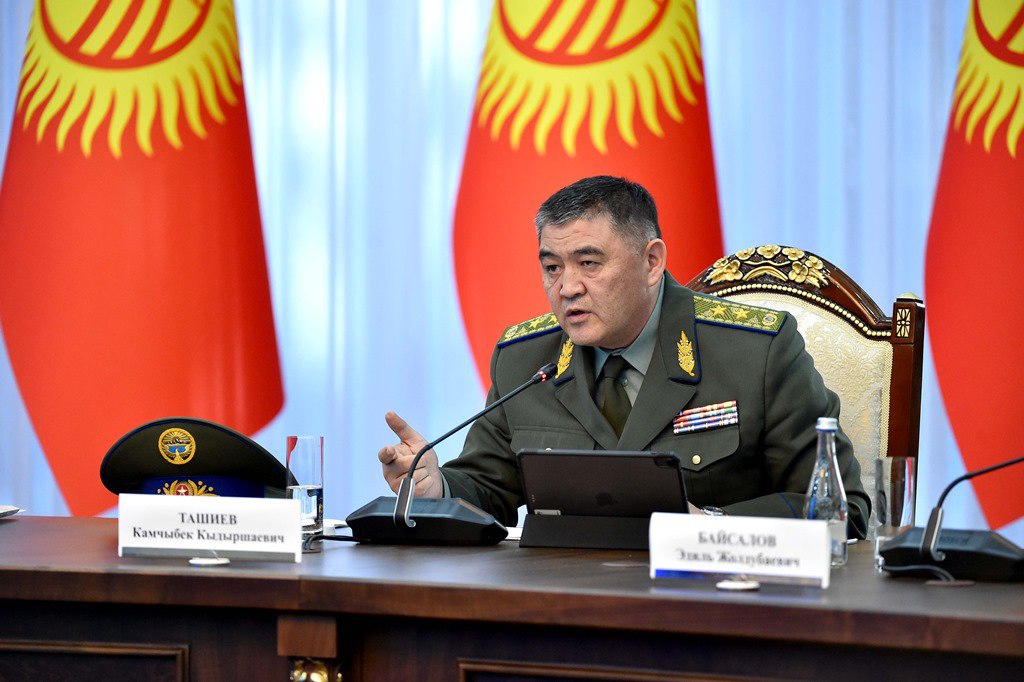
Kamchybek Tashiyev, the head of Kyrgyzstan’s State Committee for National Security (SCNS), declared that organized criminal groups (OCGs) have almost been eradicated nationally. Speaking at a press conference in Bishkek, Tashiyev highlighted significant achievements in the fight against organized crime. According to Tashiyev, property valued at 50 billion Kyrgyzstani som (KGS) has been recovered for the state budget as part of ongoing anti-crime efforts. Among the confiscated assets are those belonging to prominent figures in the criminal underworld, such as Kamchy Kolbayev, Kadyr Dosonov, Chyngyz Jumagulov, and Erkin Mambetaliyev. “A lot of property has been seized. Several boarding houses and sports complexes have already been sold,” Tashiyev stated. He also added that organized criminal groups have lost their influence and resources, asserting that Kyrgyz citizens can now work without fear. Kyrgyzstan’s government has intensified its campaign against organized crime. Key figures, including notorious crime boss Kamchy Kolbayev, have been detained or eliminated. Following these measures, several criminal leaders have publicly renounced their past and pledged to comply with the law. The Kyrgyz Interior Ministry has drafted the law “On the Prevention of Organized Crime” to establish a legal framework for combatting OCGs. This proposed legislation outlines preventive measures such as official warnings and financial audits for individuals suspected of criminal activity. While applauding the government’s efforts, some experts warn of potential negative consequences. Political scientist Aida Alymbayeva stressed that anti-crime initiatives must strictly adhere to legal procedures to avoid infringing on citizens' rights. Similarly, Doctor of Economics Asylbek Ayupov added that property seizures and arrests could impact tax revenues and harm Kyrgyzstan’s investment climate.

Uzbek Teenager Illegally Earned Over $2.5 Million Through Cryptocurrency

A 17-year-old boy has been detained in the Zhondor district of Uzbekistan’s Bukhara region for allegedly conducting illegal cryptocurrency transactions. Authorities claim the teenager engaged in the acquisition, transfer, and exchange of crypto-assets without obtaining the required licenses. Over the course of his activities, he reportedly amassed approximately 34 billion UZS (around $2.6 million). Law enforcement officials have filed a criminal case against the teenager under Article 278-8, Part 3, of Uzbekistan’s Criminal Code. This article addresses violations of laws regulating cryptocurrency transactions. Authorities have seized all of the funds the teenager earned through his alleged activities. A preliminary investigation is ongoing to determine the full extent of the violations and uncover any additional details surrounding the case. Cryptocurrency transactions in Uzbekistan are tightly regulated, with severe penalties for non-compliance. Under the law: Purchasing, selling, or exchanging crypto-assets without a license is punishable by administrative arrest of up to 15 days or a fine of 20–30 Basic Calculation Units (BCUs). Confiscation of both crypto-assets and associated funds is also mandatory. If an individual continues illegal activities after receiving an administrative penalty, they may face criminal charges, including imprisonment of up to 5 years. Unauthorized cryptocurrency mining can result in administrative arrest of up to 5 days or fines ranging from 20 to 30 BCUs. For reference, one BCU currently equates to 330,000 UZS (about $25). To conduct cryptocurrency operations legally in Uzbekistan, individuals and businesses must use licensed service providers. Licensed entities ensure compliance with the country’s strict regulatory framework, minimizing risks for participants in the crypto market.

Tinker, Tailor, Kazakh Ties: UK Spy Trial Reveals Moscow’s Long Shadow in Kazakh Politics

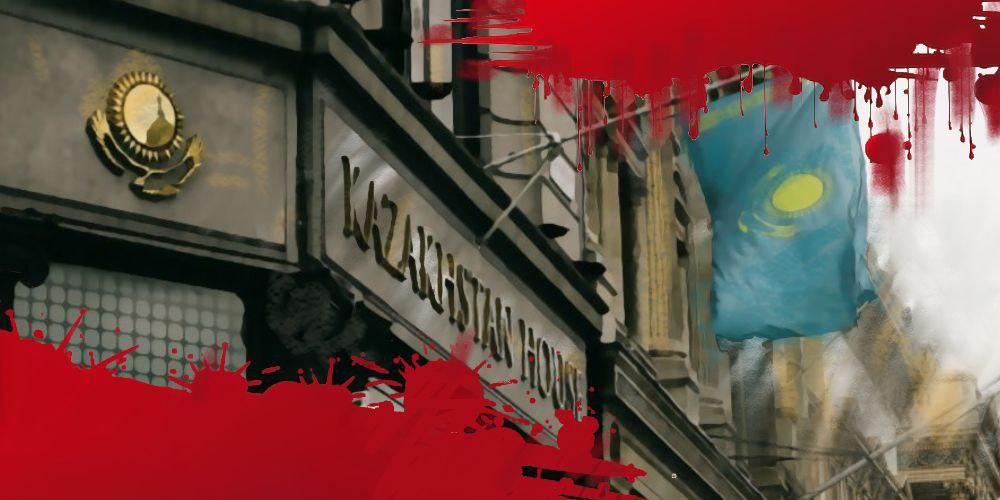
London's Central Criminal Court, known as the Old Bailey, is currently hearing the trial of several Bulgarian nationals accused by the British authorities of spying for Russia’s intelligence services. The case is likely being scrutinized not only in Moscow but also in Astana, as at least two of the six alleged operations relate to Kazakhstan. A Favor for Nazarbayev The defendants, five Bulgarian citizens, are accused of planning six espionage operations, one of which centers around Bergey Ryskaliyev, a former senior Kazakh official during the presidency of Nursultan Nazarbayev.The accused filmed Ryskaliyev in his London home and plotted to alternately dress up as DHL or Deliveroo drivers, or use a fake ambulance as a cover to access his premises. Ryskaliyev served as akim of the oil-rich Atyrau region from 2006 to 2012, before leaving Kazakhstan amid serious corruption allegations. Both he and his brother Amanzhan - an ex-deputy of the Mazhilis - have been wanted in their homeland for over a decade, facing charges of large-scale corruption, organized crime, false entrepreneurship, and money laundering. Public opinion in Kazakhstan attributes the Ryskaliyev brothers’ prosecution to their alleged involvement in the December 2011 Zhanaozen uprising. According to reports, the uprising was intended to culminate in Nazarbayev’s resignation through a symbolic “march to Astana.” By the summer of 2012, Nazarbayev seemed wary of Ryskaliyev, publicly thanking him for his service during a visit to Atyrau. Shortly after, Ryskaliyev resigned for "health reasons,” while Amanzhan stepped down as a Mazhilis deputy. The brothers remained in hiding for years, with their lawyers claiming in a 2019 trial that their whereabouts were unknown. However, reports later surfaced that Ryskaliyev had filmed and leaked a video of Nazarbayev in London’s Hyde Park, allegedly using it to blackmail the former president. Ryskaliyev denied this, characterizing his actions as a “small rally” outside Nazarbayev’s residence. Despite these allegations, Kazakhstan’s Supreme Court ruled in 2020 to return some of Ryskaliyev’s confiscated assets, including land, money, and shares in various companies, and to reverse property seizures which had affected their spouses. Prosecutors in the London trial allege that Ryskaliyev’s case was part of an operation to foster stronger ties between Moscow and Astana, with Russia suggesting that Kazakhstan might benefit from pursuing him. If accurate, this initiative likely predated January 2022, when Nazarbayev retained significant influence despite stepping down as president. Targeting Tokayev? The second alleged operation appears to have been directed at Kazakhstan’s current president, Kassym-Jomart Tokayev. Prosecutors claim the defendants planned a staged protest outside Kazakhstan’s embassy in London in September 2022, intending to pass information about the “organizers” to the Kazakh authorities. This, they argue, was another effort to bolster Russian-Kazakh relations. However, details reported by Germany’s Der Spiegel suggest a more specific objective. According to the report, the FSB instructed the operatives to stage a protest and send a letter to European Commission President Ursula von der Leyen, ostensibly from a fabricated group critical of Tokayev. Plans also included splashing fake blood or pig’s blood on the...