


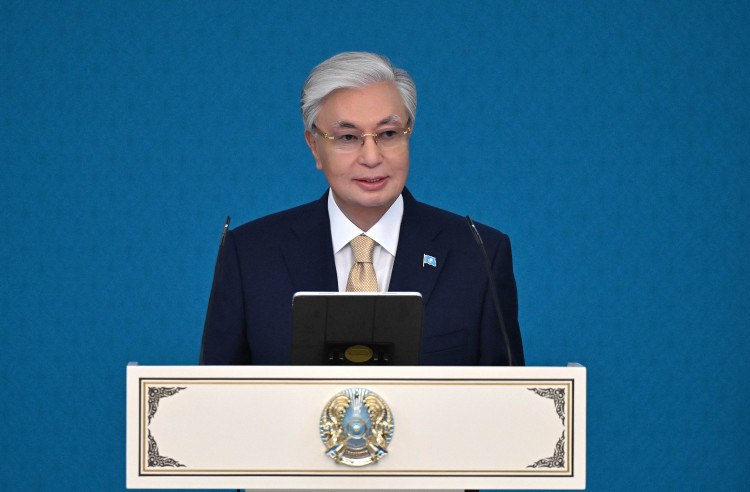
Tokayev Says Kazakhstan Offers Healthcare Benefits Unavailable in Some Western Countries
Kazakhstan provides its citizens with a range of social guarantees that, according to President Kassym-Jomart Tokayev, are unavailable even in some of the world’s most developed countries. Tokayev made the remarks during an awards ceremony for healthcare workers ahead of their professional holiday. Kazakhstan marks Medical Workers’ Day annually on the third Sunday of June, which falls on June 21 this year. Speaking at the ceremony, Tokayev said Kazakhstan remains a social state and that fulfilling social obligations is a constitutional responsibility of all branches of government. He noted that more than 9 trillion tenge, or almost $18 billion, was allocated from the national budget for social spending last year alone. “The implementation of the Guaranteed Volume of Free Medical Care Program is also a constitutional obligation. This is a unique program with no equivalent abroad, at least in terms of the scale of free medical services provided,” Tokayev said. He also pointed to maternity benefits as another example. “Women in Kazakhstan receive three years of maternity leave with payments and job security. These are unique conditions for young mothers. I worked in the West, particularly in Switzerland, and studied their system. Such arrangements do not exist there or in other Western countries,” he said. Tokayev added that Kazakhstan is developing as a regional center for medical tourism, citing high treatment standards and competitive pricing. Earlier this month, Tourism and Sports Minister Yerbol Myrzabosynov reported that about 80,000 foreign patients had received medical care in Kazakhstan. Tokayev linked much of the sector’s progress to accelerated digitalization in healthcare. “Kazakhstan has actively begun introducing advanced technologies across all sectors, including medicine. This has given a new impulse to the development of our healthcare system,” he said. According to the president, the use of digital technologies has reduced diagnostic times by four times and increased the detection rate of malignant tumors by 30%. Artificial intelligence tools are now assisting doctors in making complex clinical decisions. More than 1,800 medical institutions across the country have switched to digital systems, while the integration of healthcare information platforms has reduced administrative costs by up to 40%, he said. Tokayev also highlighted the government’s efforts to improve the social standing of healthcare workers. He said state support for medical professionals has increased seven times over the past three years, with wages rising gradually. This year, Kazakhstan allocated 33 billion tenge, or about $67.4 million, for salary increases and additional support measures. “These initiatives have helped stabilize the staffing of the healthcare system,” Tokayev said. “New specialized scientific institutes, multidisciplinary hospitals, modern clinics, and perinatal centers are being launched in the capital and the regions. The government must now carry out a large-scale renovation of the entire healthcare infrastructure and modernize its material and technical base.” As previously reported by The Times of Central Asia, Kazakhstan opened Central Asia’s first Brain Research Institute this summer. Tokayev also announced last autumn that science cities would be established in Almaty and Kurchatov, with nuclear medicine among the planned research...
