• KZT/USD = 0.00222
  • TJS/USD = 0.10850
  • UZS/USD = 0.00008
  • TMT/USD = 0.29850
  • KZT/USD = 0.00222
  • TJS/USD = 0.10850
  • UZS/USD = 0.00008
  • TMT/USD = 0.29850
  • KZT/USD = 0.00222
  • TJS/USD = 0.10850
  • UZS/USD = 0.00008
  • TMT/USD = 0.29850
  • KZT/USD = 0.00222
  • TJS/USD = 0.10850
  • UZS/USD = 0.00008
  • TMT/USD = 0.29850
  • KZT/USD = 0.00222
  • TJS/USD = 0.10850
  • UZS/USD = 0.00008
  • TMT/USD = 0.29850
  • KZT/USD = 0.00222
  • TJS/USD = 0.10850
  • UZS/USD = 0.00008
  • TMT/USD = 0.29850
  • KZT/USD = 0.00222
  • TJS/USD = 0.10850
  • UZS/USD = 0.00008
  • TMT/USD = 0.29850
  • KZT/USD = 0.00222
  • TJS/USD = 0.10850
  • UZS/USD = 0.00008
  • TMT/USD = 0.29850
19 November 2026

Viewing results 1 - 6 of 3

Kazakhstan Uses AI-Quryltai to Draft Child Safety Bill

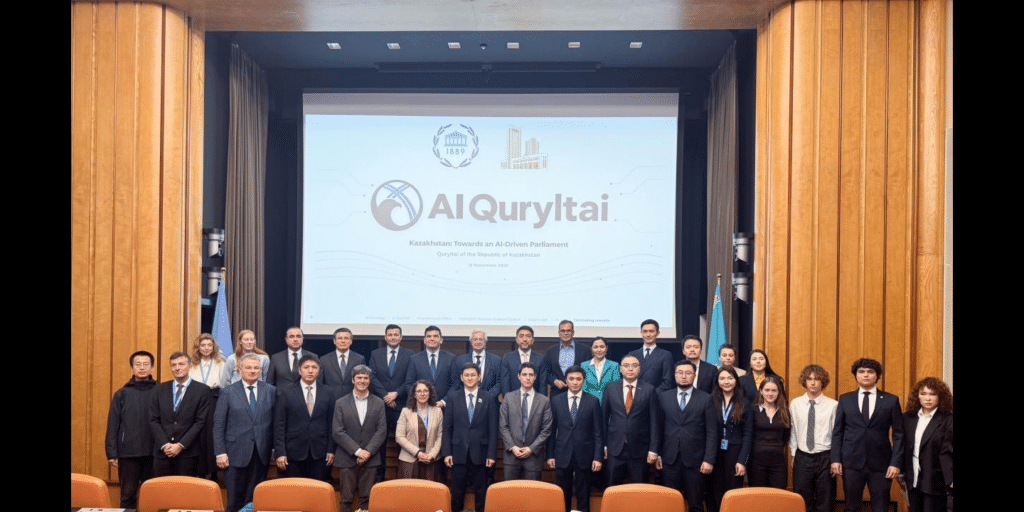
Lawmakers in the Kurultai, Kazakhstan’s parliament, drafted legislation with AI assistance for the first time, Deputy Speaker Dinara Zakiyeva said on November 16. They used the AI-Quryltai platform to prepare the bill “On Children’s Digital and Information Safety.” It would require digital platforms to offer parental controls and restrict children’s access to unlabeled or unverified games and apps. The platform helped lawmakers analyze public submissions and feedback from parents and experts, as well as review how other countries protect children online. Zakiyeva said its model trained for legal analysis draws on a database of more than 800,000 laws and regulations. Lawmakers used it to check proposed changes against existing rules and identify potential conflicts. They drafted more than 120 amendments while working on the bill. Zakiyeva did not specify how many were based on AI suggestions. Lawmakers reviewed and refined every suggestion from the platform with help from outside lawyers and digital safety specialists, according to the Kurultai’s press service. Yekaterina Smyshlyayeva, who heads the Kurultai’s AI lab, said parliament also plans to use the platform to assess the likely effects of proposed rules and track how they are applied once adopted. A few days before Zakiyeva’s announcement, a delegation from Kazakhstan presented AI-Quryltai in Geneva alongside parliament’s 2027–2029 Digital Transformation Strategy. The platform builds on e-Quryltai, parliament’s existing digital system, and is also designed to prepare briefings for lawmakers and parliamentary staff. It is still in a pilot phase, with the AI lab testing individual features. Kazakhstan already uses AI to review applications for targeted social assistance. The system analyzes photos and videos of applicants’ homes and makes recommendations about whether a household needs assistance. On October 16, the government said it had used the technology to process more than 183,000 applications. Final decisions on benefits still follow the standard process. Separately, Kazakhstan’s Ministry of Justice nnounced plans in October 2025 for an AI assistant to help draft laws and regulations. The ministry said the tool would review legal practices in other countries and flag provisions that might conflict with the Constitution.


Kazakhstan’s Child Online Safety Bill Proposes Restrictions on Games and Apps

Kazakhstan is proposing mandatory government checks for online games and apps before children can download them. A new bill would also restrict online shopping by minors. Dinara Zakiyeva, deputy speaker of the Kurultai, Kazakhstan’s parliament, outlined the bill, “On Children’s Digital and Information Safety,” at a parliamentary session with government officials on November 16, 2026. Platforms would have to label their games and apps with information about potentially risky features. A game’s description, for example, would have to say whether players can message each other or make in-game purchases. All digital platforms would be required to offer parental controls and filter the content children can access. Unlabeled or unverified games and apps would be hidden from children. The bill calls for monitoring of online platforms to ensure they comply with the new requirements. If a digital product poses a threat to children, authorities could require its removal or block access to it. Platform owners could be held liable for violations. For purchases by children on online marketplaces, Zakiyeva’s published remarks did not specify what the rules would require of retailers or how they would be enforced. The bill also proposes photo identification cards for children. Zakiyeva said the cards would verify children’s identities and help protect their rights online. Her remarks did not explain how individual websites or apps would use the cards. The 2018 Law on the Protection of Children from Information Harmful to Their Health and Development establishes six age categories for content. It also provides for measures to limit children’s online access to material prohibited for minors. However, websites other than online publications are exempt from its requirement to display age-rating labels. The proposed legislation would add mandatory government checks for digital products, including games and apps. The Children of Kazakhstan Concept for 2026–2030, which the government approved on January 29, 2026, calls for updating the law. It envisages special SIM cards registered to children that would automatically restrict access to entertainment content at night. The government also plans to recommend that mobile carriers include parental controls in their service plans. For the 2023 Kazakhstan Kids Online study, the United Nations Children’s Fund and Kazakhstan’s Ministry of Education surveyed 1,201 children ages 9 to 17 across all regions of the country. Nearly half (46%) said they first went online between the ages of 5 and 8. Among children ages 9 and 10, 60% reported having their own accounts on social media and gaming platforms, as did 66% of children ages 11 and 12. Most of these profiles were publicly visible. Zakiyeva said this was the first bill drafted with the help of AI-Quryltai, an AI platform developed in Kazakhstan. Lawmakers used it to analyze feedback from parents and international approaches to protecting children online. The system drew on a database of more than 800,000 laws and regulations. Its proposals were reviewed and revised by lawmakers working with lawyers and digital safety specialists. More than 120 amendments were drafted during work on the bill, Zakiyeva said. It is...

School Bullying in Kazakhstan: Prosecutors Propose New Deputies to Protect Students from Violence

In schools across Kazakhstan’s Zhambyl region, children told visiting inspectors about beatings, extortion, and threats. Some described incidents involving brass knuckles and stun guns. But reports from those same schools recorded no bullying. The scale of the problem was exposed in October 2025, when Kazakhstan’s commissioner for children’s rights, Dinara Zakiyeva, published the findings of inspections across the region. An interagency team identified more than 200 cases of bullying and extortion in the Baizak and Zhambyl districts alone. During the first nine months of that year, 14 suicides involving minors were recorded in the region. Prosecutors have introduced the position of deputy principal for legal affairs at 190 schools in the region. They say the initiative has helped reduce crime involving minors. The Prosecutor General’s Office now wants to extend it nationwide. But the proposal raises a question about how schools handle violence. Children do not always trust adults, teachers often prefer to resolve conflicts themselves, and school administrators may see public disclosure as a threat to their institutions’ reputations. Why Bullying Goes Unreported In November 2024, regional prosecutor Nurgalym Abdirov reported that recorded offenses counted against schools in performance rankings, giving administrators an incentive to conceal incidents. Following intervention by prosecutors, this indicator was removed from the evaluation system. But changing reporting criteria proved easier than changing school practices. In the fall of 2025, inspections again uncovered violence that children had disclosed only after outside specialists intervened. Similar incidents have been uncovered in other regions. In the Atyrau region, five school principals were held accountable for concealing beatings and other unlawful acts committed by older students. Kazakhstan introduced a legal definition of bullying in 2022, and administrative liability for bullying took effect in 2024. In 2025, authorities registered 438 administrative cases and held 272 people accountable. By October 22, 2026, authorities had received more than 2,000 reports of bullying that year. A study published in 2013 by the United Nations Children’s Fund found that 66% of children surveyed had witnessed, experienced, or perpetrated school violence or discrimination during the preceding year. The 2022 Programme for International Student Assessment found that 12% of students in Kazakhstan did not feel safe in their classrooms, while 14% felt unsafe in school hallways, cafeterias, and restrooms. Both figures exceeded the averages for countries belonging to the Organisation for Economic Co-operation and Development. The gap between official reports and children’s experiences was also evident during an independent evaluation of the DosbolLike anti-bullying program, introduced in all schools and colleges across the country in September 2025. The findings, reported in August 2026, showed that students often denied that bullying occurred when completing questionnaires but described harassment during group discussions. Some said teachers or psychologists had asked them to redo their questionnaires. Researchers also examined whom children were willing to trust with reports of violence. Nearly 90% of respondents named their homeroom teacher, 55.3% named their parents, and 18.4% selected the 111 child-protection helpline. None of the students surveyed on this question selected the police. One...
