Viewing results 1 - 6 of 2
Kazakhstan has opened a center to monitor radiation and coordinate responses to nuclear and radiological emergencies, with support from the United States Department of Energy’s National Nuclear Security Administration. The center opened on October 2 under Kazakhstan’s Atomic Energy Agency. It will receive and analyze radiation data, facilitate information exchange between government agencies, and coordinate their actions during emergencies. The authorities also plan to train specialists and conduct practical emergency-response exercises. Kazakhstan is the world’s largest uranium producer and operates nuclear research facilities. The consequences of Soviet nuclear weapons testing at Semipalatinsk continue to require monitoring and remediation. Between 1949 and 1989, 456 nuclear tests were conducted at the site, leaving areas contaminated with radioactive material. Emergency preparedness needs will increase as the country develops nuclear power generation. In an October 2024 referendum, 71.12% of those who voted supported the construction of a nuclear power plant, with turnout at 63.66%. The authorities have since begun preparations for second and third plants. The first new nuclear power plant is planned near the village of Ulken on the shore of Lake Balkhash. A consortium headed by Russia’s Rosatom will lead the project. The site for a second plant has been designated in the Zhambyl district of the Almaty region, near the first project, while China National Nuclear Corporation has been selected to lead the second project. Kazakhstan can also exchange urgent information on nuclear and radiological emergencies through the international system of the International Atomic Energy Agency (IAEA). The IAEA’s Incident and Emergency Centre is the round-the-clock global focal point for emergency communication and coordinates information exchange and international assistance. Kazakhstan plans to train specialists for its future nuclear power plants both domestically and abroad
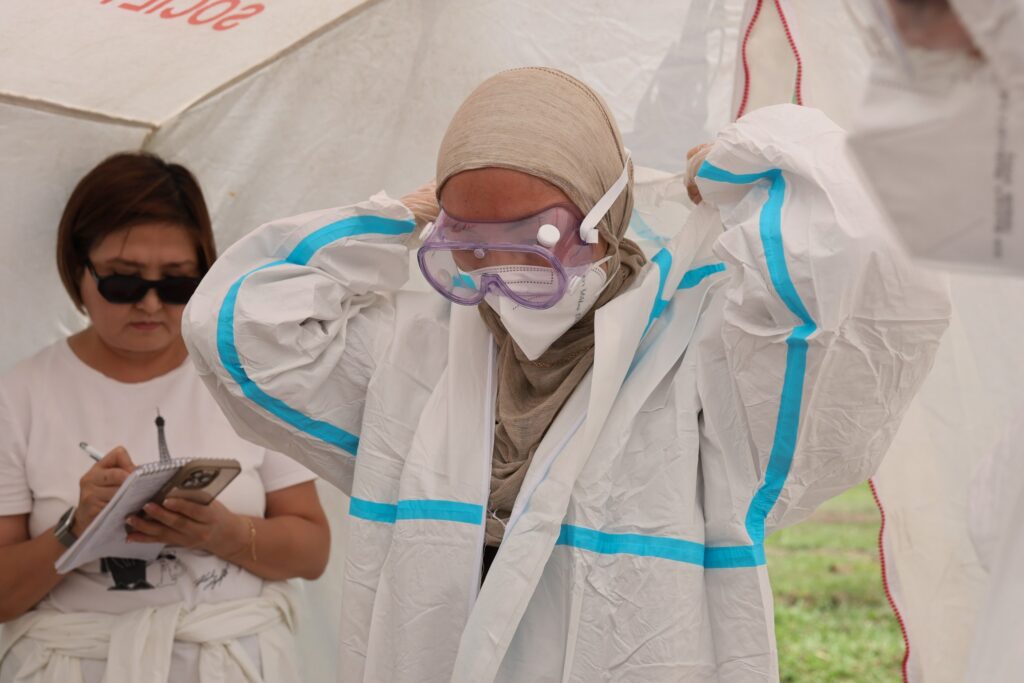
Kyrgyzstan has carried out large-scale interagency public health emergency exercises as part of preparations for the sixth World Nomad Games, which will take place from August 31 to September 6. Authorities say health security has become one of the key components of planning for what is expected to be the country's largest international event of the year. The two-day simulation exercise was held on July 14-15 in Cholpon-Ata, in the Issyk-Kul region. It brought together representatives of the Ministry of Health, healthcare institutions, the World Health Organization (WHO), other government agencies, and international development partners. Participants rehearsed the response to a simulated outbreak of acute intestinal infection and cases of an unidentified illness during a major international gathering. Field exercises were conducted in the Kyrchyn Gorge, one of the main venues for the upcoming Games, and at the infectious diseases department of the Issyk-Kul District Center for General Medical Practice. The drills tested early detection of health threats, laboratory diagnostics, medical response, interagency coordination, and crisis communication. According to Gulbara Ishenapysova, Kyrgyzstan's Deputy Minister of Health and Chief State Sanitary Doctor, the exercises provided an opportunity to assess the country's emergency response system under conditions closely resembling a real public health crisis and to identify areas requiring further improvement. Acting WHO Representative in Kyrgyzstan Zhanara Bekenova said such exercises are essential for evaluating coordination, information sharing, and decision-making mechanisms ahead of large international events. Preparations for the Games extend well beyond sports infrastructure. As previously reported by The Times of Central Asia, the 2026 World Nomad Games mark the event’s return to Kyrgyzstan. The event is also intended to promote tourism and the country’s nomadic cultural heritage internationally. Following the exercises, the Ministry of Health plans to prepare recommendations to improve interagency cooperation and the preparedness of healthcare institutions. The recommendations will also cover risk communication and revisions to national public health emergency response plans. The sixth World Nomad Games are expected to attract participants from more than 95 countries. More than 3,000 members of sporting delegations and delegations representing culture and science are expected to attend. The event is also expected to draw more than 600 domestic and international media representatives. For more from our World Nomad Games 2026 special coverage, click here.