
• KGS/USD = 0.01144 0%
  • KZT/USD = 0.00213 0%
  • TJS/USD = 0.10562 0%
  • UZS/USD = 0.00008 0%
  • TMT/USD = 0.28530 0%
  • KGS/USD = 0.01144 0%
  • KZT/USD = 0.00213 0%
  • TJS/USD = 0.10562 0%
  • UZS/USD = 0.00008 0%
  • TMT/USD = 0.28530 0%
  • KGS/USD = 0.01144 0%
  • KZT/USD = 0.00213 0%
  • TJS/USD = 0.10562 0%
  • UZS/USD = 0.00008 0%
  • TMT/USD = 0.28530 0%
  • KGS/USD = 0.01144 0%
  • KZT/USD = 0.00213 0%
  • TJS/USD = 0.10562 0%
  • UZS/USD = 0.00008 0%
  • TMT/USD = 0.28530 0%
  • KGS/USD = 0.01144 0%
  • KZT/USD = 0.00213 0%
  • TJS/USD = 0.10562 0%
  • UZS/USD = 0.00008 0%
  • TMT/USD = 0.28530 0%
  • KGS/USD = 0.01144 0%
  • KZT/USD = 0.00213 0%
  • TJS/USD = 0.10562 0%
  • UZS/USD = 0.00008 0%
  • TMT/USD = 0.28530 0%
  • KGS/USD = 0.01144 0%
  • KZT/USD = 0.00213 0%
  • TJS/USD = 0.10562 0%
  • UZS/USD = 0.00008 0%
  • TMT/USD = 0.28530 0%
  • KGS/USD = 0.01144 0%
  • KZT/USD = 0.00213 0%
  • TJS/USD = 0.10562 0%
  • UZS/USD = 0.00008 0%
  • TMT/USD = 0.28530 0%

Viewing results 1 - 6 of 8

Beyond the Belt and Road: China’s New Playbook in Central Asia

In the Kyzylorda Region, near the town of Shieli, the silos and conveyor belts of a Chinese-backed plant rise out of the fine brown dust that dominates the landscape. It is the kind of project the Belt and Road was supposed to deliver in Central Asia: heavy industry, fixed capital, and a visible mark on the landscape. But it is also a reminder that China’s role in the region has become narrower, more contested, and less sweeping than the old rhetoric suggested. In photographs, the Gezhouba Cement Plant looks like a self-contained industrial island on the steppe. For nearby villagers, it became something else: a source of jobs and local prestige for some, but also of years of complaints about dust clouds and whether the state was quicker to defend a flagship Chinese-backed project than the people living beside it. Projects like the plant in Shieli also help explain why views of China across Central Asia remain mixed. Beijing is seen as a source of trade, investment, and technology, but that promise is tempered in some places by concerns over transparency, environmental costs, and who really benefits when a project arrives. China has become Central Asia’s dominant trading partner, but investment has not kept pace with the surge in commerce. The gap says a lot about how Beijing now works in the region: with a sharper focus on sectors that matter to its long-term influence. In 2025, trade in goods between China and the five Central Asian states reached $106.3 billion, up 12% year on year. Chinese exports to the region totaled $71.2 billion, while imports from Central Asia reached $35.1 billion. Trade has grown fast enough to reshape the region’s external balance, but long-term investment has been far more selective. Over 2005–2025, the five Central Asian states accounted for about 3% of China’s global overseas investment and construction total. The picture changes once direct investment is separated from trade and construction contracts. China’s FDI stock in the five Central Asian states stood at about $36 billion by mid-2025. Roughly 90% was concentrated in Kazakhstan, Uzbekistan, and Turkmenistan. The structure of that capital has also changed. Extractive industries still accounted for 46% of the portfolio, but manufacturing and energy together made up more than one third, and greenfield projects rose from 43% to 60%. China has not poured money into Central Asia on the scale once implied by early Belt and Road rhetoric. Instead, it has invested in sectors that strengthen its industrial position. Kazakhstan remains at the center of this relationship. It is China’s biggest commercial partner in Central Asia, and the main destination for Chinese capital in the region. Kazakhstan-China trade reached $43.8 billion in 2024. The country’s portfolio of projects with Chinese participation includes 224 ventures worth about $66.4 billion. Some are still at the planning stage, but the range of projects is telling. Recent developments have included a hydrogen energy technology innovation center in Almaty and a large wind farm with electricity storage. Kazakhstan still sells...
Opinion – Kazakhstan’s New Constitution Sends a Key Signal for Global Partners

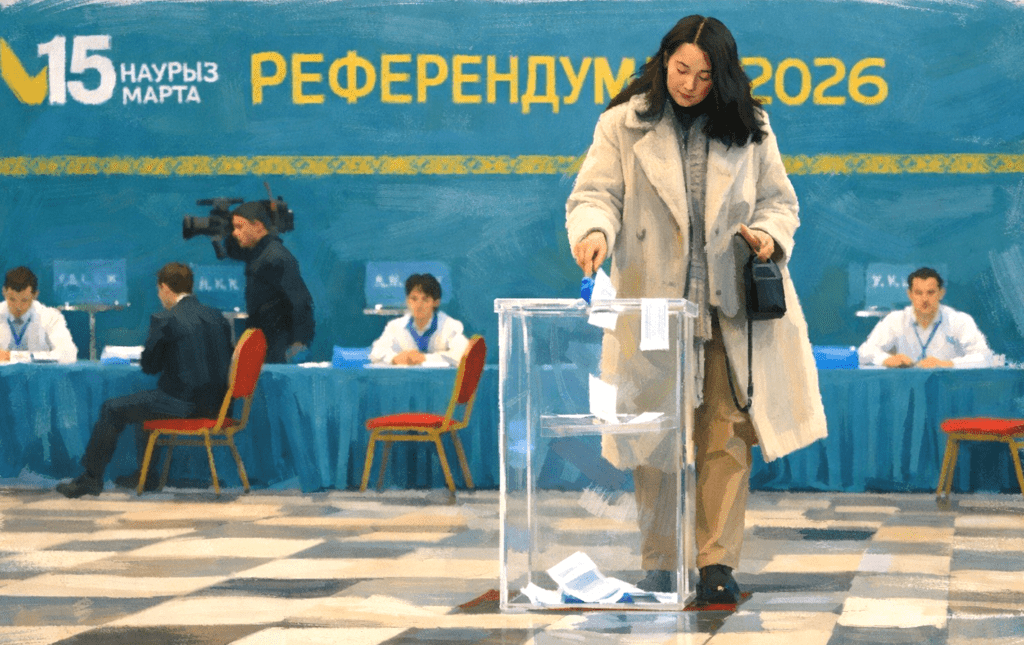
In a nationwide referendum on March 15, over 87% of voters approved a new constitution for Kazakhstan. It was a significant victory for President Tokayev and his administration, all the more so because voter turnout exceeded 73%. Kazakhstan’s new constitution is a key signal for global partners. It replaces the old bicameral system with a unicameral legislature, establishes the Halyk Kenesi (People’s Council), an advisory body intended to promote national dialogue, and creates a vice presidency to provide for clearer succession at the top of the state. The new constitution is the outcome of a strategy that has been building for some time. Now, backed by a clear majority, Kazakhstan’s leadership is seeking to strengthen governance by redistributing power, lessening political ambiguity, and grounding politics in shared values—however difficult that may be to accomplish. All of this is being pursued despite—and perhaps because of—the nation’s history of corruption and nepotism. Kazakhstan’s constitutional reforms were deliberate, structural measures designed to reorient the country’s governmental machinery toward what supporters describe as the common good. That, at least, is the stated intention, reflected in a slogan often used by backers of the new constitution: “A strong president, an influential parliament, and an accountable government.” Some outside observers have viewed the new constitution favorably, framing it as an effort to streamline governance and clarify institutional roles, while others have warned that the changes could impede sociopolitical progress and human rights by prioritizing stronger governance. Some also see the reforms as signaling a move toward more restrictive political practices. These alarmist interpretations are overstated. Astana’s constitutional reforms fit into an ongoing political effort, using the law to strengthen civic involvement and the well-being of the community as a whole, not just individual interests. The new constitution did not emerge ex nihilo for the purpose of freezing elite advantages at the expense of the people, as others in Kazakhstan and the broader region have done in the past. That interpretation of constitutional change in Central Asia overlooks the government’s broader reform agenda, whatever its perceived shortcomings. In his March 31 article, A New Constitution for a Just, Strong, and Prosperous Kazakhstan, President Tokayev framed Kazakhstan as a rules-oriented state, emphasizing rights, judicial independence, and impartial institutions—an approach that stands out regionally despite open questions about follow-through. Tokayev emphasized that “The new constitution is about people, not just better government.” The constitution’s largest section is dedicated to protecting freedoms and rights based on common sense and traditional values, including privacy, personal data, private property, and home inviolability. Judicial independence is reinforced to ensure that all citizens receive qualified, impartial defense – at least that’s the intent. Amendments require a public referendum, ensuring that fundamental choices remain popular. Religious liberty is guaranteed in a secular society. The constitution also presents Kazakhstan as a more attractive and predictable place to do business, for both domestic and foreign investors. The constitution, according to Tokayev, “sets clear rules for economic activity.” As such, the reforms create a political culture that aims...

Kyrgyzstan Sees Continued Growth in Foreign Direct Investment

Kyrgyzstan continues to show steady growth in attracting foreign direct investment (FDI), with figures exceeding pre-pandemic levels. According to the National Statistical Committee, FDI reached over $1 billion in 2024, and the positive momentum has continued into 2025. In the first quarter of 2025, Kyrgyzstan attracted $288.3 million in direct investment, up 44% compared to the same period in 2024. The National Statistical Committee categorizes investments as coming from either Commonwealth of Independent States (CIS) countries or non-CIS countries, with volumes from both sources remaining roughly comparable. Among non-CIS nations, China maintained its position as Kyrgyzstan’s largest investor, contributing $66.3 million during the first quarter. Among CIS countries, Russia led with $56 million, while Kazakhstan remained a key regional partner with nearly $50 million invested from January to March 2025. Other CIS countries contributed considerably smaller amounts. Turkey also continues to play a significant role, investing $62 million in Kyrgyzstan’s production sector. Other notable contributors include the Netherlands, with $23.8 million. Uzbekistan demonstrated marked growth, following the signing of a bilateral agreement on the demarcation of certain border areas and water resources. Uzbek investments reached more than $5 million in the first quarter of 2025, up sharply from $237,000 in all of 2024. India likewise recorded a surge in investment, increasing from $91,000 in 2024 to $1.9 million in the first three months of 2025, an almost 2,000% rise. Bishkek remains the country’s most attractive destination for foreign investment, drawing more than $525 million in 2024. The Chui region ranks second, driven by the expansion of factories and processing enterprises with foreign participation. The manufacturing sector continues to be the primary target for foreign investment, followed by financial intermediation and insurance. Additional capital is flowing into mineral extraction, trade, and equipment repair.

Kazakhstan’s Trade Policy Makes It a Nexus of Eurasian Supply Chains

Kazakhstan's foreign-trade priorities have markedly evolved in response to global market demands and geopolitical shifts. Historically, the country has relied on its neighbors, particularly Russia, for trade and economic security. However, in recent years, it has been strategically diversifying its trade partners to leverage its geographical position and resource wealth more effectively in the global market. This wealth includes significant reserves of oil, natural gas and minerals. In 2023, Kazakhstan's trade turnover broke a historical record and reached $139.8 billion. Top exports include crude petroleum, gold, refined copper, ferro-alloys, and copper ore. The strategy of diversification enhances Kazakhstan’s sovereignty and economic stability, providing support for President Kassym-Jomart Tokayev's multifaceted reform programs. These reforms include, among other things, increasing workers' salaries, reducing corruption, abolishing capital punishment, and decentralizing the government. In his state-of-the-nation address, Tokayev announced a transition to a new economic model involving further de-monopolization and diversification of the economy. The recent realignment of Kazakhstan's trade relationships is marked by China's ascendancy over Russia as the country's principal trading partner. This development in turn reflects regional trade dynamics and underscores broader geopolitical and economic trends within Central Asia. In 2023, yearly trade turnover between Kazakhstan and China surged 30% to $31.5 billion. This growth is emblematic of deepening economic ties and expanding trade routes across Eurasia, Asia, Africa, and Europe. China's investment in Kazakhstan, especially in infrastructure and energy sectors, is a critical factor in this ascendancy. China has invested $36.7 billion in Kazakhstan’s economy in the last 17 years, with two-thirds of this (or $25.2 billion) invested in the power sector. Approximately half of the investments are in oil and gas, while the rest are mainly in mining and ore processing, machine manufacturing, energy and food production. The partnership between Kazakhstan and China offers Kazakhstan significant economic growth opportunities, but necessitates careful navigation of its relationships with both China and Russia. President Tokayev is keenly attentive to balancing economic benefits with the need to maintain sovereignty and avoid over-dependence on a single partner. Russia's yearly trade turnover with Kazakhstan fell 3.7 percent to $26 billion in 2023. This decrease reflects the broader economic challenges and the volatility that Russia faces, impacting its capacity to engage in foreign trade at previous levels and pushing Kazakhstan to seek reliable and economically beneficial partnerships. This shift in trade dynamics illustrates the ongoing realignment in the geopolitical landscape of Eurasia. China's emergence challenges Russia's historical influence in Central Asia. Kazakhstan's enhanced cooperation with China reflects a strategic alignment and a hedging strategy against over-reliance on any single country. China's higher profile is not the only significant characteristic of Kazakhstan's evolving trade policy. Kazakhstan is actively expanding its trade relationships beyond its traditional partners to include countries in Europe and the Middle East. Italy has become Kazakhstan's third-largest trading partner, with a turnover of $16.1 billion in 2023, underscoring Kazakhstan's efforts to diversify its economic connections and enhance its trade portfolio with European nations. This growth highlights the potential for increased trade in goods...
