• KGS/USD = 0.01144 0%
  • KZT/USD = 0.00200 0%
  • TJS/USD = 0.10494 -0.28%
  • UZS/USD = 0.00008 0%
  • TMT/USD = 0.28490 -0.28%
  • KGS/USD = 0.01144 0%
  • KZT/USD = 0.00200 0%
  • TJS/USD = 0.10494 -0.28%
  • UZS/USD = 0.00008 0%
  • TMT/USD = 0.28490 -0.28%
  • KGS/USD = 0.01144 0%
  • KZT/USD = 0.00200 0%
  • TJS/USD = 0.10494 -0.28%
  • UZS/USD = 0.00008 0%
  • TMT/USD = 0.28490 -0.28%
  • KGS/USD = 0.01144 0%
  • KZT/USD = 0.00200 0%
  • TJS/USD = 0.10494 -0.28%
  • UZS/USD = 0.00008 0%
  • TMT/USD = 0.28490 -0.28%
  • KGS/USD = 0.01144 0%
  • KZT/USD = 0.00200 0%
  • TJS/USD = 0.10494 -0.28%
  • UZS/USD = 0.00008 0%
  • TMT/USD = 0.28490 -0.28%
  • KGS/USD = 0.01144 0%
  • KZT/USD = 0.00200 0%
  • TJS/USD = 0.10494 -0.28%
  • UZS/USD = 0.00008 0%
  • TMT/USD = 0.28490 -0.28%
  • KGS/USD = 0.01144 0%
  • KZT/USD = 0.00200 0%
  • TJS/USD = 0.10494 -0.28%
  • UZS/USD = 0.00008 0%
  • TMT/USD = 0.28490 -0.28%
  • KGS/USD = 0.01144 0%
  • KZT/USD = 0.00200 0%
  • TJS/USD = 0.10494 -0.28%
  • UZS/USD = 0.00008 0%
  • TMT/USD = 0.28490 -0.28%

Viewing results 1 - 6 of 15

Kazakhstan Adopts Pragmatic AI Regulation in Financial Sector

The global financial market faces a strategic choice: impose tighter restrictions on artificial intelligence or allow the technology to evolve within existing regulatory frameworks. While the European Union has opted for comprehensive regulation, Kazakhstan has adopted a more pragmatic approach. According to the National Bank of Kazakhstan, approximately 75% of the country’s banks already use AI technologies, and 88% plan to expand their use. This indicates that AI integration is no longer experimental but systemic within the financial sector. Madina Abylkasymova, Chair of the Agency for Regulation and Development of the Financial Market, articulated the principle of technological neutrality as early as 2025: the regulator does not intend to introduce artificial constraints until uniform global standards for AI are established. In her view, existing regulatory frameworks remain sufficient. Cybersecurity requirements, data protection standards, and risk management rules continue to apply regardless of whether decisions are made by humans or algorithms. Accountability and oversight remain unchanged. At the same time, the market faces significant structural barriers. These include a shortage of specialists at the intersection of finance and data science, the absence of unified data standards, and the high cost of computing infrastructure. The introduction of additional “European-style” restrictions could disproportionately burden smaller market participants and potentially force them out of the sector. Recognizing the high cost of entering the AI ecosystem, the state is assuming an infrastructural role. Timur Suleimenov, Governor of the National Bank of Kazakhstan, has outlined a strategic objective: to establish secure and scalable infrastructure to support AI development in the financial sector. This includes the launch of domestic data centers and the expansion of partnerships with global technology companies. The stated goal is to strengthen technological sovereignty and ensure the protection of citizens’ personal data. In practical terms, the regulator aims to create a sovereign “sandbox” in which fintech companies can test algorithms without transferring sensitive information to foreign servers. The rapid expansion of AI also requires a transformation of supervisory practices. Currently, 39% of financial organizations in Kazakhstan use neural networks in some capacity. Over the past year, the number of companies that have progressed from pilot projects to partial implementation has nearly doubled. International institutions, including the Bank for International Settlements and the International Monetary Fund, argue that AI does not generate fundamentally new categories of risk. Rather, it accelerates and amplifies existing risks, credit, market, and operational. This suggests that regulators do not need to rewrite foundational rules but must enhance the speed, scale, and depth of analytical capabilities. In response, the National Bank of Kazakhstan and the Agency for Regulation and Development of the Financial Market have launched an internal SupTech (Supervisory Technology) program. The first phase involves deploying AI assistants for document analysis and chatbots to support knowledge management. In subsequent stages, authorities plan to introduce multi-agent autonomous systems capable of analyzing large transaction datasets in real time, detecting systemic risk signals, identifying potential market overheating, and flagging suspicious patterns that may indicate money laundering. Kazakhstan’s approach reflects a deliberate balancing...

EU Targets Kyrgyz Financial Sector Over Russia Sanctions Evasion

At the beginning of the year, the news agenda surrounding Kyrgyzstan shifted dramatically. Several media outlets reported that the European Union is considering restrictive measures affecting Kyrgyzstan as part of its 20th sanctions package against Russia. This does not imply direct sanctions against the state itself, but rather potential measures targeting banks, oil companies, and cryptocurrency services that, according to Brussels, may facilitate circumvention of the sanctions regime. For Kyrgyzstan’s economy, which is highly sensitive to cross-border capital flows, this represents a serious warning signal. EU Special Envoy for Sanctions David O’Sullivan, who visited Bishkek, outlined Brussels’ principal concern: a sharp increase over the past year in imports of machine tools and radio equipment into Kyrgyzstan. According to O’Sullivan, exports of certain categories of goods have risen by several hundred percent compared with the pre-war period. These goods fall into the category of dual-use products, and even relatively inexpensive components can be incorporated into drones or missile systems. The EU’s core argument is that such goods are neither produced nor consumed in significant volumes within Kyrgyzstan but are imported from Europe for subsequent re-export to Russia. Brussels views this pattern as evidence of systematic transit. The European Commission is also advocating restrictions on exports of certain machine tools and radio equipment to Kyrgyzstan. According to cited sources, exports of sanctioned technologies to Kyrgyzstan have increased eightfold since the start of the war in Ukraine, while shipments of equipment from Kyrgyzstan to Russia have risen by approximately 1,000%. O’Sullivan stated that the EU “does not impose sanctions on countries,” but rather on specific companies and banks. In practical terms, however, the distinction can be largely formal for the national economy. In October 2025, the EU added two Kyrgyz banks, Tolubay Bank and Eurasian Savings Bank, to its sanctions lists. According to the special envoy, the measures do not prohibit domestic operations, but they do restrict transactions with European financial institutions. In practice, this means the loss of correspondent banking relationships and limited access to SWIFT. Previously, Keremet Bank, Capital Bank, and the cryptocurrency platforms Grinex and Meer were sanctioned by the United Kingdom and the United States. In November 2025, Canada imposed sanctions on Capital Bank of Central Asia and the A7 platform. Brussels has formally stated that it respects Kyrgyzstan’s sovereignty and its legitimate trade relations with Russia and does not seek to halt lawful trade or remittance flows from migrant workers. According to O’Sullivan, preventing transit should not generate significant economic losses, as the goods in question represent only a “tiny fraction” of trade and do not create substantial added value within Kyrgyzstan. A Delicate Balancing Act The situation is further complicated by the lack of full consensus within the EU itself regarding the new sanctions package. Kyrgyzstan finds itself at a difficult intersection of interests. On one side are longstanding economic ties with Russia; on the other, the growing importance of the EU as a source of investment, grants, and institutional support. Following an extended meeting between First...

Farmers, Courts, and Investors: Examining Recent Land Disputes in Uzbekistan

Uzbekistan’s agricultural sector is once again in the spotlight following a recent report by Human Rights Watch and the Uzbek Forum for Human Rights, which raised concerns about the treatment of cotton and wheat farmers under what it describes as a coercive state production system. At the same time, local agricultural representatives argue that the situation is more complex and that recent legal and institutional changes have improved farmers’ ability to defend their rights. The debate intensified earlier this year after complaints from farmers in parts of the Syrdarya region, particularly in the Xovos district, regarding land seizures linked to failure to meet so-called “normative yield” requirements. Komoliddin Ikromov, head of the Agrobiznes Association, has been among the most vocal local figures commenting on these developments. State Plan Abolished, but Normative Yields Remain According to Ikromov, it is important to distinguish between the former state production plan and the current regulatory framework. “There is no state plan now,” he said. “The state order was abolished in 2020. What exists today is the concept of rational land use. If a farm’s yield falls below the normative level for three consecutive years, then the land may be withdrawn, but only through a court decision.” While cotton state procurement was abolished beginning with the 2020 harvest, reforms affecting wheat and grain procurement were phased in and linked to the 2021 harvest. Ikromov referred to Article 36 of the Land Code, which sets out the procedure for termination of land-use rights where land is used irrationally or in violation of law. Detailed criteria — such as persistent underperformance relative to normative yield levels — are established in related regulatory acts rather than in the Land Code text itself. “Under current legislation, the khokim (local governor) cannot independently seize land,” Ikromov said. “The case must be submitted to the court. Only a court can decide.” Ikromov cited reforms adopted beginning in 2022 and subsequently strengthened by presidential measures in 2024, which expanded electronic auction procedures and curtailed direct administrative land allocation. Complaints from Farmers Beginning in January, the Agrobiznes Association started receiving complaints from farmers, mainly in Syrdarya. “I personally received about 50 to 60 appeals,” Ikromov said. “In total, there were more than 100 messages, mostly through Telegram.” According to him, many complaints concerned pressure to voluntarily surrender land leases through notarized statements. Farmers alleged that they were being encouraged or pressured to go to a notary and sign documents relinquishing their land. “These were not isolated cases,” he said. “In some districts, it was widespread. But after the issue was raised publicly, the process shifted. Now cases are going through courts.” Ikromov noted that unusual weather conditions contributed to the problem. Heatwaves and water shortages in 2024 made it difficult for some farmers to meet normative yield levels. In areas like Xovos, where soil fertility is relatively low, he said, agricultural production is already more challenging. Legal Process and Court Outcomes Following public attention, including Ikromov’s interview with the Uzbek outlet Kun.uz, land disputes increasingly...

ADB Provides Tajik Bank with First Direct Loan of $10 Million

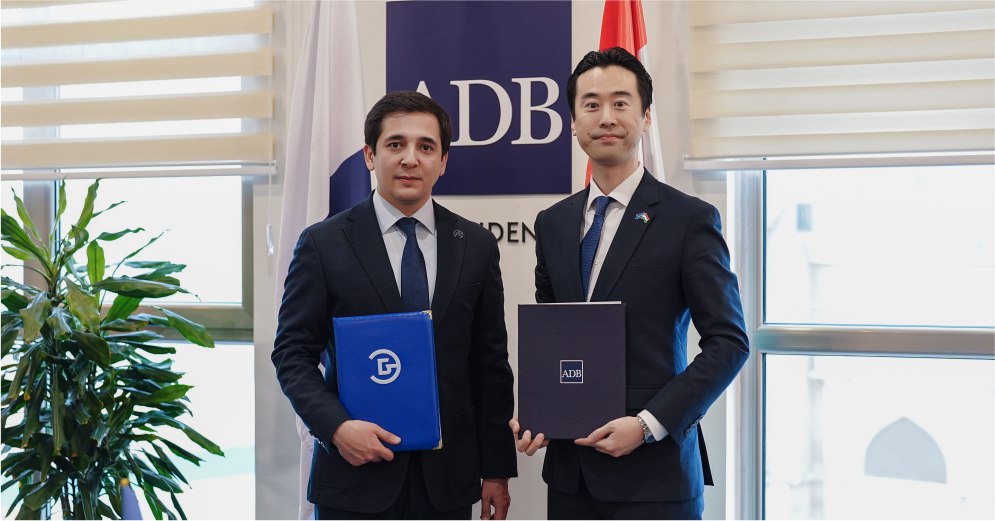
Bank Eskhata OJSC (Open Joint-Stock Company) and the Asian Development Bank (ADB) have signed a direct lending agreement, marking a new stage in financing for small and medium-sized enterprises (SMEs) in Tajikistan. This is the first time the ADB has issued a direct loan to a Tajik bank, bypassing intermediary financial institutions. The ADB stated that the format reflects a high level of trust in the partner bank and confidence in its stability within the national financial market. Tajikistan has been a member of the ADB since 1998. Under the terms of the agreement, the ADB is providing a loan in local currency equivalent to $10 million. The funds are intended to support entrepreneurs implementing environmentally friendly and energy-efficient technologies, as well as projects that reduce environmental impact and contribute to building a sustainable economy. Akmaljon Saifidinov, CEO of Bank Eskhata, described the agreement as strategically important. “We are honored to be the first financial institution in Tajikistan to receive direct lending from the ADB. This landmark event opens new horizons for supporting MSMEs and advancing green finance,” he said, referring to micro, small, and medium-sized enterprises. He added that the partnership with the ADB further strengthens the bank’s role as a leader in innovative financial solutions. The ADB expects the direct lending mechanism to significantly improve access to financing for businesses. “Direct lending will significantly expand enterprises’ access to financing and serve as a key stimulus for the development of green initiatives in Tajikistan,” said Ko Sakamoto, head of the ADB office in Dushanbe. The loan is expected to support projects in energy efficiency, green technologies, and sustainable business models, areas that have traditionally lacked access to long-term financing. In a separate initiative, the ADB recently approved a $3 million grant to enhance Tajikistan’s capacity for glacier monitoring and natural disaster forecasting.  The project includes the creation of a unified digital system for analyzing risks related to snow and ice melt and aims to improve public safety in mountainous regions.

Kazakhstan to Develop AI Rules for Financial Sector

Kazakhstan’s Agency for Regulation and Development of the Financial Market (ARDFM) plans to establish a regulatory framework governing the use of artificial intelligence (AI) in the country’s financial sector. The announcement was made by ARDFM Chair Madina Abylkassymova during the 13th Congress of Financiers of Kazakhstan. According to the regulator, 75% of banks in Kazakhstan already use AI technologies in areas such as credit scoring, fraud detection, marketing, and customer service chatbots. However, adoption levels vary significantly: large banks have made substantial progress, while medium and smaller institutions are primarily conducting pilot projects. Abylkassymova stressed that the widespread use of AI is imminent, necessitating the development of unified standards and regulatory guidelines. “There is currently no dedicated document regulating artificial intelligence, but one will certainly be introduced,” she said. “The main challenges today involve the absence of uniform standards, inconsistent data quality, and a shortage of qualified specialists. At present, each financial institution independently sets objectives and configures its AI systems, but without common rules. We must therefore rely on existing regulatory practices and client-service standards.” She added that regulatory measures should be proportionate to the level of risk associated with specific financial transactions. “We will conduct a detailed risk assessment. We do not believe every application of AI must be tightly regulated. Low-risk areas may require light oversight, whereas high-risk applications, particularly those with systemic implications, should face stricter controls.” Abylkassymova identified data quality as a major obstacle to AI development. She noted that information is often fragmented and stored across various systems and formats, increasing the likelihood of errors in AI-driven decision-making. A proposed legislative initiative includes the creation of a unified database of anonymized data accessible to market participants, aimed at improving AI model accuracy. Ongoing discussions are addressing whether access to government databases should be free or paid, and whether different pricing models should apply depending on the purpose of use. “We place extensive requirements on financial institutions, including offering access to government services through their digital platforms,” Abylkassymova explained. “To fulfill these functions, banks need access to public databases. So, the question is: is it justified to charge for such access? That’s one scenario. It’s another matter entirely when access is sought for purely commercial gain.” She concluded that the future AI framework will be developed in consultation with market stakeholders, with the goal of striking a balance between enabling innovation and safeguarding financial system stability. Previously, The Times of Central Asia reported that Kazakhstan’s Ministry of Finance is piloting a digital platform that leverages AI and big data to help entrepreneurs identify the most profitable sales locations for their products.