• KGS/USD = 0.01144 0%
  • KZT/USD = 0.00207 0%
  • TJS/USD = 0.10463 0%
  • UZS/USD = 0.00008 0%
  • TMT/USD = 0.28490 0%
  • KGS/USD = 0.01144 0%
  • KZT/USD = 0.00207 0%
  • TJS/USD = 0.10463 0%
  • UZS/USD = 0.00008 0%
  • TMT/USD = 0.28490 0%
  • KGS/USD = 0.01144 0%
  • KZT/USD = 0.00207 0%
  • TJS/USD = 0.10463 0%
  • UZS/USD = 0.00008 0%
  • TMT/USD = 0.28490 0%
  • KGS/USD = 0.01144 0%
  • KZT/USD = 0.00207 0%
  • TJS/USD = 0.10463 0%
  • UZS/USD = 0.00008 0%
  • TMT/USD = 0.28490 0%
  • KGS/USD = 0.01144 0%
  • KZT/USD = 0.00207 0%
  • TJS/USD = 0.10463 0%
  • UZS/USD = 0.00008 0%
  • TMT/USD = 0.28490 0%
  • KGS/USD = 0.01144 0%
  • KZT/USD = 0.00207 0%
  • TJS/USD = 0.10463 0%
  • UZS/USD = 0.00008 0%
  • TMT/USD = 0.28490 0%
  • KGS/USD = 0.01144 0%
  • KZT/USD = 0.00207 0%
  • TJS/USD = 0.10463 0%
  • UZS/USD = 0.00008 0%
  • TMT/USD = 0.28490 0%
  • KGS/USD = 0.01144 0%
  • KZT/USD = 0.00207 0%
  • TJS/USD = 0.10463 0%
  • UZS/USD = 0.00008 0%
  • TMT/USD = 0.28490 0%

Viewing results 1 - 6 of 12

Financing Agreement for China-Kyrgyzstan-Uzbekistan Railway Project Signed in Bishkek

On December 16, a loan agreement was signed in Bishkek to finance the construction of the China-Kyrgyzstan-Uzbekistan (CKU) railway, an ambitious regional transport project intended to bolster connectivity across Central and South Asia. According to the Kyrgyz government, the agreement was concluded between China-Kyrgyzstan-Uzbekistan Railway Company LLC, a joint venture formed by the three participating countries and a syndicate of Chinese banks, including the China Development Bank and Eximbank. The CKU railway has been discussed for more than two decades, but repeatedly stalled over financing, route selection, and technical concerns. Momentum increased after 2022 as China sought alternative westbound transport corridors and Central Asian states looked to diversify trade routes and reduce reliance on existing transit pathways. The total cost of the railway project is estimated at $4.7 billion. Half of that amount, approximately $2.3 billion, will be provided as a 35-year loan from China to the joint project company, which will be responsible for repayment. The remaining $2.3 billion will be contributed to the company’s authorized capital: China will cover 51%, while Kyrgyzstan and Uzbekistan will each provide 24.5%. The CKU railway is a strategically significant infrastructure initiative spanning 523 kilometers. Construction officially began on December 27, 2024, in Kyrgyzstan’s Jalal-Abad region. Once completed, the railway will link Kashgar in China with Torugart, Makmal, and Jalal-Abad in Kyrgyzstan, and continue on to Andijan in Uzbekistan. A cargo transshipment station and logistics hub are planned in Makmal. The railway is expected to handle up to 15 million tons of cargo annually. Despite its strategic appeal, the project has raised concerns about debt exposure, particularly for Kyrgyzstan, which already relies heavily on Chinese financing. Officials say the joint-venture structure and long loan maturity will limit fiscal risks, though critics argue projected cargo volumes will need to be met for the railway to be financially sustainable. Currently, neither Kyrgyzstan nor Uzbekistan has a direct rail link with China; the only such connection in Central Asia runs through Kazakhstan. For Uzbekistan, the railway is expected to shorten transit times to Chinese markets and expand export capacity for industrial and agricultural goods. Officials in Tashkent have argued that the CKU route could reduce delivery times by several days compared with existing rail corridors. The CKU railway is among the most technically complex projects in the region. It includes the construction of 50 bridges and 29 tunnels, totaling 120 kilometers in length, meaning roughly 40% of the route will consist of bridges and tunnels. The Kyrgyz section alone will cover 304 kilometers. On December 5, Chairman of the Kyrgyz Cabinet of Ministers Adylbek Kasymaliev visited the construction site of one of the tunnels in the Jalal-Abad region to inspect progress. According to government sources, work has begun on 18 of the 29 planned tunnels and 17 of the 50 bridges. The project currently involves 5,695 pieces of machinery and over 5,000 workers. For Kyrgyzstan, the CKU railway represents the largest infrastructure project in the country’s history. Authorities view the project as a chance to transform...
AIIB Provides $500 Million to Support Uzbekistan’s Green Economy Reforms

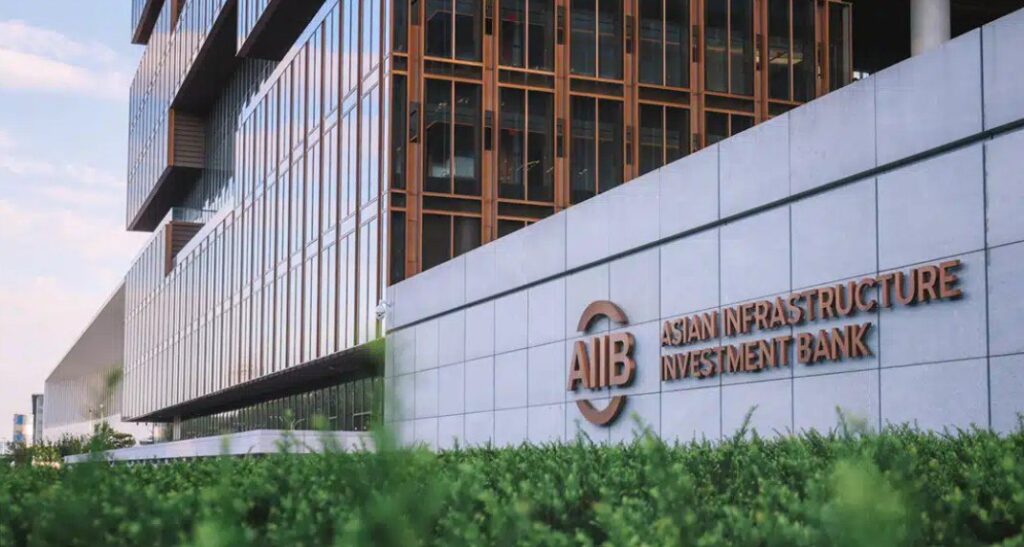
The Asian Infrastructure Investment Bank (AIIB) and the Government of Uzbekistan have signed a $500 million financing agreement to support the country’s Green and Resilient Market Economy Program, the Bank announced on November 28. The initiative is designed to accelerate Uzbekistan’s transition toward a greener, more resilient, and market-oriented economy through a comprehensive package of policy and institutional reforms. According to AIIB, the funding will assist the Uzbek government in strengthening the policy and governance frameworks necessary for low-carbon development, improved public-sector efficiency, and greater resilience to climate-related risks. The initiative falls under AIIB’s Climate-Focused Policy-Based Financing approach, which supports systemic reforms that have economy-wide climate impacts. The reforms backed by the new financing include measures to enhance efficiency and governance in the energy sector and state-owned enterprises, expand climate-responsive public procurement, and establish transparent systems for carbon-credit development and trading. The program also highlights the development of a robust Measurement, Reporting, and Verification (MRV) system to attract greater private capital for climate investments. “This operation reflects AIIB’s commitment to supporting Uzbekistan’s reform agenda through measures that can deliver lasting climate and economic gains,” said Konstantin Limitovskiy, AIIB’s Chief Investment Officer for Region 2 and Project and Corporate Finance Clients. He noted that the program is expected to foster conditions conducive to increased climate finance and stronger private-sector engagement in Uzbekistan’s green transition. The program is co-financed by the World Bank Group and is aligned with several national strategies, including Uzbekistan’s Strategy for Transition to a Green Economy for 2019-2030, its second Nationally Determined Contribution under the Paris Agreement, and the broader Uzbekistan-2030 development strategy. These frameworks stress clean energy, resource efficiency, and long-term economic resilience. AIIB projects that the reforms will generate substantial environmental and social benefits over time. More efficient resource use, the scaling up of clean energy solutions, and improved climate regulation are expected to reduce greenhouse gas emissions, enhance air quality, and strengthen the country’s capacity to withstand climate shocks. The adoption of cleaner technologies could also lower energy costs and improve living conditions, particularly for vulnerable communities. In a separate agreement earlier this year, AIIB provided a $71.1 million loan to Uzbekistan to modernize rural roads in Khorezm and Karakalpakstan. That project aims to enhance climate resilience and improve access to markets and public services for rural populations.

ADB Commits $10 Billion to CAREC, $700 Million to Kyrgyzstan

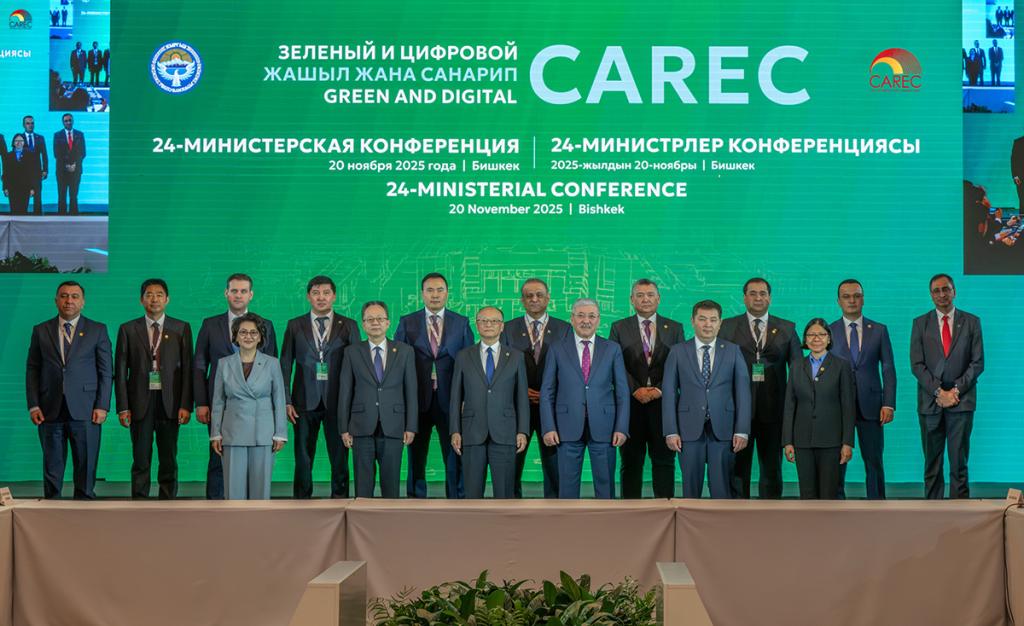
At the 24th Ministerial Conference of the Central Asia Regional Economic Cooperation (CAREC) Program held in Bishkek on November 20, Asian Development Bank (ADB) President Masato Kanda announced a commitment of more than $10 billion in financing through 2030 to strengthen regional integration, connectivity, and resilience. The CAREC Program brings together 11 member countries – Afghanistan, Azerbaijan, China, Georgia, Kazakhstan, Kyrgyzstan, Mongolia, Pakistan, Tajikistan, Turkmenistan, and Uzbekistan – along with international development partners, to promote sustainable economic growth through regional cooperation. Since its inception in 2001, CAREC has mobilized approximately $54 billion in funding for regional projects. The ADB serves as the host institution for the CAREC Secretariat. “Our vision for CAREC is clear: a region that is economically resilient, environmentally sustainable, socially inclusive, and digitally connected,” Kanda said in his keynote address. “We are scaling up support with over $10 billion in financing through 2030. These projects will catalyze greater integration, resilience, and shared growth.” During the conference, ministers endorsed the Bishkek Declaration, initiating formal negotiations on trade and investment facilitation. The initiative aims to reduce cross-border barriers, increase investment flows, and promote cooperation in emerging areas such as digital trade and the green economy. On the sidelines of the conference, Kanda met with Kyrgyz President Sadyr Japarov to reaffirm ADB’s commitment to Kyrgyzstan’s development goals. ADB plans to provide over $700 million in financing for the country between 2025 and 2027. “The Kyrgyz Republic has shown remarkable commitment to building a greener, more connected, and resilient future,” Kanda said. “As the country’s largest multilateral development partner, ADB is ready to deepen support for national priorities and strengthen Kyrgyzstan’s role as a regional leader in connectivity and clean energy.” Kanda also met with Chairman of the Cabinet of Ministers Adylbek Kasymaliev to sign a memorandum of understanding with the Ministry of Finance. The agreement outlines a new financing framework for 2026-2027 and includes three projects under the existing 2025 framework. These focus areas include green transformation, disaster resilience, and affordable housing. Altogether, the 2025 and planned 2026-2027 packages will provide more than $700 million in ADB support for Kyrgyzstan. Upcoming projects will aim to boost energy efficiency and climate resilience in public infrastructure, enhance water resource management and disaster preparedness, and improve access to energy-efficient housing and affordable mortgage financing.

ADB Approves $56.4 Million Disaster-Response Package for Tajikistan and Kyrgyzstan

The Asian Development Bank (ADB) has approved a $56.4 million program aimed at strengthening disaster-response capacity in Tajikistan and Kyrgyzstan, the bank announced in an official statement. According to the ADB, both countries face high exposure to earthquakes, floods, and other climate-related hazards. Their ability to respond effectively remains limited by constrained fiscal resources and a lack of risk-transfer mechanisms. The newly approved program is designed to enhance financial preparedness through two pre-arranged ADB financing instruments, each tailored to different levels of disaster risk. Innovative Tools for Disaster-Risk Financing The program incorporates two key components: Contingent Disaster Financing (CDF) and Disaster Resilience Bonds (DRB). CDF provides budgetary support during medium-scale natural disasters or public health emergencies. DRBs, issued on international capital markets, offer rapid liquidity for major, high-severity disasters. “This program will help reduce the fiscal burden on both countries following natural disasters, including geophysical events, extreme weather, and health emergencies,” said Leah Gutierrez, ADB Director General for Central and West Asia. She emphasized that the combination of policy reforms, institutional strengthening, and innovative financing marks a shift from reactive response to proactive disaster-risk management. Focus on Institutional Reforms and Regional Cooperation The initiative also emphasizes strategic policy reforms, capacity building, and governance improvements to ensure a coordinated and transparent disaster-risk management system. It was developed under ADB’s technical assistance program to establish disaster-risk transfer mechanisms in the Central Asia Regional Economic Cooperation (CAREC) region, a partnership supporting sustainable development and regional integration. The program will be financed through a $53.1 million grant from the Asian Development Fund (ADF), with an additional $3.3 million from the Asia-Pacific Climate Fund. ADF grants are targeted at the poorest and most vulnerable countries in the Asia-Pacific. From 2021 to 2024, the fund supported the lifting of 384,000 people out of poverty and the creation of approximately 500,000 jobs.