• KGS/USD = 0.01144 0%
  • KZT/USD = 0.00191 -0%
  • TJS/USD = 0.10850 0%
  • UZS/USD = 0.00008 0%
  • TMT/USD = 0.28490 0%
  • KGS/USD = 0.01144 0%
  • KZT/USD = 0.00191 -0%
  • TJS/USD = 0.10850 0%
  • UZS/USD = 0.00008 0%
  • TMT/USD = 0.28490 0%
  • KGS/USD = 0.01144 0%
  • KZT/USD = 0.00191 -0%
  • TJS/USD = 0.10850 0%
  • UZS/USD = 0.00008 0%
  • TMT/USD = 0.28490 0%
  • KGS/USD = 0.01144 0%
  • KZT/USD = 0.00191 -0%
  • TJS/USD = 0.10850 0%
  • UZS/USD = 0.00008 0%
  • TMT/USD = 0.28490 0%
  • KGS/USD = 0.01144 0%
  • KZT/USD = 0.00191 -0%
  • TJS/USD = 0.10850 0%
  • UZS/USD = 0.00008 0%
  • TMT/USD = 0.28490 0%
  • KGS/USD = 0.01144 0%
  • KZT/USD = 0.00191 -0%
  • TJS/USD = 0.10850 0%
  • UZS/USD = 0.00008 0%
  • TMT/USD = 0.28490 0%
  • KGS/USD = 0.01144 0%
  • KZT/USD = 0.00191 -0%
  • TJS/USD = 0.10850 0%
  • UZS/USD = 0.00008 0%
  • TMT/USD = 0.28490 0%
  • KGS/USD = 0.01144 0%
  • KZT/USD = 0.00191 -0%
  • TJS/USD = 0.10850 0%
  • UZS/USD = 0.00008 0%
  • TMT/USD = 0.28490 0%
10 November 2025

Viewing results 1 - 6 of 22

Real Madrid to Play Kairat in Almaty in UEFA Champions League

Almaty’s Kairat will face European giants, including 15-time champions Real Madrid, in the UEFA Champions League group stage, marking a historic milestone for the Kazakh club. Kairat has never before reached this phase of the competition. Earlier this summer, the club became only the second team from Kazakhstan, after Astana, to qualify for the group stage by overcoming four rounds of qualifiers. Prior to the August 28 draw, head coach Rafael Urazbakhtin expressed a wish to be grouped with Real Madrid, Barcelona, or Liverpool. The draw delivered on one of those wishes: Kairat will now face Real Madrid, the most decorated club in European football history. Also in their group are Inter Milan, three-time Champions League winners, and Arsenal, a top English club with 13 domestic league titles but still seeking their first Champions League crown. Kairat's group stage schedule includes away matches against Sporting Lisbon and Copenhagen, while they will host Belgium’s Club Brugge, Greece’s Olympiacos, and Cyprus’s Pafos in Almaty. The group stage will be played between late September 2025 and the end of January 2026. “We are delighted to be playing Real Madrid. It's not often that such a club comes to Kazakhstan,” said Urazbakhtin. He acknowledged the disparity in skill levels but emphasized the importance of home support and maximizing their advantage in Almaty. A total of 36 clubs are competing in this season’s group stage. Each team plays eight matches, four home and four away, against different opponents. The top eight teams overall will advance directly to the playoffs, while clubs ranked 9th to 24th will enter a playoff round in February 2026 to fight for the remaining spots in the round of 16. As previously reported by The Times of Central Asia, Kairat earned their Champions League berth after a dramatic penalty shootout win over Celtic, with reserve goalkeeper Temirlan Anarbekov playing a decisive role in the victory.

Backup Goalkeeper Anarbekov Secures Champions League Berth for Kairat Almaty

Temirlan Anarbekov, the reserve goalkeeper for Kazakhstani football club Kairat Almaty, played a starring role as his team reached the UEFA Champions League group stage for the first time. On August 26 Kairat secured its place in Europe’s premier club competition this season by beating Scottish champions Celtic in the final qualifying round. Kairat entered the Champions League qualifiers after claiming their fourth domestic title last year. This summer, the Kazakh champions successfully navigated three qualifying rounds, defeating Slovenia’s Olimpija, Finland’s KuPS, and Slovakia’s Slovan Bratislava, to reach a decisive playoff against Celtic. The Scottish club, a regular participant in recent Champions League group stages, posed a formidable challenge. Kairat, by contrast, had previously reached the autumn phase of European competition just once, in the lesser UEFA Conference League three years ago. In the first leg in Glasgow last week, Kairat held Celtic to a 0-0 draw. However, the result came at a cost: first-choice goalkeeper and national team regular Alexander Zarutsky sustained a leg muscle injury and had to be substituted. Temirlan Anarbekov, the team’s backup, stepped in. With Zarutsky still sidelined, Anarbekov started the return leg in Almaty. He delivered a flawless performance, keeping a clean sheet through regular time and two 15-minute periods of extra time. The match was ultimately decided by a penalty shootout. Anarbekov stole the spotlight by saving three out of five attempts. Kairat won the shootout 3-2. The team became only the second from Kazakhstan to reach the Champions League group stage, following Astana’s breakthrough in 2015. Kairat will discover its group-stage opponents during the Champions League draw on August 28. They are Kazakhstan’s sole representative in European competition this season, after Aktobe failed to qualify for both the Europa League and Conference League, and Shymkent’s Ordabasy and Astana exited in earlier rounds. Meanwhile, in neighboring Uzbekistan, the national football federation continues its search for a new head coach. As previously reported by The Times of Central Asia, former South Korea and Portugal manager Paulo Bento is the frontrunner for the role.

Uzbekistan Eyes Paulo Bento as National Team Coach Amid Ambitious Football Reforms

Reports regarding Uzbekistan’s search for a new head coach for its national football team have taken a significant turn, with Paulo Bento, former manager of South Korea and Portugal, emerging as a leading candidate, according to Football-Asian. The Uzbekistan Football Association (UFA) is seeking a seasoned tactician to lead the team during its landmark debut at the 2026 FIFA World Cup. Initial approaches to high-profile names such as Germany’s 2014 World Cup-winning coach Joachim Löw and veteran Turkish manager Fatih Terim failed to yield results. Attention has since shifted to Bento, a 56-year-old Portuguese coach with a strong international and club-level résumé. Bento previously guided Portugal to the semi-finals of Euro 2012 and led South Korea to the Round of 16 at the 2022 World Cup in Qatar. His coaching career also includes stints with clubs in Portugal, Brazil, Greece, and China, as well as a recent tenure with the UAE national team. For Uzbekistan, which qualified for the World Cup for the first time this year, Bento’s tournament experience and tactical acumen are considered valuable assets. “Whether Bento accepts the challenge of leading Central Asia’s standard-bearers remains to be seen, but the very fact he is in the frame underlines Uzbekistan’s determination to think big,” Football-Asian reported. Current manager, Timur Kapadze, who led Uzbekistan to their first World Cup finals appearance, has dismissed rumors that he is to be replaced. "No one from the Football Association has informed me of anything. There was no talk about bringing someone in. It’s hard for me to comment on this news,” Kapadze stated. Domestic Football Reforms Underway In parallel with their reported search for a new coach, Uzbekistan is undertaking structural reforms to strengthen its football development pipeline. A recent presidential decree mandates the creation of a “Legionnaires’ Club” under the UFA, aimed at uniting Uzbek footballers and specialists with experience abroad. These members will collaborate with local academies and football schools to share their expertise. In support of these efforts, state-owned land plots will be allocated under public-private partnerships to help them establish football academies and clubs throughout the country.

Opinion: What Uzbekistan’s FIFA World Cup Breakthrough Tells Us About State-Building

When Uzbekistan's goalkeeper Utkir Yusupov made those crucial saves against the UAE last night, securing his country's first-ever FIFA World Cup qualification, he was putting the finishing touches to a decade-long story about how nations build capacity, and what happens when they finally get it right. Uzbekistan's journey to the 2026 World Cup is not just a sports story. Go deeper, and you'll find something more interesting: a case study in institutional development. The Numbers Don't Lie Consider what Uzbekistan has pulled off in recent years. At Rio 2016, the country won 13 Olympic medals, placing 21st globally. In Tokyo, they obtained three gold medals despite disruptions caused by the pandemic. Uzbekistan achieved its best-ever performance at the Paris Olympics, securing 13 medals (8 gold, 2 silver, and 3 bronze), placing them 13th overall in the medal standings, first among post-Soviet states, and fourth among Asian nations overall. But the real story is the systematic nature of their success. Seven of those 13 Rio medals came in boxing alone, with three golds. At the 2023 World Boxing Championships in Tashkent, Uzbek fighters received five gold medals, the tournament's best overall performance. Boxers also dominated the Paris Olympics, bringing five gold medals to the national team’s account. Uzbekistan’s youth football teams have been even more dominant: AFC U-23 champions in 2018, U-20 Asian Cup winners in 2023, and U-17 continental champions twice since 2012. This is not random. Big tournaments reward institutional capacity, not just individual talent. Success on this scale requires functional sports federations, coherent youth development systems, and the kind of long-term planning that only works when bureaucracies can actually implement policies rather than just announce them. Small Economy, Outsized Results What makes Uzbekistan's breakthrough particularly striking is the economic context. Uzbekistan is not Germany or Japan leveraging massive GDP advantages. Uzbekistan's sports budget doubled to roughly $230 million by 2025, serious money for the country, but pocket change compared to what traditional powers spend. Yet they're outperforming nations with far deeper pockets. Their junior teams dominate youth football rankings. Their boxers routinely defeat athletes from wealthier countries. That efficiency ratio, results per dollar invested, suggests something important is happening at the governance level. The government has built over a hundred new sports facilities while doubling coaches' salaries. President Mirziyoyev's Presidential Olympics program scouts talent across all regions, attracting the best prospects to national training centers. Athletes now receive meaningful incentives: houses, cars, and scholarships. This is a systematic investment with clear metrics and accountability. The Quiet Politics of Athletic Success Sports remain one of the few arenas where state effectiveness can reveal itself without the outsized intrusion of politics. You can't fake your way to consistent Olympic medals or sustained success in FIFA youth competitions. These achievements require multiple sectors - education, healthcare, and urban planning - to function in coordination. Uzbekistan's sporting surge coincides with broader signs of improved state capacity under Mirziyoyev's administration. The infrastructure investments are real. The youth development programs are producing measurable results....

Uzbekistan Qualify for the FIFA World Cup

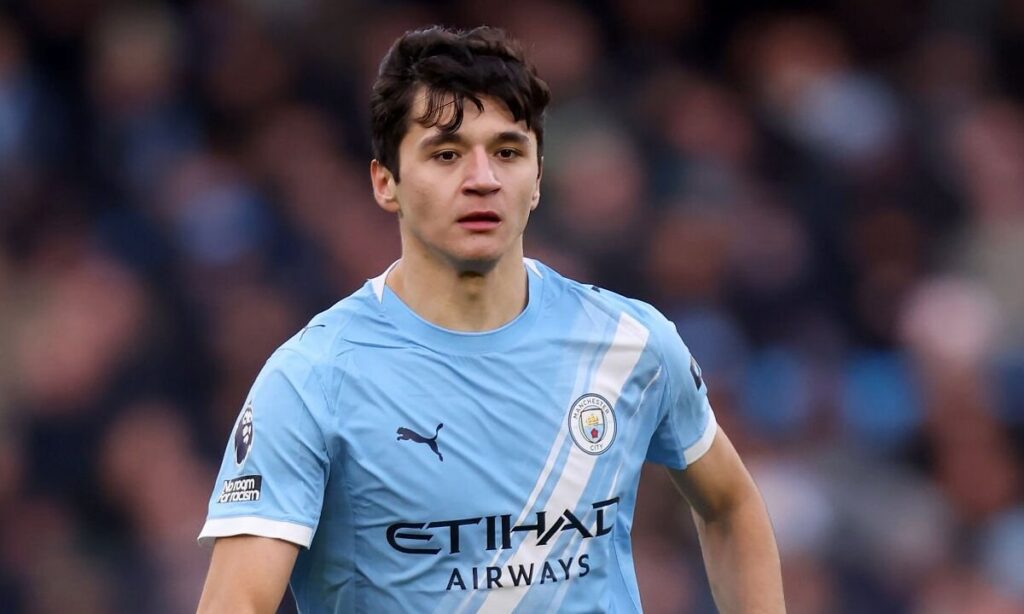
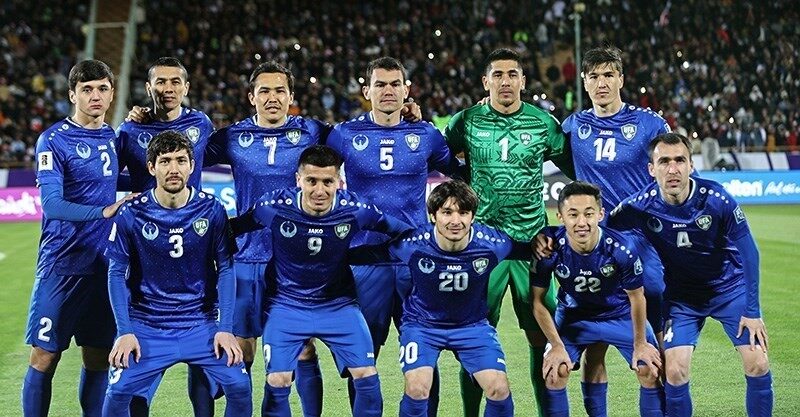
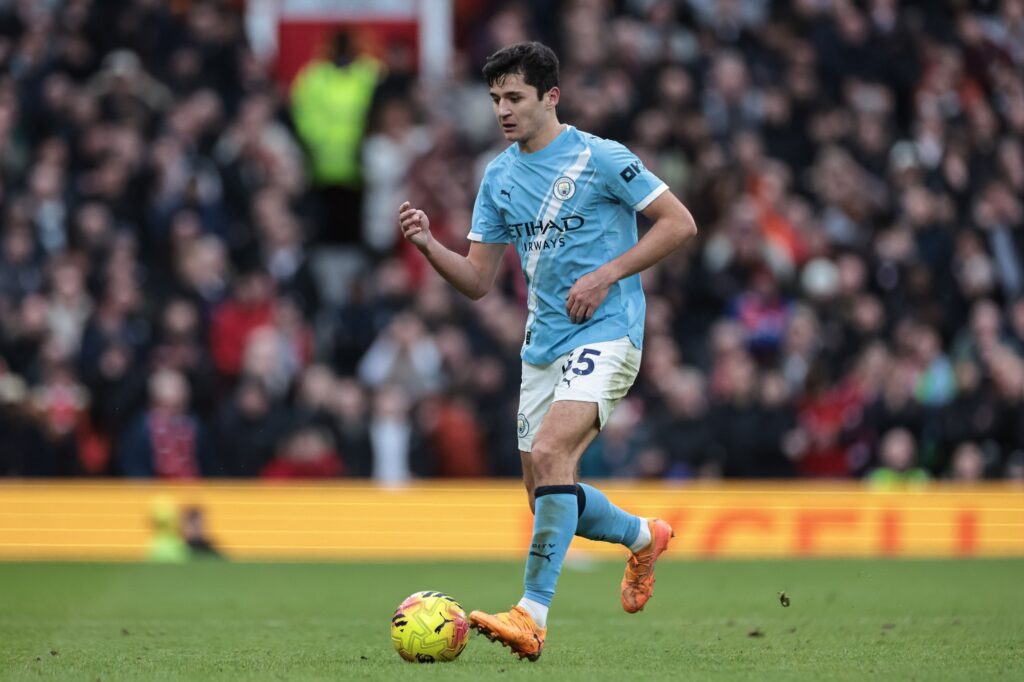
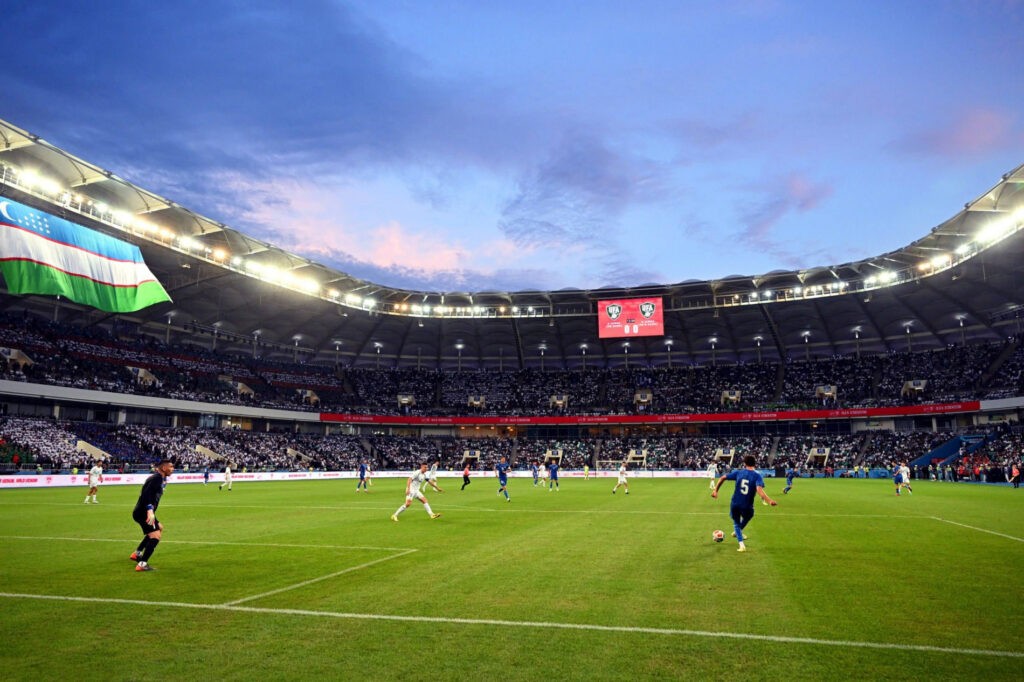
On June 5, history was made in Uzbekistan as the national football team qualified for the 2026 FIFA World Cup. A nervy 0-0 draw against the United Arab Emirates in Abu Dhabi was enough to secure them a place at next year’s tournament in North America. It marks the first time that the 34-year-old nation will appear in the final stages of the competition. They become only the third nation from the former USSR, after Russia and Ukraine, and the first from Central Asia, to do so. A Night of Nerves The final hurdle was not an easy one. The Uzbeks faced an intimidating atmosphere even before kick-off, with long airport screening processes meaning over 100 fans were detained for between 7-9 hours at Sharjah airport. Then there was the weather, even at 8pm, the Al Nahyan Stadium in Abu Dhabi sweltered in 31-degree heat. Nevertheless, the team was helped by an Uzbek away support that did not cease all match. The away section was full well before kick-off, and the chants of “Oz-Bek-Is-Ton!”, accompanied by the pounding of drums, could be heard around the stadium. The Uzbeks, with just one loss in their nine-match qualifying campaign, have built their play around a solid defense. In six out of their nine qualifying matches, they did not concede a goal. The team’s star player, Manchester City’s Abdukodir Khusanov, has been the lynchpin of that formidable rearguard, but this is not a side of individuals. The whole team worked tenaciously for each other, and even when their protection was breached, the impressive Uktir Yusupov was on hand to make a few smart saves. Towards the end, the Uzbek fans and coaching staff were screaming at the referee to blow the final whistle after he added ten minutes of additional time. But when time was finally up, well-earned and long-awaited joy was plain to see on every face. Several players broke out sobbing. Celebrations The elation was shared not only by the players. The Uzbek media present in the stadium were seen jumping around the press box in delirium. Back home in Uzbekistan, where half the country had stayed up to watch the match, there was similar joy. “The feeling is indescribable. We’ve been waiting for this day for thirty-four years!” said Diyor Mirpolatov, a 19-year-old student from Tashkent told The Times of Central Asia. Xojiakbar Xamdamov, a graphic designer from Andijan, also could not hide his relief at finally making the tournament. “The failure had even become part of Uzbek pop culture,” he said. “It gets mentioned by standup comedians, in movies, on talk shows… now I think everything will change.” Mirpolotov says that he plans to go to the United States for the tournament: “I’m also going to apply as a volunteer for the World Cup, so I can get more access to matches.” His dream is to see his country play against Portugal. “It would be amazing for Cristiano Ronaldo to play against Uzbekistan,” he said. Xamadov is more circumspect. “Uzbekistan is one of those countries from...

Turkmenistan’s Arkadag Footballers Left Without Prize Money Despite AFC Victory

The recent triumph of Turkmenistan’s Arkadag football club in the AFC Challenge League, one of Asia’s most prestigious club competitions, has stirred controversy beyond the pitch. While the victory was widely celebrated, players were left without significant financial rewards, as over $1 million in prize money was donated to charity, prompting mixed reactions among fans and observers. The team was honored with a hero’s welcome in the newly constructed city of Arkadag, complete with fireworks and a celebratory parade. However, expectations of substantial bonuses went unmet. Each player received a symbolic $1,000 from President Serdar Berdimuhamedov, a modest sum compared to their tournament earnings. The total prize purse for winning the competition and reaching the final reportedly exceeded $1.5 million. According to official statements, the athletes themselves requested that the funds be donated to the Gurbanguly Berdimuhamedov Charitable Foundation for Children. Despite their international success, the players reportedly earn official salaries of no more than $120 per month. Turkmen football remains largely cut off from global sporting networks, with few foreign players, limited match broadcasts, and minimal competitive depth in domestic leagues. Arkadag’s main rivals frequently field incomplete squads, diminishing the overall level of competition. Sports analysts and development experts warn that the lack of meaningful financial incentives could erode player morale and hinder the growth of football in Turkmenistan. They argue that while charitable contributions are commendable, sustained investment in athletes is essential to build a competitive and inspiring national sports culture.