• KGS/USD = 0.01144 0%
  • KZT/USD = 0.00208 0%
  • TJS/USD = 0.10516 0.77%
  • UZS/USD = 0.00008 0%
  • TMT/USD = 0.28571 0%
  • KGS/USD = 0.01144 0%
  • KZT/USD = 0.00208 0%
  • TJS/USD = 0.10516 0.77%
  • UZS/USD = 0.00008 0%
  • TMT/USD = 0.28571 0%
  • KGS/USD = 0.01144 0%
  • KZT/USD = 0.00208 0%
  • TJS/USD = 0.10516 0.77%
  • UZS/USD = 0.00008 0%
  • TMT/USD = 0.28571 0%
  • KGS/USD = 0.01144 0%
  • KZT/USD = 0.00208 0%
  • TJS/USD = 0.10516 0.77%
  • UZS/USD = 0.00008 0%
  • TMT/USD = 0.28571 0%
  • KGS/USD = 0.01144 0%
  • KZT/USD = 0.00208 0%
  • TJS/USD = 0.10516 0.77%
  • UZS/USD = 0.00008 0%
  • TMT/USD = 0.28571 0%
  • KGS/USD = 0.01144 0%
  • KZT/USD = 0.00208 0%
  • TJS/USD = 0.10516 0.77%
  • UZS/USD = 0.00008 0%
  • TMT/USD = 0.28571 0%
  • KGS/USD = 0.01144 0%
  • KZT/USD = 0.00208 0%
  • TJS/USD = 0.10516 0.77%
  • UZS/USD = 0.00008 0%
  • TMT/USD = 0.28571 0%
  • KGS/USD = 0.01144 0%
  • KZT/USD = 0.00208 0%
  • TJS/USD = 0.10516 0.77%
  • UZS/USD = 0.00008 0%
  • TMT/USD = 0.28571 0%

Viewing results 1 - 6 of 9

First Russian Freight Train Reaches Iran via Kazakhstan and Turkmenistan

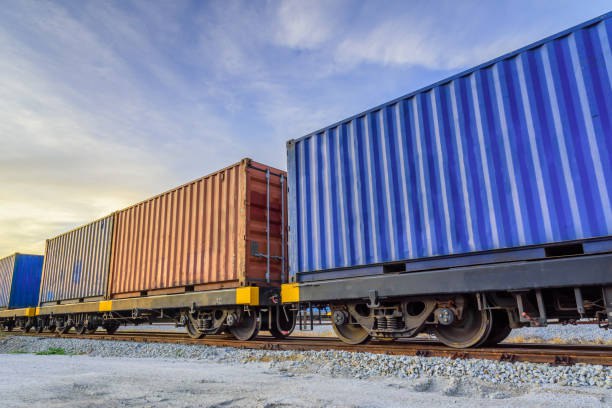
A Russian freight train has arrived at the Aprin dry port near Tehran after transiting through Kazakhstan and Turkmenistan, Iran’s ISNA news agency reported on November 8. The train carried 62 forty-foot containers loaded with paper, cellulose, and other paper products, according to Iranian officials. The cargo is destined for various regions in Iran and Iraq. The train crossed the Turkmenistan-Iran border at Incheh-Borun and reached Tehran in 12 days, marking a new phase in regional transit cooperation. Morteza Jafari, Deputy Director of Iranian Railways, said the arrival of the first Russian freight train is expected to enhance trade ties between Russia and Iran and lay the groundwork for regular rail services linking the two countries with Central Asia. He noted that Iran currently anticipates receiving one Russian container train every ten days, with plans to increase the frequency. Jafari emphasized Iran’s broader goal of becoming a regional hub for exports, imports, and transit by expanding coordination with neighboring and CIS countries. The new route underscores growing interest in enhancing rail connectivity across the Caspian region, where Iran is positioning itself as a key transit corridor. In August, Turkmenistan and Iran agreed to construct two additional railway lines at the Sarakhs border crossing to increase freight capacity. The decision followed discussions between Iranian Railways head Jabbar Ali Zakeri and Turkmenistan’s Minister of Railways Mammet Akmammedov during the UN Conference on Landlocked Developing Countries. Officials in both countries have stressed that expanded rail infrastructure will support faster, more reliable cargo movement across Central Asia and help integrate regional markets.

China Steps Into the Central Asian Power Vacuum

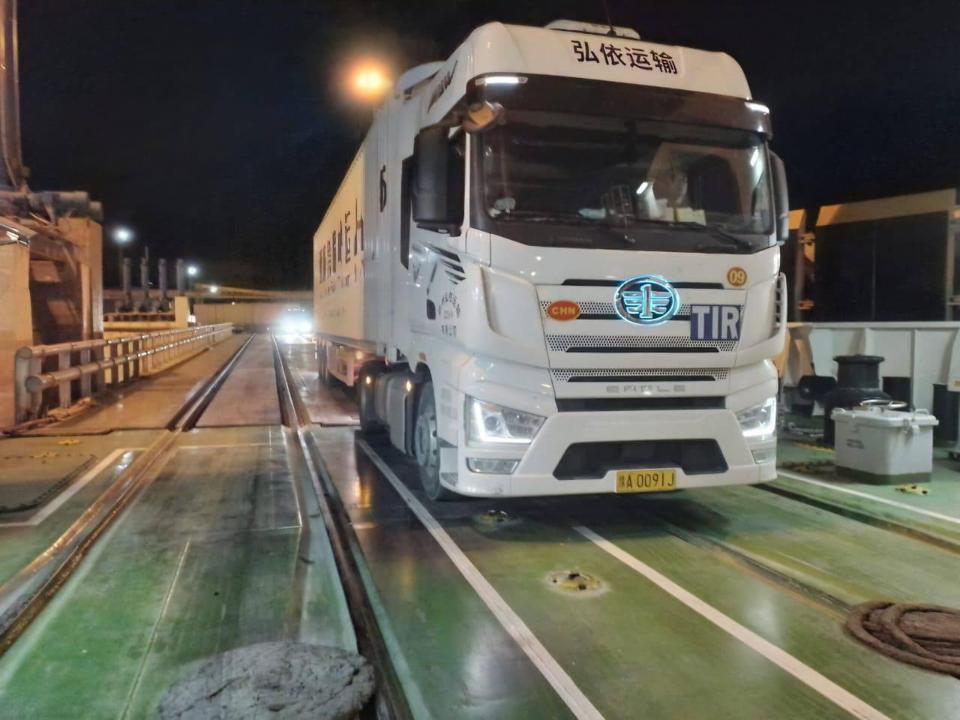
China’s footprint in Central Asia is growing rapidly, with the number of joint projects and strategic initiatives expanding across the region. Analysts attribute this shift to the waning influence of both Russia and the United States. Kazakhstan: From Agriculture to Atomic Energy In recent months, China has significantly deepened its cooperation with Kazakhstan. As The Times of Central Asia recently reported, on July 24, the Kazakh Ministry of Finance announced a pilot project with China involving unmanned freight trucks crossing the Bakhty (Kazakhstan) and Pokitu (China) border points. The initiative, known as "Smart Customs," will employ autonomous guided vehicles (AGVs) and implement a unified electronic customs declaration system recognized by both countries. Further institutional cooperation had earlier emerged on July 23, with the launch of the China-Central Asia Poverty Reduction Cooperation Center and the China-Central Asia Education Exchange and Cooperation Center in Urumqi, Xinjiang. These centers aim to deepen collaboration on poverty alleviation and education, priorities reaffirmed during the second China-Central Asia Summit in Astana, where 24 bilateral agreements were signed during President Xi Jinping’s visit. Meanwhile, China is asserting itself in Kazakhstan’s energy sector. On June 14, the China National Nuclear Corporation (CNNC) was announced as the leader of a consortium to build a new nuclear power plant in Kazakhstan. Although Russia's Rosatom is slated to construct the country's first nuclear plant, logistical and financial setbacks at its Akkuyu project in Turkey have led some experts to suggest that CNNC may ultimately be responsible for Kazakhstan’s inaugural facility. Meanwhile, as previously reported by The Times of Central Asia, transit routes through Russia are seeing multiple problems, with Kazakhstan temporarily suspending oil exports via the Black Sea ports of Novorossiysk and Yuzhnaya Ozerovka due to newly enforced Russian regulations. At land borders, new entry procedures for foreign citizens, including Kazakhs, have led to massive traffic jams. China’s Strategic Pivot According to sociologist Gulmira Ileuova, China's assertive role is a response to the diminishing presence of both Russia, distracted by the war in Ukraine, and the United States, which has scaled back developmental efforts. In March, President Donald Trump signed an executive order curtailing the global operations of the United States Agency for International Development (USAID), leading to the suspension of several NGO and media initiatives in Central Asia. “China is rapidly filling the vacuum,” Ileuova noted in an interview with The Times of Central Asia. “Beijing is transitioning from economic engagement to ideological influence, promoting narratives of social harmony and a shared future.” Ileuova anticipates that a broad ideological campaign, comparable to the "One Belt, One Road" infrastructure initiative, may follow, amplifying China’s soft power in the region. Rather than emphasizing democratic values, Chinese cooperation projects often focus on poverty alleviation, which finds greater resonance among Central Asian populations. Xi Jinping’s Repeated Visits Signal Priority As previously stated, Chinese President Xi Jinping visited Kazakhstan on June 16 for the Second China-Central Asia Summit in Astana, during which leaders signed the Astana Declaration and a treaty on “eternal good-neighborliness.” According to political...

Kazakhstan and Russia to Expand Rail Freight Volumes, Including China-Europe Transit

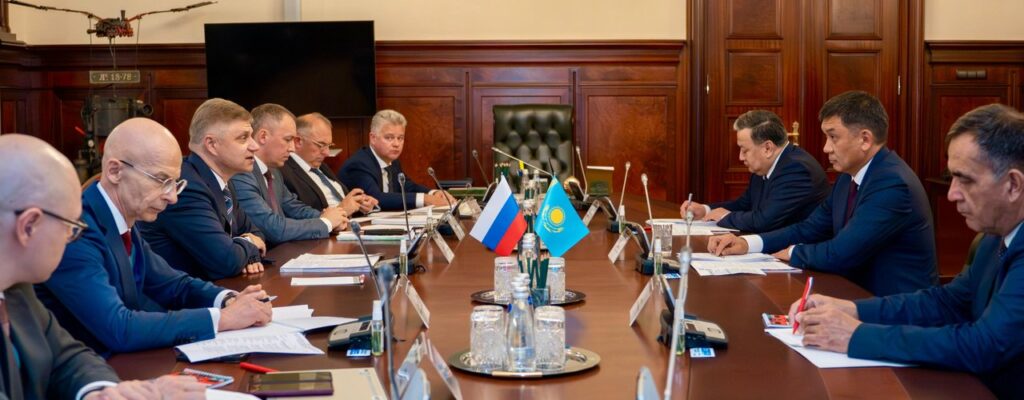
Kazakhstan Temir Zholy (KTZ), the national railway operator, and Russian Railways (RZD) are preparing to boost cargo transportation volumes in the second half of 2025 and into 2026, according to a statement released by KTZ. On July 21, KTZ Chairman of the Board Talgat Aldybergenov met in Moscow with Oleg Belozerov, CEO and Chairman of the Board of Russian Railways, to assess the implementation of their Strategic Partnership Agreement, signed in November 2024 in Astana. The agreement outlines plans to modernize railway infrastructure at nine key border crossings, expand capacity, and introduce a unified digital logistics system aimed at improving efficiency and cross-border freight operations. Boosting Rail Throughput During the July 21 meeting, the two sides signed a protocol to enhance operations at interstate junction points. Under the new framework, train throughput is expected to rise by 30%, from 65 to 85 train pairs per day, beginning in the second half of this year. They also discussed increasing freight volumes along the eastern branch of the North-South International Transport Corridor, which traverses Kazakhstan and connects Russia with Turkmenistan and Iran. With a current annual cargo capacity of 10 million tons, the corridor is gaining prominence as a strategic trade route. Advancing China-Europe Rail Transit KTZ and RZD further agreed to accelerate the automation of rail transit between China and Europe. Key upgrades will include the automatic registration of transit declarations and integration with the information systems of Russian and Belarusian railway operators. According to KTZ, freight volumes have continued to rise steadily. In the first half of 2025, total rail cargo volume surpassed 45 million tons, representing a 4.1% year-on-year increase. Container transit reached 273,300 twenty-foot equivalent units (TEU), marking an 18% rise compared to the same period in 2024.

Kazakh-Chinese Container Terminal Launches in Almaty

The Zhetysu container terminal, a new logistics hub jointly developed by Kazakhstan and China, officially opened in Almaty on June 10, marking a significant step in regional freight infrastructure development. The project is a partnership between Kazakhstan’s national railway operator, Kazakhstan Temir Zholy (KTZ), and Xi’an Free Trade Port Construction and Operation Co., Ltd. of China. Designed to handle up to 115,000 twenty-foot equivalent units (TEU) annually, the Zhetysu terminal is expected to serve as a strategic center for consolidating and distributing Chinese goods transported via rail and road. Situated at the intersection of key international transit corridors, the terminal is positioned to become Kazakhstan’s largest import hub and a vital link along the Trans-Caspian International Transport Route (TITR), a growing trade pathway connecting China and Europe through Central Asia. The facility spans 9.8 hectares. Its container yard covers 9,200 square meters and can store up to 1,101 TEU at a time. It also features 23,400 square meters of warehouse space and an 8,900-square-meter parking area for commercial vehicles. The terminal’s launch was marked by the arrival of the first container train from Xi’an, home to the Kazakh-Chinese cargo terminal that began operations in February 2024. Yuan Xiaojun, General Director of Xi’an Free Trade Port Construction and Operation, described the new Almaty terminal as both a symbol of China-Kazakhstan cooperation under the Belt and Road Initiative and a catalyst for greater regional economic integration. “This international logistics hub will help ensure sustainable growth in economic cooperation between China, Kazakhstan, and the broader Eurasian region,” Yuan said.

CASCA+ Transport Corridor Freight Transit

Representatives of the railway administrations of Uzbekistan, Kyrgyzstan, Turkmenistan, Azerbaijan, Georgia, and Turkey convened in Tashkent on May 28 and 29 to discuss the development of freight transportation along the CASCA+ transport corridor. CASCA+ is a joint initiative of the state railways of Azerbaijan, Georgia, Kyrgyzstan, Turkmenistan, Turkey, and Uzbekistan. The “+” sign indicates a willingness to accept new potential participants in achieving the goal to connect transport routes to Southeast Asia, particularly China, with Europe. As reported by Uzbekistan’s Ministry of Transport, the agenda focused on projects to develop the CASCA+ transport corridor, with representatives of all railway administrations supporting the Uzbekistan Railways’ initiative to create a consortium to coordinate related activities. Proposals were also forwarded to establish the safe transportation of perishable goods such as fruit and vegetables in refrigerated containers along the CASCA+ corridor and to create an online monitoring system for the location of wagons and containers travelling along the route. The emphasis on refrigerated transportation  aligns with recommendations made in March by President Shavkat Mirziyoyev at a government meeting on increasing Uzbek agricultural exports.    

Test Run of Trans-Caspian Route from China to Europe via Kazakhstan

At a meeting of the Kazakh-Chinese commission on road transportation on 24 May in Aktau, Kazakhstan’s Ministry of Transport reported on a test  run of the transit of goods along the China-Kazakhstan-Azerbaijan-Georgia route through the seaports of Kuryk and Baku across the Caspian Sea. On 23 May, the first three Chinese trucks, weighing 80 tons, travelled from Urumqi through Kazakhstan to the city of Aktau’s Kuryk port and after being loaded onto a ferry, continued their journey to Azerbaijan, Georgia, and Europe. Praising the agreement with China on enhancing road transportation signed last year, Ali Altai, Chairman of the Committee for Road Transport and Transport Control at the Ministry of Transport of Kazakhstan, commented: “For the first time in history, vehicles from both countries can travel directly to all our major trading cities and transit through their territories. It currently takes up to 52 days for hundreds of millions of tons of cargo to be shipped by sea from China to Western countries, and up to 22 days to transport smaller volumes by rail. Road transport can reduce the delivery time to 12 days, on a ‘door to door’ basis without intermediate loading/unloading.”