


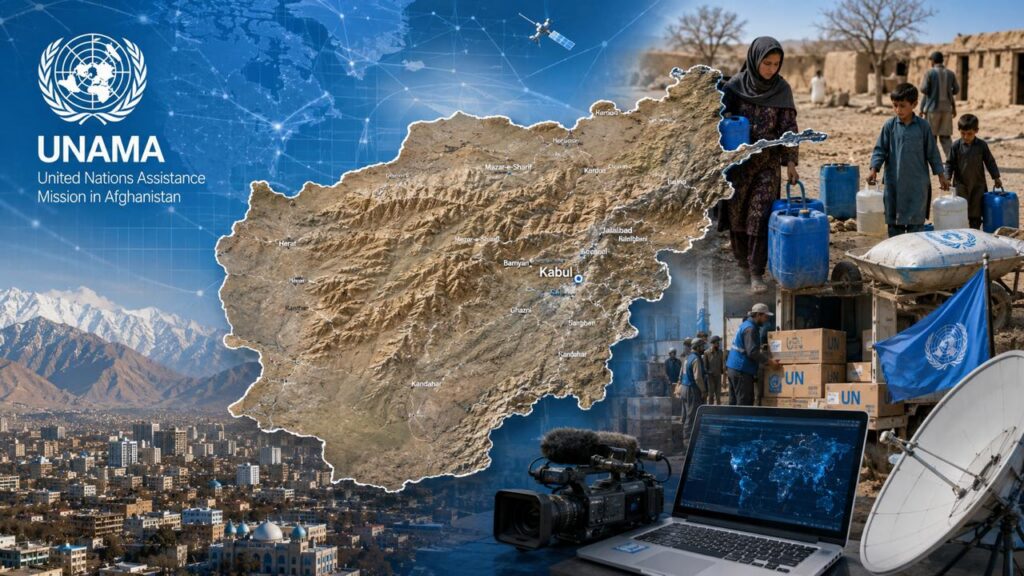
Opinion: Why the Next Head of UNAMA Should Come from Central Asia
A recent briefing on Afghanistan before the United Nations Security Council again showed that the country’s challenges can no longer be viewed only through humanitarian assistance or debates over recognition of the Taliban government. Afghanistan remains a deeply complex domestic issue, but it is increasingly becoming a regional one as well. The discussion now extends beyond human rights and political dialogue with the de facto authorities. It now includes the return of millions of people from neighboring countries, pressure on cities and rural communities, shortages of jobs and water, cross-border trade, security, and the future of regional transport corridors. Against this backdrop, the question of who should lead the United Nations Assistance Mission in Afghanistan (UNAMA) is no longer only a personnel decision. It has become part of a wider debate about what international policy toward Afghanistan should look like in its next phase. The catalyst for this discussion was the recent briefing delivered by Georgette Gagnon, the UN Secretary-General’s Deputy Special Representative for Afghanistan, before the Security Council. According to Gagnon, the de facto authorities maintain control over both Afghanistan’s territory and administrative structures. At present, they face no significant armed or political challenge. The Taliban themselves view the restoration of security across Afghanistan as one of their principal achievements. Yet this does not mean the situation is stable. Gagnon pointed to a fundamental contradiction within the current system of governance. There are rigid ideological policies that place considerable pressure on society. There are also more pragmatic approaches that have so far allowed the system to function and survive. In other words, Afghanistan appears to have achieved a form of managed stability, but without a clear vision of where that system is ultimately headed. Stability Conceals Deep Structural Problems The economic picture is equally mixed. Afghanistan has recorded positive growth in absolute terms. Fiscal stability has improved, revenue collection has increased, and several infrastructure projects are moving forward. The country has also largely maintained the gains achieved through the reduction of opium poppy cultivation. Yet beneath these signs of stabilization lie significant challenges. According to Gagnon, nearly 5.9 million people have returned to Afghanistan since 2023. This represents a population increase of more than 10%. Another 2.8 million Afghans could return during 2026 alone. Many returnees arrive with no savings, no employment, and limited prospects for rebuilding their lives. For a country with a fragile economy, this creates enormous pressure. Cities and rural communities are struggling to absorb new arrivals. Jobs, housing, water resources, and social services remain in short supply. The humanitarian situation remains severe. In 2026, approximately 21.9 million people, around 45% of Afghanistan’s population, are expected to require humanitarian assistance. Another major concern is demographics. More than half of Afghanistan’s population is under the age of 25. This generation is growing up amid limited opportunities. While the challenges facing girls have received international attention, boys increasingly face difficulties as well. Employment opportunities are scarce, household incomes are declining, and competition for livelihoods is intensifying. Environmental pressures...
