
• KGS/USD = 0.01144 0%
  • KZT/USD = 0.00216 0%
  • TJS/USD = 0.10562 0%
  • UZS/USD = 0.00008 0%
  • TMT/USD = 0.28530 0%
  • KGS/USD = 0.01144 0%
  • KZT/USD = 0.00216 0%
  • TJS/USD = 0.10562 0%
  • UZS/USD = 0.00008 0%
  • TMT/USD = 0.28530 0%
  • KGS/USD = 0.01144 0%
  • KZT/USD = 0.00216 0%
  • TJS/USD = 0.10562 0%
  • UZS/USD = 0.00008 0%
  • TMT/USD = 0.28530 0%
  • KGS/USD = 0.01144 0%
  • KZT/USD = 0.00216 0%
  • TJS/USD = 0.10562 0%
  • UZS/USD = 0.00008 0%
  • TMT/USD = 0.28530 0%
  • KGS/USD = 0.01144 0%
  • KZT/USD = 0.00216 0%
  • TJS/USD = 0.10562 0%
  • UZS/USD = 0.00008 0%
  • TMT/USD = 0.28530 0%
  • KGS/USD = 0.01144 0%
  • KZT/USD = 0.00216 0%
  • TJS/USD = 0.10562 0%
  • UZS/USD = 0.00008 0%
  • TMT/USD = 0.28530 0%
  • KGS/USD = 0.01144 0%
  • KZT/USD = 0.00216 0%
  • TJS/USD = 0.10562 0%
  • UZS/USD = 0.00008 0%
  • TMT/USD = 0.28530 0%
  • KGS/USD = 0.01144 0%
  • KZT/USD = 0.00216 0%
  • TJS/USD = 0.10562 0%
  • UZS/USD = 0.00008 0%
  • TMT/USD = 0.28530 0%

Viewing results 1 - 6 of 4

Kazakhstan to Digitalize Seaports to Boost Trans-Caspian Transport Route

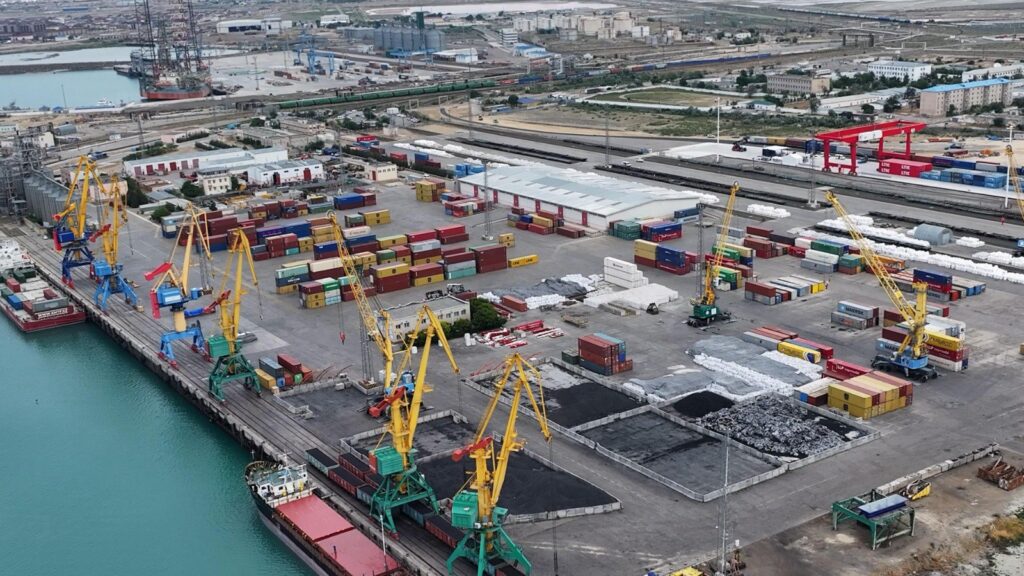
Kazakhstan is advancing the digital transformation of its maritime infrastructure as part of broader efforts to strengthen the Trans-Caspian International Transport Route (TITR), also known as the Middle Corridor. The Ministry of Transport is developing an electronic Maritime Single Window system designed to replace paper-based documentation with digital data exchange for vessel entry and exit procedures at the country’s seaports. The initiative is included in the Roadmap for the Digitalization of Kazakhstan’s Transport Industry for 2025-2027. According to the ministry, the project is being implemented with support from the German Society for International Cooperation (GIZ). An international tender has already been held to select experts responsible for preparing the system’s technical specifications. In February, working meetings were held with stakeholders in Aktau and Kuryk, Kazakhstan’s two largest ports on the Caspian Sea. Discussions focused on port digitalization, simplifying administrative procedures, and reducing vessel processing times through the introduction of the Maritime Single Window. The project is viewed as a key component in the further development of the TITR, which connects China with Europe via Central Asia and the South Caucasus. By streamlining port operations and reducing bureaucratic delays, Kazakhstan aims to enhance the route’s competitiveness and reliability. Kazakhstan’s maritime transport sector has recorded steady growth in recent years. In 2025, maritime cargo volumes reached 8 million tons, a 7% increase compared to 2024. Container traffic through Kazakh seaports rose by 29% to 90,637 TEUs, while cargo volumes transported along the TITR increased by 36%. Infrastructure development has accompanied this growth. In 2025, construction of a container hub at the port of Aktau was completed, a dry cargo vessel was launched on the Kuryk-Baku route, and two new ferries were acquired. Overall transit cargo traffic through Kazakhstan reached 36.9 million tons in 2025, up 6.6% year on year, driven by the integrated development of road, rail, air, and maritime transport. Under the country’s comprehensive maritime infrastructure development plan for 2024-2028, Kazakhstan intends to establish a major transport and logistics cluster based on the ports of Aktau and Kuryk. The plan includes the expansion of container handling capacity, development of cargo terminals and international shipping logistics, and a reduction in administrative barriers. By 2028, total cargo throughput at the ports is expected to increase by 50%, while container handling volumes are projected to triple. To ensure year-round navigation and maintain competitiveness amid changing environmental and logistical conditions in the Caspian region, Kazakhstan has also prioritized dredging works, including the deepening of the ports of Aktau and Kuryk.


UNDP and GIZ Renovate Osh Laboratory to Strengthen Tuberculosis Diagnosis in Southern Kyrgyzstan

On April 7, the National Center for Phthisiology and the Osh Region Tuberculosis Center, with support from the United Nations Development Programme (UNDP) and the German Agency for International Cooperation (GIZ), inaugurated a renovated building of the Osh Interregional Reference Laboratory in southern Kyrgyzstan. UNDP, in partnership with GIZ, carried out a full-scale renovation, upgraded staff capacities, and certified diagnostic equipment. The modernization enables the facility to enhance tuberculosis (TB) diagnostics and improve treatment effectiveness, UNDP Kyrgyzstan reported. Accurate and timely diagnosis is essential for effective TB treatment. In this context, UNDP supports the Kyrgyz government's efforts to expand diagnostic capacity, improve treatment outcomes, and reduce the national TB burden, advancing the goal of a TB-free Kyrgyzstan. Until 2019, Kyrgyzstan operated two reference laboratories equipped with advanced TB diagnostic technologies. The National Reference Laboratory oversaw supervision, mentoring, and quality control across the country, with a focus on drug susceptibility testing in northern regions. Meanwhile, the Osh facility served the southern regions of Osh, Jalal-Abad, and Batken. Despite having modern equipment, the laboratory was housed in a deteriorating building that compromised diagnostic quality. Operations were scaled down in 2019 due to poor conditions and resumed only after the facility’s renovation in December 2024. The lab now provides full diagnostic services for Osh city and the Osh and Batken regions. U.S. Support Bolsters National TB Response Kyrgyzstan has made substantial progress in TB detection and treatment in recent years, with strong backing from the U.S. government. Since 2019, the United States has invested over $20 million in TB-related programs through the U.S. Agency for International Development (USAID). Declining TB Incidence and Mortality According to Abdullaat Kadyrov, Director of the National Phthisiology Center, Kyrgyzstan has seen a sustained decline in tuberculosis incidence and mortality over the past 15-20 years. In 2001, the country recorded 168 TB cases per 100,000 people and a mortality rate of 27 per 100,000. By 2024, this had fallen to 56.3 per 100,000, with mortality dropping to 2.6 per 100,000.