• KGS/USD = 0.01144 0%
  • KZT/USD = 0.00207 0%
  • TJS/USD = 0.10409 -0.86%
  • UZS/USD = 0.00008 0%
  • TMT/USD = 0.28571 0%
  • KGS/USD = 0.01144 0%
  • KZT/USD = 0.00207 0%
  • TJS/USD = 0.10409 -0.86%
  • UZS/USD = 0.00008 0%
  • TMT/USD = 0.28571 0%
  • KGS/USD = 0.01144 0%
  • KZT/USD = 0.00207 0%
  • TJS/USD = 0.10409 -0.86%
  • UZS/USD = 0.00008 0%
  • TMT/USD = 0.28571 0%
  • KGS/USD = 0.01144 0%
  • KZT/USD = 0.00207 0%
  • TJS/USD = 0.10409 -0.86%
  • UZS/USD = 0.00008 0%
  • TMT/USD = 0.28571 0%
  • KGS/USD = 0.01144 0%
  • KZT/USD = 0.00207 0%
  • TJS/USD = 0.10409 -0.86%
  • UZS/USD = 0.00008 0%
  • TMT/USD = 0.28571 0%
  • KGS/USD = 0.01144 0%
  • KZT/USD = 0.00207 0%
  • TJS/USD = 0.10409 -0.86%
  • UZS/USD = 0.00008 0%
  • TMT/USD = 0.28571 0%
  • KGS/USD = 0.01144 0%
  • KZT/USD = 0.00207 0%
  • TJS/USD = 0.10409 -0.86%
  • UZS/USD = 0.00008 0%
  • TMT/USD = 0.28571 0%
  • KGS/USD = 0.01144 0%
  • KZT/USD = 0.00207 0%
  • TJS/USD = 0.10409 -0.86%
  • UZS/USD = 0.00008 0%
  • TMT/USD = 0.28571 0%

Viewing results 1 - 6 of 27

Kazakhstan Limits Re-Export of Russian Grain to Uzbekistan and China

Kazakhstan has imposed restrictions on the re-export of Russian grain to Uzbekistan and China, Prime Minister Olzhas Bektenov announced. The move aligns with Kazakhstan’s ban on wheat imports from Eurasian Economic Union (EAEU) countries, which will remain in effect until the end of 2024. The restriction was outlined in Bektenov's response to a parliamentary inquiry. He explained that the decision aims to protect Kazakhstan’s domestic agricultural market, citing concerns about maintaining local production. During a meeting of the Kazakhstan-Russia intergovernmental commission, Rosselkhoznadzor, Russia’s federal agricultural oversight agency, raised issues related to the restrictions. The commission recommended that authorities expedite the removal of these measures, highlighting their impact on bilateral agricultural trade. Bektenov noted that these restrictions were critical to safeguarding Kazakhstan’s domestic market. “To protect the domestic market, Kazakhstan banned wheat imports from EAEU countries until the end of 2024. This ban limits the re-export of Russian grain to Uzbekistan and China,” he stated. In addition to the re-export ban, Kazakhstan has raised unified tariffs for the transit of goods across its territory for EAEU countries. Notably, the tariff for transporting Russian grain to Kyrgyzstan through Kazakhstan has doubled this year, further impacting regional trade dynamics.

Kazakhstan Begins Export of New Harvest Grain

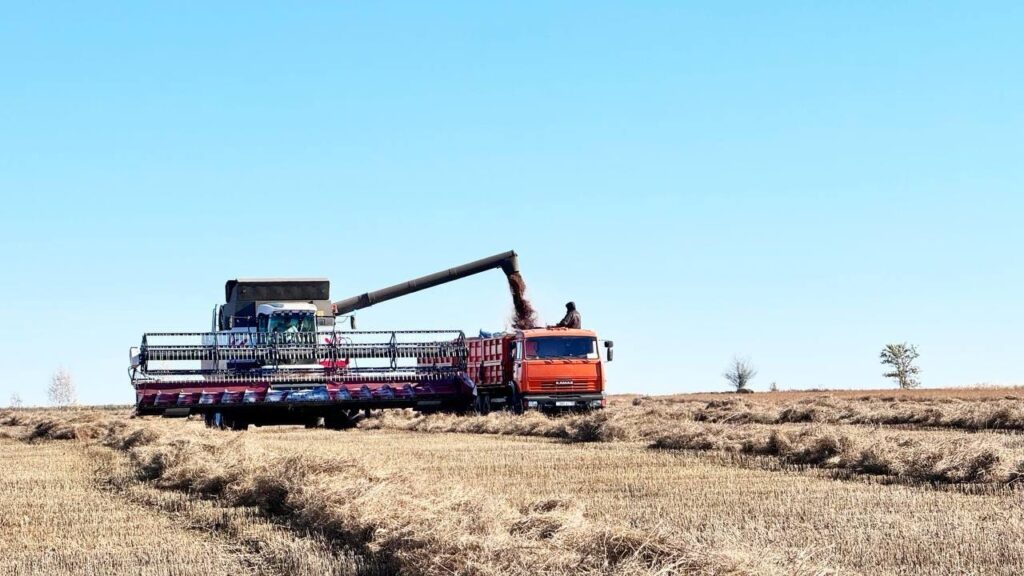
Kazakhstan has begun exporting grain from the new harvest, which totaled 26.6 million tons this year, 56% higher than in 2023. In September-October, Kazakhstan’s national railway company, Kazakhstan Temir Zholy (KTZ), transported 1.8 million tons of grain for export, 48% more than in the same period last year (1.2 million tons). During the two months, grain exports to Uzbekistan amounted to 738,000 tons (49% more than in September-October 2023), and 298,000 tons were shipped to Tajikistan (a 48% increase). Increasing grain exports were also reported to China, Afghanistan, Iran, and Kyrgyzstan. The Kazakh Ministry of Agriculture expects a significant increase in grain exports in the first half of 2025. According to KTZ, Afghanistan is ready to import about 200,000 tons of Kazakh grain, which will be transported via Turkmenistan. According to the Ministry of Agriculture, Kazakhstan plans to export about 12 million tons of the new harvest grain to traditional markets—Central Asia and Afghanistan—and new ones, such as Pakistan, Indonesia, Brazil, and Malaysia. Uzbekistan remains the primary importer of Kazakh grain, followed by Tajikistan, Afghanistan, Turkmenistan, and China.

Grain War: Has Kazakhstan Become Russia’s Victim?

The fall brought two headaches for Kazakhstani farmers: a rich grain harvest that coincided with an oversupply of grain on world markets, and Russia's ban on exporting Kazakh wheat to and transiting through Russia. Experts complain about the 40% failure of Kazakhstani grain exports, and representatives of farmer associations complain about low prices and high production costs and ask the government to buy their surplus products. The background is talk of a grain war between Moscow and Astana.   Phytosanitary ban According to Kazakhstan's Ministry of Agriculture, this year the harvested area of crops amounted to 23.3 million hectares, of which 16.7 million were sown with cereals. Fieldwork has been completed by 99.7%. 26.5 million tons of grain were threshed. Proponents of the opinion that the agricultural authorities of Kazakhstan and Russia have entered into a hidden confrontation for external grain markets argue that Kazakhstan is a victim of this trade war. They cite the restrictions imposed by Rosselkhoznadzor in October as evidence. On October 1, the Russian agency asked Kazakhstan's Ministry of Agriculture to suspend the issuance of phytosanitary certificates for grain and its products, tomatoes, peppers, and sunflower seeds exported to the Russian Federation. On October 3, journalists asked Vice-Minister of Agriculture Ermek Kenzhekhanuly about the stage of fulfillment of this wish. He replied that the Russian side received a reply letter requesting evidence of phytosanitary control violations. According to him, Rosselkhoznadzor had not responded as of October 3. On October 17, the Russian Federal Service for Veterinary and Phytosanitary Surveillance temporarily banned imports of several types of agricultural goods from Kazakhstan. Transit of wheat, lentils, and oilseed flax seeds through Russia's territory is allowed. Still, a phytosanitary certificate for the country of final destination must be issued, and grain must be transshipped directly from railcars into the ship's holds. At the same time, deliveries of tomatoes, peppers, sunflower seeds, and melons from Kazakhstan are prohibited, even for transit.   Obstacles in response to the ban However, let's carefully review the Kazakhstani press. We will find that as early as September 3rd, Kazakhstani farmers sounded the alarm—Russia is pushing our grain out of traditional markets. Representatives of the Grain Union of Kazakhstan discussed the problems Kazakh traders face with the transit of domestic grain through the territory of the Russian Federation at a session with journalists at the Agricom forum. However, they cited only two cases of such restrictions but tried to convey another message—Russia has introduced hidden obstacles because of Kazakhstan's ban on grain imports from the Russian Federation, which was imposed as early as August 1. As reported by Kazakhstan's Ministry of Agriculture, the restrictions imply a complete ban on wheat imports by all modes of transportation. Previously, the restrictive measures provided for a ban on imports of goods by road, water, and rail (except for imports to poultry and flour mills) since April. The decision was made because, despite the previous ban, grain imports from Russia exceeded 1.1 million tons in six months. Experts considered...

Kazakhstan to Increase Grain and Wheat Exports

According to Kazakhstan's Ministry of Agriculture, Aidarbek Saparov, 16.7 million hectares of cereals were sown in Kazakhstan this year. Harvesting is 99.7% complete, and 26.5 million tons of grain have been threshed. Kazakhstan plans to export about 12 million tons of the new harvest to traditional markets—the countries of Central Asia and Afghanistan—and new ones, such as Pakistan, Indonesia, Brazil, and Malaysia. At a government meeting on October 23, Deputy Minister of Trade and Integration Kairat Torebayev reported that Kazakhstan's export potential for cereals is estimated at 12 million tons, including 7-7.5 million tons of wheat, 1.4 million tons of barley, and 300,000 tons of corn.Torebayev stated that in 2023, Kazakhstan exported 1.43 million tons of cereals to China, marking a 5.5-fold increase over the previous year. Wheat exports alone surged to 538,800 tons, representing nearly a 15-fold increase compared to 2022. Torebayev said Kazakhstan could increase its wheat exports to China and other Asian countries to 1.6 million tons, adding that its export potential to Turkey and Middle Eastern countries is almost 1 million tons. Preliminary agreements have been reached on the export of 600,000 tons of wheat to Armenia and 1 million tons to Italy. Negotiations on exporting 200,000 tons of grain to North African countries are underway. According to APK-Inform, in the 2022/23 grain season, Kazakhstan exported more than 7.3 million tons of wheat, a record-high volume for the last few seasons. Uzbekistan remained the primary importer of Kazakh grain, followed by Tajikistan, Afghanistan, Turkmenistan, and China. In 2022, Kazakhstan's wheat exports totaled $1.91 billion, making it the 11th largest wheat exporter globally.

China and Afghanistan are the Main Importers of Kazakh Grain and Flour

In January-September 2024, Kazakhstan’s national railways company, Kazakhstan Temir Zholy (KTZ), transported 6.6 million tons of Kazakh grain and 2.7 million tons of flour. Of that amount, 5 million tons of grain and 2.1 million tons of flour were exported. KTZ Managing Director Bauyrzhan Urynbasarov announced this at a government meeting on October 7. According to Urynbasarov, Kazakhstan exported grain mainly to neighboring Central Asian countries (2.9 million tons), China (1.3 million tons), and Afghanistan (127,000 tons). Kazakhstan resumed grain supplies to Iran (211,000 tons), and 423,000 tons of grain were exported to Italy, Turkey, and Russia. From January to September, 495,000 tons of flour were exported to Central Asian countries, 639,000 tons to China, and 666,000 tons to Afghanistan. At the meeting, Deputy Prime Minister Serik Zhumangarin said that Kazakhstan must supply 2 million tons of grain to China this year, but the figure can be increased to 3 million tons. He also ordered an increase in flour supplies to Afghanistan. According to the Ministry of Agriculture, as of October 7, Kazakhstan had completed harvesting 93.2% of grain crops on 15.5 million hectares, and 23.5 million tons of grain had been threshed.

Chinese Company to Build Sugar Substitutes Plant in Kazakhstan

Chinese state company CITIC Construction plans to invest more than 1 billion dollars in constructing a plant for deep grain processing in the Almaty region. The agreement was reached during the meeting of the Vice-Minister of Agriculture of the Republic of Kazakhstan, Ermek Kenzhekhanuly, with representatives from the Chinese delegation. The parties discussed the development of Kazakhstan's agro-industrial complex and details of the project to build a production line for deep wheat processing with an annual capacity of 300,000 tons. The enterprise will produce maltose, fructose, crystalline fructose, allulose, crystalline dextrose, sodium gluconate, gluten by-products, and feed. The project will be realized in the Kazbek bi-industrial zone in the Almaty region. CITIC Construction's total investment will be about $1.07 billion, and the total value of its products will be $1.87 billion. More than 2,000 jobs will be created. In mid-July, the Ministry of Agriculture of Kazakhstan signed an agreement with Chinese companies CITIC Construction and Beijing Capital Agro to attract $600 million in investment to develop beef cattle breeding in the country. The funds will be used to establish feedlots, with the partnership expected to involve more than 600 farms and existing feedlots. China is Kazakhstan's leading trading partner. At the end of 2023, agricultural exports from Kazakhstan to China doubled and reached $1 billion. In 2023, the volume of bilateral trade turnover amounted to $41 billion, and Kazakhstan intends to double this figure. In addition, Beijing is one of the leading foreign investors in Kazakhstan, having invested about $25 billion in its economy over the past 15 years.